Practical special effects mechanics and 4 proven rules that forge breathtaking cinematic realism
Behind cinema’s most unforgettable visceral moments lies a masterclass in physics, pneumatics, and optical geometry. Discover how physical special effects manipulate light and gravity to produce raw on-screen authenticity.

Understanding practical special effects mechanics separates unforgettable cinematic tactile reality from unconvincing digital sheen that instantly shatters narrative immersion. When a physical charge detonates on a soundstage, it does not merely generate a flash of light. It compresses ambient air, propels heterogeneous debris across the floor, rattles the camera lens mount, and forces a genuine physiological flinch from actors standing just outside the blast radius. That raw sensory feedback cannot be fabricated cleanly in post-production. The human visual cortex has spent millions of years interpreting gravity, mass, friction, and light bounce, making audiences remarkably gifted at spotting artificial shortcuts.
Tactile filmmaking endures because audiences yearn for real matter occupying real space. Every splash of simulated blood, collapsing miniature bridge, and hydraulic creature jaw operates under Newtonian laws. When a film production decides to build a full-scale gimbal rig or rig high-pressure air mortars beneath a breakaway wall, they trade the sterile safety of software for the chaotic unpredictability of physics. That deliberate trade-off breathes dangerous vitality into every frame.
The tactile physics behind tangible cinematic illusions
The foundational beauty of practical special effects mechanics rests on an uncompromising truth: real cameras capture real photons bouncing off real textures. Digital renders often struggle to emulate the micro-imperfections of light filtering through grease, dust motes, and human skin. When a practical rig shakes or an animatronic creature flexes its silicone brow, the surrounding studio lighting interacts organically with those surfaces, scattering light naturally across the lens elements.
Physical props possess inherent inertia. An actor slamming a prop iron gate feels the reactive shockwave traveling up their arm, shifting their center of gravity and modifying their vocal cadence. When that gate is purely virtual, the performer must mimic resistance, almost always failing to reproduce the nuanced muscular micro-adjustments that register instinctively with a viewer. Real objects possess micro-weight, subtle vibrations, and friction that communicate authenticity faster than the brain can consciously analyze the frame.
Furthermore, air displacement plays a colossal role in selling physical danger. High-pressure air mortars, known in the trade as air cannons, launch harmless soft debris like cork shavings, vermiculite, and diatomaceous earth using sudden pneumatic bursts. As these particulates race past the camera, they drag air currents along with them, fluttering clothing, rustling hair, and disturbing settled smoke. This localized aerodynamic disturbance creates an involuntary sensory response in the viewer, grounding fantastical scenarios in unmistakable physical logic.
Atmospheric integration and camera perspective tricks
Atmospheric control forms the glue that binds disparate practical elements into a singular, believable frame. Veteran effect technicians treat airborne particles as optical diffusers. By maintaining a measured suspension of atomized mineral oil or organic crackersmoke across the set, technicians reduce harsh background contrast, simulate natural depth, and soften the telltale seams of fabricated sets and painted backdrops.
Forced perspective represents another triumph of geometric discipline over digital fabrication. By positioning a miniature architectural model close to the camera lens while staging live actors dozens of paces deeper in the set along the same optical axis, filmmakers can fuse the two distinct planes into a towering, seamless hall. Achieving this requires meticulous alignment of optical nodal points, matching lighting gradients, and utilizing split-diopter lenses or narrow apertures to keep both near and distant objects in razor-sharp focus simultaneously.
Four proven rules governing physical movie magic
Mastering practical special effects mechanics requires abandoning guesswork in favor of precise physical laws. Without disciplined planning, physical builds risk looking sluggish, artificial, or catastrophically chaotic on camera. Legendary mechanical supervisors lean on four non-negotiable principles to construct effects that defy optical scrutiny.
Match hydraulic force with natural mechanical deceleration
A frequent downfall of mechanical props is robotic, unnatural motion. In nature, living tissue and massive structures never start or stop instantaneously; they accelerate smoothly, reach peak velocity, and decelerate against resistance or elastic tension. Pneumatic pistons driven solely by standard industrial solenoid valves snap open and shut with a jarring, artificial rigidity that screams machinery.
Master fabricators resolve this by integrating progressive hydraulic dampening valves and variable-flow proportional controllers into their rigs. If an animatronic beast turns its head, the motion profile must curve gently at the start and buffer smoothly at the conclusion of the movement. Adding mechanical slack via coiled springs or silicone ligaments absorbs violent stops, yielding the organic inertia characteristic of living muscle and bone.
Calculate miniature scale through high frame rate camera mathematics
Scaling down an environment does not scale down the gravitational pull of the earth. If a technician constructs a one-sixteenth-scale miniature skyscraper and collapses it at standard sound speed of twenty-four frames per second, the falling plaster chunks will plunge sixteen times too rapidly. To the audience, the collapse looks cheap, weightless, and instantly unmasked as a tabletop model, where practical special effects mechanics intersects directly with optical geometry.
To overcome this temporal mismatch, filmmakers employ a strict mathematical ratio: overcrank the camera by the square root of the scale factor. For a one-sixteenth-scale model, the square root of sixteen is four. Multiplying the standard shooting rate of twenty-four frames per second by four yields ninety-six frames per second. When played back at standard projection speeds, the falling debris, flame curls, and plume dynamics slow down to match the majestic, crushing inertia of a full-sized structural disaster.
Calibrate interactive set lighting before triggering explosive charges
Pyrotechnic flashes last mere milliseconds, yet their optical footprint defines the believability of an entire sequence. A gasoline fireball or naphthalene flash creates an explosive burst of warm tungsten illumination. If the ambient set lighting remains static during this event, the blast appears disembodied, as though it were composited into the frame from an unrelated reel.
To produce cohesive visual carnage, effect crews rig auxiliary high-output strobe arrays, photoflood lamps, or programmable LED clusters linked directly to the pyrotechnic trigger console. Just as documentary integrity relies on Investigative sourcing mechanics and 4 proven rules that prevent devastating editorial betrayal to substantiate claims without editorial deceit, physical effects teams must adhere to relentless on-set verification protocols before any live pyrotechnic charge is detonated. When the technician depresses the firing switch, the interactive lighting rig floods the actors and scenery with matching lumens micro-seconds before the physical fuel vaporizes, ensuring perfect photometric harmony.
Blend prosthetic elastomer elasticity with mechanical cable cores
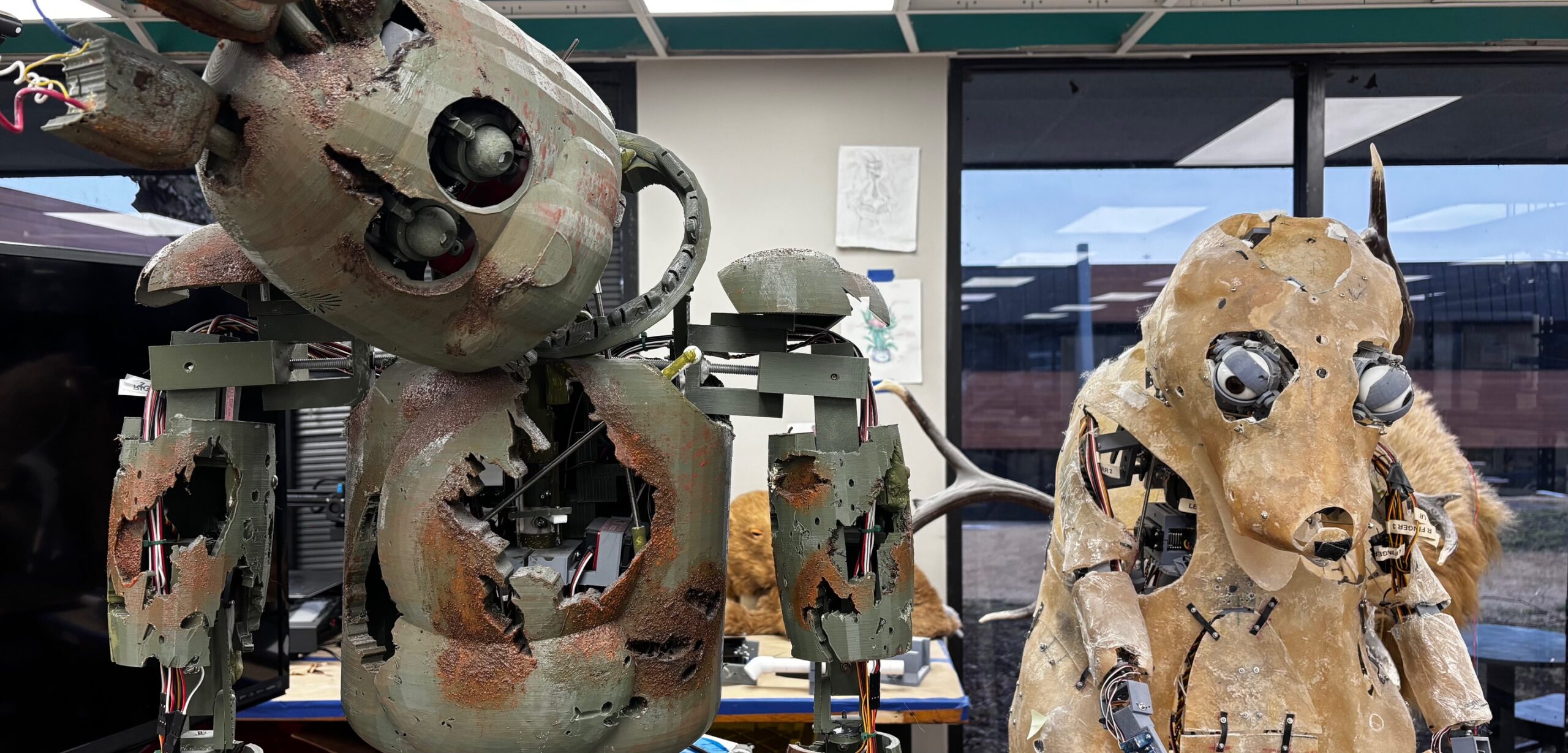
Animatronic faces fail when they ignore the interplay between structural skeletons and pliant outer skin. Human and animal expressions rely on superficial facial musculature pulling across underlying cranial bones. Creating believable prosthetics requires a layered sandwich of differing physical properties: a rigid fiberglass core, a mechanical cable harness, and a pliant silicone or platinum-cured foam latex epidermis.
If the synthetic skin is cast with uniform thickness, it wrinkles like cheap upholstery rather than natural flesh. Skilled sculptors carve differential thicknesses into the reverse side of the prosthetic skin, leaving tissue thin across the eyelids and temples while reinforcing the jowls and bridge of the nose. When miniature aircraft cables tug the internal armature, the silicone stretches unevenly, producing organic crow’s feet, folding brow furrows, and authentic vascular tension.
Optical calibration and the psychophysics of human vision
The enduring success of practical special effects mechanics depends on exploiting the subtle limitations of human perception. The human visual system processes dynamic motion through edge contrast, luminance persistence, and motion blur. By balancing depth of field against shutter angles, cinematographers can camouflage artificial joints while elevating tactile focal points.
Shutter angle selection dictates how motion blur records onto the sensor or negative. A classic one-hundred-and-eighty-degree shutter captures smooth, naturalistic motion blur that blends the micro-vibrations of miniature wires and rig supports into the background. Conversely, tightening the shutter to forty-five or ninety degrees eliminates blur, freezing water droplets, exploding glass shards, and dirt clods into crystalline diamonds of kinetic violence. Cinematographers often reference historical preservation records and technical studies gathered within the American Society of Cinematographers technical archives to calculate how lens coatings interact with practical atmospheric flare on studio soundstages.
Costly workshop blunders that shatter tactile realism
Inexperienced fabricators often neglect the baseline constraints of practical special effects mechanics when rushing to meet tight shooting schedules. The most pervasive error involves improper fluid viscosity. Whether mixing simulated stage blood, toxic industrial sludge, or alien saliva, amateur productions frequently rely on water-thinned food coloring. Water possesses surface tension that beads unnaturally on human skin, running too fast and lacking the clinging, viscous drag of biological fluids. Professional technicians balance corn syrup, methylcellulose, and surfactants to ensure fluids smear, coat, and pool with agonizing realism.
Another classic mistake involves neglecting environmental weathering. Freshly welded steel rigs, newly molded latex masks, and freshly painted miniature facades possess unnatural chromatic uniformity. Studio lighting bounces off unweathered surfaces with flat, artificial highlights. Seasoned effects artists spend hours distressing every surface using raw umber washes, fuller’s earth, airbrushed soot, and sandpaper to simulate decades of friction, oxidation, and human contact.
Finally, cable management errors ruin countless otherwise brilliant takes. A heavy cable pull intended to yank a stunt performer across a room must never operate with constant tension. If the pulling rig pulls before the performer initiates the reaction, the performer visibly slides into motion without an initiating impact. True violence on camera requires kinetic synchronization: the impact, the breakaway prop shattering, and the winch retraction must occur in a single explosive millisecond.
Preserving the artisanal legacy of practical set engineering
The modern renaissance of practical special effects mechanics proves that audiences crave the irrepressible weight of tangible objects. Digital artists have realized that computer-generated graphics achieve their finest expression not when replacing practical components entirely, but when supplementing physical foundational elements. A real fire ignition augmented with subtle digital smoke cleanup or an animatronic puppet whose rod mounts are digitally erased delivers a depth of realism that neither discipline can achieve alone.
Physical craftsmanship demands patience, engineering bravura, and deep respect for physical materials. From the tension of braided steel cables to the delicate viscosity of chemical formulas, practical effects bridge the gap between mechanical engineering and pure artistic illusion. By understanding the physics of light, scale, and motion, filmmakers can continue to craft cinematic wonders that remain utterly convincing for generations to come.