Tesla Autopilot Faces 4 Major Legal Crises and Dangerous Crashes
A surge of high-stakes incidents and judicial rulings has thrown Tesla’s driver-assist technology into the global spotlight. From California patrol collisions to European market retreats, here is the complete breakdown of the automaker’s unfolding crisis.
Public and regulatory scrutiny over Tesla Autopilot reached a boiling point this week following a cascade of alarming collisions and pivotal courtroom determinations across two continents. In the span of mere days, corporate admissions, high-speed emergency vehicle strikes, a consequential federal appeals decision, and international market pullbacks converged to reopen urgent questions about vehicle automation safety. For years, the boundary between automated assistance and true driverless capability has remained clouded by ambitious branding, but recent physical roadway events and judicial decisions are forcing a rigorous recalculation for drivers, victims, and automotive regulators alike.
The sudden influx of developments highlights a widening divide between corporate legal victories and real-world road safety. While defense attorneys have successfully steered federal fraud claims into closed-door arbitration, police departments and grieving families continue to deal with catastrophic impacts on active highways. As federal authorities and international transport ministries tighten oversight, the underlying tension centers on how semi-autonomous technology monitors human engagement and responds when driver vigilance inevitably fails.
The Immediate Fallout From New Crashes and Court Battles
The latest wave of attention began when legal disclosures verified that automated software was actively driving during a fatal high-speed cross-median crash. As reported by Yahoo, company documentation confirmed that the vehicle’s automated software was actively engaged at the exact moment a Tesla drifted across a highway dividing line, striking an oncoming vehicle and killing a motorist. The formal acknowledgment that the system was operational during such an abrupt trajectory shift has injected renewed energy into wrongful death claims, challenging corporate assertions that drivers maintain sole physical control over sudden lane departures.
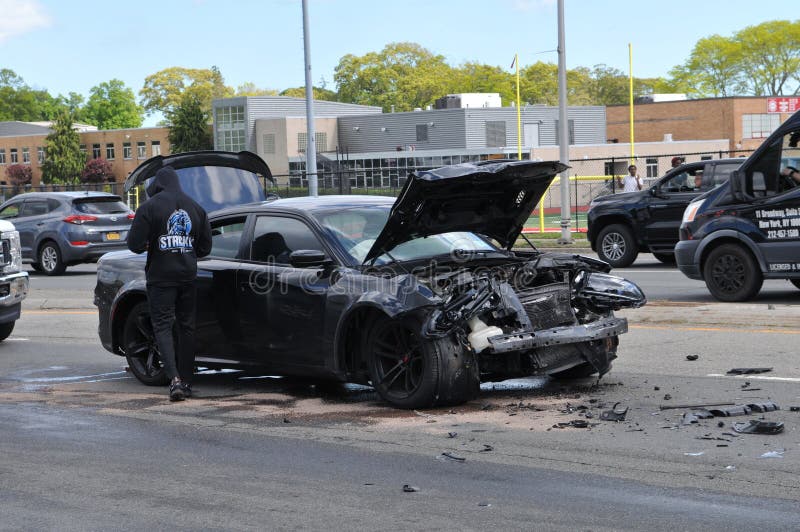
Simultaneously, law enforcement agencies in California faced the immediate physical dangers of automated driving neglect. According to reports from Electrek and the New York Post, a Tesla traveling along an active highway corridor slammed directly into a stationary California Highway Patrol vehicle near Fairfield. The violent impact sent two California Highway Patrol officers to the hospital with injuries and completely crumpled the emergency cruiser. Compounding public outrage, investigators confirmed that the Tesla driver openly admitted to falling completely asleep at the wheel while relying on automated software to navigate traffic.
These back-to-back incidents underscore the core operational limitations of Tesla Autopilot when operating at highway speeds. Despite persistent warnings that automated driving suites represent Level 2 driver assistance rather than autonomous navigation, motorists routinely bypass safeguard mechanisms. The combination of driver inattention and system failure in detecting stationary emergency vehicles has created a recurring pattern that safety advocates argue requires urgent structural interventions rather than simple consumer warnings.
How Fatal Collisions and Patrol Car Impacts Reopened Safety Scrutiny
Emergency responders and traffic safety analysts have expressed deepening frustration over collisions involving parked or stopped service vehicles on high-speed roadways. When the Fairfield collision occurred, emergency lights and reflective markings should have provided clear visual barriers. Yet, the sleeping driver drifted straight into the patrol cruiser. Such failures reflect an ongoing engineering hurdle where optical sensors and computational vision systems struggle to distinguish stopped obstacles against complex highway backgrounds at velocity.
The admission by the driver that he was unconscious behind the wheel exposes fundamental flaws in cabin monitoring systems. While modern steering wheels utilize torque resistance and internal cabin cameras track eye movements, real-world experience demonstrates that drivers continue to find workarounds. For injured officers and motorists caught in the path of multi-ton electric sedans traveling at highway velocities, the technological promises made around Tesla Autopilot have collided directly with physical roadways, leaving little margin for error when automation misjudges roadway topography.
Four Pivotal Fronts Defining the Autonomous Driving Debate
To fully grasp the magnitude of the current controversy, the intersecting legal disputes, criminal inquiries, and regulatory rollbacks must be examined as distinct pressure points reshaping the automotive industry.
Cross Median Fatal Crash Confirmation in Court Filings
The formal confirmation documented by Yahoo that automated systems were engaged during a deadly median crossover marks a watershed moment in ongoing product liability litigation. Historically, crash defenses have rested heavily on the premise that disengagements occur seconds before impact, shifting legal liability back toward human reaction time. By confirming system engagement during the lethal maneuver itself, plaintiffs gain substantial leverage in arguing that lane-keeping algorithms failed to detect physical road boundaries or improperly overrode necessary steering stabilization.
Sleeping Driver Patrol Car Collision in California
The collision in Fairfield documented by Electrek and the New York Post highlights the persistence of dangerous driver complacency. Two officers sustained significant trauma when their cruiser was struck, prompting fresh inquiries from state law enforcement into how driver monitoring features can permit a vehicle to travel continuously while its operator is fully asleep. When motorists feel comfortable enough to fall asleep behind the wheel while trusting Tesla Autopilot and FSD capabilities, the failure cannot merely be framed as individual negligence; it points directly to insufficient vehicle lockout mechanisms.
Federal Appeals Court Hands Tesla Arbitration Win Over Marketing Claims
In a major legal turn on the commercial front, a US appeals court blocked class-action lawsuits brought by consumers accusing the company of misleading them regarding self-driving capabilities. As Reuters reported, the appellate court ruled that vehicle purchase contracts explicitly mandate individual arbitration rather than massive consolidated class actions. This ruling grants the automaker a formidable corporate defense against sweeping consumer fraud trials, effectively requiring dissatisfied owners to pursue costly, isolated disputes behind closed doors rather than uniting under a single judicial banner.
The legal maneuver parallels intense judicial maneuvering seen in other high-profile courtrooms, where procedural technicalities reshape entire narratives, much like the unexpected evidentiary shifts detailed in our analysis of Katie Price and the 4 Major Revelations Rocking Her Bitter Courtroom Showdown. Even though plaintiffs argued that marketing campaigns for Tesla Autopilot misled purchasers about fully autonomous driving, the appellate ruling insulates the company from collective financial restitution on that specific front.
European Regulatory Crackdown Stalls Autonomous Rollout
While American courts handed down procedural protections, the global regulatory climate presented an entirely different reality across the Atlantic. According to CarBuzz, Tesla’s Full Self-Driving ambitions have ground to a halt in Europe following intensive regulatory and legal challenges. European transport authorities operate under strict United Nations Economic Commission for Europe (UNECE) frameworks, which mandate rigorous advance validation before driver-assist systems can execute autonomous maneuvers without immediate driver oversight.
The regulatory divergence underscores a fundamental philosophical clash between rapid beta testing on public roads and proactive administrative validation. European regulators refused to grant broad latitude to uncertified beta software, ultimately prompting the withdrawal of market rollout plans. This international retreat proves that regulatory barriers outside North America can effectively block deployment strategies that rely on consumer-led real-world testing.
Why the Arbitration Ruling Splits Consumers and Regulators
The appellate court decision reported by Reuters serves as a double-edged sword for the automotive sector. On one hand, enforcing mandatory arbitration protects corporate balance sheets from billions of dollars in consolidated consumer claims. By shutting down class-action certifications, the legal system prevents large groups of buyers from pooling resources to challenge long-standing statements regarding autonomous hardware readiness.
On the other hand, procedural legal shields do nothing to protect against government oversight or wrongful death liability. Regulatory agencies such as the National Highway Traffic Safety Administration (NHTSA) are not bound by private consumer arbitration clauses. Federal investigators possess subpoena powers to demand engineering telematics, crash logs, and internal communications, distinguishing between liability for crashes and consumer fraud claims tied to Tesla Autopilot software. While corporate attorneys celebrate the procedural victory in federal appeals court, regulatory probes into emergency vehicle crashes remain active and dangerous to corporate standing.
What Lies Ahead for Driver Monitoring and Public Safety
The convergence of a fatal crossover confirmation, injured patrol officers in California, European market retreats, and domestic legal battles marks a turning point for assisted driving technology. The illusion that Level 2 driver assistance can operate safely alongside passive human supervision is increasingly difficult to defend against empirical crash data. When an operator can fall asleep and cause traumatic bodily harm to first responders, voluntary safety guidelines prove insufficient.
In the coming months, federal regulators and state legislators will face mounting pressure to mandate uncompromised driver engagement standards. Visual eye-tracking cameras must become non-negotiable shutoffs rather than secondary alerts, and marketing language must accurately reflect automated limits to prevent fatal complacency. The ongoing evolution of Tesla Autopilot requires clearer driver monitoring and stricter operational guardrails if advanced automotive software is ever to achieve the safety transformation it long promised without compromising the safety of the public traveling beside it.