Albania Protests Escalate With 4 Major Turning Points Pushing Tirana Past The Boiling Point
Thousands have flooded the boulevards of Tirana as student-led demonstrations push civic unrest to a critical breaking point. Despite direct attacks on government ministries, Prime Minister Edi Rama remains steadfast against mounting demands for his immediate resignation.
The sudden eruption of the Albania protests has plunged the capital city of Tirana into its most severe civil confrontation in recent memory. Crowds of thousands have taken over broad boulevards, pushing against security cordons, throwing flares, and converging on the physical symbols of executive authority. What commenced as an impassioned student revolt against systemic institutional grievances has accelerated into an existential political test for the nation. As reported by BBC and Reuters, central ministries have faced direct physical assaults, shattering the veneer of civic tranquility in a country striving toward European Union integration.
Downtown Tirana now presents an atmosphere dense with chemical irritants, flashing emergency sirens, and continuous chants echoing off stone administrative façades. The demonstrations represent far more than routine political friction. They mark a critical juncture where generational anger over economic stagnation, educational neglect, and entrenched governance has spilled onto the streets, demanding nothing less than the fall of the executive leadership.
The Anatomy of a Boiling Point in Tirana
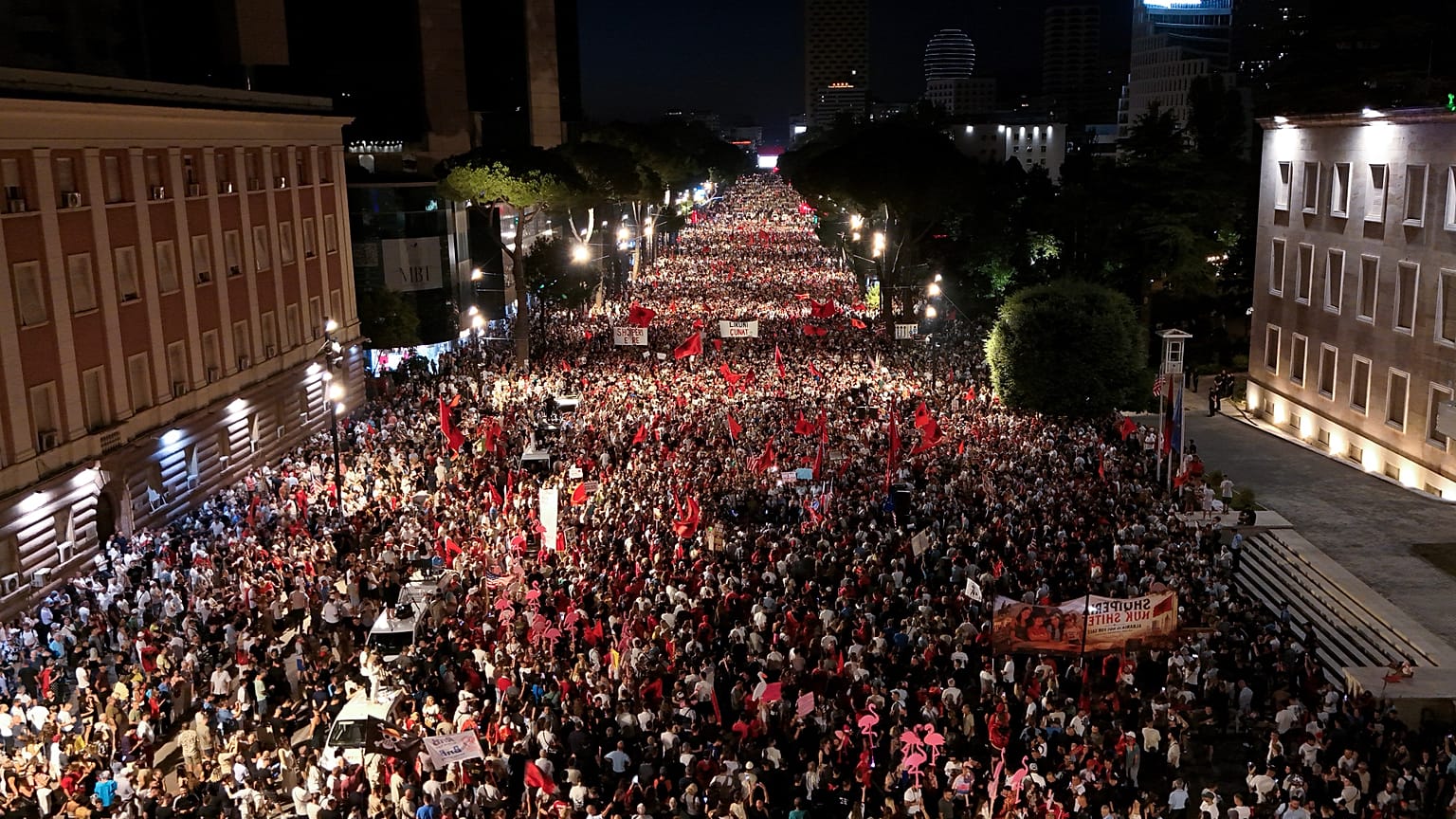
To comprehend the sheer velocity of the unrest, one must examine how quickly isolated grievances aggregated into a national mobilization. As reported by Reuters, the Albania protests swelled dramatically as thousands moved through the core arterial roadways of the capital, overwhelming local police detachments and converging upon the primary ministerial district. Protesters carried national banners alongside handwritten placards decrying official corruption and deteriorating public infrastructure.
Analysis published by Al Jazeera described the social landscape as reaching an inevitable boiling point. Long-standing frustrations surrounding governance under the Socialist Party, which has held power for over a decade, provided dry tinder for the current conflagration. When university organizers sounded the initial alarm regarding institutional stagnation and unresponsive administrators, their message resonated across socio-economic lines. Citizens who had remained silent during previous electoral cycles joined the youth-led marches, transforming localized campus discontent into a sweeping civic uprising that quickly spilled past municipal squares.
Why Youth Grievances Collided With State Authority
Student demonstrators have consistently formed the backbone and energetic engine of modern Balkan political mobilization, and Tirana has proven no exception. For years, independent civil watchdogs and academic observers have noted a widening gulf between Albania’s youthful demographic and an entrenched political class perceived as aloof and unaccountable. Inflationary pressures, surging living expenses in urban centers, and limited career prospects have prompted tens of thousands of young Albanians to emigrate toward Western Europe, creating a profound demographic strain at home.
What began as a localized student dispute transformed rapidly, turning the Albania protests into an outlet for broader national disillusionment. The university cohorts leading the rallies argued that cosmetic legislative reforms failed to resolve deep structural rot within the state apparatus. Rather than finding institutional pathways for dialogue, students encountered heavily fortified government perimeters and official statements that downplayed their economic precarity. That dynamic transformed academic assembly into direct confrontation, setting the stage for organized marches toward the executive ministries lining Boulevard Dëshmorët e Kombit.
Four Critical Flashpoints Defining the Tirana Unrest
The transition from peaceful civic assembly to acute state confrontation unfolded across several decisive stages. Understanding how the situation reached its current intensity requires examining four crucial flashpoints documented across international news dispatches.
Student Mobilization Across University Hubs and Public Squares
The initial momentum coalesced inside Tirana’s prominent higher education institutions, where student leaders coordinated walkouts and assemblies to denounce tuition structures, dilapidated campus facilities, and opaque university governance. As documented by The New York Times, these student groups rapidly organized into cohesive marching columns, sweeping from lecture halls into major public squares. The sheer speed of this initial mobilization caught municipal authorities flat-footed, demonstrating a level of digital and grassroots coordination that traditional political opposition parties had struggled to generate for years.
Attacks on Central Government Ministries
When demonstrations shifted toward physical state infrastructure, the Albania protests entered a more volatile phase. The BBC reported that student protesters actively attacked government ministries in Tirana, hurling flares, stones, and paint canisters against the entrances of state institutions. Demonstrators attempted to breach security perimeters guarding the Ministry of Interior and adjacent bureaucratic headquarters, signaling an escalation from vocal discontent to active disruption of the state apparatus. Riot units deployed defensive formations directly outside ministerial gates as smoke from pyrotechnics filled the surrounding corridors.
Escalating Street Clashes and Police Mobilization
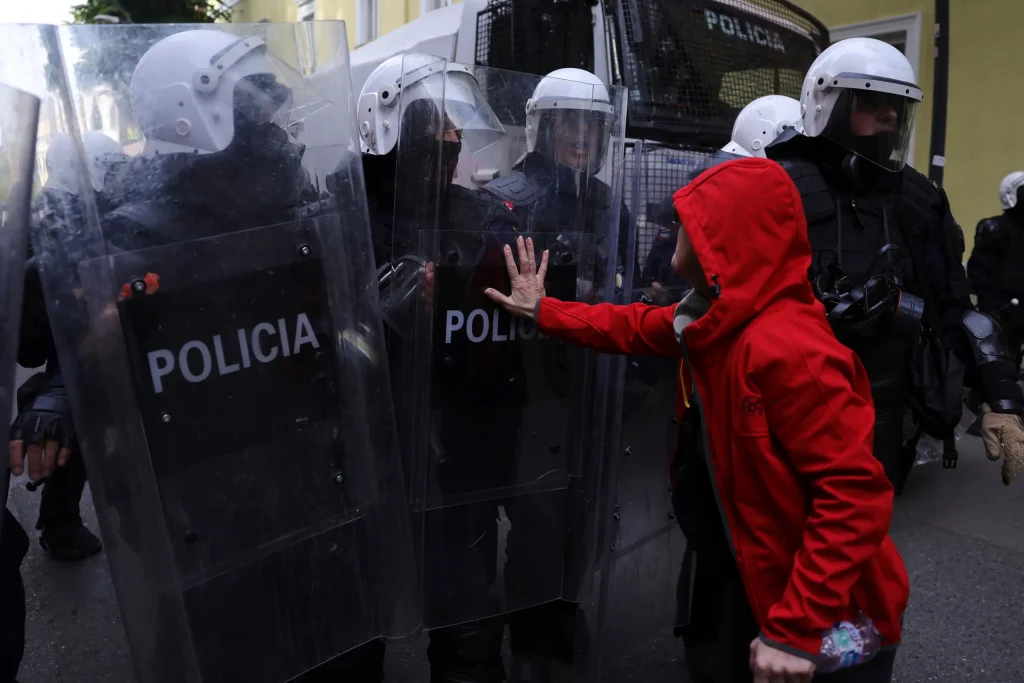
The physical confrontations intensified as specialized riot police deployed crowd-dispersal agents, including tear gas and water cannons, to drive demonstrators back from administrative compounds. Witnesses captured scenes of intense atmospheric chaos that appeared almost staged for cinema, evoking the technical precision explored in Practical special effects mechanics and 4 proven rules that forge breathtaking cinematic realism, yet the choking chemical smoke, shattering glass, and raw panic were unmistakably authentic. According to The New York Times, several clashes resulted in injuries among both protesters and law enforcement officers, with multiple demonstrators detained as baton-wielding units fought to secure key intersections across the capital.
The Growing Demand for Executive Resignation
By challenging the highest echelons of power, the Albania protests transformed from an educational policy dispute into a direct push for institutional regime change. Financial Times confirmed that calls have grown relentlessly for the prime minister’s outright resignation, with crowds chanting unified slogans outside the prime ministerial office. What began as an appeal for administrative transparency has hardened into an ultimatum: protesters view the current executive leadership as the fundamental barrier to democratic renewal, insisting that meaningful national reform cannot occur while the existing administration retains authority.
Edi Rama Holds the Line Amid Executive Defiance
Despite the physical siege of ministerial buildings and the swelling numbers on Tirana’s streets, the response from the highest level of government has been uncompromising. As reported by the Financial Times, Prime Minister Edi Rama has refused to resign, dismissing demands that he vacate his office under the pressure of street demonstrations. Rama, an imposing political figure who has dominated Albanian statecraft since 2013, framed the attacks on government buildings as an illegitimate assault on the rule of law orchestrated to destabilize public order.
Confronted by relentless unrest across downtown Tirana, the Albania protests met an unyielding wall from the Prime Minister’s office. Rama’s administration maintains that legitimate policy grievances must be resolved through established constitutional procedures and parliamentary debate rather than coercive street action. In official briefings and televised appearances, government representatives have drawn a sharp distinction between legitimate civic speech and violent attacks against public property, signaling that security forces will maintain an aggressive posture against any attempt to breach state institutions. This resolute stance has established a dangerous standoff, leaving demonstrators with little incentive to retreat while state forces dig in to protect central government headquarters.
The Fragile Path Forward for Albanian Civil Society
The confrontations playing out across Tirana hold profound ramifications that extend well beyond the immediate security perimeter around the capital’s ministries. Albania stands at an intricate diplomatic crossroads, actively engaged in technical accession negotiations with the European Union. Brussels and Western allies have long conditioned progress on demonstrable improvements in governance, rule of law, anti-corruption enforcement, and civic stability. Prolonged unrest accompanied by violent state repression or the destruction of public property risks complicating the country’s European trajectory.
For the thousands of young Albanians who took to the boulevards, the stakes are profoundly immediate. The demonstrations highlight a fundamental generational divide: an educated, digitally connected youth demographic that refuses to accept the slow pace of institutional modernization versus an executive administration determined to demonstrate absolute control over the instruments of power. Regardless of whether the street mobilizations subside in the coming days, the Albania protests have irrevocably altered the country’s political baseline, exposing deep fault lines that cannot be paved over with official dismissals or tear gas.