Tennis serve mechanics and 4 proven rules that unlock explosive court power
Unlocking devastating serve velocity requires mastering full-body kinetic whip physics rather than muscling the ball with raw arm strength. Explore the essential mechanics, structural checkpoints, and diagnostic drills that build effortless overhead speed.
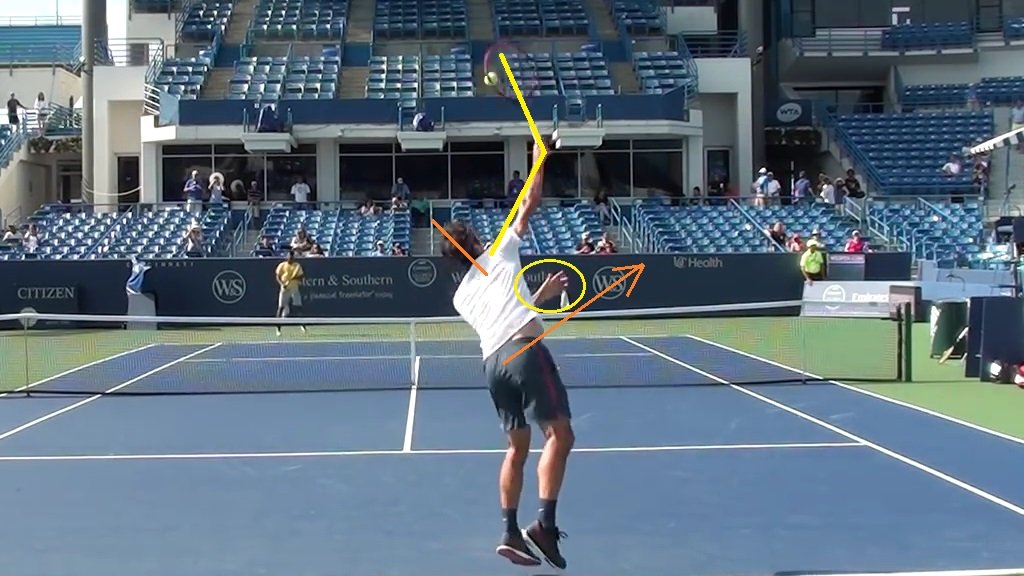
Understanding dynamic tennis serve mechanics separates recreational baseline pushers from devastating servers who control match tempo with effortless, lightning-quick kinetic energy. The serve is the only closed-loop closed-skill stroke in tennis. Nobody feeds you the ball. No incoming topspin alters your preparation, and no defensive scramble compromises your balance. You begin from absolute stillness, dictate the toss, and govern every degree of rotational velocity. Yet, the vast majority of club players treat the motion as an aggressive arm swat, flinging their shoulder joint into severe internal impingement while watching flat balls sail long or crash squarely into the net tape.
The Physics of Ballistic Kinetic Whipping
Elite delivery is never an isolated arm movement. It is a full-body elastic catapult orchestrated from the court surface upward. Biomechanists classify the delivery as an open kinetic chain movement where force transmits through sequential body segments, accelerating as it travels from larger, heavier structures to smaller, lighter distal extremities.
When your shoes dig into the asphalt, the ground pushes back with an equivalent magnitude through ground reaction forces. Compressing the lower body through rhythmic ankle dorsiflexion and knee flexion stores strain energy within the Achilles tendons and quadriceps. As you push upward, this force does not travel straight into the ball; it initiates an explosive rotational cascade.
The hips rotate forward first, dragging the torso behind them. Because the shoulder girdle lags behind the pelvic axis, the abdominal wall and thoracic musculature stretch violently like industrial bungee cords. This stretch-shortening cycle amplifies mechanical output far beyond what voluntary muscular contraction could ever generate alone. By the time energy climbs past the scapula, angular momentum has multiplied exponentially. The arm and racquet act simply as the final whip crack at the tail end of an unbroken chain.
The Anatomy of the Fluid Kinetic Chain
Analyzing elite competitors reveals that sound tennis serve mechanics demand strict segmental sequencing. If a single anatomical link fires out of order, the entire energetic continuum dissolves. The movement begins with stance stability, whether employing a platform stance with stationary feet or a pinpoint stance where the rear foot slides forward to meet the front. Both variations aim to maximize vertical thrust and align the pelvis diagonally to the baseline.
As the tossing arm rises, the dominant shoulder dips into the classical trophy position. Here, the torso coils roughly forty-five degrees away from the net, establishing vital torsional separation between hips and shoulders. The hitting elbow flexes near ninety degrees, staying comfortably level with or slightly below the shoulder plane to preserve subacromial space.
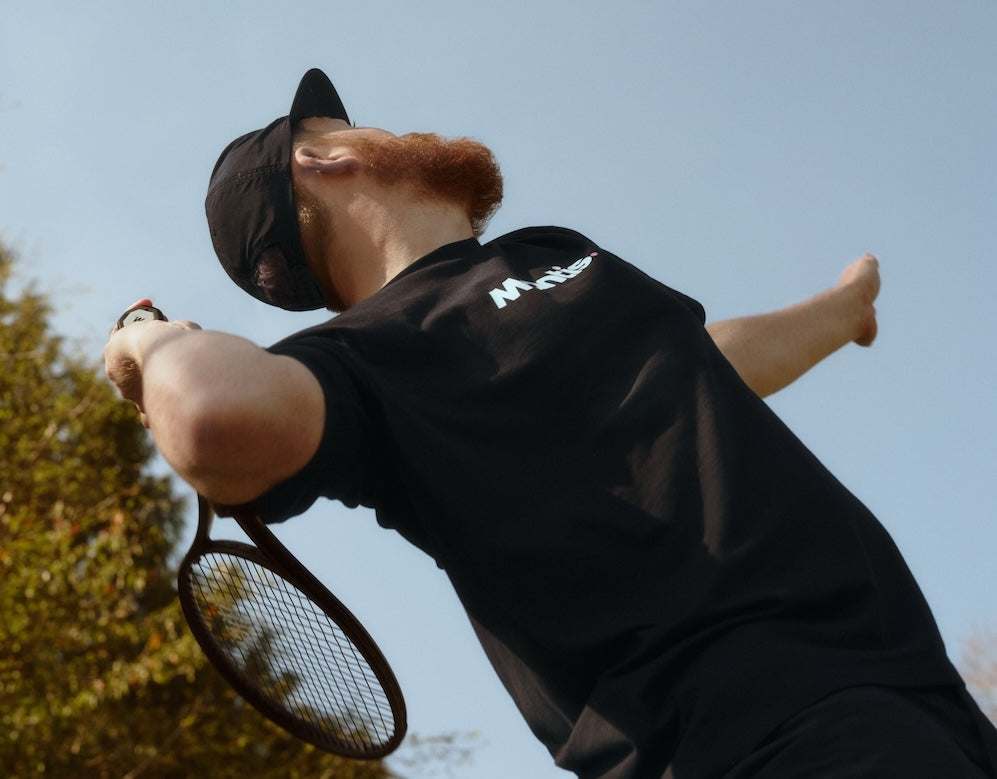
Then comes the most misunderstood element of the entire delivery: the racquet drop. Contrary to common intuition, the server never deliberately yanks the racquet head down their spine. Instead, as the legs drive upward and the chest unfurls toward the sky, inertial resistance causes the heavy racquet head to lag behind. The forearm supinates passively, dropping the frame edge-first into the deep slot behind the back.
When breaking down high-performance tennis serve mechanics, tracking the transition from this deep drop to terminal contact highlights a massive burst of internal shoulder rotation and forearm pronation. Energy surges through the arm, driving the racquet edge toward the target before the forearm twists inward at the final microsecond, presenting a flat string bed at peak impact height.
Four Proven Principles That Deliver Devastating Serve Velocity
Transforming raw physical effort into explosive, repeatable velocity requires mastering non-negotiable structural anchors throughout the delivery.
Drive Ground Reaction Forces Through Deep Knee Flexion
Vertical propulsion is the fundamental engine of ball speed. Without substantial knee flexion, the hips cannot clear an upward path, forcing the upper body to muscle the stroke through sheer lateral arm pull. Servers should aim for roughly fifty to seventy degrees of knee flexion during the coiling phase, synchronizing maximum dip with the peak of the ball toss. As the legs explode upward, both feet leave the court surface, driving the center of mass up and forward into the baseline court space. This vertical clearance steepens the downward trajectory angle over the net and guarantees that the stroke utilizes gravity rather than fighting it.
Maintain Radial Deviation During the Racquet Drop
A common flaw that ruins clean tennis serve mechanics is releasing wrist angle prematurely. To whip the racquet through the hitting zone, the wrist must maintain radial deviation—cocked slightly upward toward the thumb side—during the trophy stance and the initial drop. This preserves the primary lever arm. When the elbow drives upward, the forearm remains loose, allowing elastic strain to build across the flexor tendons. Uncocking the wrist early or squeezing the grip with white-knuckle intensity locks the joint, increases aerodynamic drag, and drains explosive power before the strings ever reach the ball.
Master Shoulder over Shoulder Cartwheel Rotation
Horizontal shoulder rotation yields flat, low-margin trajectories that frequently clip the net. Devastating serves rely instead on vertical cartwheeling rotation. As the legs fire, the non-dominant tossing arm pulls down and tucks tightly against the ribcage, functioning as a rotational brake that accelerates the hitting shoulder upward. The dominant shoulder vaults directly over the dipping tossing shoulder in a steep diagonal plane. This vertical axis tilt creates an elevated contact point, expands the visual hitting window over the net, and permits heavy brush for topspin-slice hybrids that dive violently into the service box.
Unleash Dynamic Forearm Pronation at Terminal Impact
True power does not come from flexing the wrist downward like a basketball player snapping a jump shot. Active wrist flexion under high load is the leading cause of chronic wrist tendinopathy among tennis players. Instead, velocity emerges from violent forearm pronation. As the racquet ascends edge-first, resembling an axe chop, the radius bone rotates over the ulna milliseconds before impact. This turns the strings square to the ball at the exact moment of collision, snapping through the strike and finishing with the string face pointing outward toward the dominant side fence. Precision timing here transforms basic tennis serve mechanics into a biomechanical slingshot that generates blinding speed without stressing delicate soft tissues.
Fatal Technical Traps That Sabotage Velocity and Shred Shoulders
Recreational courts are littered with chronic rotator cuff tears and medial epicondylitis, almost all traceable to faulty motor patterns. The most pervasive technical virus is the dreaded waiter’s tray error. Players open the racquet face toward the sky early during the backswing, dropping the elbow low and pushing the strings forward like a cafeteria server holding a platter. This eliminates both the stretch-shortening cycle and forearm pronation, turning an explosive ballistic whip into an agonizing, friction-heavy push.
Another disastrous fault is the erratic toss. A toss thrown too far behind the head forces lumbar hyperextension, while a toss falling too far forward robs the server of upward extension. In mechanical systems, timing governs output. Much like how undisciplined market execution unravels liquidity—a reality analyzed in our breakdown of order book mechanics and 4 proven rules that eliminate costly trade slippage—tiny micro-breakdowns in physical alignment compound into massive energetic failure at the point of execution. When toss timing drifts, the kinetic chain breaks, and the vulnerable shoulder joint absorbs the destructive braking forces that the core and legs failed to support.
Furthermore, gripping the handle with a tight eastern forehand grip cripples potential. Optimal tennis serve mechanics mandate a continental grip, positioning the base knuckle of the index finger on the second bevel of the racquet handle. The continental grip feels unnatural to beginners because the frame approaches the ball edge-first, but it is the sole structural orientation that unlocks natural forearm pronation and overhead fluidity.
Diagnostic Drills to Calibrate Muscle Memory and Power
Rebuilding a broken delivery requires stripping away the ball and isolating movement patterns until the nervous system automates proper sequencing. Relying on sheer willpower during high-stakes match play never works; the brain instinctively falls back on ingrained motor habits under stress.
Begin with the weighted sock drill. Place two tennis balls into a long athletic tube sock, grip the open end, and practice rhythmic service motions. If your movement contains hitches, premature wrist snaps, or waiter’s tray deviations, the heavy sock will immediately wrap around your neck or hit your shoulder blade. When you execute smooth kinetic transitions and maintain an edge-first trajectory, the sock flows in an uninterrupted, rhythmic loop around your body without snagging.
Transition next to contact point isolation drills against a chain-link fence or high wall. Position yourself at full vertical reach and practice pronating the racquet face flat against the fence surface from an edge-forward posture. Groundbreaking biomechanical studies published by the American Sports Medicine Institute reveal that high internal shoulder rotation velocity accounts for upwards of fifty percent of total racquet head speed at impact. Calibrating this exact pronation window establishes the neuromuscular pathways necessary to strike the ball at the absolute zenith of your reach.
Finally, implement progressive serving sets from the service line back to the baseline. Focus exclusively on loose grip pressure—roughly three out of ten on a tension scale—and deep knee coil. When you allow the kinetic chain to fire naturally without muscular interference, the racquet accelerates effortlessly. Refining your tennis serve mechanics is an ongoing discipline of subtraction: removing unnecessary tension, eliminating mechanical hitches, and letting pure rotational physics propel the ball past your opponent.