Freestyle swimming mechanics and 4 proven rules that unlock effortless aquatic speed
Mastering fluid movement requires abandoning terrestrial habits and working alongside water rather than fighting it. Uncover the hydrodynamic secrets and core-driven mechanics that turn raw effort into effortless aquatic speed.
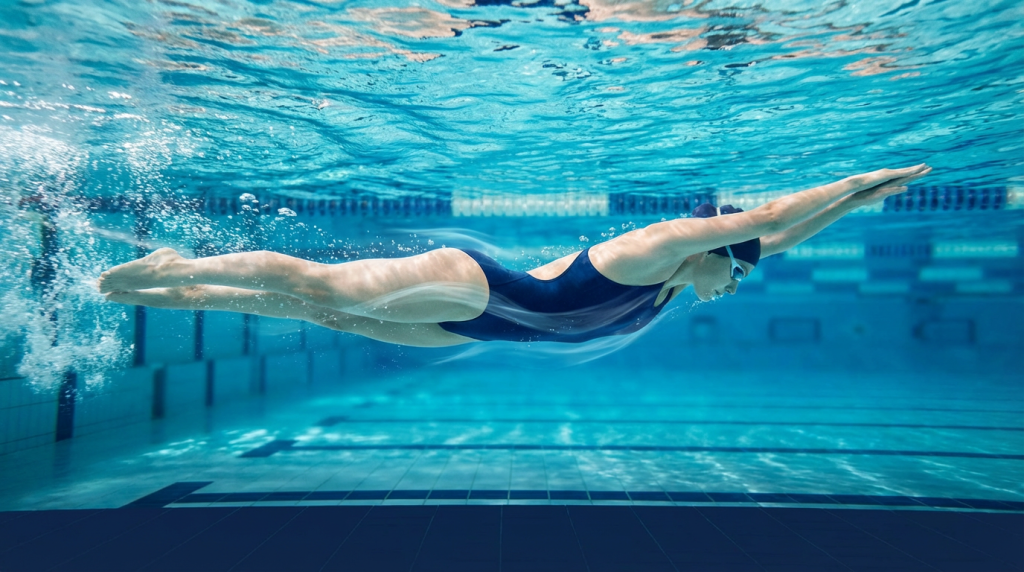
Mastering proper freestyle swimming mechanics requires unlearning almost every terrestrial instinct your nervous system developed on dry land. Humans are naturally configured to push against hard surfaces. When you place a sprinter on a tartan track, force application is direct, Newtonian, and vertical. In the water, however, that aggressive instinct collapses into immediate failure. Water is roughly 800 times denser than air and roughly 55 times more viscous, creating a medium that penalizes brute muscular force with punishing drag while rewarding streamlined geometry. When novice swimmers feel exhaustion creeping into their deltoids, their reflexive reaction is to thrash with higher stroke tempo. That response is a physiological trap. The water does not yield to panic; it simply piles up against your chest like a wet concrete wall. Understanding how the human frame maneuvers through a fluid medium is less about sheer cardiovascular grit and far more about fluid dynamics, neuromuscular timing, and mechanical conservation. Once you align your anatomy with the laws of aquatic flow, the water transforms from a suffocating barrier into a cooperative runway.
The Hidden Hydrodynamics of Human Water Displacement
Every swimmer faces two distinct categories of resistance as they cut across the pool: passive drag and active drag. Passive drag describes the hydrodynamic friction created by the body being towed through water in a static position. Active drag represents the turbulent resistance generated while the limbs and torso are in motion. Biomechanical testing reveals that active drag can be more than double passive drag if a swimmer allows their hips to sink or flails their feet excessively wide. When an athlete studies high-performance freestyle swimming mechanics, water stops being an adversary to punch and becomes a fluid landscape governed by Bernoulli’s principle and boundary layer physics.
As your hands enter the surface, they encounter laminar flow, the smooth parallel layering of fluid particles. The instant an errant fingertip slices sideways or an elbow drops too low, that smooth flow fractures into chaotic, swirling eddies known as turbulent flow. These micro-vortices act like physical suction cups, dragging your kinetic momentum backward and robbing you of precious forward velocity. According to extensive biomechanical swimming research archived by the National Institutes of Health, swimming economy hinges dramatically on minimizing active frontal surface area rather than attempting to generate massive peak propulsive power. The fastest human swimmers are not necessarily those who output the most raw wattage in a laboratory test; they are the individuals who generate the least turbulence while sustaining forward momentum.
The Deceptive Illusion of Muscular Power in Aquatic Environments
Watch an Olympian swim a hundred meters from the poolside deck, and the stroke appears almost lazy. The arms sweep forward with effortless cadence, the torso rocks like a metronome, and the water behind their feet barely foams. Yet underneath the surface, incredible amounts of torque are being channeled with surgical precision. The fundamental breakdown in recreational freestyle swimming mechanics occurs when swimmers attempt to pull their bodies forward using raw shoulder biceps and latissimus strength alone. This terrestrial pull mindset treats water like a rope you can haul toward your chest. But water is slippery and mobile; if you pull on it with a bent wrist and dropped elbow, the liquid simply slips around your forearm without generating purchase.
Elite swimming is not a pulling motion at all. It is an anchoring action. You plant your hand and forearm into a pocket of still, undisturbed water, lock that segment in space, and vault your entire torso past that anchor point using core rotation. Much like the foundational physics and misdirection broken down in stage illusion mechanics and 4 hidden principles that create impossible magic, efficient aquatic movement deceives the eye by hiding the real source of propulsion beneath effortless surface stillness. What appears to be an arm-driven sport is in truth an uninterrupted sequence of core-driven torque pulses, where the arms merely function as rigid oars pegged into fluid fulcrums.
Four Proven Principles That Transform Propulsion in the Pool
Transforming from a frantic thrasher into an effortless glider requires dismantling the stroke into distinct biomechanical phases. By isolating the kinetic chain from fingertips to toes, integrating these four principles into daily practice reconstructs fundamental freestyle swimming mechanics from the inside out.
Anchor the Forearm Early Through the High Elbow Catch
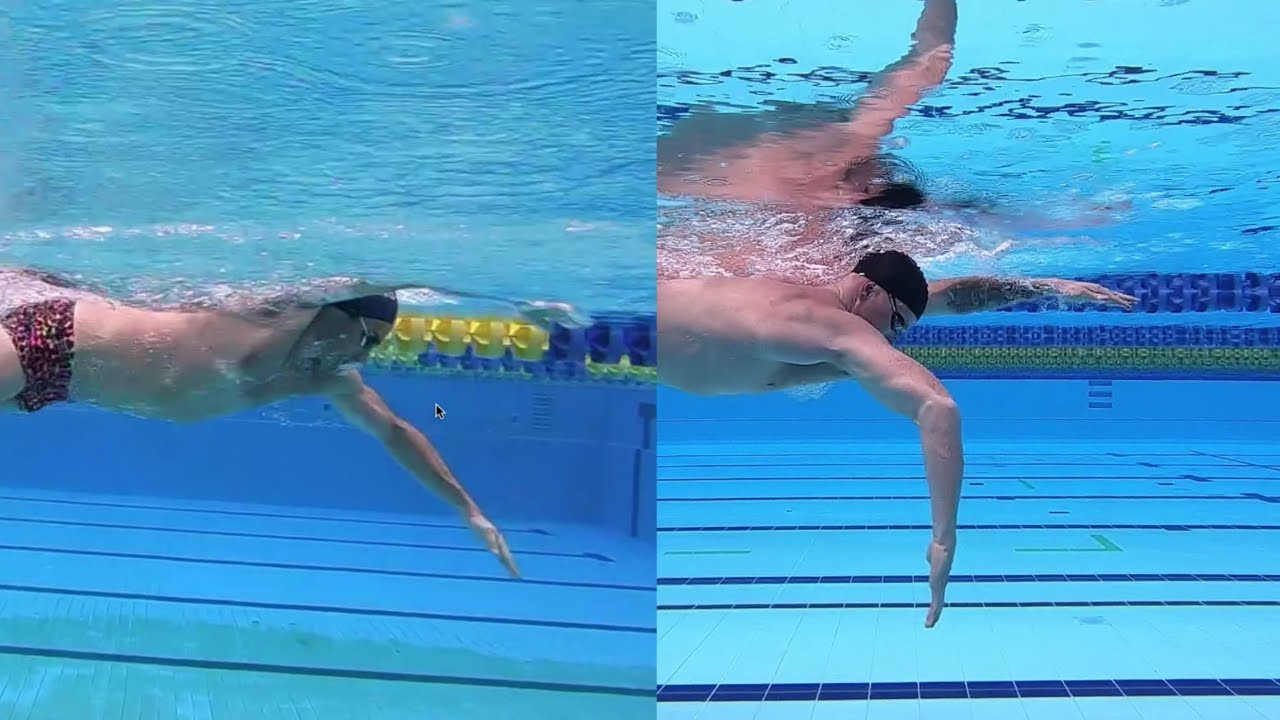
Recreational swimmers typically drop their elbows the moment their hands plunge below the surface. This anatomical flaw drops the upper arm into a horizontal plane, pointing the palm toward the bottom of the pool rather than toward the wall behind them. Pressing downward lifts the chest, which promptly drives the hips and legs downward into heavy, drag-inducing deep water. To fix this, you must master the early vertical forearm catch. As the hand enters the water aligned between your ear and shoulder, keep your elbow high near the surface while hinging purely from the elbow joint. This action points the fingertips directly toward the pool basin while the palm and forearm form a wide, vertical paddle facing directly backward. Rather than slicing through water like a knife, this vertical paddle creates a broad surface area that traps a dense pocket of fluid, establishing an immovable anchor against which your core can leverage forward progress.
Drive Rotational Energy from Core Torque Instead of Shoulder Torque
Paddling flat on your belly forces your deltoids and rotator cuffs to handle the entire workload of propulsion, leading inevitably to rapid fatigue and painful impingement syndromes. Sustainable freestyle swimming mechanics rely on rotational inertia transferring kinetic energy from the pelvis to the fingertips. The human body is designed to generate exponential power through rotational cross-slings, specifically the thoracolumbar fascia connecting the opposite latissimus dorsi and gluteal complexes. As your right hand enters the catch phase, your right hip should rotate sharply downward along your longitudinal axis, driven by the oblique muscles and hip flexors. This rotational snap does not merely stabilize your line; it physically slingshots the trailing left shoulder forward for recovery while driving the catching arm into solid water. Swimming is essentially an ongoing alternating roll of roughly 30 to 45 degrees to each side, transforming your torso from a flat, high-drag raft into a sharp, low-drag hull.
Maintain Axial Posture to Minimize Wave and Form Drag
The easiest way to swim faster is not to pull harder, but to remove invisible brakes. The greatest brake in swimming is poor spinal alignment. The human body behaves like a seesaw balanced on the center of buoyancy located in the lungs. When you lift your head to see where you are going, your heavy cranium elevates above the water line, causing your dense, muscular legs to sink like an anchor. This tilt exposes your thighs, knees, and torso to immense form drag, creating a wide aerodynamic footprint that demands enormous caloric expenditure to drag through the lane. You must maintain a strict neutral spine, tucking the chin slightly so the crown of the head presses gently downward into the water. This downward head pressure levers the hips upward toward the surface. When your heels break the surface tension without excessive knee bend, your body planes effortlessly, carving a narrow corridor through the water that requires minimal energy to sustain.
Synchronize Rhythmic Inhalation Without Lifting the Cranium
Breathing is the single most disruptive moment in any swimming stroke cycle. When the oxygen debt rises, panic triggers a terrestrial urge to raise the entire face out of the water to inhale. Doing so immediately halts hip rotation, drops the lead arm, and drops the lower body into dead water. Masterful breathing is an act of subtle head rotation rather than elevation. As your body rolls along its longitudinal axis toward the breathing side, your head should rotate just enough to nestle your lower eye and cheek in the bow wave created by the crown of your head. This forward movement displaces water and creates a natural pocket of air right beside your mouth, known hydrodynamically as the bow wave trough. By inhaling inside this air pocket with only one goggle lens out of the water, you protect your body line, preserve momentum, and avoid the devastating deceleration that plagues amateur swimmers.
Neurological Calibration and Drills for Longterm Fluid Mastery
Theoretical knowledge of hydrodynamics means nothing if your central nervous system cannot sense fluid resistance. Water changes density and turbulence dynamically during every stroke cycle, requiring fine motor micro-adjustments that terrestrial movement patterns never demand. This sensory acuity, colloquially termed the feel for the water, is governed by cutaneous mechanoreceptors located in your palms, fingertips, and the skin of your forearms.
To develop this awareness, standard continuous laps must be replaced with deliberate neuromuscular drills. Front sculling drills, where you sweep your forearms back and forth in figure-eight patterns without kicking, teach your motor cortex to hold pressure against shifting fluid currents. Catch-up drills, where one hand remains fully extended in front of the body until the recovering hand taps it, force you to maintain hydrodynamic alignment while executing a powerful rotational catch. Swimming with closed fists or wearing fingertip paddles strips away false sensory feedback, forcing the brain to find leverage through proper forearm orientation rather than relying on wrist flexion.
Recalibrating sensory feedback is the only reliable way to cement efficient freestyle swimming mechanics over thousands of meters. When you step onto the pool deck, discard the instinct to overpower the water. Water is a non-compressible fluid that rewards patience, posture, and rotational precision. By treating the pool as a study in streamline physics rather than a test of raw muscular endurance, you unlock a state of aquatic grace where every stroke yields effortless speed, supreme conservation of energy, and absolute control.