Tommy Paul Eyes 3 Proven Strategic Moves to Dismantle Daniil Medvedev in Shanghai
Ahead of their high-stakes Rolex Shanghai Masters quarterfinal clash, Tommy Paul has unveiled a bold strategic blueprint designed to unravel Daniil Medvedev on Friday. Here is an inside look at the tactical adjustments, head-to-head dynamics, and tournament stakes defining this marquee matchup.
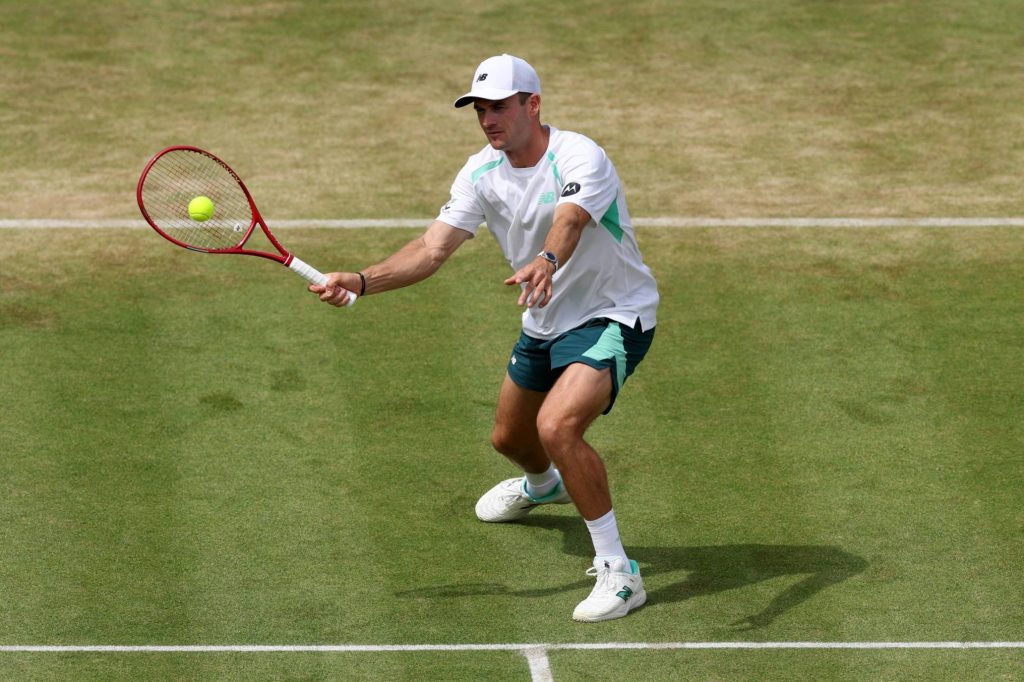
When American contender Tommy Paul stepped into the press spotlight ahead of Friday, his tactical intentions for the Rolex Shanghai Masters quarterfinals were unmistakable. Standing on the opposite side of the net at the Qizhong Forest Sports City Arena is one of the most stubborn defensive fortresses in modern tennis. Daniil Medvedev has long treated the fast courts of Shanghai as a second home, but the American number three enters this encounter armed with an aggressive, calculated blueprint engineered to disrupt the former world number one.
Friday at the ATP Shanghai Masters showcases the quarterfinals from the bottom half of the draw, featuring two distinct clashes of stylistic philosophy. As highlighted by Last Word On Sports, the matchup pits Medvedev’s deep-court counterpunching against an opponent who thrives on forward momentum, athletic footwork, and transition play. With a semifinal berth on the line, the clash serves as a litmus test for whether disciplined attacking tennis can reliably dismantle the sport’s premier defensive anchor on a slick Asian hard court.
The Sixth Chapter in an Intense Hard Court Rivalry
Friday marks the sixth career encounter between the two competitors, establishing a rich catalog of strategic chess matches. According to match previews from The Grandstand, Daniil Medvedev holds the historical edge in their head-to-head record, having frequently blunted the American’s aggressive surges in previous clashes. Yet recent installments have displayed tighter margins, with the American proving capable of pulling Medvedev outside his comfort zone through relentless tempo changes.
For Tommy Paul, who has steadily solidified his position among the world’s elite throughout the 2026 campaign, this quarterfinal represents far more than an opportunity to improve a head-to-head metric. A victory over Medvedev on a premier stage validates the evolution of his tactical identity. Rather than engaging in 30-shot wars of attrition against an opponent who feasts on standard baseline exchanges, the American team spent the lead-up to Friday analyzing microscopic flaws in the Russian’s fortress.
Medvedev enters the contest riding the wave of high-caliber momentum. Coverage from Tennis.com emphasizes that the Russian has consistently navigated tight scorelines in Shanghai, utilizing his laser-like flat backhand and impenetrable wingspan to frustrate opponents who overhit under pressure. To change that narrative, Paul must execute a clean match free from impatience or technical lapses.
Medvedev and His Remarkable Shanghai Masters Dominance
To appreciate the scale of the challenge awaiting the American, one must examine Medvedev’s storied history at this tournament. As officially reported by the ATP Tour, Medvedev secured his quarterfinal ticket by dispatching longtime rival Stefanos Tsitsipas on Wednesday. That clinical victory propelled Medvedev into the Shanghai quarterfinals for the fourth time across his past five appearances, underscoring what the tour rightly describes as a genuine Shanghai love affair.
The conditions at Qizhong Arena align seamlessly with Medvedev’s unique baseline geometry. The court surface allows his low, skidding groundstrokes to slide through without bouncing into the optimal strike zone of power baseliners. Furthermore, the expansive run-off space behind the baseline enables Medvedev to retreat nearly five meters back to receive serve, granting him extra fractions of a second to read incoming deliveries and return with devastating depth.
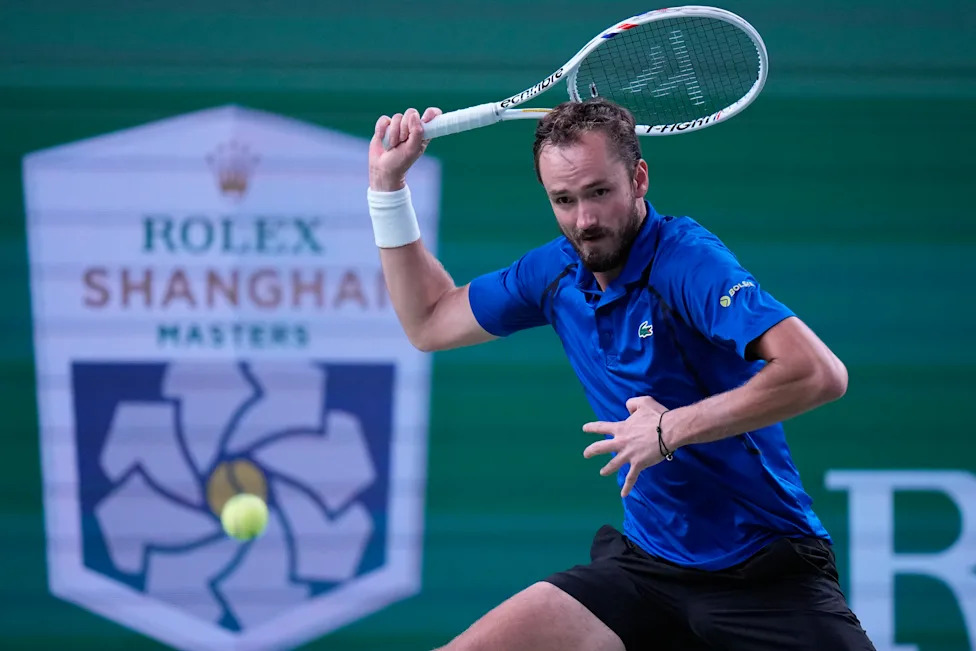
By neutralizing Tsitsipas with relentless depth and high-percentage serving on Wednesday, Medvedev demonstrated that his form in China remains near its peak. Opponents who attempt to blast through him from the baseline regularly commit upwards of forty unforced errors, suffocated by the lack of free points. Breaking through requires tactical disruption of the highest order, an assignment that Paul has studied exhaustively.
Breaking Down the High Stakes Game Plan for Friday
Speaking to international media ahead of the match, as documented by Yahoo Sports, Tommy Paul revealed that unraveling Medvedev demands total commitment to a specific and unforgiving tactical plan. The American recognized that beating Medvedev does not happen by accident or through raw physical endurance. It requires structural dismantling across three specific phases of play.
Disrupting Deep Court Positioning with Direct Net Approaches
The cornerstone of the strategy relies on punishing Medvedev’s extreme return stance. Because the Russian sets up camp adjacent to the line judges on return of serve, standard baseline groundstrokes give him ample time to reset the point. The countermeasure involves aggressive serve-and-volley maneuvers, combined with sneaky chip-and-charge tactics on short second balls.
By shortening the time between ball strikes, the American removes Medvedev’s primary defensive asset: lateral recovery time. Executing this pattern forces Tommy Paul to accept higher risk on his approach shots, prioritizing crisp volley placement over blistering pace. If he can force Medvedev to run forward rather than side to side, the spatial dynamics immediately swing in Paul’s favor.
Attacking Short Angles to Neutralize the Flat Two Handed Backhand
Medvedev’s two-handed backhand is arguably the most reliable stroke on the ATP Tour when hit from waist height behind the baseline. Attempting to trade backhands through the middle of the court is tactical suicide. The strategic alternative is utilizing heavy topspin cross-court forehands that bounce high and drag Medvedev off the doubles alley, followed immediately by drop shots or sharply angled drive volleys.
Last Word On Sports analysts point out that Medvedev’s elongated frame makes low, dipping balls in the front court far more awkward to manage than high-velocity baseline drives. Dragging him into the forecourt strips away his comfort zone, forcing him to create passing shots off balance while moving downhill.
Protecting First Serves and Dictating Early Baseline Exchanges
No tactical plan against Medvedev holds water without exceptional first-serve performance. The American must maintain a high first-serve percentage to prevent Medvedev from establishing baseline dominance on return games. Kick serves out wide to the backhand side will pull Medvedev away from the court center, opening up immediate down-the-line winners into the vacated space.
According to tactical insights shared across tennis analytical circles, players who allow Medvedev to dictate points beyond five shots see their win probability plummet below thirty percent. Shortening points, taking the ball on the rise, and refusing to concede territory inside the baseline form the essential triad of Paul’s blueprint.
Navigating Fast Conditions and Intense Late Season Pressure
As the ATP calendar races toward its climax in Turin, the physical and psychological toll of ten consecutive months of global competition begins to manifest. In elite sports as in major enterprise strategy, the difference between triumph and defeat frequently hinges on structural discipline under stress. When large corporate shifts occur, like when Varonis Clinches 6.3 Billion Dollar Buyout with 3 Critical Shocks to Enterprise Security, leadership teams must execute highly sophisticated operational maneuvers without flinching. The exact same mental fortitude is demanded of top-tier tennis professionals operating under the glare of center-court lights in Shanghai.
Tennis analysts evaluating Tommy Paul note that his athletic transition game will be tested by the court speed and heavy humidity typical of night sessions in Shanghai. Fatigue alters shot selection, and against a player of Medvedev’s defensive prowess, a single sloppy decision can unravel an entire set of disciplined execution.
Both competitors are also acutely aware of the broader stakes. A deep run at the Rolex Shanghai Masters offers valuable ranking points that dictate seedings for the upcoming Paris Masters and the season-ending championships. The psychological battle between Medvedev’s icy composure and Paul’s explosive competitive energy will be just as decisive as the technical execution on break points.
The Bigger Picture for the Autumn Hard Court Swing
The Rolex Shanghai Masters has consistently acted as a launchpad for players seeking to make a definitive leap into the sport’s topmost tier. For Medvedev, capturing another title in China would reaffirm his status as the undisputed master of slick Asian hard courts. For his opponent, a quarterfinal triumph would represent one of the most significant scalp collections of his career.
Predicting the outcome requires weighing Medvedev’s historical comfort on these grounds against the clarity of the American’s tactical preparation. If the American serves at a high clip and demonstrates the discipline required to finish points at the net, an upset is well within reach. Conversely, should the first-serve percentage dip, Medvedev’s counterpunching engine will inevitably grind down resistance.
When the umpire calls play on Friday, theoretical plans give way to physical execution. American tennis fans and global observers alike will be watching closely to see if Tommy Paul can convert a meticulously designed game plan into a landmark semifinal berth at one of the tour’s most prestigious Masters 1000 tournaments.