Option pricing mechanics and 4 proven rules that prevent devastating trading losses
Financial derivatives do not follow the simple directional logic of ordinary shares. Learn the deep mathematical forces governing option contracts and four essential rules to safeguard your trades against hidden volatility traps.
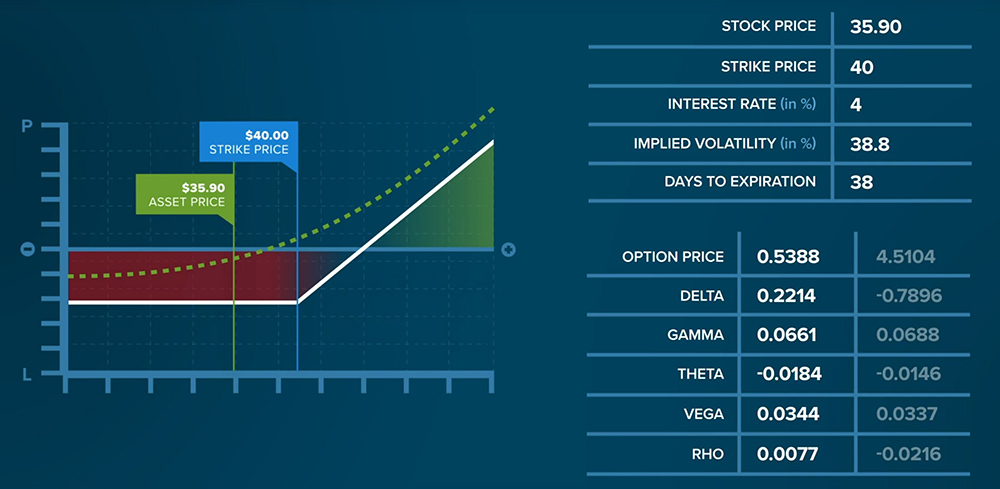
Mastering option pricing mechanics separates institutional risk managers from casual speculators who inevitably watch their capital evaporate during sudden market volatility. Derivative contracts do not behave like common shares. A common stock represents proportional equity in an enterprise, oscillating around corporate balance sheets, operational earnings, and macroeconomic conditions. When you hold an equity share, your financial outcome remains strictly linear: if the share price moves up two dollars, your position gains two dollars. An option contract, by contrast, is a dynamic derivative bound by rigid expiration dates, non-linear pricing paths, and multifaceted probability engines. Many retail traders purchase call options expecting an explosive rally, only to experience a confounding paradox: the underlying stock rises, yet the option contract loses significant value. This disconnect is not broker trickery; it is the mathematical consequence of derivatives operating under exact quantitative laws.
The Hidden Machinery Beneath Contract Valuations
A comprehensive grasp of option pricing mechanics requires dissecting an option into its two constitutive components: intrinsic and extrinsic value. Intrinsic value represents pure, demonstrable moneyness. For a call option, intrinsic value is the spot price of the underlying equity minus the strike price. For a put option, it is the strike price minus the spot asset value. If an option possesses no immediate economic value upon hypothetical instant exercise, its intrinsic value is precisely zero. It can never fall below zero because an option holder holds the privilege, but never the obligation, to execute the transaction.
Extrinsic value constitutes everything else. Often termed time value, extrinsic worth is actually a composite premium representing uncertainty, prospective volatility, and the temporal runway remaining before contract expiration. When an option trades out of the money, its market price consists entirely of extrinsic value. This premium fluctuates continuously based on statistical expectation. Market participants are not merely betting on whether an asset will cross a target strike; they are purchasing statistical standard deviations of price variance over a defined calendar duration.
As the expiration date approaches, extrinsic value faces relentless erosion. The contract converts statistical possibilities into binary reality. Every trading day that passes without a proportional move in the underlying asset siphons away extrinsic value. If the underlying security moves sideways, the contract loses worth through temporal atrophy alone. Understanding this internal friction transforms how an investor approaches capital allocation.
The Mathematical Engine That Decides Contract Worth
The breakthrough that revolutionized modern option pricing mechanics emerged when Fischer Black, Myron Scholes, and Robert Merton solved the partial differential equation for contingent claims. Their theoretical architecture, recognized in the landmark Royal Swedish Academy of Sciences analysis of derivative valuation, provided a closed-form formula to price European-style options by constructing a continuously rebalanced, risk-neutral hedging portfolio.
The core formulation requires five observable inputs: the current spot price of the asset, the strike price specified by the contract, the time remaining until expiration, the prevailing risk-free interest rate, and the dividends expected during the period. Yet the model requires a sixth, unobservable parameter: future volatility. Because historical price swings cannot guarantee future market turbulence, market makers invert the formula. They input the prevailing market transaction price of the contract and mathematically solve backward for volatility. This derived figure is implied volatility.
Implied volatility represents the market consensus regarding the standard deviation of annualized asset returns over the lifespan of the contract. When market uncertainty explodes, implied volatility surges, inflating extrinsic premiums across all strikes. Conversely, when uncertainty subsides following a corporate earnings release or central bank rate announcement, implied volatility collapses. Without accounting for how implied volatility skews market expectations, foundational option pricing mechanics break down under extreme market stress, leaving uninformed traders holding rapidly deflating contracts despite accurate directional predictions.
Four Proven Rules to Navigate Volatility and Capital Decay
Translating theoretical option pricing mechanics into resilient execution requires an operating doctrine that accounts for dynamic market shifts. Derivative traders do not fail because they miscalculate arithmetic; they fail because they treat non-linear risk profiles as simple directional wagers. These four foundational rules provide an analytical framework designed to keep trading capital intact.
Respect Delta and Gamma Velocity Before Leverage Accelerates
Delta gauges the sensitivity of an option price relative to a one-dollar shift in the underlying asset. A delta of 0.50 implies that a one-dollar climb in the stock will yield a fifty-cent gain in the option premium. Concurrently, delta serves as an informal proxy for the probability that the contract will expire in the money. However, delta is not static; it moves along an S-curve governed by Gamma.
Gamma measures the rate of change of Delta for every one-dollar change in the underlying asset. When an option sits near the money close to expiration, Gamma reaches extreme levels. A tiny movement in the stock produces massive swings in Delta, transforming a mild position into an aggressive, unhedged directional exposure in minutes. Savvy risk managers establish strict positional guardrails on portfolio Gamma to prevent exponential directional acceleration from blowing through risk budgets.
Quantify Vega Exposure Against Structural Volatility Regimes
Vega calculates an option contract sensitivity to a one-percentage-point shift in implied volatility. Out-of-the-money contracts with distant expiration horizons carry elevated Vega. When broad indices decline rapidly, implied volatility generally surges, expanding option premiums even when directional movements run counter to a trade.
Conversely, buying options immediately before major public disclosures is an asymmetric risk trap. Once an anticipated catalyst passes, implied volatility plunges instantaneously. This phenomenon, known as volatility crush, strips massive value from long call and put contracts regardless of which direction the stock jumps. Long volatility positions must be established during low-volatility regimes when extrinsic value is cheap, rather than during frantic spikes when premium costs are historically stretched.
Manage Theta Decay Curve Steepening in Final Weeks
Theta quantifies the daily decay rate of an option contract extrinsic value. Theta is non-linear; it does not decay at a steady daily drip. Instead, it follows a steepening exponential decay curve. An option with ninety days until expiration experiences negligible daily decay. However, between forty-five and thirty days before expiration, the temporal decay slope steepens dramatically.
During the final fourteen trading days, Theta decay becomes violent. Out-of-the-money options lose their remaining extrinsic value at an accelerating velocity that requires immense directional momentum to overcome. Professional traders exploit this curve by acting as net premium sellers during accelerated decay windows, or by buying contracts with ample calendar duration to insulate their directional hypotheses from destructive temporal erosion.
Model Tail Risk and Skew Instead of Symmetrical Curves
Traditional financial formulas assume stock price variations follow a symmetrical log-normal distribution. Market reality behaves quite differently. Ever since historic liquidity shocks rattled international exchanges, option markets exhibit pronounced volatility skew, often referred to as the volatility smile. Out-of-the-money downside puts consistently trade at higher implied volatility values than equidistant upside calls.
When panic grips institutional asset allocators, practical option pricing mechanics abandon symmetrical Gaussian assumptions to price in downside catastrophe. Investors aggressively bid for out-of-the-money downside protection, driving put premiums to substantial markups. Failing to account for structural skew leads traders to overpay for crash protection or underprice the extreme risk of selling naked downside exposure.
Synthesizing The Greeks Into Systematic Portfolio Defense
Protecting capital across complex market cycles demands treating an options book as an integrated thermodynamic system. Each individual Greek metric—Delta, Gamma, Vega, Theta, and Rho—represents a distinct vector of risk that reacts dynamically with every tick of the market clock. A trader holding long calls might celebrate an upward price move, only to realize that adverse Vega contraction and aggressive Theta decay neutralized the Delta gains entirely.
Disciplined derivative management requires continuous stress testing against combined adverse scenarios. What occurs if the underlying asset falls three percent while implied volatility contracts by four percentage points? How does the portfolio behave if an asset moves sideways across twenty trading sessions? Just as understanding Freestyle swimming mechanics and 4 proven rules that create effortless water propulsion requires minimizing turbulent drag rather than flailing with erratic power, mastering derivatives requires eliminating structural premium friction rather than blindly swinging for directional home runs.
Institutions survive multi-generational downturns not through supernatural predictive accuracy, but by constructing structural hedges where contract decay pays for tail-risk protection. By aligning trade structure with implied volatility regimes, monitoring Gamma cliffs near expiration, and acknowledging non-linear market distributions, an investor stops gambling on market direction. Ultimately, a deep mastery of option pricing mechanics transforms dynamic derivatives from hazardous gambles into precision tools for capital longevity.