Freestyle swimming mechanics and 4 proven rules that create effortless water propulsion
Water resists movement eight hundred times more than air, punishing brute force while rewarding streamline precision. Discover how refining your biomechanical alignment and kinetic timing transforms exhausting struggle into frictionless aquatic power.
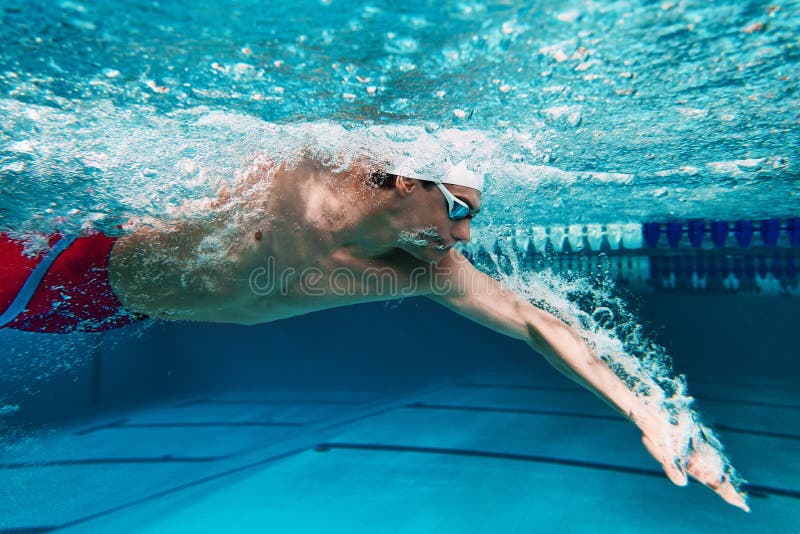
Mastering freestyle swimming mechanics requires understanding a brutal physical reality: water is roughly eight hundred times denser than air. When an athlete attempts to muscle their way across an Olympic pool through raw exertion, fluid dynamics pushes back with equal and unforgiving fury. The aquatic medium does not yield to desperate thrashing. Instead, it forms chaotic vortices, separates boundary layers, and traps inefficient swimmers behind an invisible wall of frontal resistance. Real velocity in the water is rarely born from sheer shoulder strength. It is an engineering victory of alignment, rotational leverage, and hydrodynamic slip.
Swimmers who glide across the surface with apparent ease are not immune to fatigue, nor possess supernatural buoyancy. They simply understand that moving forward in water is fundamentally an exercise in minimizing surface area rather than generating uncontrolled horsepower. Every millimeter that your hips sink beneath the surface multiplies friction exponentially. Every degree your torso snakes laterally diverts kinetic energy away from straight-line progress. By treating the human body as an articulating nautical vessel rather than a terrestrial machine, you unlock a state of movement where every pull delivers genuine, unencumbered acceleration.
The Physics of Moving Through Water Without Wasting Energy
Human locomotion on land relies on rigid ground reaction forces, allowing runners to plant their feet against an immovable substrate. In swimming, the operational medium is unstable, fluid, and relentlessly shifting. To produce forward momentum, you must create stationary pockets of water against which your hands and forearms can push, while simultaneously shaping the rest of your body into a needle-like hull that pierces oncoming currents with minimal wake.
Hydrodynamic drag comes in three primary flavors: frontal pressure drag, skin friction, and wave-making drag. Frontal pressure drag is your greatest adversary. When your body tilts even slightly upward, your chest acts as a plow, compressing water in front while leaving low-pressure eddies behind your legs that suck you backward. Skin friction occurs along the surface of your skin and suit, which is minor compared to pressure drag, while wave drag manifests whenever you breach the boundary between water and air. When coaches analyze elite freestyle swimming mechanics, they do not look for sheer brute force; they look for the absence of turbulence around the crown of the head and hips. True economy in the pool comes from sliding through the smallest possible underwater tunnel created by your leading profile.
Why Most Swimmers Fight the Water Instead of Working With It
The survival instincts wired into human neurobiology work directly against effective aquatic performance. When placed face down in deep water, the brain reflexively urges you to lift your skull to locate the horizon and guard breathing pathways. The moment your cervical spine extends to elevate your chin, your lower body behaves like a pendulum: the hips drop, the knees bend, and your legs submerge into dense, slow-moving layers of the water column. You become an aquatic brake pad, generating towering walls of drag that exhaust your cardiovascular system within fifty meters.
Another catastrophic error is over-pulling with a dropped elbow. Novice swimmers often imagine their arms acting as paddle wheels on an old steamboat, pulling with a straight arm beneath the rib cage. In doing so, the hand slips through the water like a knife through butter, slipping out of position without capturing solid water mass. The shoulder rotator cuff takes on the entire mechanical burden, leading to chronic impingement, acute tendon inflammation, and miserable propulsion. Fighting the medium wastes precious glycogen stores on noise and spray rather than forward displacement.
Four Proven Rules That Transform Water Resistance Into Explosive Speed
Rebuilding your movement pattern requires dissecting freestyle swimming mechanics into distinct biomechanical phases that work in harmonious synchrony. Each element feeds the next, transforming what feels like disjointed limb movements into a rhythmic, unstoppable pulse of perpetual motion.
Establish a Piercing Neutral Head Spine Alignment
Your head represents nearly ten percent of your total body mass, serving as the physical rudder of your entire aquatic silhouette. To maintain high body trim, your gaze must remain pinned directly toward the floor of the basin, keeping the back of the neck extended and flat. The water line should break naturally across the crown of the skull, creating a subtle bow wave that lowers the water pressure around your mouth when you turn to breathe. By resting your head weight down into the natural buoyancy of your chest cavity—an effect swimming theorists call pressing your buoy—your hips, thighs, and ankles will immediately elevate toward the surface without demanding frantic kicking effort.
Anchor the Early Vertical Forearm Before Initiating the Pull
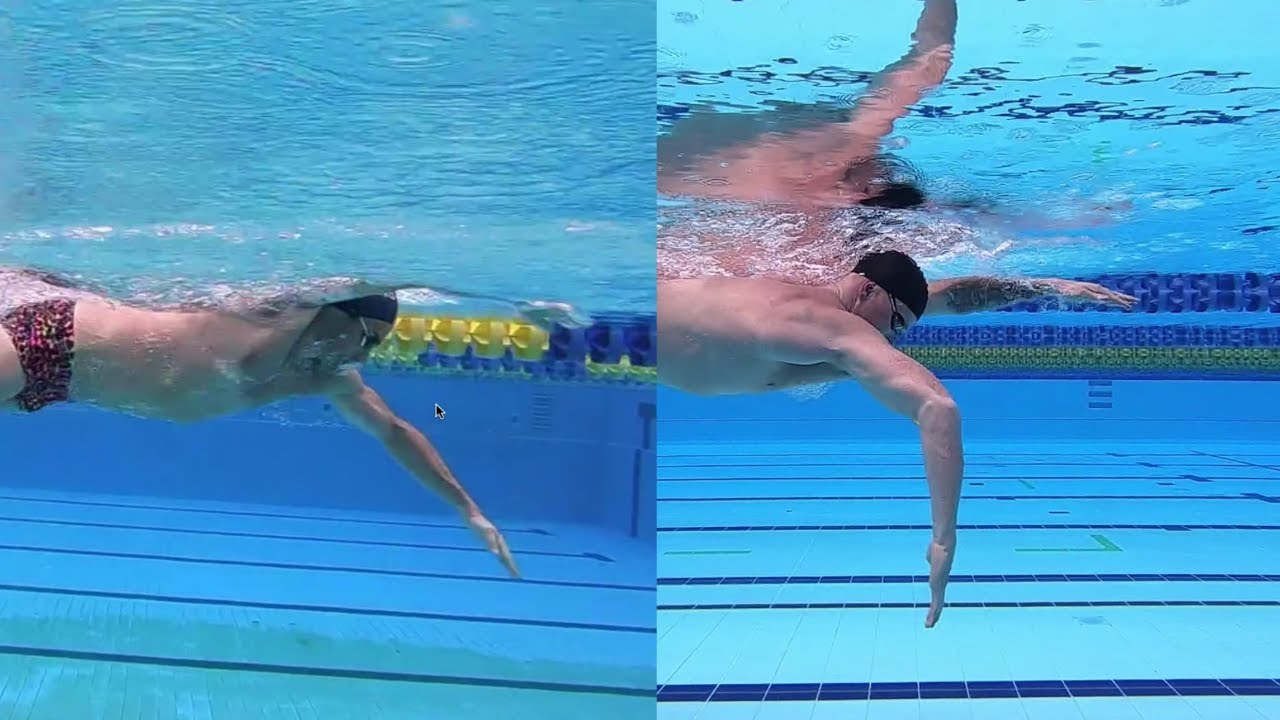
Propulsion in freestyle begins well before the arm pulls backward toward the hip. Upon hand entry, your fingertips must slide forward through an imaginary slot just outside the shoulder line, reaching into full extension before initiating the catch. At the furthest point of reach, the wrist flexes slightly downward, followed immediately by internal rotation of the humerus to elevate the elbow. This crucial posture, known as the early vertical forearm, turns the entire limb from fingertips to elbow into a single broad paddle perpendicular to the direction of travel. Rather than pulling your arm through the water, you are locking your forearm into place and leveraging your torso past that anchored point.
Drive Propulsion From Rhythmic Torso Rotation Rather Than Shoulder Muscle
Swimmers who stay flat on their stomach surrender more than forty percent of their potential mechanical power. The stroke must be propelled by kinetic rotational surges driven by the core musculature, including the obliques, latissimus dorsi, and gluteal complexes. Much like how baseball pitching mechanics and 4 proven rules that unleash devastating velocity rely on kinetic sequencing from the pelvis upward, a dominant swimming stroke originates in the core and hips rather than the peripheral extremities. Torque generation remains the primary engine of elite freestyle swimming mechanics, transferring kinetic energy from the core directly into the catch phase as your torso snaps from one tilted axis to the other, slicing through water like the sharp keel of a racing yacht.
Maintain a Compact Core-Driven Flutter Kick for Hydrodynamic Trim
A common misconception is that the kick provides the majority of forward drive in long-distance freestyle. In reality, the flutter kick primarily serves as an active stabilizer that balances rotational forces and prevents the lower extremities from sinking. The movement must never originate from bent knees. Instead, initiate each kick from the hip socket, maintaining relatively straight legs with loose, floppy ankles that act like flexible fish fins. Flawed kick rhythms disrupt the delicate equilibrium of freestyle swimming mechanics, dropping the lower body into dense, slow-moving water layers. Keep your kick cadence compact, rhythmic, and tightly contained within the hydrodynamic slipstream carved out by your upper torso.
The Neuromuscular Pathways That Seal Flawless Stroke Execution
Developing what aquatic coaches call water feel is not mystical wizardry; it is a neurological calibration of cutaneous mechanoreceptors across the palms, fingers, and forearms. These tactile receptors register minute fluctuations in fluid pressure, signaling your central nervous system to adjust hand pitch and wrist angle in real time to capture dense water. As demonstrated in biomechanical research on passive and active hydrodynamic drag, an athlete’s ability to maintain high limb rigidity under load without inducing unwanted muscular tension is the defining boundary between recreational lap swimmers and master technicians.
Scientific evaluations of freestyle swimming mechanics demonstrate that neuromuscular adaptations take precedence over metabolic conditioning during the early learning curve. When fatigue accumulates, the neurological system defaults to terrestrial motor habits, abandoning precision alignment in favor of uncoordinated thrashing. To hardwire these pathways permanently into muscle memory, training sets must prioritize short, razor-sharp intervals punctuated by adequate rest periods where cognitive attention remains focused entirely on body alignment, catch angle, and rotational timing.
Refining Your Daily Water Workouts for Sustainable Power
Transitioning into an efficient aquatic athlete requires abandoning the obsession with total pool mileage in exchange for pristine stroke economy. Begin workouts with targeted drill progressions: single-arm extensions, fingertip drag recovery drills, and balance-focused kicking on your side with one arm extended along the surface. These drills break the stroke down into isolated biomechanical checkpoints, forcing your motor cortex to map joint angles that are impossible to perceive when moving at high speeds.
Integrate tempo trainers and stroke-counting protocols into your main training sets. If you can cover fifty meters in thirty-two strokes instead of thirty-eight while maintaining identical split times, your net energetic savings are extraordinary. By committing to disciplined repetition, your freestyle swimming mechanics shift from a conscious mechanical chore into an instinctive, fluid aquatic glide. The water stops being a hostile barrier to overcome and becomes an accommodating fluid highway that propels you forward with effortless grace.