Mortgage amortization mechanics and 4 proven rules that slash costly loan interest
Discover how front-loaded loan math quietly drains your monthly payments, and learn the practical levers that tilt amortization schedules in your favor.
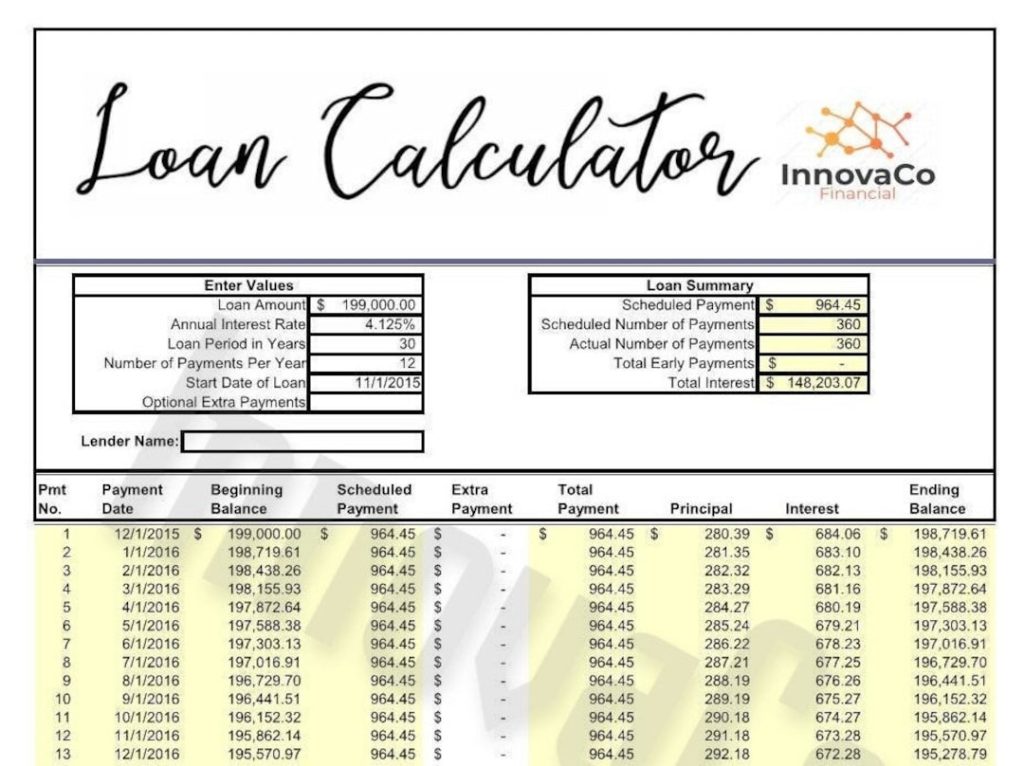
Understanding mortgage amortization mechanics is the single most valuable financial skill a borrower can develop before signing a thirty-year promissory note. Most home buyers look at their monthly mortgage bill and assume their monthly payment steadily and evenly eats away at what they borrowed. That assumption is an expensive fiction. During the initial decade of a standard fixed-rate home loan, the lender captures the vast majority of your payment as pure profit while your actual equity crawls upward at a painful, glacial pace.
Amortization is not designed to be malicious, but it is engineered to protect lenders from default risk while front-loading their investment yield. The word itself shares Latin etymological roots with death: admortire, literally meaning to extinguish or kill a debt over time. Yet the mechanism by which that debt is extinguished remains a mystery to millions of property owners who faithfully write four-figure checks every single month without realizing how little of that money stays in their pockets.
The hidden mathematical architecture behind your monthly payment
At its fundamental core, mortgage amortization mechanics rely on an annuity formula calibrated to produce an identical total payment every month while constantly shifting the underlying components. The equation calculates monthly obligations based on three fixed inputs: the total loan principal, the periodic interest rate, and the exact count of monthly payment periods. Because the interest owed each month is calculated strictly against your remaining unpaid principal balance, the earliest payments inevitably carry monumental interest charges.
Consider a standard fixed-rate loan of $400,000 at an interest rate of 6.5% over thirty years. Your baseline monthly principal and interest payment sits at precisely $2,528.27. In month one, your remaining balance is the full $400,000. Multiplying that balance by one-twelfth of the annual interest rate yields an immediate monthly interest assessment of $2,166.67. Out of your hard-earned $2,528.27 payment, a staggering 85.7% goes straight to the bank as financing expense, leaving a meager $361.60 to chip away at your actual balance.
Over the full thirty-year horizon of that identical loan, total interest payments reach an astonishing $510,177. You repay more in raw interest fees than the original value of the property itself. As highlighted in Consumer Financial Protection Bureau loan disclosure guides, examining the statutory breakdown on your initial loan disclosure statement exposes this brutal imbalance before closing. The lender extracts their investment return up front, ensuring that even if you sell the property after five or seven years, they have collected the lion’s share of their projected profits.
The frustrating illusion of linear debt reduction
Borrowers naturally expect financial progress to behave in a straight line. If you make payments for fifteen years on a thirty-year loan, intuition suggests you ought to own roughly half of the home. The mathematical reality is shockingly different. This lopsided split is where standard mortgage amortization mechanics surprise unsuspecting buyers, because the equity accumulation curve is parabolic rather than linear.
On that same $400,000 mortgage at 6.5%, you will not hit the fifty-fifty crossover point—the month where your payment delivers more principal than interest—until month 224. That means you must make payments for eighteen years and eight months before more than half of your monthly check actually belongs to your balance sheet. During the first seven years, a period when the average American homeowner relocates or refinances, you will have paid more than $173,000 in interest charges while knocking down only $38,000 in actual debt balance.
This dynamic creates a profound vulnerability known as negative homeownership inertia. If property values stagnate or experience a cyclical contraction during the first five years of ownership, an owner who put down 5% or 10% can easily find themselves with negative or razor-thin equity once standard selling commissions and transfer taxes are factored in. The debt reduction was simply too tiny to build a defensive cushion against ordinary market fluctuations.

Four proven rules that systematically defeat amortization schedules
When you decode mortgage amortization mechanics, you quickly realize the schedule is not an immutable prison sentence. The amortization table represents a passive default track. By making deliberate, calculated adjustments to timing and capital flow, you can fundamentally hack the mathematical curve and divert tens of thousands of dollars away from bank revenue and directly into personal wealth.
Attack early principal balances to extinguish compounding interest at the root
Because every dollar of monthly interest is dictated entirely by your outstanding balance at the close of the preceding billing cycle, early principal prepayments deliver an outsized compounding dividend. A single extra payment of $1,000 applied directly to principal in month twelve eliminates the need to pay interest on that thousand dollars for the remaining twenty-nine years. At 6.5%, that single one-time thousand-dollar prepayment saves over $5,400 in future nominal interest costs over the life of the loan.
To make this strategy work, precision execution is mandatory. When submitting unscheduled payments, you must explicitly mark the transaction as an immediate principal-only reduction. Uninformed borrowers frequently make supplemental payments without verifying account designations, leading careless loan servicing systems to classify the extra funds as prepaid interest for the upcoming month. A prepaid payment provides zero compound interest savings; a dedicated principal reduction rewrites your downstream payoff trajectory immediately.
Convert to biweekly payment schedules to force an automatic extra billing cycle
One of the most elegant and psychologically painless tactics for disrupting an amortization curve is establishing a biweekly payment cadence. Instead of submitting a single $2,528.27 payment every month, you arrange to pay half that amount—$1,264.14—every two weeks. Because there are fifty-two weeks in a standard calendar year, you complete twenty-six half-payments, which equates to thirteen full monthly payments annually rather than the traditional twelve.
That solitary extra payment per year operates like a financial wrecking ball against long-term interest calculations. On our benchmark $400,000 mortgage, moving to a biweekly cadence trims more than five full years off a thirty-year schedule and eliminates over $96,000 in raw interest costs. Furthermore, because money is applied to the balance every fourteen days rather than every thirty days, the daily balance upon which interest accrues is constantly suppressed, compounding your structural savings without straining your monthly lifestyle.
Demand a loan recast to lower monthly overhead without costly closing fees
When borrowers accumulate a significant lump sum—whether through an annual corporate bonus, an inheritance, or the sale of an asset—they frequently assume refinancing is the only pathway to lower their monthly mortgage burden. Refinancing, however, requires formal loan underwriting, complex appraisal fees, title insurance, and closing expenses that routinely run between 2% and 5% of the total loan amount. Moreover, refinancing restarts your amortization clock back at day one, resetting the front-loaded interest trap all over again.
A mortgage recast represents a far smarter mechanism. By paying a modest administrative fee, usually ranging between $250 and $500, and supplying a lump sum principal reduction (typically $5,000 to $10,000 minimum), your current lender will re-amortize your existing loan balance across the remaining loan term. Rather than altering your term length or interest rate, leveraging mortgage amortization mechanics through a recast recalculates the remaining monthly obligation without altering the underlying interest rate. You lock in immediate, permanent monthly cash flow relief while keeping your equity progress intact.
Protect your equity acceleration schedule against unpredictable financial chaos
Financial blueprints rarely shatter because the mathematical calculations are wrong; they unravel because human lives encounter unexpected turmoil. When life disruptions, sudden legal entanglements, or abrupt health emergencies emerge, liquidity becomes far more critical than paper net worth. High-profile institutional turmoil and sudden personal disruptions—just as P Diddy Faces 4 Critical Realities Behind His Violent Prison Transfer and discovers how unforeseen crises dismantle normal operational control—demonstrate that external volatility spares no one. If an unforeseen catastrophe strikes your household, illiquid equity locked inside your drywall cannot pay for groceries or settle urgent emergency bills.
A rigorous debt reduction strategy must never compromise core operational liquidity. funneling every spare discretionary dollar into principal pre-payments while holding a hollow emergency reserve leaves a family critically exposed. If you lose your employment or face major medical bills, a bank will not extend a line of credit simply because you paid down your balance ahead of schedule. Build a fortified liquid reserve of six months of baseline operating expenses before deploying capital into hyper-aggressive amortization acceleration.
The dangerous opportunity cost trap of hyper-aggressive payoffs
Evaluating mortgage amortization mechanics strictly in a vacuum leads many homeowners to commit an expensive strategic mistake. Wiping out mortgage debt feels profoundly satisfying on an emotional level. Living in a home free of monthly liens delivers psychological security that no spreadsheet can fully quantify. However, capital deployed toward a 3% or 4% debt during an economic climate where risk-free treasury yields or diversified index returns pay significantly higher yields creates severe opportunity cost drag.
Every dollar utilized to accelerate a low-interest fixed mortgage is locked into an illiquid physical asset yielding a return exactly equal to the note rate. If you locked in a historic 3.25% thirty-year mortgage in prior economic cycles, paying off that debt prematurely yields a guaranteed 3.25% return. Yet, if conservative capital market instruments yield 5% or broad equity indices historically return between 8% and 10% annualized over long horizons, you voluntarily sacrifice compounding net worth growth in exchange for debt elimination.
Conversely, when carrying debt at 6.5% or 7.5%, the mathematical calculus pivots dramatically. Securing an absolute, risk-free, tax-equivalent return of 7% by aggressively paying down principal is extraordinarily difficult to beat in modern public markets after factoring in federal and state capital gains taxes. The correct decision depends on where your specific mortgage interest rate sits relative to the prevailing cost of capital across the broader economic landscape.
Building an unshakeable blueprint for lifetime equity control
Taking mastery over your home loan begins with auditing your primary loan paperwork and establishing automated payment mechanisms. Start by logging into your mortgage servicer portal and downloading your full amortization schedule. Identify your exact crossover date. Knowing the specific calendar month when your principal reduction outpaces your interest assessment provides a tangible benchmark to target and systematically accelerate.
Establish automated, separate line items for principal reduction. Even an extra $100 or $150 per month injected into your regular automated draft shaves multiple years off the back end of your loan obligation without requiring drastic daily lifestyle sacrifices. Ensure that your loan servicer does not mandate minimum thresholds for principal curtailments and explicitly verify on your quarterly billing statements that your extra remittances are decreasing your unpaid balance rather than sitting in an unallocated suspense account.
Mastering mortgage amortization mechanics transforms a thirty-year debt sentence into an adjustable financial engine. Rather than remaining a passive consumer subjected to the front-loaded profitability of lending institutions, you dictate the terms of your balance sheet. By applying disciplined structural rules, respecting liquidity boundaries, and targeting the compounding power of the early payment curve, you retain control of your home, your equity, and your long-term financial independence.