Forced perspective cinematography mechanics reveal 4 proven secrets behind impossible cinema illusions
Discover how master cinematographers weaponize visual angles and monocular vision to bend physical scale right on set. Learn the optical physics that make miniature actors share the frame with towering giants without digital intervention.
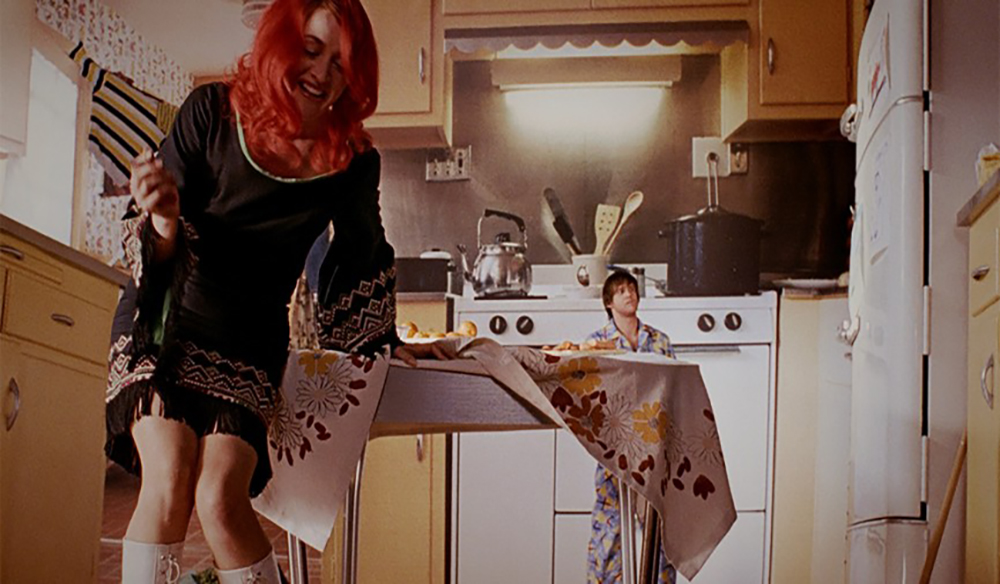
Mastering forced perspective cinematography mechanics allows filmmakers to turn a standard camera lens into an elastic optical playground where giants converse seamlessly with miniature companions. The illusion does not originate inside post-production rendering suites. It unfolds right on the physical soundstage through an audacious exploitation of human perceptual vulnerability. Our eyes and visual cortex spend a lifetime learning how light, distance, and relative scale interact across a three-dimensional world. Yet the moment a cinematographer points a single spherical glass element at physical reality, that three-dimensional universe flattens into two dimensions, stripping away our primary defense against optical deceit.
For more than a century, visionary directors and camera operators have used this geometric sleight of hand to bypass astronomical visual effects budgets. By positioning two actors at dramatically different distances from the sensor while meticulously aligning their eyelines and horizon intersections, a six-foot performer appears towering while another seems knee-high. Understanding how this illusion functions requires dissecting the raw physics of monocular sight, lens focal length, depth of field management, and radiometric consistency. When these forces harmonize, the cinema screen displays a breathtaking physical reality that the human brain simply refuses to question.
The Optical Vulnerability of the Monocular Camera Lens
Human depth perception relies heavily on binocular stereopsis. Because our eyes sit roughly sixty-three millimeters apart, each retina receives a slightly different horizontal image of the environment. The brain continuously merges these disparate angles into a single mental model with visceral physical depth. Bring a single camera lens into the equation, however, and stereopsis evaporates instantly. A camera has only one eye.
Deprived of dual ocular input, the human brain scrambles to determine spatial depth using secondary cues. It evaluates familiar size, relative scale, aerial perspective, texture density, and occlusion. If an adult human appears beside another adult human, the brain immediately assumes they occupy the same spatial plane. When you leverage forced perspective cinematography mechanics, you hijack these automatic cognitive assumptions. The visual angle subtended by an object at the lens plane equals the physical dimension of the object divided by its absolute distance from the camera. If an actor stands four meters away and a second actor stands eight meters away, the background performer casts an image half as tall on the sensor. If the physical environment is constructed without telltale architectural cues to reveal that spatial gulf, the distant actor shrinks in the viewer’s mind, not in physical space.
Four Proven Optical Secrets Behind Flawless Scale Illusions
Mastering forced perspective cinematography mechanics requires surgical precision across four interconnected technical disciplines. Filmmakers who succeed do not rely on chance. They calibrate their sets down to the millimeter because a single stray shadow or blurred edge shatters the spell instantly.
Proportional Distance Scaling and Eyeline Geometry Calibration
Scale deception begins with ruthless trigonometry. Suppose a production design calls for a mythical giant measuring nine feet tall to sit across an intimate dining table from a four-foot companion. In reality, both actors stand six feet tall. To produce this differential on screen, the camera team calculates an exact distance ratio based on the target sensor size and prime lens focal length.
The smaller character is placed deep in the background, while the towering character sits mere inches from the camera rig. However, placing bodies at disparate distances introduces an immediate spatial trap: eyelines. If the background actor stares straight ahead, their gaze sweeps over the foreground actor’s head, instantly revealing the physical gap between them. Cinematographers solve this by engineering offset sightline targets. The foreground actor must look at a designated marker hovering several feet above the lens, while the background actor gazes down toward an empty mark on the floorboards. To the two actors on stage, the scene feels disjointed and absurd. Yet through the viewfinder, their pupils lock together in flawless, emotionally charged eye contact. The physical table between them is often an asymmetrical polygon, built wider at the far end to maintain linear perspective while seamlessly masking the missing floor space.
Deep Depth of Field and Split Diopter Optical Engineering
Nothing betrays an optical illusion faster than optical defocus. In natural vision, when two people appear to converse face-to-face across a table, both remain in relatively sharp focus within our working visual field. If an optical shot features an oversized foreground actor in tack-sharp focus while the miniature background companion melts into creamy bokeh, the audience immediately identifies the spatial gulf. Defocus blur is an inescapable monocular depth cue that the visual cortex reads instantly.
To neutralize this giveaway, forced perspective cinematography mechanics demand extreme depth of field. Directors traditionally stop down the lens aperture to extreme numbers like T16 or T22, flooding the soundstage with tens of thousands of watts of incandescent or high-output LED light to expose the tiny aperture. When stopping down the iris is optically impossible or demands prohibitive lighting rigs, master cinematographers deploy split-field diopters. A split diopter is a precision convex half-lens mounted directly over half of the primary camera lens. The uncovered half focuses cleanly on the distant background actor, while the glass element pulls the focal plane of the foreground actor into razor-sharp focus simultaneously. The physical dividing line of the diopter glass is concealed behind a vertical architectural element, such as a doorway frame, a structural pillar, or a dramatic shadow line, rendering the optical split completely invisible.
Synchronized Motion Parallax and Dynamic Dolly Engineering
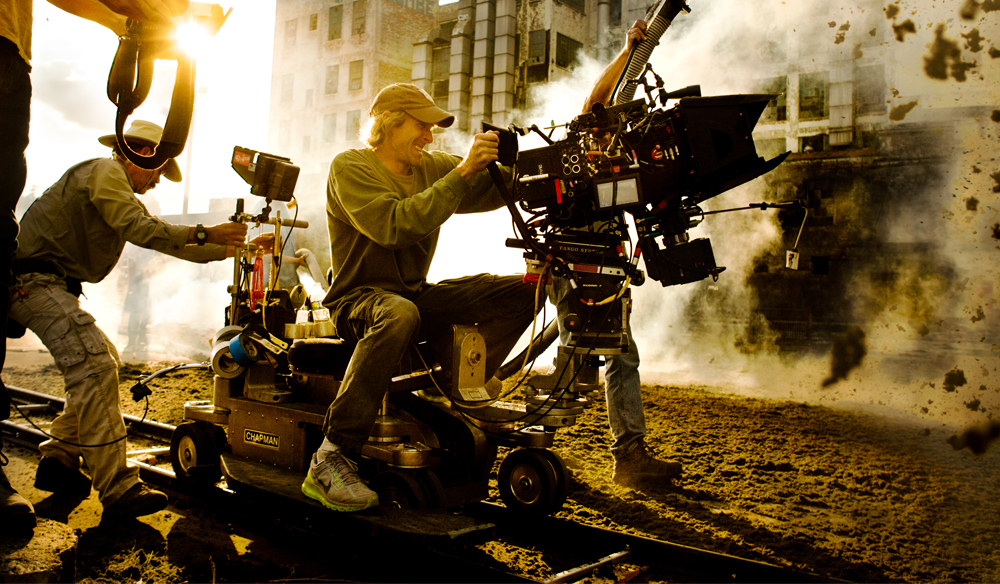
Static forced perspective shots are mathematically challenging, but dynamic moving shots push practical physics to the absolute limit. In the physical world, when an observer moves sideways, nearby objects appear to glide past rapidly, while distant mountains barely budge. This phenomenon, known as motion parallax, provides our brains with immediate, undeniable spatial data. For decades, this reality forced optical trick shots to remain locked on heavy, immobile tripods. The moment the camera moved, the foreground actor slipped across the background at different speeds, shattering the scale illusion.
Overcoming this constraint birthed dynamic forced perspective. Instead of anchoring the camera, visionary engineers mount the foreground actor and corresponding set pieces onto a motorized motion platform that moves in lockstep with the camera dolly track. Just as precision mechanics dictate human motion—where sprint acceleration biomechanics reveal 4 proven levers to unleash explosive speed through ruthless alignment of force vectors—camera engineering demands exact mathematical synchronization of spatial axes. As the camera dollies sideways on its rail, the foreground actor’s platform moves along a complementary counter-vector at an identical proportional speed. Through the camera eye, the background and foreground move in perfect geometric unity, tricking the brain into believing both subjects exist on a single, coherent plane during a fluid tracking shot.
Shadow Isolation and Radiometric Light Intensity Matching
Lighting an optical scale trick requires uncoupling the illumination schemes of two distinct physical zones that must appear as one unified environment. Natural light diminishes according to the inverse-square law, dropping off exponentially as distance increases. If a single key light illuminates both a foreground actor stationed three feet from the lens and a background actor standing fifteen feet away, the foreground subject will be heavily overexposed while the distant performer languishes in murky shadows.
Cinematographers isolate the lighting zones completely. High-intensity fresnels and tightly cut flags illuminate the background actor to match the exact foot-candle exposure of the foreground performer. Every directional key, rim, and fill light must share an identical color temperature, beam angle, and shadow hardness. The most dangerous pitfall is shadow spill. If the foreground actor inadvertently casts a long silhouette that lands onto the body of the background performer, the spatial lie collapses instantly. A shadow crossing fifteen feet of empty air reveals the true three-dimensional void. Crews construct intricate gobo cutouts and razor-thin flags to truncate light beams, ensuring shadows terminate on physical set geometry before they can bleed into opposing visual zones.
Why Digital Cinema Replaced and Then Resurrected Practical In-Camera Illusion
During the rapid digital revolution of the late 1990s and early 2000s, traditional in-camera trickery seemed destined for extinction. Green screens, blue screens, and digital compositing promised absolute freedom. Directors could film actors on separate soundstages at their convenience, scale them down with a digital slider, and paste them into synthetic virtual environments.
Yet that convenience carried an unforeseen cost. Digital scaling often produced an uncanny, weightless disconnect. Actors stared into vacant space without genuine eye contact, while synthetic light failed to scatter realistically across human skin and textiles. Composited edges frequently appeared razor-sharp and disconnected from the environmental atmosphere. The physical presence of light bouncing between real human bodies was missing. Recognizing these synthetic flaws, leading cinematographers led a dramatic return to practical craft. Organizations like the American Society of Cinematographers have consistently highlighted how tangible physical sets anchor an audience emotionally in ways digital pixels struggle to replicate. Applying forced perspective cinematography mechanics grounds fantastical narratives in tactile reality.
Practical Strategies for Mastering Scale Geometry on Modern Sets
Executing scale deception today does not require Hollywood-tier budgets, but it demands relentless planning before anyone turns on a camera monitor. Modern digital sensors with extreme resolutions make optical alignment more accessible and simultaneously more unforgiving. Because high-resolution sensors capture minute textural discrepancies, filmmakers must be even more vigilant about depth of field and edge clarity.
Begin every sequence with millimeter-grade floor mapping. Use laser measuring tools to verify that your distance ratios strictly match the field of view of your chosen focal length. Wide-angle glass exaggerates distance, making background actors appear dramatically smaller over shorter physical spans, but it introduces barrel distortion that can warp linear architecture. Longer focal lengths compress space, demanding massive soundstages to achieve meaningful scale differences. Embrace physical prop tailoring. If two characters must share a cup or handle the same book across an illusionary shot, build two distinct props: one scaled up by fifty percent for the smaller actor, and one scaled down by thirty percent for the larger actor. When passed with rehearsed choreography across the split plane, the mind completely accepts the tactile continuity. By respecting the physics of optics and the psychology of monocular vision, forced perspective cinematography mechanics turn modest production spaces into boundless cinematic spectacles.