Cast iron seasoning mechanics and 4 proven rules that build indestructible natural cookware
Cast iron cookware owes its legendary nonstick durability to polymer chemistry rather than grease buildup. Learn the precise molecular mechanics that turn liquid cooking oil into an indestructible, glass-smooth cooking surface.
Mastering cast iron seasoning mechanics transforms an abrasive, rust-prone hunk of raw metallurgical iron into a naturally slick, mirror-dark culinary powerhouse. For generations, kitchen folklore treated pan seasoning as an arcane ritual governed by heirloom myths, bacon grease dogma, and fearful superstitions about dish soap. In reality, the glassy black surface that seasoned home cooks revere is not dried grease, baked-on food residue, or charred animal tallow. It is a thin, cross-linked, solid polymer film chemically bonded directly into the microscopic fissures of gray iron.
When liquid fat meets intense heat in an oxygenated environment, it undergoes a profound phase shift. The oil stops behaving like a lubricant and begins behaving like a plastic coating. This molecular transformation solves iron’s two greatest vulnerabilities: its relentless desire to oxidize into orange rust and its jagged microscopic topography that snags delicate protein strands. Once you grasp the underlying chemistry of this transformation, you can diagnose flaking pans instantly, strip away kitchen superstitions, and build a cooking surface that withstands high heat searing for decades.
The Molecular Transformation Behind True Skillet Patina
To understand why bare iron clings to your food, look at the metal under a metallurgical microscope. Freshly cast gray iron resembles an arid mountain range full of jagged peaks, valleys, and exposed crystalline fissures. When a cold egg hits that unseasoned surface, proteins slip into those microscopic valleys. As thermal energy climbs, the proteins denature, coagulate, and form direct covalent and mechanical bonds with the iron atoms, fusing the food inextricably to the metal.
Understanding cast iron seasoning mechanics requires moving beyond culinary intuition and into polymer chemistry. Seasoning solves the sticking problem through thermal oxidation and free radical polymerization. When you expose a thin layer of cooking oil to ambient oxygen and temperature levels exceeding its smoke point, the triglycerides in the fat decompose. The fatty acid chains crack open, releasing volatile organic compounds while generating hyper-reactive free radicals. These radicals attack neighboring fatty acid molecules, linking individual monomers into long, tangled molecular chains.
As heating continues, these linear hydrocarbon chains cross-link sideways with one another, forming an interlocking three-dimensional matrix. Simultaneously, iron acts as a mild catalyst, speeding up oxidation at the metal boundary. The curing polymer shrinks slightly as volatile components boil away, pulling itself tight into the microscopic pores of the iron substrate. The result is an insoluble, tough, non-reactive solid resin known chemically as a poly-lipid matrix. It acts as an impermeable barrier that keeps water from touching elemental iron and fills every microscopic canyon so food glides effortlessly across the surface.
Why Everyday Cooking Oils Behave Differently on Hot Metal
Not all culinary fats possess the chemical architecture necessary to build an enduring seasoning matrix. The primary variable governing an oil’s polymerization capacity is its degree of unsaturation, historically measured by its iodine value. Saturated fats like beef tallow, lard, and butter consist of straight hydrocarbon chains packed with single carbon-carbon bonds. Because every carbon atom is fully saturated with hydrogen, there are few reactive double bonds available to initiate cross-linking. When heated, saturated fats oxidize into greasy carbonaceous ash rather than forming an organized polymer lattice.
Monounsaturated and polyunsaturated fats tell a completely different story. Oils high in polyunsaturated fatty acids contain multiple double bonds within their carbon backbones. These double bonds serve as springboards for thermal oxidation. When thermal energy breaks these double bonds, they eagerly link with adjacent molecules. An authoritative American Chemical Society analysis of cast iron seasoning chemistry demonstrates how triglycerides break down under thermal stress into free fatty acids, acrolein, and volatile aldehydes before cross-linking into an insoluble solid matrix.
The fundamental cast iron seasoning mechanics dictate that an oil must possess enough carbon-carbon double bonds to form cross-links, without creating an excessively rigid matrix that flakes under thermal shock. Drying oils such as pure organic flaxseed oil possess extraordinarily high levels of alpha-linolenic acid, meaning they polymerize rapidly into an exceptionally hard resin. However, this hardness brings brittle inflexibility. If applied too thickly or subjected to rapid heat swings, pure flaxseed seasoning often shatters off the pan like glass. Semidrying oils like grapeseed, expeller-pressed canola, or high-smoke-point sunflower oil provide the ideal chemical compromise: high polyunsaturated content paired with enough structural flexibility to flex alongside the expanding iron beneath it.
Four Proven Rules That Engineer a Resilient Nonstick Matrix
When you translate laboratory physics into stove-top execution, mastering cast iron seasoning mechanics comes down to four distinct, non-negotiable operational principles. Skipping any phase guarantees either a sticky brown puddle of unpolymerized sludge or a fragile coating that washes away at the first sign of hot water.
Apply Ultra Thin Lipid Coats to Avoid Sticky Residue
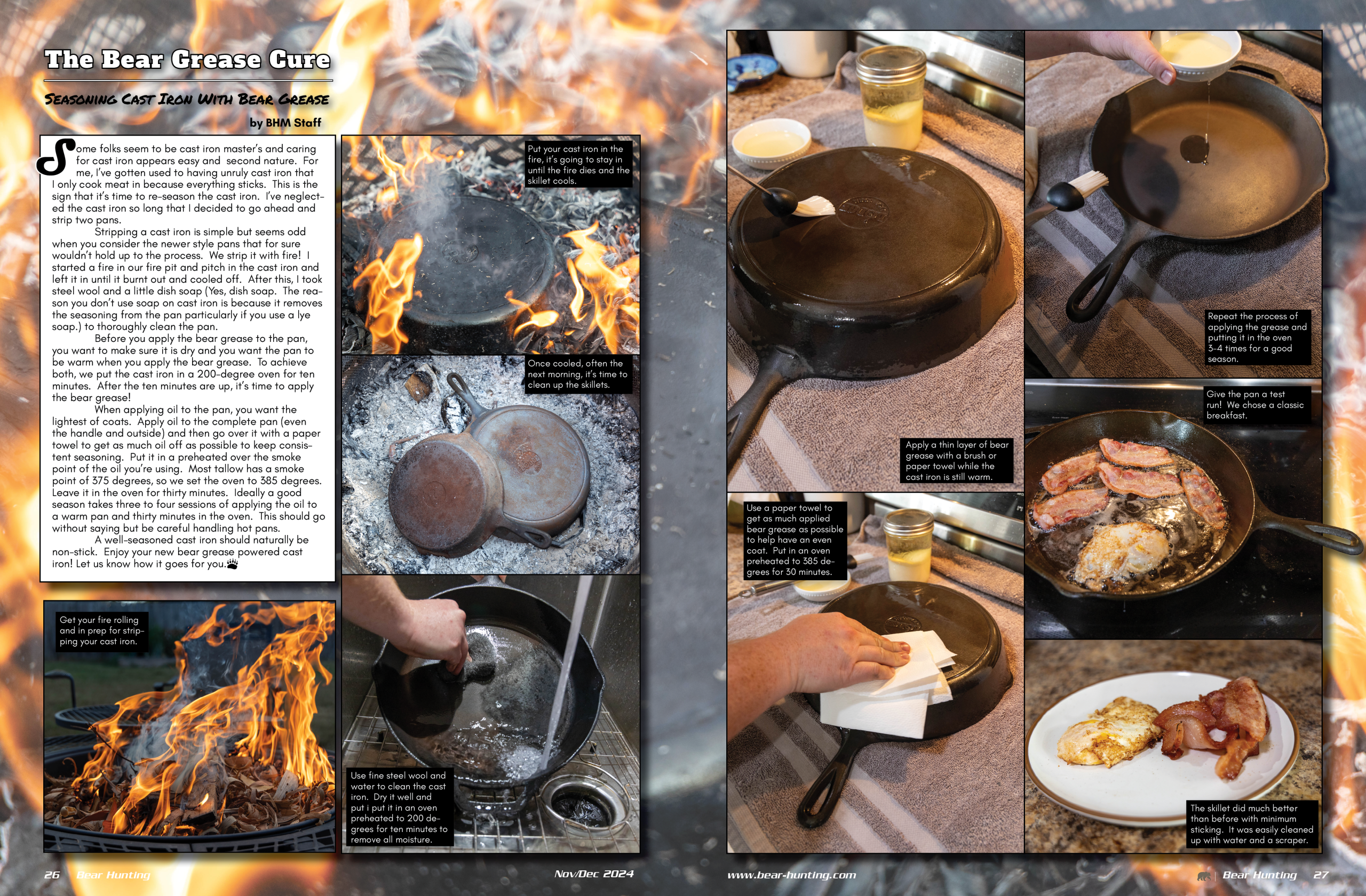
The single most destructive mistake cooks make is pouring oil into the pan and leaving a visible puddle. Polymerization requires atmospheric oxygen to drive the cross-linking reaction. If an oil film is thicker than a microscopic fraction of a millimeter, oxygen cannot penetrate into the lower layers resting against the iron. The surface will partially skin over while the oil underneath stays trapped as a tacky, half-cured grease that collects grit and smells rancid. Pour a dime-sized drop of high-polyunsaturated oil into the clean iron, rub it vigorously into every square inch with a lint-free cloth, and then take a completely dry towel and wipe the pan aggressively as if you made a terrible mistake applying the oil in the first place. When the pan looks matte and bone-dry, the remaining microscopic sheen is precisely the right thickness.
Exceed the Oil Smoke Point to Complete Cross Linking
Baking oil below its smoke point results in greasy failure. You cannot rely on gentle heat to cross-link lipids. Heat serves as the thermodynamic activation energy that ruptures carbon double bonds and drives the liberation of volatile compounds. You must elevate the oven temperature roughly twenty-five to fifty degrees Fahrenheit above the oil smoke point. For grapeseed or canola oil, this requires an ambient temperature of four hundred fifty to four hundred seventy-five degrees Fahrenheit. At this threshold, the oil smokes actively, breaks down structurally, and completes its full phase shift from a wet organic fluid to an inert dry polymer within sixty minutes.
Cool Down Slowly to Prevent Thermal Stress Cracks
Cast iron is brittle and features a distinct coefficient of thermal expansion. As the metal heats, the iron crystal lattice expands outward. As it cools, it contracts. If you extract a blistering hot skillet from the oven and drop it onto a cold marble countertop or quench it in a sink, the metal contracts faster than the curing polymer can adapt. This thermal shock creates micro-fissures across the fresh seasoning, leading to peeling layers weeks later. Once your sixty-minute baking cycle ends, switch off the heat and leave the oven door completely closed. Allow the skillet to cool gradually alongside the oven interior over two to three hours. This slow descent tempers the polymer and allows the hydrocarbon matrix to settle under minimal physical shear.
Layer Unsaturated Lipids Before Cooking Acidic Ingredients
A single round of seasoning does not produce an indestructible barrier. The initial cycle simply covers the tallest peaks of the iron surface, leaving microscopic valleys exposed to moisture and ambient acids. Building true commercial-grade durability demands multiple consecutive micro-layers. Three to four successive cycles of ultra-thin oiling, smoking, and cooling construct a dense, laminated polymer shield. This multi-ply structure cushions against metal spatulas and creates a formidable barrier that protects raw iron from moisture and chemical attack.
Common Kitchen Pitfalls That Strip Your Protective Barrier
Generations of cooks grew up believing that a drop of commercial dish soap would permanently destroy a seasoned skillet. This persistent myth originated during the frontier era when homemade soaps were synthesized using animal tallow and unmeasured potassium hydroxide, also known as caustic lye. Unbound lye attacks organic polymers and strips cured oil coatings instantly through chemical saponification. Modern commercial dish detergents, however, use mild synthetic surfactants designed specifically to lift loose surface fats without reacting with cross-linked polymers. A gentle wash with modern soap and a non-abrasive sponge will clean away greasy residue while leaving your polymer foundation untouched.
The emotional debates over dish soap and traditional seasoning methods mimic ideological standoffs, much like how Supreme Court turmoil unleashes 3 crucial battles across two hemispheres, where entrenched doctrine battles empirical reality. In the kitchen, basic chemistry cuts through dogma. The real enemies of cast iron are standing moisture and aggressive chemical acids. Leaving a pan soaking in a sink guarantees rust because water exploits every microscopic pinhole in an immature seasoning layer, lifting the coating from beneath.
Similarly, attempting to simmer an acidic tomato sugo or reduce red wine in a newly seasoned pan breaks the fragile iron-polymer interface. Dilute acetic, citric, or tartaric acids donate hydrogen ions that strip the bond between the iron atoms and the base polymer film. Failing to respect cast iron seasoning mechanics when handling acidic marinades or prolonged braises will inevitably dissolve the sub-microscopic iron-polymer boundary, leaving a metallic taste in the sauce and gray, stripped patches across the cooking surface.
Maintaining Generational Cookware for Decades of Daily Use
You do not need to bake your pan in an oven every week to maintain its finish. Once you build an initial foundation, your daily cooking routines take over the curing process. Professional kitchens rely on stovetop micro-seasoning. After searing proteins, deglaze the pan with hot water, scrape away food debris using a flat wooden spatula, rinse the skillet, and place it immediately over a medium burner until every drop of surface moisture evaporates.
Once the iron is completely dry, dab a few drops of neutral oil into the warm pan and buff it across the metal with a paper towel until the skillet looks dry. Allow the metal to warm until a faint wisp of smoke rises from the cooking floor, then cut the flame. Routine maintenance is simply the daily continuation of cast iron seasoning mechanics, where every searing session deposits fresh microscopic polymers over wear points. Each smash burger, seared steak, and batch of charred vegetables donates microscopic fat fragments that polymerize into the surface, constantly repairing and thickening the resilient black shell.
Cast iron is not a fragile antique requiring nervous coddling. It is heavy, forgiving industrial metal waiting to form a permanent partnership with high-heat cooking fats. By respecting the authentic cast iron seasoning mechanics, you liberate yourself from fragile Teflon coatings and inherit a piece of resilient, self-healing iron engineered to outlast lifetimes.