Emulsion stability science and 4 proven rules that prevent broken sauces
Broken sauces ruin countless dinners, but emulsion failure is purely mechanical rather than bad luck. Understanding droplet physics, surfactants, and shear force guarantees flawless, velvety results at the stove every time.
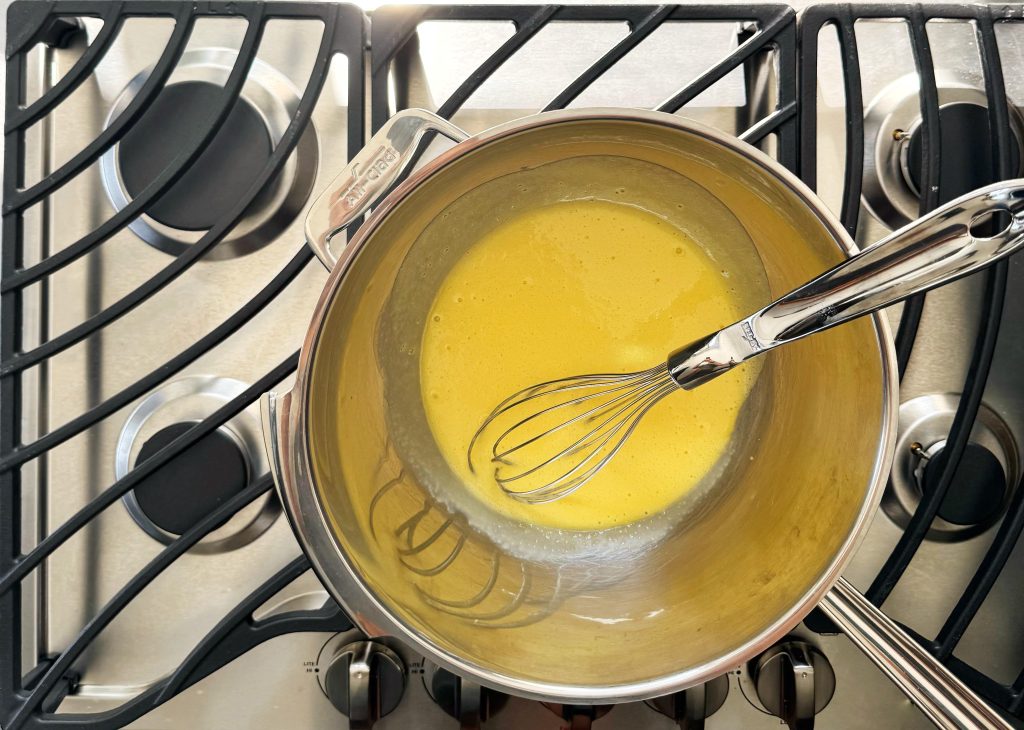
Mastering emulsion stability science separates anxious home cooks from confident culinary technicians who command pan sauces and velvety dressings without panic. Every cook remembers the precise heartbreak of watching a silky hollandaise suddenly curdle into a grainy puddle of warm grease. You whisk frantically, hoping friction alone will resurrect the velvet sheen, but thermodynamics does not yield to desperate optimism. At its heart, a broken sauce is never a moral failing or bad luck. It is a predictable physical reaction governed by liquid interfacial tension, kinetic energy, and molecular geometry. When liquids that naturally despise each other are forced into intimate union, stability requires far more than vigorous stirring. It demands an understanding of how microscopic lipid droplets stay suspended within an aqueous matrix. Once you see a sauce as a delicate suspension of millions of microscopic spheres suspended in moisture, the kitchen ceases to feel like a high-stakes casino and begins operating like a predictable, repeatable laboratory.
Why oil and water naturally refuse to cooperate
Water molecules are obsessive perfectionists. They form tight, hydrogen-bonded networks with neighboring water molecules, clinging to each other with immense cohesive energy. Nonpolar fat molecules, composed of long hydrocarbon chains, lack the electrical charges required to participate in this hydrogen-bonding dance. When you pour clarified butter or olive oil into an aqueous base like lemon juice, vinegar, or reduced stock, the water molecules pull tightly together, squeezing the fat molecules out of the matrix. This exclusion drives the two liquids into separate layers, minimizing their contact area to achieve the lowest possible thermodynamic state.
The physical barrier preventing spontaneous mixing is known as interfacial tension. Oil wants to merge with oil, and water wants to surround water. Left to their own devices, two immiscible fluids will always minimize their surface area of interaction. When examining thermodynamic tension at the lipid-water interface, emulsion stability science reveals why oil droplets naturally coalesce whenever mechanical agitation ceases. Every time two tiny fat globules collide, they merge into a larger droplet because a single large sphere has less surface area than two small spheres. Without an active countermeasure, entropy ensures that droplets aggregate, cream toward the surface, and ultimately separate into an unappetizing slick of yellow oil floating atop a cloudy watery puddle. Defeating this natural tendency requires both physical disruption and deliberate chemical interference.
The microscopic role of surface active emulsifiers
Mechanical force alone cannot create a permanent culinary suspension. You can shake vegetable oil and vinegar inside a mason jar with furious vigor, shattering the oil into microscopic droplets. The resulting mixture might look opaque and creamy for twenty seconds, but within two minutes, the interface will reappear, leaving you with two distinct strata. To transform a temporary dispersion into a stable, lasting sauce, you must introduce surface-active molecules called amphiphiles.
These amphiphilic compounds possess a split chemical personality. One end of the molecule is hydrophilic, craved by water, while the opposite tail is lipophilic, drawn inexorably toward fats. When dispersed into the mixture, these molecules race to the boundary layer between the two fluids. They plant their oily tails deep inside the fat droplets and thrust their water-loving heads outward into the surrounding liquid. By coating the newly formed fat droplets, emulsifiers dramatically slash interfacial tension. More importantly, they create a protective electrostatic and steric perimeter around every fat sphere. When two droplets collide, their coated surfaces repel one another rather than merging into a monolithic fat slick.
In the classic culinary repertoire, egg yolks represent the gold standard of emulsifying agents. Yolks are packed with lecithin, a phospholipid, alongside complex low-density lipoproteins that act as microscopic scaffolding. Mustard seeds contribute mucilage and specialized proteins that accomplish a similar defensive buffering in vinaigrettes. According to peer-reviewed research on food emulsions and lipid interfaces, the efficiency of an emulsifier relies heavily on the packing density of these molecular coats along the droplet boundary. Understanding how amphiphilic molecules operate within emulsion stability science to bridge two inherently hostile liquids allows cooks to manipulate sauces with surgical confidence.
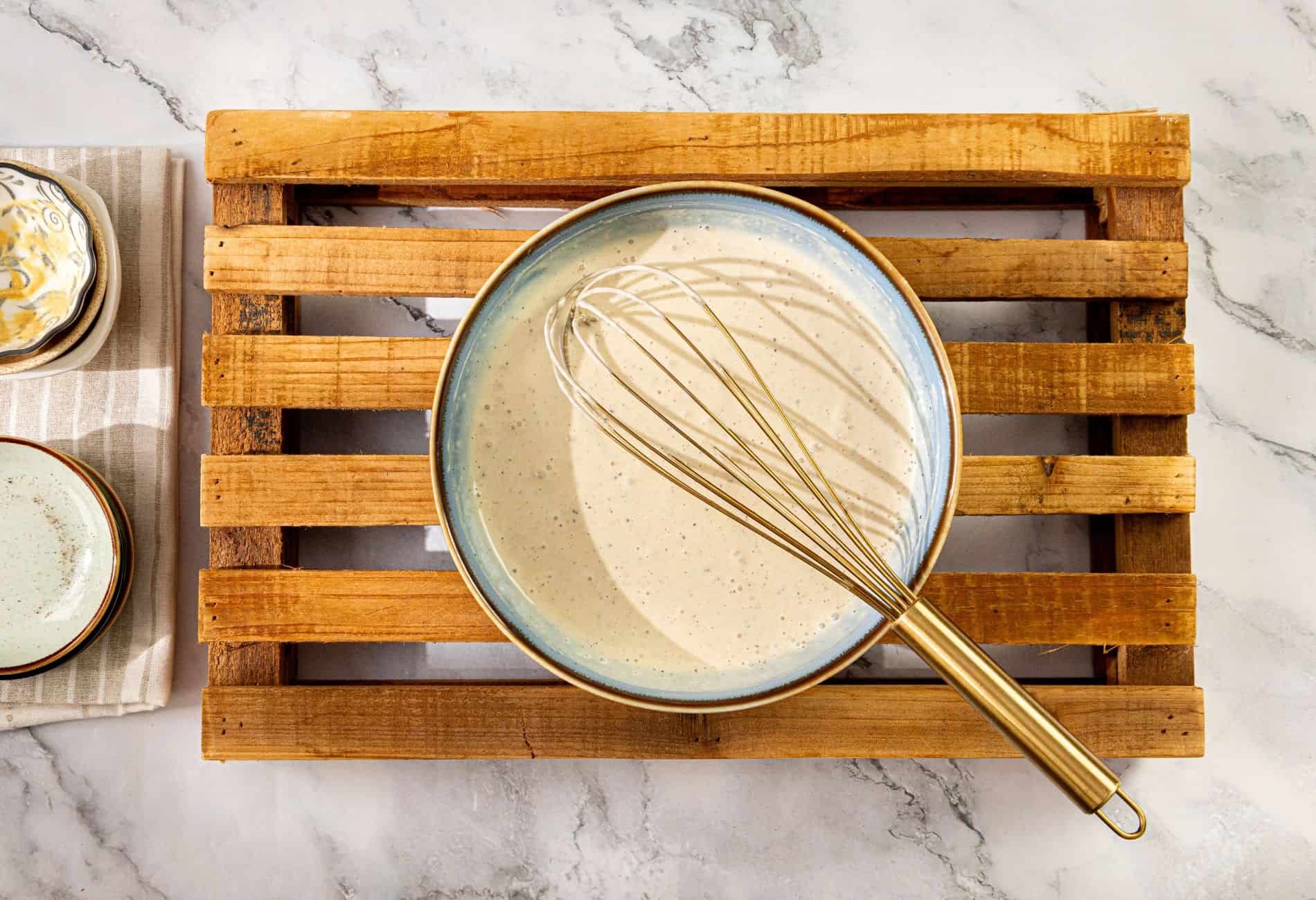
Four essential principles that guarantee unbroken emulsions
Achieving a velvety pan sauce, a sturdy mayonnaise, or a glossy béarnaise does not hinge on superstitious kitchen rituals. It depends on four non-negotiable physical laws that dictate how droplets behave under stress.
Respect the critical thermal boundaries of protein matrices
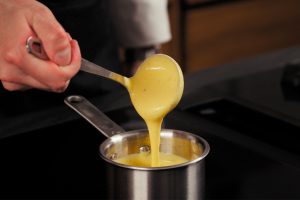
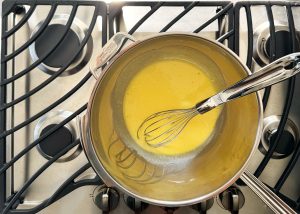
Heat provides kinetic energy, which initially helps disperse thick fats and speeds up molecular rearrangement. Yet excessive heat is the swiftest assassin of any protein-stabilized emulsion. When you prepare hollandaise or sabayon, egg yolk proteins uncoil and form a light, supportive web that thickens the water phase. If the pan temperature climbs past 150 degrees Fahrenheit, those delicate proteins unfold too rapidly and cross-link aggressively. Instead of hovering as a flexible barrier around fat droplets, they contract into tight, rubbery clumps of scrambled egg. As the protein net shrinks, it violently squeezes out both water and fat, causing immediate phase separation. Applying foundational emulsion stability science to temperature thresholds prevents the sudden collapse of a hollandaise. The ideal sweet spot sits between 130 and 145 degrees Fahrenheit, hot enough to promote fluidity and gentle denaturation, but cool enough to preserve molecular elasticity.
Control the continuous phase volume before adding fat
Every emulsion consists of two phases: the dispersed phase, which is broken into microscopic droplets, and the continuous phase, the fluid ocean that surrounds and suspends those droplets. In a classic mayonnaise or pan sauce, water is the continuous phase, and fat is the dispersed phase. A common mistake occurs when cooks attempt to incorporate an enormous volume of fat into an insufficient reservoir of liquid. One standard egg yolk contains roughly two to three tablespoons of water, which can comfortably suspend nearly a cup of oil, provided the droplets stay microscopic. However, if the water evaporates in a hot skillet, the ratio collapses. When the volume fraction of the dispersed oil droplets exceeds roughly 75 to 80 percent of the total volume, the spheres are forced so close together that they can no longer tumble past each other freely. They bump, deform, rupture their protective coatings, and merge into a broken grease pool. Always ensure you maintain sufficient water or stock in the pan before introducing butter.
Apply mechanical shear force at the inception of mixing
The size of your fat droplets directly dictates the lifespan and mouthfeel of your sauce. Smaller droplets possess an exponentially larger cumulative surface area, creating greater viscosity and packing density that resists separation. Coarse, lazy whisking produces large, irregular blobs of fat that readily overcome steric repulsion and coalesce. High-speed mechanical shear, whether delivered via a brisk whisk, an immersion blender, or a food processor, shreds the incoming fat into microscopic spheres measuring just a few microns across. Because the kinetic reality of emulsion stability science demands gradual dispersion rather than sudden dousing, the initial moments of mixing represent the most vulnerable phase of creation. Rapid shearing creates the microscopic template upon which the entire emulsion builds its structural resilience.
Introduce lipids dropwise until structural micelle grids form
The fatal error in sauce making almost always happens during the first forty-five seconds. When starting a mayonnaise or mounting a pan sauce with cold butter, pouring in fat too quickly floods the continuous phase. Before the emulsifying molecules have a chance to coat the new droplets, the excess fat pools together and overwhelms the water base. This catastrophic event is known as phase inversion, where the fat suddenly becomes the continuous phase and the water gets trapped inside clumsy droplets. To prevent this collapse, introduce fat drop by drop at the beginning. Only when you observe the mixture turn pale, thick, and lustrous, indicating that a stable network of coated droplets has formed, should you increase the flow to a steady, thin ribbon.
How to diagnose and resurrect a collapsed emulsion
Even seasoned chefs occasionally lose a sauce to sudden heat spikes, evaporation, or momentary impatience. Recognizing early warning signs saves hours of frustration. Before an emulsion completely splits into floating grease, it sends subtle distress signals. The glossy surface dulls, tiny beads of perspiration appear around the rim of the bowl, and the texture turns slack instead of springy. If you catch these indicators immediately, whisking in a single tablespoon of ice-cold water or cold heavy cream can instantly cool the matrix and replenish the depleted continuous phase.
When catastrophic separation occurs and the sauce shatters into curdled fragments floating in butter oil, all is not lost. You cannot fix the break by simply beating the existing bowl harder; the droplet geometry has already failed. Instead, you must build a clean rescue staging area. Place a single tablespoon of water, lemon juice, or a fresh egg yolk into a clean bowl. Whisk it vigorously, then slowly introduce the broken sauce into this fresh base drop by drop, treating the entire ruined mixture as if it were pure oil. Much like the procedural integrity required in investigative research, where breaking verification protocols leads to systemic breakdown as outlined in Anonymous Sourcing in Journalism and 4 Essential Rules That Shield Credibility, an emulsion fails whenever a cook assumes invisible foundations will hold without active verification. By resetting the continuous phase from scratch, the fresh emulsifier and moisture capture the wayward droplets, re-establishing balance and restoring the sauce to a silky sheen. When a butter sauce splits, understanding emulsion stability science provides the precise diagnostic path to re-establish the matrix without wasting expensive ingredients.
Cultivating procedural discipline at the stove
Cooking with confidence requires stripping away superstition and embracing the mechanical beauty of food physics. A velouté, a pan sauce monté au beurre, and an aioli are not temperamental spirits requiring culinary luck. They are mechanical structures governed by temperature, hydration, shear, and surface tension. When you observe your pan sauce simmering, pay attention to the bubbles. Slow, glossy bubbles that burst lazily indicate that gelatin, starch, or reduced stocks have elevated the viscosity of your continuous phase, creating an ideal haven for cold butter cubes.
Keep your heat gentle, maintain your fluid reservoir, whisk with deliberate cadence, and allow emulsifiers to perform their microscopic duties undisturbed. Once your hands instinctively recognize the tactile resistance of a thickening emulsion, you can command complex sauces on the fly without glancing at a recipe. Kitchen alchemy disappears, replaced by an intimate mastery of culinary mechanics. Ultimately, integrating genuine emulsion stability science transforms kitchen anxiety into absolute mechanical control, turning humble pan drippings into a crowning culinary triumph.