Supreme Court Turmoil Unleashes 3 Crucial Battles Across Two Hemispheres
From sweeping church-state doctrine revisions in Washington to barricaded street marches in New Delhi, apex judiciaries are colliding with public trust. Here is the investigative breakdown of how these parallel crises developed.
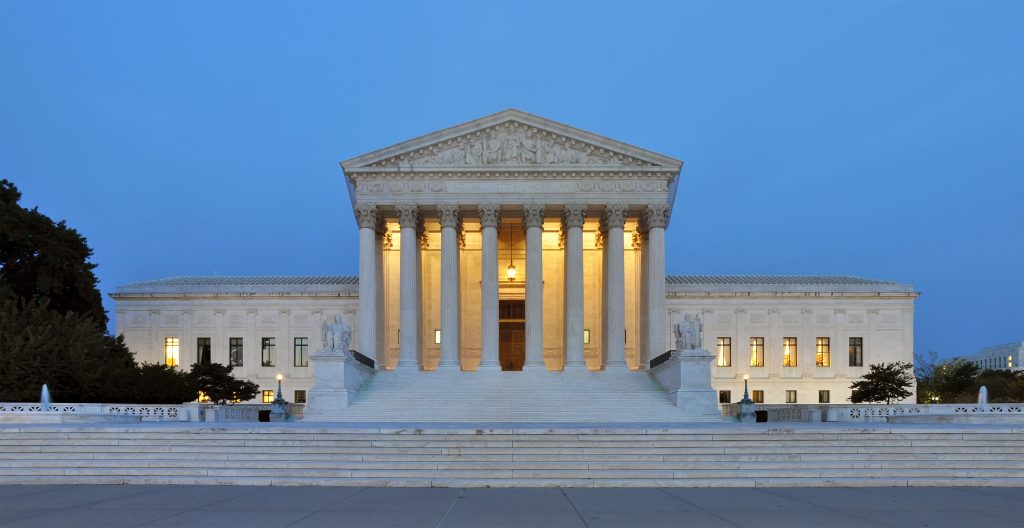
When institutional guardrails erode, the supreme court becomes the ultimate battleground where raw political power and everyday human lives violently collide. Over the past seventy-two hours, parallel developments across two continents have forced the highest judicial benches back into the global spotlight. These events are not academic seminars on jurisprudence; they represent tangible, seismic disruptions to governance, individual liberty, and democratic faith.
Around the world, the decisions and symbol of the supreme court reflect a dramatic evolution in how judicial authority intersects with democracy. In the United States, an increasingly assertive conservative majority continues to dismantle decades-old constitutional guardrails, altering both the structural separation of church and state and the statutory mechanisms that govern criminal justice reform. Simultaneously, halfway around the globe in New Delhi, the judicial capital has transformed into a fortified zone of dissent, demonstrating that when institutional remedies appear compromised, citizens and lawmakers take their grievances directly to the courthouse gates.
The Global Judicial Pressure Cooker
Apex courts were originally conceived as detached arbiters, insulated from partisan turbulence to provide finality and legal stability. Yet, the modern political reality has fundamentally stripped away that insulation. Across diverse constitutional landscapes, judges are issuing rulings that reach far into everyday civil existence, while opposition movements increasingly view apex benches as either the final defense of democracy or a compromised redoubt of executive overreach.
The convergence of legal shifts in Washington and mass mobilizations in New Delhi illustrates a growing friction between judicial edicts and societal consensus. Rather than resolving profound national disputes, recent interventions have often amplified them. When judicial statutory interpretation threatens to return rehabilitated citizens to prison cells, or when election integrity disputes spill into traffic-halting demonstrations, the judiciary finds itself squarely at the center of public rage.
3 Critical Arenas Where Supreme Court Authority Faces Backlash
The friction surrounding judicial power is manifesting across three distinct, high-stakes battlegrounds that demand careful examination.
The Reimagining of Church and State in Washington
As reported by The Washington Post, the United States supreme court under Chief Justice John Roberts has methodically dismantled longstanding doctrines governing religious freedom, pushing the constitutional envelope toward greater accommodation of faith in public life. Over consecutive terms, the bench has discarded traditional tests that long governed Establishment Clause jurisprudence, permitting taxpayer-funded vouchers for religious schools and expanding corporate and municipal religious exemptions.
This ongoing term signals a critical escalation in that trajectory. Legal scholars and civil rights litigators are watching closely as the conservative supermajority weighs cases that could effectively redefine how religious liberty interacts with non-discrimination laws, public education, and state regulations. Critics argue that the Roberts bench is transforming a constitutional shield designed to protect minority beliefs into a sword that elevates religious exercise above neutral civic laws. Supporters counter that the bench is merely restoring original constitutional text that had been corrupted by mid-century secular orthodoxy. Regardless of perspective, the resulting doctrine creates an altered civic landscape where municipalities struggle to enforce equal protection standards without triggering federal litigation.
The Human Cost of the First Step Act Resentencing
Beyond abstract constitutional theory, high-bench rulings carry severe, irreversible human consequences. Patrick Dewayne Smith spent thirteen years in federal custody on drug charges before securing release under the bipartisan First Step Act. Smith diligently rebuilt his life, securing steady employment, reintegrating with family, and contributing to his local community. According to an investigation by AP News, a May supreme court ruling interpreting the First Step Act has suddenly upended his hard-won freedom, putting him at immediate risk of being returned to federal prison for the rest of his natural life.
The ruling hinged on a hyper-technical reading of statutory eligibility criteria, narrowing the legal pathways available to inmates seeking retroactive sentence reductions. By interpreting the statute strictly against defendants, the majority opinion cut short the rehabilitative promise heralded by lawmakers when the legislation passed with overwhelming bipartisan support. Smith’s terrifying reality illustrates the human fault lines created when formalist statutory mechanics clash with restorative justice. Families, defense attorneys, and criminal reform advocates are now grappling with an agonizing precedent that could tear hundreds of reformed individuals away from their communities and force them back behind bars.
New Delhi Barricades and the March Against the Election Chief
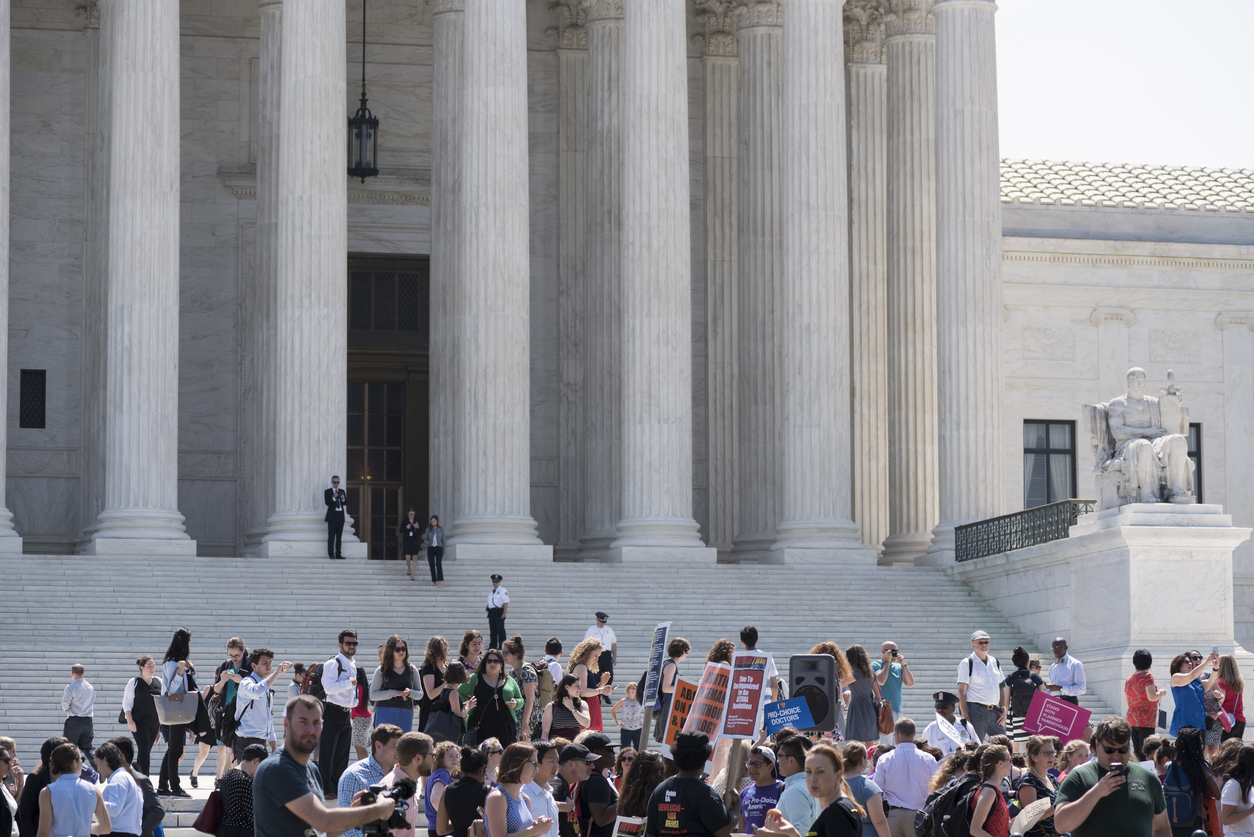
While the American bench reorders domestic statutes, India’s highest tribunal has become the physical ground zero of an escalating electoral integrity crisis. As reported by Reuters, BBC, and Al Jazeera, opposition leaders led by Rahul Gandhi launched an unprecedented march toward India’s supreme court to confront the nation’s election chief over allegations of vote tampering. The coordinated demonstration by the broad-based INDIA opposition alliance prompted law enforcement to shut down central New Delhi metro stations, deploy anti-riot barricades, and impose severe traffic restrictions across the capital.
Opposition leaders contend that the Election Commission of India has demonstrated systemic bias, failing to investigate widespread discrepancies, voter suppression tactics, and irregular vote tabulations. By directing their physical march straight toward the apex tribunal, the opposition bypassed executive offices to deliver a symbolic, high-pressure plea directly to the justices. Demonstrators carried copies of the Indian Constitution, arguing that the judiciary represents the sole remaining independent entity capable of preserving electoral transparency before public faith collapses entirely. The dramatic standoff highlighted a sharp deterioration in trust toward state electoral apparatuses, turning the steps of the judicial complex into an active political theater.
Institutional Friction and the Fragility of Balance
These parallel crises reveal a deeper, systemic paradox facing modern judicial institutions. When citizens conclude that legislative avenues are deadlocked and executive departments are unaccountable, they channel their collective hopes into the legal system. Yet, when the legal system responds with either narrow formalist decisions that destroy reformed lives, or doctrinal shifts that disrupt social peace, the resulting disenchantment cuts doubly deep.
Institutional equilibrium requires delicate structural integrity. Maintaining stability within complex democratic bodies functions much like culinary physics; as outlined in our review of Emulsion stability science and 4 proven rules that prevent broken sauces, preserving balance demands absolute adherence to foundational constraints before the underlying bond irreparably breaks. When an apex tribunal loses touch with the fundamental balance between statutory interpretation and societal reality, the entire constitutional structure risks separation.
The intense scrutiny surrounding the supreme court underscores how fragile legal trust becomes when decisions stray from established consensus. Across international borders, legal doctrines are not abstract mathematics. They determine whether a father remains free to work and care for his children, whether a local school district can maintain non-sectarian educational policies, and whether an electorate believes its ballots are accurately counted. The moment that legal reasoning divorces itself from foundational fairness, the moral authority of the bench begins to erode.
Global Precedents and the Future of Apex Judiciary Power
The converging developments in the United States and India provide a stark preview of judicial politics in the decade ahead. Apex benches will not be allowed to deliberate in tranquil isolation. From controversial constitutional reinterpretations in America to mass street mobilizations in New Delhi, the modern supreme court is no longer insulated from public confrontation.
In the United States, the coming months will test whether congressional lawmakers can pass targeted remedial legislation to repair the First Step Act loopholes exposed by recent judicial decrees. Without legislative intervention, individuals who demonstrated exemplary rehabilitation remain at the mercy of mechanical judicial enforcement. At the same time, the Roberts court will continue issuing rulings that test the outer bounds of church-state relations, reshaping public sector norms for an entire generation.
Across South Asia, the reaction of the New Delhi bench to the opposition march will signal whether constitutional courts are willing to enforce robust oversight upon autonomous electoral authorities. If the bench retreats behind procedural deference, civic unrest over democratic transparency will inevitably escalate. If it intervenes, it risks explosive confrontations with ruling party machinery. In every theater, the lesson remains unmistakable: apex courts are no longer mere arbiters of statutory text, but active participants in the high-stakes struggle over the future of global democracy.