Daylight Savings Leaves 4 Crucial Battles Unresolved as Clocks Fall Back Across America
With Americans preparing to turn back their clocks, congressional leaders concede there is no clear path to end the biannual ritual. Fresh data warns that permanent clock shifts could force millions of students into dangerous winter commutes.

Every autumn, the confusing schedule of daylight savings sends millions of Americans rushing to search engines to determine when their clocks will shift. In living rooms from Austin to Detroit, the perennial ritual involves inspecting digital dashboards, resetting microwave displays, and asking whether Sunday morning brings a gifted hour of rest or unexpected disorientation. As the first Sunday of November approaches, that nationwide seasonal puzzle has once again captured the public imagination.
Local reporting from across the country captures the sheer scale of the collective query. As highlighted by the Detroit Free Press and The Detroit News, residents throughout Michigan and neighboring states consistently scramble to confirm whether the clock change occurs tonight or next weekend, bracing for the shift back to standard time at 2:00 a.m. Simultaneously, the Austin American-Statesman documented a surge in inquiries from Texas residents questioning when the change takes effect and why state lawmakers have yet to abolish the biannual disruption. What appears on the surface to be a simple calendar event is actually the flashpoint of an intractable national debate involving public safety, human biology, retail lobbying, and deadlocked federal politics.
The Annual Ritual and the Confusion Surrounding Fall Back
The machinery governing American time zones is far more rigid than most citizens realize. Under the Uniform Time Act of 1966, the federal government established a synchronized framework for time observation, which was later amended by Congress in 2005 to extend the daylight-saving period from the second Sunday in March to the first Sunday in November. When clocks fall back by one hour, the United States returns to standard time, granting commuters brighter mornings at the immediate expense of late-afternoon sunlight.
Yet every time autumn arrives, the perennial debate surrounding daylight savings reemerges across state legislatures and community message boards. Residents repeatedly question why their states cannot simply opt out of the biannual switch. The reality is rooted in federal preemption. While the Uniform Time Act explicitly permits any state to exempt itself and remain on year-round standard time—a path long embraced by Hawaii and the majority of Arizona—it strictly prohibits states from adopting permanent daylight saving time on their own authority.
This statutory limitation creates endless frustration in state capitols. Over the past decade, dozens of states, including Texas, Michigan, and Florida, have drafted or passed trigger laws signaling their intent to ditch the time change forever. Those state measures remain completely dormant, however, because they require an act of the United States Congress to take legal effect. As a result, tens of millions of citizens remain caught in an annual cycle of logistical confusion, resetting their household appliances while waiting on a legislative solution that never seems to arrive.
Washington Gridlock and the Stalled Push for Permanent Sun
While state lawmakers wait on federal action, the legislative appetite on Capitol Hill has hit a formidable wall. Despite recurring promises from politicians across the political spectrum to end the clock changes, congressional leaders are openly acknowledging that legislative progress has ground to a halt. As reported by Politico, Senate Republican Leader John Thune candidly stated there is no clear path forward for federal clock-change legislation, dampening expectations that the biannual ritual will disappear in the near future.
The frank assessment from Thune came even as President Donald Trump renewed his vocal demand for permanent daylight savings across the nation. The divide highlights a stark disconnect between high-profile political rhetoric and the difficult mechanics of passing nationwide legislation. Clock reform routinely exposes deep regional and philosophical fissures that do not conform to standard partisan alignments.
Lawmakers representing the western edges of existing time zones face an entirely different set of daily realities than those situated on the eastern boundaries. A time policy that provides pleasant evening light for outdoor recreation in Miami can simultaneously plunge western Michigan, eastern Indiana, or west Texas into bitter morning darkness until mid-morning. Because every single state delegation balances competing local industries and parental concerns, consensus remains virtually unattainable, leaving the Sunshine Protection Act and its legislative siblings indefinitely stranded in committee rooms.
4 Crucial Dilemmas Fueling the National Clock Debate
The debate over how America should measure its hours is far more complex than a preference for evening golf versus early morning sunshine. Decades of research, regional data, and past historical missteps demonstrate that altering federal time policies triggers severe unintended consequences across society.
Danger in the Dark for Schoolchildren
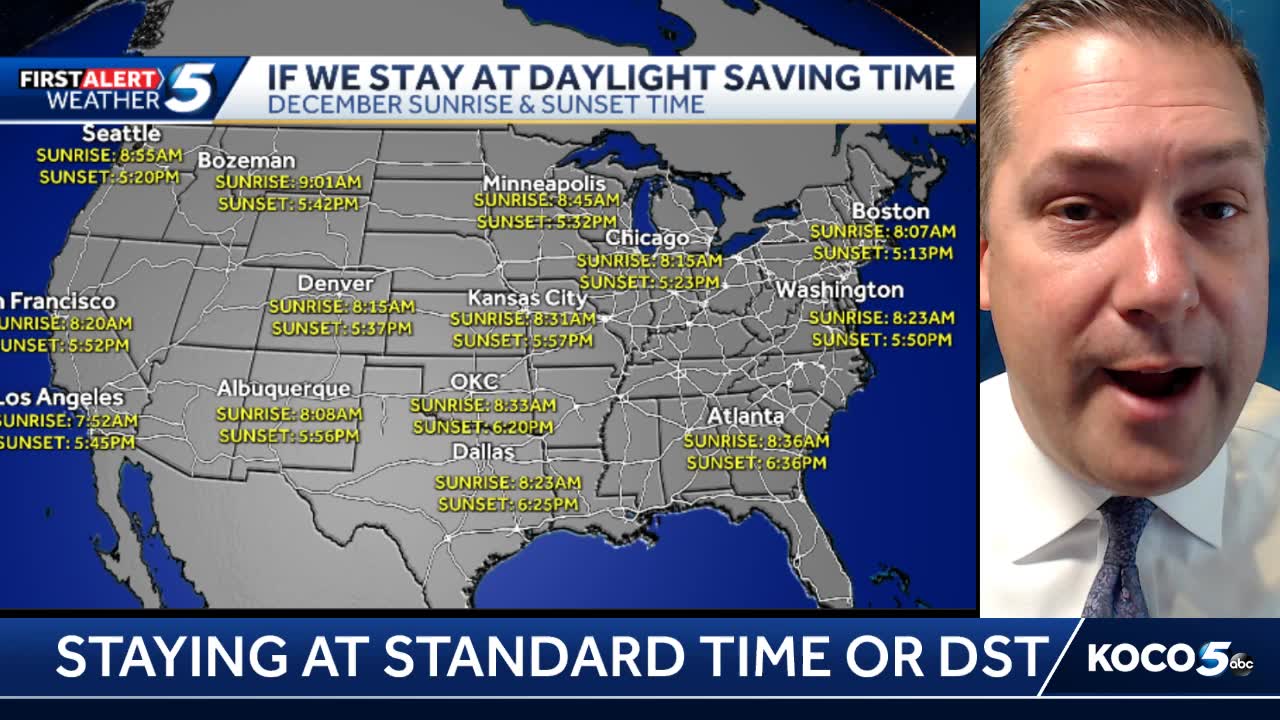
The most immediate and emotionally charged argument against permanent daylight time centers on student safety. As reported by The Hill, fresh nationwide data demonstrates that evaluating the real-world impact if daylight savings were enacted year-round reveals an alarming consequence: millions of elementary and secondary students would be forced to commute to school in total darkness during the dead of winter.
Under a permanent spring-forward framework, sunrises in dozens of major metropolitan areas across the Midwest, Northern Plains, and Pacific Northwest would not occur until after 8:30 a.m., and in some regions, well past 9:00 a.m. in December and January. That schedule places young children at bus stops, walking along suburban roads, and crossing busy intersections during the darkest, coldest, and most hazardous hours of the morning commute. The United States previously attempted year-round daylight saving time during the 1973-1974 energy crisis under President Richard Nixon. That experiment was abandoned within months after eight Florida schoolchildren were struck and killed by vehicles in pre-dawn darkness, prompting an immediate public outcry and a swift congressional repeal.
Biological Clocks and Human Health Disruption
While safety advocates worry about traffic, medical experts are deeply concerned with human physiology. The American Academy of Sleep Medicine and leading circadian biologists have consistently argued that standard time is the only option that naturally aligns with the human circadian system. Morning sunlight is the primary environmental signal that shuts down melatonin production, regulates core body temperature, and resets internal neurological rhythms.
Just as cinematic sound engineers orchestrate invisible environmental cues to ground human perception—mastering techniques explored in Foley sound design and 4 proven secrets that create unforgettable cinematic realism—the human body relies on sunlight as its foundational biological cue. When morning light is delayed by permanent daylight time, individuals experience chronic social jetlag, leading to documented increases in sleep deprivation, metabolic dysfunction, and cardiovascular stress. Conversely, while reverting to standard time in autumn repairs circadian alignment, the abrupt springtime switch induces acute health spikes, including measurable surges in heart attacks and traffic collisions during the initial transition week.
Economic Tradeoffs and Consumer Spending
Behind the scientific discussions lies intense corporate lobbying. The push for permanent evening light is heavily bankrolled by the retail, hospitality, convenience store, and recreation industries. For decades, business associations have recognized that consumers are far more likely to shop, dine at outdoor restaurants, visit theme parks, and play golf if daylight lingers after standard working hours.
The Association of Convenience Stores and the golf industry have historically been among the most aggressive proponents of keeping evening light extended as long as possible, estimating that an extra hour of post-work illumination generates hundreds of millions of dollars in economic activity. Conversely, the agricultural sector, commercial television networks, and sleep-related wellness organizations caution that these retail gains come at the expense of morning productivity, agricultural workflows, and workforce alertness.
Federal Preemption Versus State Frustration
The final dilemma is structural governance. Because federal statutes prohibit states from acting independently on permanent daylight time, state legislatures find themselves paralyzed between local public pressure and federal inaction. Lawmakers in Austin, Lansing, and Tallahassee face constituents demanding an immediate end to the biannual clock shift, yet state officials are powerless against laws that prevent states from adopting permanent daylight savings without federal intervention.
The result is a patchwork of symbolic legislation. Over thirty states have passed resolutions or contingent bills pledging to lock the clock the moment Washington gives permission. But because Congress remains split, these measures serve only as symbolic gestures, deepening voter cynicism and leaving the national map fundamentally fragmented.
The Realistic Outlook for America Time Policy
As the United States enters another winter season, the national exhaustion with daylight savings remains widespread, yet meaningful reform is firmly off the table. Senator Thune’s assessment of congressional inertia confirms that lawmakers recognize the electoral dangers of making the wrong choice. Any member of Congress who votes to make daylight time permanent risks immense political fallout if winter traffic accidents rise, while voting for permanent standard time draws fierce backlash from business lobbies that fear curtailed evening commerce.
For the foreseeable future, the status quo of twice-yearly clock adjustments will endure as a messy compromise between morning safety and afternoon commerce. For households preparing for the upcoming change, the practical directives remain straightforward: verify automated devices, manually adjust legacy clocks before going to bed, and take advantage of the temporary morning brightness. While the legislative machinery in Washington remains deadlocked, the twice-yearly ritual of daylight savings is unlikely to vanish anytime soon, keeping the debate alive for another generation of weary commuters.