Discounted cash flow valuation and 4 proven rules that prevent costly investment traps
Financial models often project false certainty when built on fragile assumptions. Discover the mechanics of intrinsic value and four battle-tested rules that prevent catastrophic valuation blunders.
Mastering discounted cash flow valuation separates serious capital allocators from speculators who rely on superficial price-to-earnings ratios. Market prices swing wildly on quarterly narratives, macroeconomic noise, and algorithmic momentum, but an underlying enterprise produces tangible purchasing power. An investor who purchases shares without understanding the mechanics of distributable cash is merely playing a psychological guessing game. They hope someone else pays more tomorrow for an asset they cannot fundamentally price today.
Multiples such as enterprise value to EBITDA offer convenient shorthand, yet they routinely conceal deteriorating operating fundamentals. Two competing firms trading at ten times cash flow can possess radically different reinvestment demands, debt maturity schedules, and capital conversion rates. True intrinsic underwriting looks past the veneer of accounting profit. It tracks cold, hard cash as it moves from customer invoices, passes through working capital drains, satisfies reinvestment mandates, and finally arrives in the owner’s bank account.
Why Intrinsic Value Eludes Even Experienced Analysts
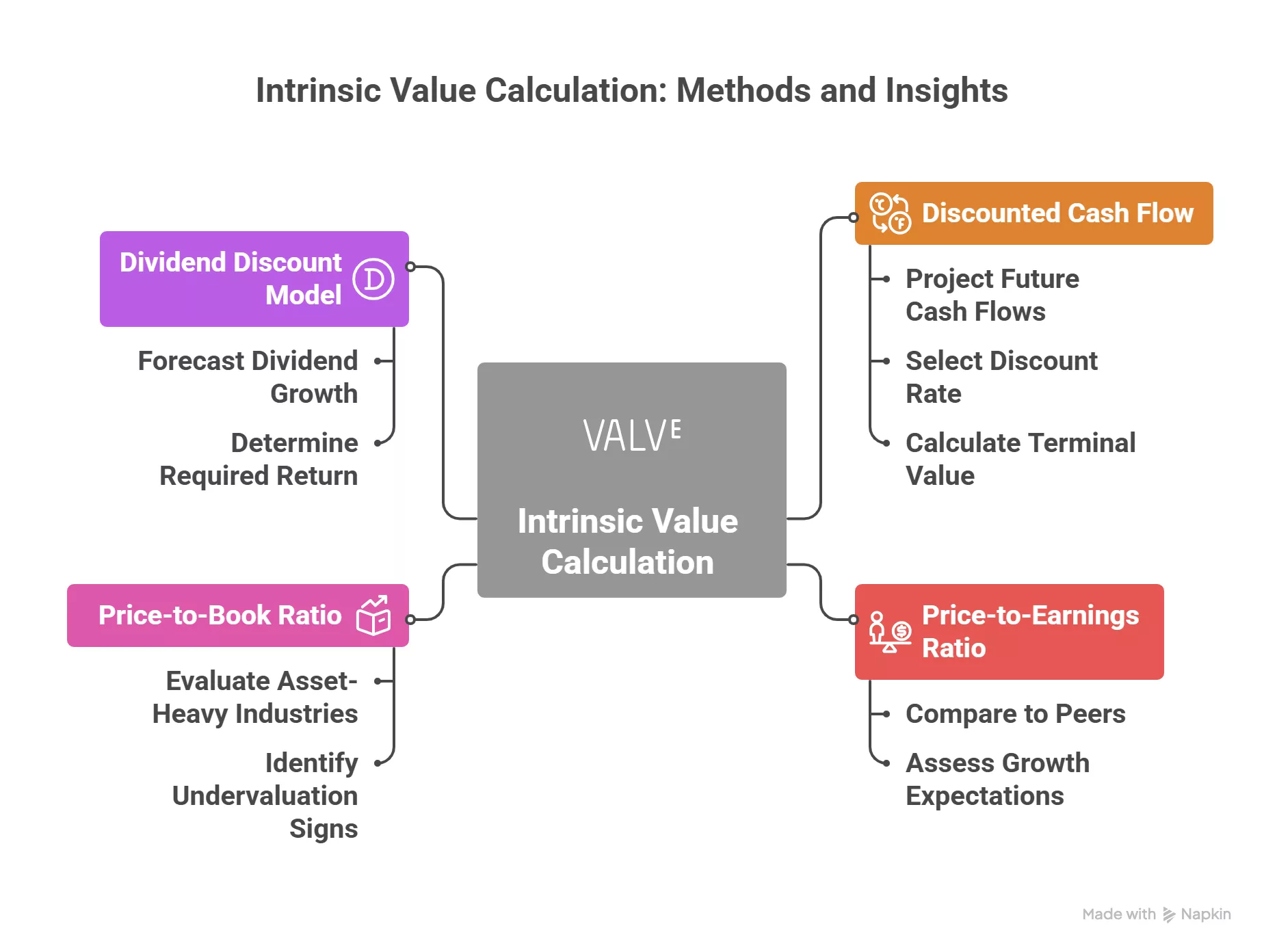
At its foundational layer, a discounted cash flow valuation asserts an elegant, uncompromising truth. A business is worth the exact sum of all future cash flows it will ever produce, discounted back to the present day using an appropriate hurdle rate. The premise feels delightfully mathematical. You plug projected cash streams into an electronic grid, apply a compounding discount rate, and arrive at a single number representing fair value.
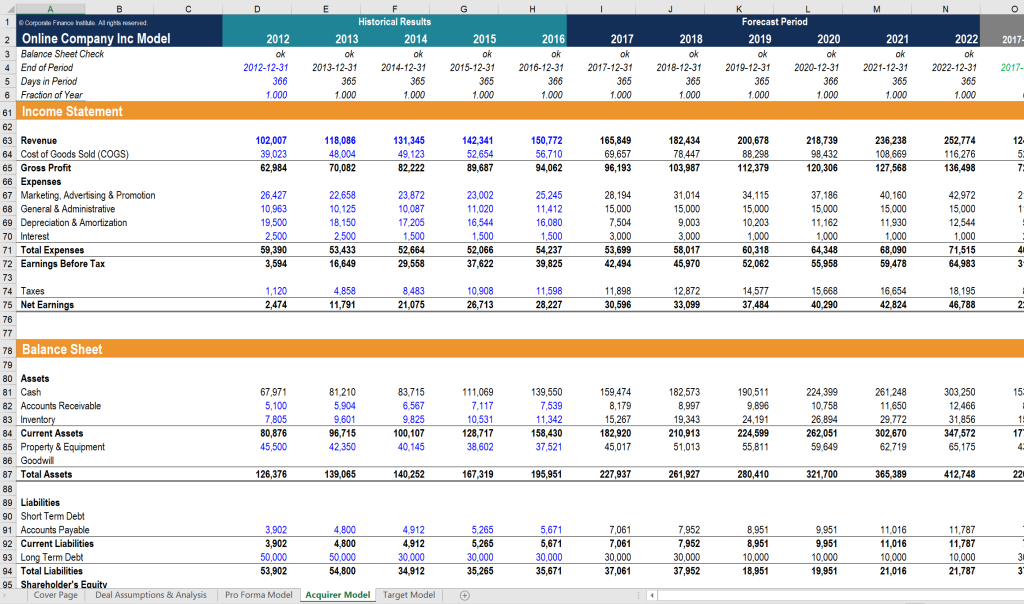
This apparent precision is precisely where analysts stumble into catastrophic traps. Modern financial software allows anyone to assemble hundreds of interconnected spreadsheet rows spanning decades into the future. Because the software generates neat outputs to two decimal places, practitioners confuse calculation precision with analytical accuracy. Small adjustments in working capital assumptions or discount rates ripple across long forecast horizons, generating valuation variances of millions or billions of dollars.
Accounting earnings rarely match cash truth. Accrual accounting exists to smooth lumpy operational events over arbitrary calendar cycles. Management teams capitalize software development, recognize revenue ahead of cash receipt, and defer operating expenses through creative capitalization policies. While these methods comply with regulatory reporting frameworks, they obscure how much physical liquidity an operating company generates before external financing rescues the payroll account.
The Mechanics of Future Cash and the Gravity of Discount Rates
Understanding intrinsic value requires isolating free cash flow to the firm. This figure reflects the unencumbered cash generated by core operations that remains available to satisfy both debt holders and equity owners after funding necessary capital additions and working capital increases. If an enterprise must spend every penny of operational inflow simply to replace deteriorating plant equipment, its reported net income represents economic phantom wealth.
The discount rate acts as universal gravity in this ecosystem. Money received ten years from now carries inherently less economic utility than capital resting in your pocket this afternoon. That discount factor does not merely reflect monetary inflation; it accounts for systematic operational risk and the undeniable opportunity cost of forgone alternative investments. A dollar delayed is a dollar exposed to customer churn, disruptive technology, and unexpected regulatory upheaval.
When analysts rush a discounted cash flow valuation, they frequently treat discount rates as static administrative inputs extracted from standard asset pricing models. They blindly compute a weighted average cost of capital without considering structural balance sheet changes. When credit spreads widen or benchmark interest rates shift upward, distant projected cash streams suffer intense arithmetic compression. An asset projected to generate cash twenty years away drops sharply in present worth the moment required hurdle rates move upward.
Four Proven Rules That Keep Cash Projections Grounded in Reality
Transforming a discounted cash flow valuation from a fragile academic toy into an actionable underwriting tool requires defensive guardrails. Flawed models do not fail because the underlying mathematical formula is defective. They fail because analysts populate cells with heroic assumptions about competitive durability and capital efficiency. Applying systematic constraints protects capital allocators from their own innate optimism.
Normalize Capital Expenditures to Reflect Real Maintenance Costs
Financial statements separate operating expenses from capital expenditures, but equipment deteriorates without regard for tax depreciation schedules. Many analysts make the rookie mistake of assuming that depreciation and amortization roughly equal ongoing capital expenditures over a multi-year horizon. In capital-intensive businesses or fast-growing platforms, that assumption invites ruin.
Accounting depreciation reflects historical costs paid years ago, before general price inflation increased the cost of replacement machinery. If an industrial fleet purchased ten years ago now costs twice as much to replace, historical depreciation schedules understate true cash maintenance requirements. Analysts must decouple growth investments from pure maintenance capital expenditures. Stripping out true sustaining capital expenditure ensures that projected cash flows represent distributable liquidity rather than funds required to keep the factory floor running.
Stress Test the Terminal Value Against Microeconomic Limits
Terminal value frequently accounts for seventy to eighty-five percent of the total calculated enterprise value in standard ten-year models. This reality means most analysts are not valuing the explicit forecast period; they are valuing an aggressive perpetuity calculation tacked onto the end of their spreadsheet. Allowing terminal value to dominate your discounted cash flow valuation without subjecting it to economic reality creates an invisible cliff.
A firm cannot indefinitely outgrow the gross domestic product of the economy in which it operates. Setting a perpetual growth rate above three percent implies that the enterprise will eventually consume the entirety of global economic output. Competitive advantages also decay over time. As highlighted by Aswath Damodaran’s valuation research at NYU Stern, excess returns on invested capital inevitably attract predatory competitors who compress margins toward the industry cost of capital. An underwriting model must enforce return decay, fading excess profitability over the terminal horizon.
Unbundle the Cost of Capital to Respect Operating Leverage
Financial modeling often mirrors auditory craftsmanship. Just as artists master Foley sound design and 4 proven secrets that create unforgettable cinematic realism by assembling artificial layers to produce believable organic resonance, an equity analyst constructs rows of calculated cash streams to mimic a firm’s operational heartbeat. If the underlying mechanics disregard physical reality, both illusions shatter the moment scrutiny arrives.
Cost of capital calculations fall apart when practitioners ignore operating leverage. Businesses with heavy fixed cost burdens experience dramatic earnings volatility during operational downturns. If debt service obligations remain constant while revenue contracts, the underlying cost of equity must climb to reflect the heightened risk of financial distress. Static discount rates fail to capture this non-linear risk escalation. A resilient model adjusts the hurdle rate upward whenever projected operating leverage magnifies downside vulnerabilities.
Decouple Revenue Growth Rates From Margin Expansion Assumptions
The classic signature of an unseasoned modeler is the simultaneous projection of accelerating top-line revenue and expanding operating margins. While this double tailwind occurs briefly during product breakthroughs, sustaining both trends simultaneously over a five-year window runs counter to basic corporate physics. Rapid expansion demands heavy marketing outlays, competitive discounting, and administrative overhead.
Scaling into new regional markets or adjacent customer segments forces companies to accept lower marginal unit economics. Customers outside the early-adopter core cost significantly more to acquire and service. By divorcing sales growth projections from profitability trajectories, analysts eliminate the intoxicating hockey-stick curve that seduces unsuspecting investors. Real-world scaling consumes working capital aggressively, and inventories balloon long before revenues convert into realized bank balances.
The Behavioral Traps That Derail Even Flawless Mathematical Models
Valuation blunders are rarely caused by a failure of spreadsheet mathematics; they emerge from unmonitored human psychology. The cognitive bias in financial analysis means that a discounted cash flow valuation often acts as retroactive justification for an existing emotional preference. An analyst who loves an executive management team or loves a consumer brand unconsciously adjusts revenue growth assumptions by two percent to justify an investment thesis.
Reverse engineering offers the most effective antidote to this cognitive trap. Instead of forecasting numbers into the darkness and declaring what an asset is worth, invert the entire procedure. Take the current public market enterprise value as a given fact and solve backward for the operating metrics required to substantiate that price. What sustained revenue growth rate, operating profit margin, and return on newly deployed capital does the prevailing price require?
This reverse inquiry reframes the investment problem completely. It changes the debate from an abstract debate over theoretical fair value to a grounded operational assessment. If current market pricing requires an enterprise to double its market share while expanding operating margins to historic highs, the underwriting profile carries an asymmetric risk of disappointment. The model serves not as a crystal ball, but as an error-detection mechanism.
Building Resilient Portfolios Through Principled Cash Flow Modeling
Capital preservation demands a strict margin of safety between calculated intrinsic worth and the price paid at execution. No matter how clean your balance sheet adjustments or how conservative your revenue assumptions, external reality remains fundamentally uncertain. Global trade friction, customer taste shifts, and macroeconomic shocks will disrupt the neat pathways of your forecast columns.
Demanding a significant discount to your calculated fair value provides an operational shock absorber. If cash flows underperform your base projections by twenty percent due to unforeseen industry headwinds, an adequate purchase discount preserves your underlying capital. Approaching discounted cash flow valuation not as a fortune-telling machine but as a disciplined sanity check transforms how you allocate capital. It frees you from the speculative anxiety of daily market movements and anchors your decisions in the enduring physics of economic cash generation.