Foley sound design and 4 proven secrets that create unforgettable cinematic realism
Most movie audio heard on screen is completely fabricated inside specialized acoustic studios. Explore the hidden physics, psychology, and prop mechanics that give cinematic storytelling its tactile weight.

Mastering Foley sound design turns hollow silent frames into visceral storytelling experiences that make audiences physically flinch, lean forward, or weep. Most moviegoers assume the audio accompanying an intimate dinner scene or a muddy battlefield charge was captured on set by overhead boom microphones. In reality, production microphones are strictly calibrated to isolate human dialogue while rejecting background noise. When the director yells cut, the resulting audio track is surprisingly sterile. It holds clear voices against an eerie vacuum. The rustle of a trench coat, the scuff of a leather boot across flagstones, the icy clink of whiskey against crystal, and the subtle flex of a wooden chair are entirely absent.
To rebuild the tactile reality of the physical world, post-production teams retreat into specialized recording stages called Foley pits. Named after Jack Foley, an early cinema pioneer who synchronized live physical sound effects to projected film at Universal Studios, this disciplined craft bridges the gap between sight and sensation. The historical evolution of Foley sound design reveals why human physical performance cannot be replaced by sterile static waveforms. Sound is not merely acoustic documentation. It is an emotional delivery mechanism that communicates mass, friction, texture, temperature, and psychological tension.
The psychoacoustics of physical impact and sensory belief
The human auditory system is exceptionally discerning. Thousands of years of evolutionary survival trained the brain to calculate mass, trajectory, and immediate threat from minute acoustic clues. When an onscreen character drops a heavy iron key onto a mahogany table, your subconscious mind calculates the expected acoustic signature in milliseconds. If the sound lacks transient impact, low-end resonance, or the subtle rattle of vibrating wood grain, the illusion breaks. The viewer might not consciously identify the flaw, but the brain registers an instinctive dissonance. The cinematic world suddenly feels fake, flat, and hollow.
Acoustic authenticity requires reproducing kinetic energy rather than simple sound waves. Every movement captured in Foley sound design relies on kinetic transference, where an artist physically mimics the onscreen body. The performer must embody the actor’s mass, fatigue, emotional hesitation, and momentum. In the physical realm, energy travels sequentially through joints and levers to produce force. Just as dissecting tennis serve biomechanics and 4 proven laws that generate effortless power illustrates how athletic power flows through a kinetic chain, a Foley artist must ground their body to match an actor’s center of gravity. A footstep recorded while sitting in a chair sounds fundamentally different from a step recorded while leaning forward with twenty pounds of imagined combat gear.
Four proven principles that give screen audio tangible weight
Building a cinematic soundscape from zero requires deep mechanical knowledge, boundless material curiosity, and relentless synchronicity. When practitioners master the physical mechanics of Foley sound design, everyday household items transform into visceral narrative tools. These four foundational disciplines elevate sterile post-production tracks into living, breathing cinema.
Fabric friction establishes character movement and emotional presence
Before footsteps or violent impacts are ever recorded, Foley artists track the cloth. Known throughout post-production studios as the cloth pass, this subtle layer provides continuous sensory glue beneath every sequence. Every garment produces a distinct acoustic fingerprint. A silk dress glides with soft, whisper-thin high frequencies, suggesting grace or vulnerability. Heavy denim creates coarse, abrasive friction that communicates blue-collar labor or rugged resilience. Leather groans with dense, creaking overtones that convey authority, menace, or rigid armor.
To capture authentic cloth passes, artists rarely rely on a single wardrobe rack. They physically wear or manipulate vintage garments close to ultra-sensitive condenser microphones. The performer watches the actor on a projection monitor, matching their breathing, arm swings, and body shifts. If a character crosses their legs in tense silence during an interrogation, the friction of wool trousers rubbing against itself speaks louder than dialogue. Without this delicate layer of fabric interaction, characters appear to float through their environments like computer models disconnected from physical gravity.
Prop manipulation mirrors emotional weight rather than literal reality
One of the greatest misconceptions about film audio is that recording an actual object yields the best sound for that object. In reality, actual objects often sound shockingly disappointing on microphone. Real swords striking steel sound like thin metallic clicks rather than the sweeping, operatic rings demanded by epic fantasy. A real punch landing on a human jaw sounds like a dull, muffled thud rather than the skull-rattling crunch an audience expects.
The Foley artist operates as an acoustic impressionist. The goal is emotional verisimilitude rather than documentary truth. To build the horrific sound of snapping bones, artists routinely twist thick stalks of celery, snap bundles of dry bamboo, or splinter frozen heads of cabbage. For visceral gore or flesh wounds, soaked chamois cloths, wet sponges, and overripe melons yield devastating squelches. Rusty hand tools, antique car door latches, and heavy brass wrenches become the sinister internal mechanisms of futuristic weaponry. The practitioner searches scrap yards and hardware aisles, auditioning hundreds of items to find the precise tactile timbre that triggers genuine emotional reaction in the listener.
Footstep choreography captures internal psychology and environment
In classic Foley sound design, recording footsteps is never merely about matching the strike of a shoe against a floorboard. The footstep is an intimate extension of human psychology. An anxious character scuffs their heels, steps unevenly, and transfers weight with nervous hesitation. A confident predator moves with smooth, deliberate, ball-of-the-foot silence. A drunken wanderer lands heavy on the outer heel, followed by a dragging toe that betrays physical exhaustion.
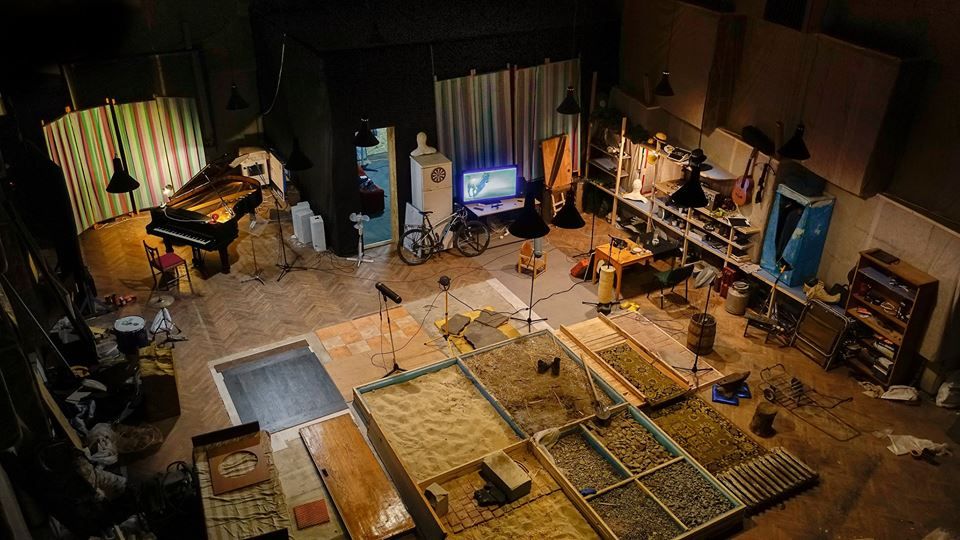
To accommodate the myriad terrains of global filmmaking, professional Foley stages feature specialized pits sunken into the studio floor. These pits are filled with varying depths of pea gravel, coarse river rock, fine sand, dry dirt, mud, snow-simulating cornstarch, hardwood parquet, and marble slabs. Foley artists curate extensive collections of footwear, maintaining dozens of worn shoes with leather soles, soft rubber sneakers, heavy combat boots, and tap heels. The artist must synchronize their strides with microsecond precision against the projection screen, matching the exact heel-to-toe roll of the actor while balancing posture to convey genuine physical mass.
Acoustic spatialization and microphone distance create three dimensional depth
Sound does not exist in an abstract acoustic vacuum. It exists within architecture. A common trap in poor audio reproduction is capturing every sound bone-dry and hyper-proximate to the microphone capsule. When a character drops a glass fifty feet down an echoey stone hallway, recording a close-up crack with pristine clarity instantly shatters visual depth. The eye sees vast distance, but the ear perceives a sound whispered directly against the eardrum.
Mastering space requires manipulating physical distance and acoustic reflections. Foley recordists balance directional shotgun microphones, sensitive large-diaphragm condensers, and distant room ambient microphones. By shifting physical distance between the prop and the microphone, the team mimics the focal length of the camera lens. Close-up framing calls for tight, intimate proximity that reveals fine textures and sub-bass transients. Wide-angle cinematic landscape shots demand that the artist work ten to fifteen feet back into the room, letting the natural reflections of the Foley stage soften the attack and color the decay. This spatial coherence allows the audience to map the physical dimensions of the scene with their eyes closed.
Why modern digital workstations still depend on analog Foley sound design
The modern film industry operates almost entirely within computer-based digital audio workstations loaded with petabytes of pre-recorded sound effects libraries. With a few keystrokes, an editor can search tens of thousands of recorded gunshot cracks, door slams, and galloping horse hooves. On paper, it would seem that manual performance in a dirt pit is an outdated relic of early Hollywood.
Yet pre-recorded digital libraries suffer from a fatal flaw: they lack organic adaptability. A static sound file repeated three times in succession produces identical acoustic waveforms, triggering an artificial sensation known among audio engineers as the machine-gun effect. Human motion is inherently non-linear and chaotic. No two strides across a wooden porch strike with the exact same velocity, angle, or duration. The human ear catches micro-variations effortlessly. Analog human performers introduce spontaneous micro-timings, velocity variations, and emotional idiosyncrasies that digital software cannot synthesize.
Furthermore, performing audio live to the picture allows for seamless narrative integration. A Foley artist can gradually accelerate the tempo of a character’s footsteps over twenty seconds to match a mounting panic attack, organically bending volume, shoe scrape, and breathing. According to standards published by the Motion Picture Sound Editors organization, tactile human performance remains the defining foundation of professional cinematic post-production. The human hand remains the ultimate instrument of acoustic storytelling.
The invisible discipline behind unforgettable screen storytelling
Great sound design is fundamentally selfless. When visual effects artists construct an astonishing digital creature or cinematographers capture an intoxicating sunset, audiences notice immediately. Foley artists, by contrast, measure their greatest triumphs by absolute invisibility. If a moviegoer walks out of a theater thinking about how brilliant the coat rustle or soup spoon sounded, the audio failed to serve the illusion. The sound must slip past the conscious mind, penetrating directly into the viewer’s emotional nervous system.
When you strip away musical scores, explosive pyrotechnics, and clever dialogue, movies live or die on physical connection. We care about stories because we inhabit the physical reality of the characters on screen. We feel the bite of the mountain wind because someone crunched leather gloves in dry cornstarch. We flinch at the impact of a blow because someone hammered a raw cabbage with a wooden mallet. Every frame of cinema whispers for tactile depth, proving that Foley sound design remains the invisible soul of filmmaking.