Kerry Kennedy Details 3 Painful Truths Hollywood Got Completely Wrong
Kerry Kennedy is confronting Hollywood myth-making head-on following the premiere of Ryan Murphy’s Love Story. Releasing a poignant new memoir, she reveals the deep emotional scars and unyielding resilience behind the Kennedy legacy.
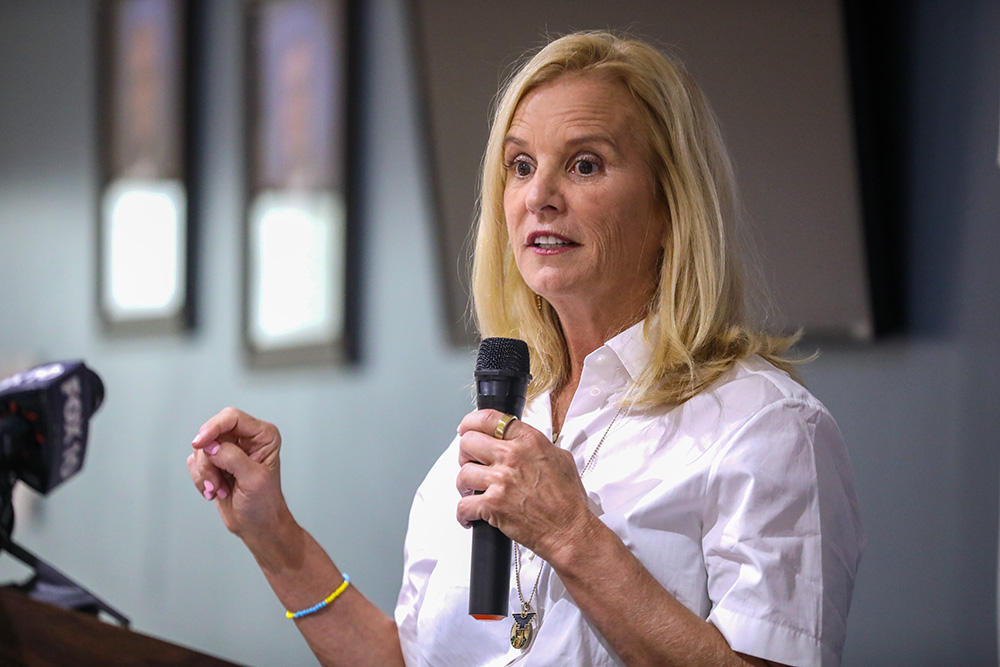
Human rights advocate Kerry Kennedy has stepped into the national spotlight to challenge popular television fiction and reclaim the authentic narrative of her family’s most private heartbreaks. Following the debut of creator Ryan Murphy’s drama series Love Story on FX and the publication of her revelatory tribute volume, public curiosity surrounding America’s most storied political dynasty has erupted across global search platforms.
The sudden surge in public interest highlights a recurring cultural tension. For decades, dramatists have treated the personal lives of Robert F. Kennedy, his wife Ethel, and their eleven children as raw material for soap operatic entertainment. In interviews surrounding her new biographical work, Kerry Kennedy offers an unfiltered corrective to the television industry, detailing how sensationalized scripts obscure genuine emotional survival, devastating historical grief, and the true character of her late mother.
The Cultural Clash Over Ryan Murphy Portrayal
Prestige television thrives on domestic friction, yet that appetite often collides with real biographical facts. The current friction stems from Love Story, the high-profile Ryan Murphy anthology series dissecting the tumultuous relationship between John F. Kennedy Jr. and Carolyn Bessette. Viewers tuning in were presented with sharp, theatrical clashes inside the private quarters of the Kennedy compound in Hyannis Port, Massachusetts.
As reported by InStyle, the 67-year-old activist and author did not seek out the televised dramatization. Kerry was alerted to the fictionalized storylines by friends and family members who expressed shock at how central figures were framed on screen. The Hollywood depiction paints the compound as an exclusive, icy fortress where newcomers were subjected to cold rejections. That framing stands in stark contrast to the actual domestic environment sustained by Ethel Kennedy throughout her long life.
Deconstructing the Fabrications of Love Story
Speaking exclusively with People and Town & Country, Kerry Kennedy explained that while she avoided streaming the Ryan Murphy series, specific scenes described to her crossed the line from dramatic license into historical falsehood. Chief among these was a fabricated breakfast encounter where Ethel was shown turning away Carolyn Bessette at the morning table.
In an entertainment climate where narrative pacing mirrors the explosive drive dissected in Sprint acceleration mechanics and 4 proven rules that unlock explosive speed, television producers often bypass historical nuance to produce immediate emotional shock. Rather than representing Ethel Kennedy as the fiercely generous woman she was, the production leaned heavily on the trope of an unforgiving, elitist matriarch guarding the estate gates against an outsider.

3 Painful Realities Grounded in Genuine Kennedy History
The release of her definitive biography, Ethel Kennedy: The Extraordinary Life and Bold Legacy, provides a rigorous, firsthand counterweight to speculative television scripts. Across detailed conversations with national outlets, the author outlined three profound realities that completely contradict popular media interpretations.
The False Hyannis Port Breakfast Snub Rebutted
For Kerry Kennedy, the depiction of her mother rejecting Carolyn Bessette at the morning table was an unforgivable distortion of daily life at the compound. As she articulated to Town & Country Magazine, Ethel Kennedy never operated with social frostiness or exclusionary breakfast rules. The reality was the exact opposite: the home functioned as an open haven where guests, neighborhood drop-ins, and family members were unconditionally welcomed into the dining room.
Kerry emphasized that Ethel held deep affection for Carolyn Bessette. Far from rejecting her son’s partner, Ethel embraced Carolyn as an integral part of the family circle. The idea that Ethel would dismiss anyone who came downstairs for coffee or food was described by Kerry as completely foreign to the values her mother practiced every single day.
The Unhealed Trauma of David Kennedy Witnessing Assassination
Beyond correcting modern television scripts, the author opened up about the deep emotional wounds that haunted her siblings following the 1968 assassination of their father, Senator Robert F. Kennedy. As reported by Entertainment Weekly, Kerry Kennedy recounted the devastating emotional toll inflicted on her younger brother David, who was only 13 years old when their father was murdered at the Ambassador Hotel in Los Angeles.
David had been left alone in an upstairs hotel room during the California primary victory celebration. While the rest of the family stood near the podium downstairs, the 13-year-old boy watched the television broadcast live as his father was shot in the kitchen pantry. Kerry revealed that David never recovered from the psychological shock of watching his father’s murder play out in real time on a broadcast screen. That unhealed childhood agony precipitated years of intense substance addiction, leading directly to David’s tragic, premature death in 1984 at the age of 28.
Ethel Kennedy Enduring Legacy of Radical Joy
The third core reality dismantles the somber, brooding caricature often pinned to the Kennedy matriarch. In her landmark memoir highlighted on CBS News, Kerry Kennedy portrays a matriarch who responded to unfathomable catastrophe not with bitterness, but with an intentional, radical pursuit of joy. Ethel endured the violent murder of her husband, the early loss of two sons, and relentless media scrutiny, yet refused to let despair define her household.
The CBS News profile illustrated how Ethel created a boisterous, sports-filled, and laughter-rich home for eleven children. She channeled her grief into tireless human rights activism, establishing the Robert F. Kennedy Center for Justice and Human Rights while instilling in her children an unwavering dedication to public service. Her joy was not ignorance of tragedy; it was a conscious, hard-fought defense against defeat.
Why Historical Accuracy Matters in Public Memory
The friction between biographical accuracy and fictionalized entertainment exposes a critical issue in modern media consumption. When docudramas like Love Story air on global streaming platforms, millions of viewers accept dramatized personality traits as documented history. Without active rebuttal from surviving family members, sensationalized scenes replace authentic biographical truth in the public consciousness.
By stepping forward to clarify these narratives, Kerry Kennedy ensures that the complex reality of her family’s grief and resilience outlasts superficial dramatization. Historical records should not sacrifice the humanity of real individuals simply to heighten fictional tension. Confronting narrative inaccuracies preserves the genuine strength of figures like Ethel Kennedy, whose actual life required far more courage than any television script could ever invent.