Meat Braising Mechanics and 4 Proven Rules to Transform Tough Cuts Into Pure Gold
Submerging tough cuts into boiling broth often leaves them stringy and parched instead of rich and tender. Discover the thermodynamic science behind connective tissue conversion and master the secrets of the ultimate braise.
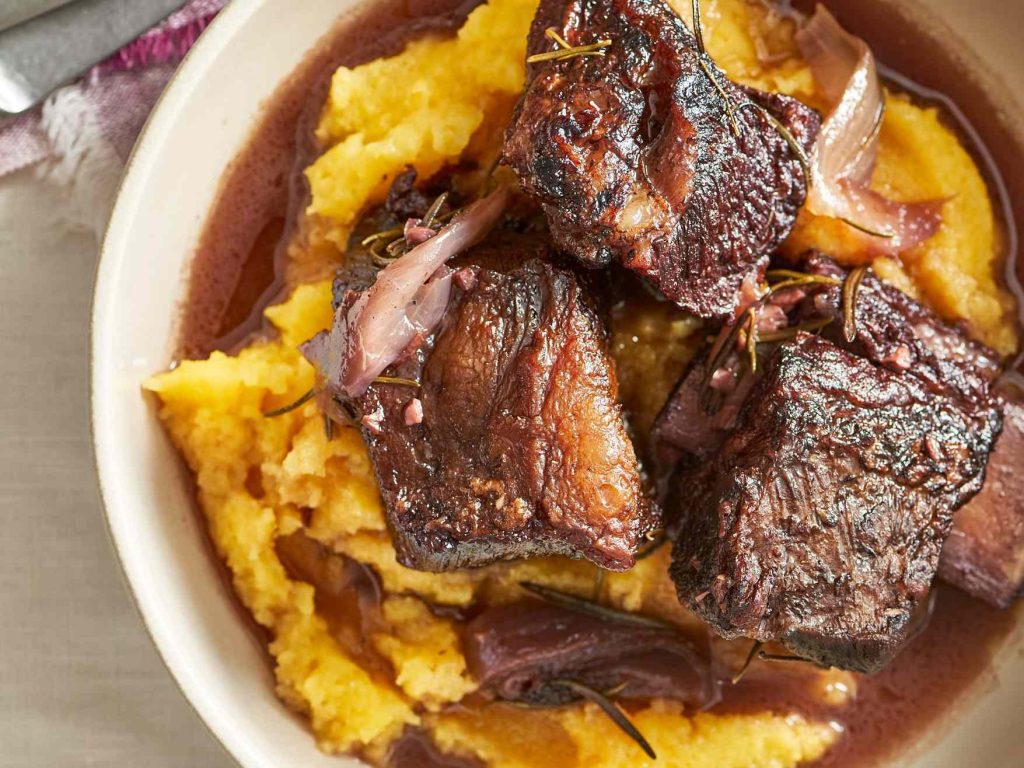
Mastering meat braising mechanics allows any cook to transform fibrous, aggressively tough cuts of muscle into unctuous, meltingly tender culinary masterpieces. Yet millions of home cooks fall prey to a baffling paradox every single evening. You submerge a marbled beef chuck, lamb shank, or pork shoulder into a pot of aromatic stock. You simmer it patiently for three long hours, expecting velvety luxury, only to pull out a gray, stringy block of protein that feels parched in the mouth despite literally dripping with broth. It defies intuition that meat bathed in simmering liquid could emerge dry as dust, but culinary physics does not care about visual assumptions.
Great braising is not an exercise in drowning meat until it surrenders. It is an intricate, slow-motion balance between structural protein contraction, moisture expulsion, and collagen conversion. When you understand the thermodynamic forces happening beneath the enameled lid of a Dutch oven, you stop relying on blind luck. You gain total control over texture, viscosity, and depth of flavor, ensuring that every budget-friendly cut transforms into restaurant-grade luxury.
The Hidden Molecular Shift From Collagen to Liquid Gelatin
To understand why tough meat requires wet heat over extended timelines, you must look directly into the structural architecture of animal muscle. Locomotion muscles—the shanks, briskets, shoulders, and tails that do the heaviest mechanical work throughout an animal’s life—are reinforced with dense matrices of connective tissue. This structural reinforcement is composed largely of collagen, a rigid, insoluble triple-helix protein that shields muscle bundles from mechanical damage. If you sear a brisket like a tenderloin steak, the collagen contracts violently into gristle, turning the meat as tough as vulcanized rubber.
At the cellular level, meat braising mechanics depend entirely on the thermal breakdown of connective tissue into silk-smooth gelatin. This transformation does not occur instantaneously. While individual muscle proteins like myosin and actin denature and tighten at moderate temperatures between 130°F and 160°F (54°C to 71°C), collagen resists heat until the meat climbs past 140°F (60°C). Even then, the unwinding of those stubborn triple-helix molecules requires sustained thermal energy in the presence of water to cleave the strong intermolecular bonds.
As documented in Exploratorium research on meat science and thermal protein denaturation, this conversion gathers meaningful momentum between 160°F and 180°F (71°C to 82°C). Over several hours within this exact window, the rigid, rubbery collagen sheath melts into liquid gelatin. Gelatin possesses an extraordinary physical capacity to bind water molecules, absorbing up to ten times its weight in moisture. When this newly minted gelatin disperses throughout the contracting muscle bundles and seeps into the surrounding cooking broth, it creates that signature unctuous, lip-coating mouthfeel that defines an authentic braise.
Why Boiled Meat Turns Dry Inside a Pool of Liquid
A comprehensive grasp of meat braising mechanics reveals that water inside a cooking vessel is not a magical moisturizer. In fact, if managed carelessly, hot water acts as a ruthless drying agent. When muscle tissue experiences temperatures near the boiling point of 212°F (100°C), its internal actin filaments contract with tremendous hydraulic force. This microscopic contraction functions exactly like wringing out a wet bath towel. The tight muscle fibers clamp together, violently expelling cellular moisture into the surrounding pot.
Once cellular juices are forced out of the muscle fibers, those fibers cannot simply drink the surrounding cooking liquid back up while the pot remains scorching hot. The interior pressure of the contracting tissue resists moisture entry. If your cooking broth boils rapidly, the meat loses its intracellular water long before the stubborn collagen has enough time to dissolve into gelatin. The heartbreaking outcome is protein fibers that are simultaneously dry, shrunken, and stripped of natural flavor, even while floating in a bath of seasoned wine and stock.
True braising circumvents this mechanical trap by relying on gentle conduction and convection rather than boiling agitation. The cooking vessel must create a stabilized thermal microclimate. In this environment, heat transfers through the humid atmosphere and cooking liquor at a rate slow enough to dissolve connective fibers without triggering catastrophic fiber shrinkage.
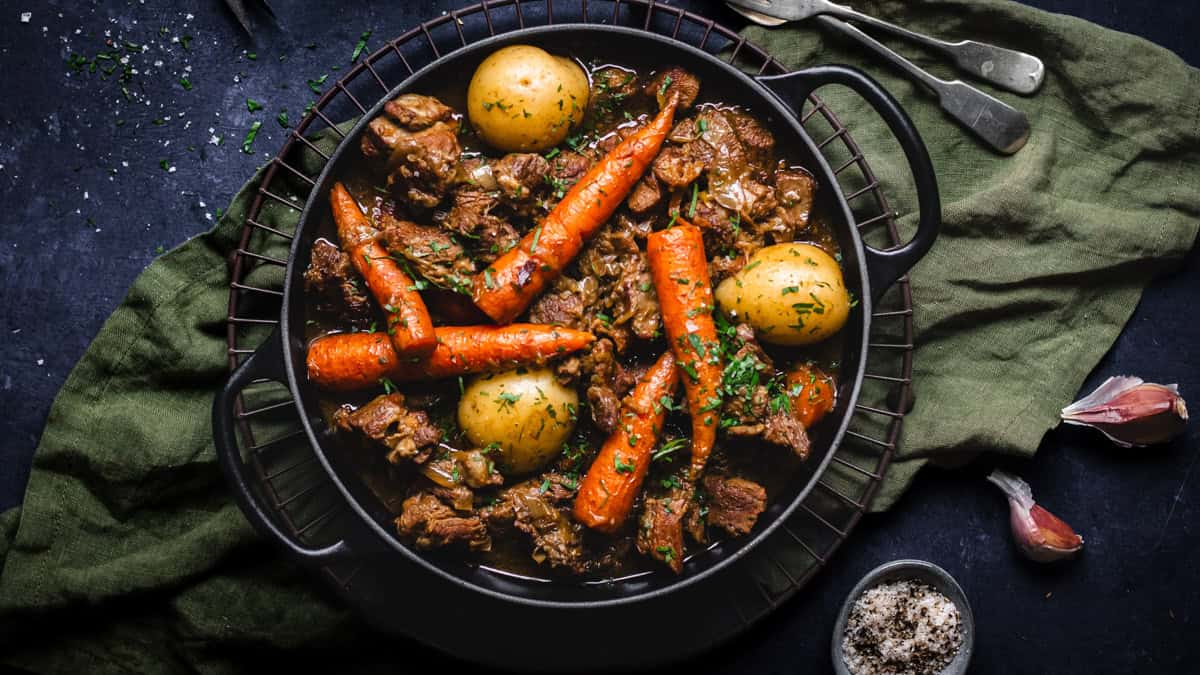
Four Proven Rules That Guarantee Meltingly Tender Meat Every Time
When cooks abandon meat braising mechanics in favor of speed, they crank up the stove burner, close the lid, and cross their fingers. Achieving flawless results requires replacing that haste with four precise, repeatable thermal protocols.
Rule One Brown the Protein Bone Dry Before Introducing Any Liquid
The Maillard reaction is the chemical cornerstone of savory flavor development, occurring when amino acids and reducing sugars interact at temperatures above 300°F (150°C). Water is the absolute enemy of this process because liquid cannot exceed its boiling point of 212°F (100°C) under atmospheric pressure. If your meat surface is damp when it hits the hot pan, the surface moisture must completely vaporize before any browning can take place, effectively steaming your meat gray while heating the interior prematurely.
Pat your cuts relentlessly dry with paper towels, season them generously with salt, and allow them to rest uncovered on a wire rack in your refrigerator for several hours before cooking. Sear the meat in small batches inside a screaming-hot heavy pot with high-smoke-point fat. You want a deep, mahogany crust on every surface. This sear accomplishes two vital goals: it creates rich non-enzymatic browning compounds that dissolve into the braising jus later, and it leaves behind a caramelized crust of fond stuck to the bottom of the vessel that forms the baseline flavor of your sauce upon deglazing.
Rule Two Maintain a Bare Tremble Rather Than an Aggressive Boil
The single most destructive mistake in home braising is permitting the cooking liquid to violently bubble. A rapid boil guarantees that the meat temperature will match the boiling point of water, destroying tender cell walls. You must keep the cooking liquid between 180°F and 195°F (82°C to 90°C). At this specific temperature, you should observe an occasional, lazy bubble breaking the surface every few seconds—a visual cue culinary professionals refer to as a bare simmer or gentle shiver.
Managing this narrow thermal window demands an appreciation for thermal mass and latency. Just as understanding Bond duration mechanics and 4 proven rules to survive devastating interest rate shocks teaches an investor how time horizon cushions sudden economic volatility, managing heavy enameled cast iron requires anticipating heat surges long before they register on the pot surface. Heavy cookware retains enormous thermal momentum. To control this momentum, avoid braising on an unpredictable stovetop burner. Instead, place your covered vessel into a steady, preheated oven set to 275°F to 300°F (135°C to 150°C). The ambient, radiant heat of the oven envelopes the pot uniformly, preventing hot spots on the bottom and stabilizing the cooking liquor at the ideal temperature for slow collagen breakdown.
Rule Three Restrict Liquid Levels to Halfway Up the Muscle Cut
A braise is fundamentally different from a stew or a boil. In a traditional stew, meat is cut into small cubes and entirely submerged beneath aromatic liquid. In an authentic braise, substantial whole cuts or bone-in portions should sit in liquid that reaches only one-third to halfway up their sides. The lower portion of the protein cooks via gentle liquid conduction, while the upper portion cooks via humid, aromatic steam convection under the tightly sealed lid.
Submerging the entire roast leaches out precious water-soluble flavor compounds, essentially boiling the character out of the meat and diluting your sauce. By keeping the top half exposed to the steam pocket, the crust you developed during searing remains intact and slowly glazes under the condensing vapors. Every forty-five minutes, turn the meat over to ensure both sides alternate evenly between the flavor-concentrating liquid bath and the gentle radiant oven heat.
Rule Four Cool the Meat Completely Inside the Braising Liquor
This restorative cooling stage represents the most neglected phase of meat braising mechanics, separating restaurant-grade succulence from chalky amateur roasts. When meat reaches its fork-tender peak after hours in the oven, its muscle fibers are relaxed, but they are fully dilated and fragile. If you immediately hoist the steaming roast out of the pot and slice it open on a cutting board, precious moisture flashes off instantly as steam, leaving the meat fibers stringy and depleted.
Instead, remove the pot from the oven, crack the lid slightly, and let the entire vessel cool down undisturbed at room temperature for at least one hour. As the temperature of the liquid drops below 140°F (60°C), the muscle fibers naturally relax and contract slightly. This creates a capillary vacuum that draws the gelatin-rich, deeply seasoned braising liquid back into the center of the protein bundles. The meat functions like a sponge, reabsorbing the very moisture and flavor it expelled during the early stages of cooking.
The Cold Rest Protocol That Multiplies Tenderness Overnight
Braising rewards patience more generously than almost any other culinary discipline. While a braise pulled from the oven and rested for an hour is delicious, an overnight chill in the refrigerator elevates the dish to an entirely different dimension of culinary science. When a finished braise sits refrigerated for twelve to twenty-four hours, two critical structural shifts occur.
The rendered intramuscular fat, which remains suspended in the hot braising liquid during cooking, rises to the surface and solidifies into a firm, clean disc. You can lift this fat cap off cleanly with a spoon, leaving behind an impeccably balanced, clear sauce without any greasy sheen. Removing this excess fat clarifies the flavor profile, allowing the deep acidity of your deglazing wine and the earthy notes of your aromatics to shine through unmasked.
Simultaneously, the gelatin dissolved in the braising liquor sets into a firm, jiggly matrix that coats every microscopic crevice of the meat fibers. When you gently reheat the pot the following day over low heat, that gelatin melts back into liquid form precisely where it is needed most: directly against the tender protein strands. The sauce coats your palate with velvet texture, the meat cuts effortlessly with a dull spoon, and the flavors taste integrated, rounded, and harmonious.
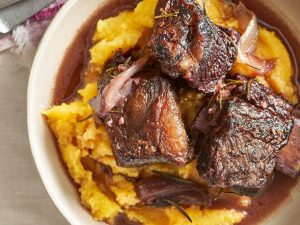
Once you honor meat braising mechanics, low-cost shank, brisket, and short ribs cease to be unpredictable gambles in the kitchen. By respecting the molecular journey of collagen, mastering oven-stabilized temperatures, and allowing the meat to reabsorb its own nectar through deliberate cooling, you will consistently turn tough muscle into culinary gold.