Miniature Practical Effects Mechanics and 4 Proven Rules Behind Cinematic Illusions
Scale models built cinema history by bending the laws of physics and light. Discover how miniature practical effects mechanics trick human eyes into seeing towering cinematic monoliths.
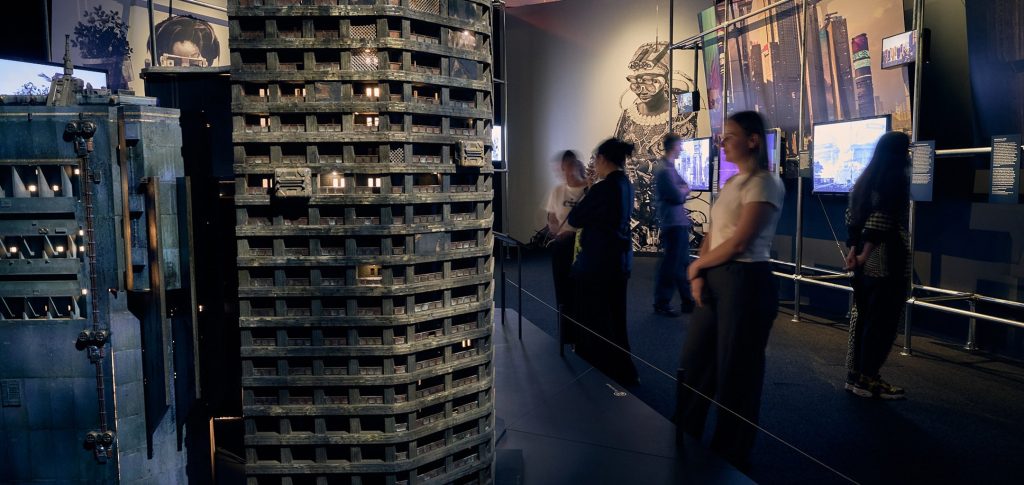
Mastering miniature practical effects mechanics requires an intimate understanding of physics, optical illusion, and scale. Long before rendering engines computed millions of theoretical light rays per second, filmmakers engineered visceral, tactile worlds using wood, plaster, resin, and high-speed motion picture cameras. When viewers watch an ancient temple crumble or a starship glide across an alien abyss, their brains process actual photons reflected off physical textures. That sensory realism cannot be faked easily. Physical matter possesses natural randomness, structural micro-imperfections, and light-scattering properties that digital artists spend decades trying to synthesize.
The magic does not happen simply by assembling a scaled-down building and pointing a camera at it. Shrinking an object alters every physical property humans use to judge mass, distance, and momentum. A toy car rolling down an incline moves with frantic, unnatural jerks because gravity acts on its tiny mass far more abruptly than on a two-ton vehicle. Capturing realistic scale demands an aggressive war against physical constants, turning miniature model shops into hybrid laboratories where art meets applied classical mechanics.
Overcoming Physics and the Unforgiving Square Cube Law
At its fundamental level, the core foundation of miniature practical effects mechanics rests upon the square-cube law, an inescapable mathematical reality that governs how volume outpaces surface area. When an object is scaled down to one-twelfth of its original size, its surface area decreases by a factor of 144, but its volume and mass drop by a factor of 1,728. This disproportionate loss of inertia creates a devastating visual giveaway on screen. A scaled-down bridge made of miniature stone does not collapse in slow, majestic arcs; it shatters and settles in a fraction of a second, instantly destroying the cinematic illusion.
Fluid dynamics and particulate matter present even harsher barriers. You cannot scale down water molecules or dust grains. A droplet of water splashing against a miniature ocean liner reveals its true size through surface tension, forming giant bulbous beads rather than sprawling ocean spray. Similarly, fire burns with flame tongues whose size is dictated by atmospheric oxygen and chemical combustion rates, completely indifferent to the scale of the miniature building beneath them. Crafting believable physical cinema requires tricking these uncooperative physical elements into behaving as though they possess immense weight and atmospheric volume.
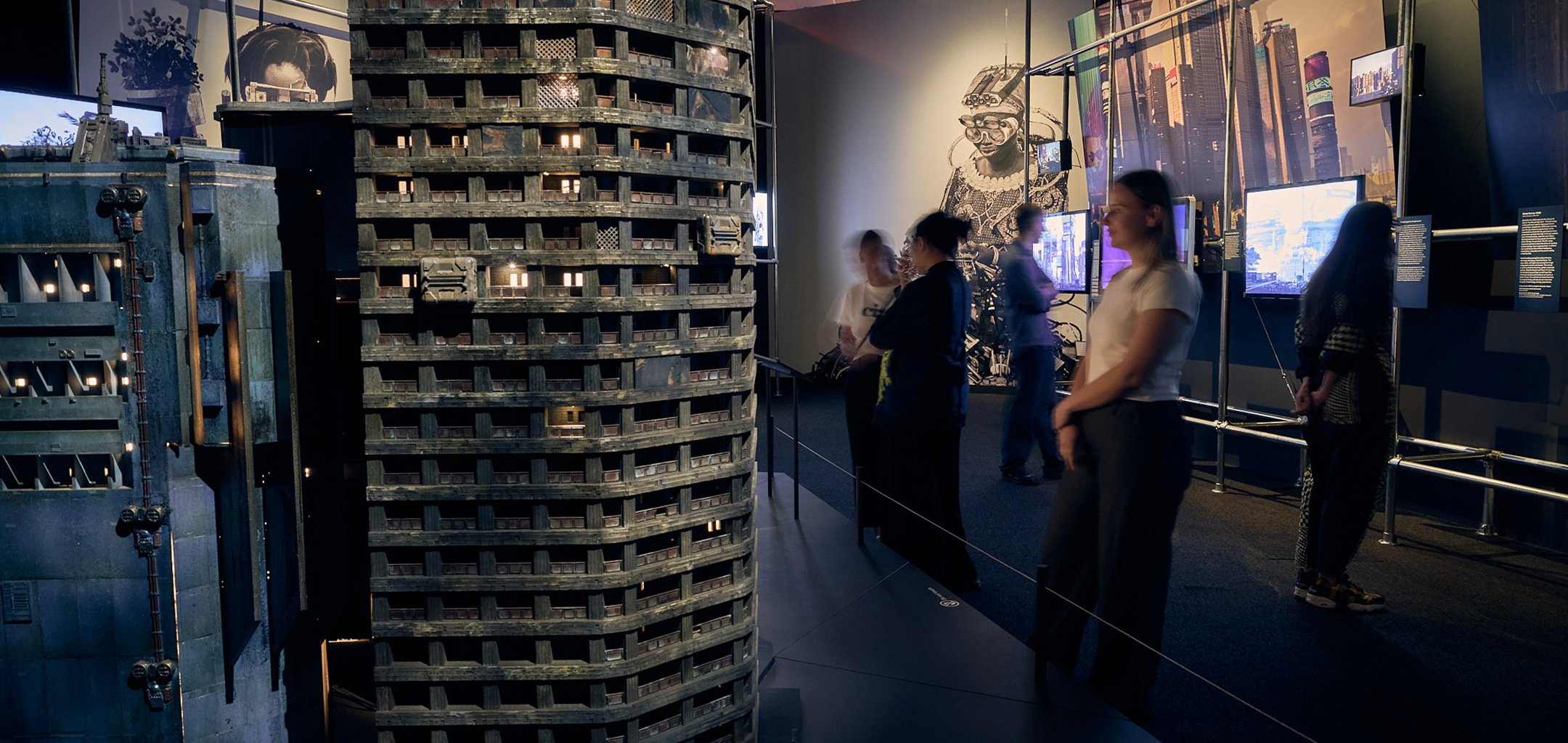
4 Proven Rules to Craft Flawless Miniature Cinema
Translating an artisan scale model into an authentic on-screen titan requires strict adherence to four fundamental craft principles that define professional miniature practical effects mechanics. Each rule addresses a specific blind spot in human perception, transforming tiny sculptures into colossal cinematic set pieces.
Crank the Camera Speed to Simulate Massive Inertia
The human brain gauges the mass of an object by how slowly it accelerates under gravity. Because scaled-down objects fall at the standard acceleration of gravity over a vastly reduced distance, their movement appears comically hyperactive at standard cinema playback speeds. To restore perceived weight, technicians shoot miniatures at extreme frame rates, often running cameras anywhere from 72 to 120 frames per second.
The mathematical relationship is derived from the square root of the scale factor. If a model maker constructs a space station at one-sixteenth scale, the square root of 16 is 4. Multiplying the standard baseline speed of 24 frames per second by 4 yields an optimal shooting speed of 96 frames per second. When this footage plays back at normal speed, falling debris, tumbling metal hulls, and cascading dust drift through the air with the majestic, heavy momentum of real-world leviathans.
Sculpt Forced Perspective to Deceive the Human Eye
Studio space is always finite, yet directors often demand horizons that stretch across endless vistas. Forced perspective solves this spatial limitation by distorting the physical geometry of miniature sets. Craftsmen deliberately taper walls, tilt floors upward, and shrink structural details toward a calculated vanishing point, squeezing miles of apparent visual depth into twenty feet of studio soundstage.
When aligned precisely with the camera optical axis, these distorted geometries align into a coherent, massive space. Foreground models built at larger scales can seamlessly intersect with microscopic background miniatures. The slightest camera drift can shatter this delicate geometric alignment, requiring specialized optical rigs and locked-down camera tracks that preserve the focal convergence point.
Engineer Atmospheric Haze to Create Synthetic Depth
In the natural world, distant mountain ranges appear faded, low-contrast, and slightly blue because human eyes look through miles of particulate-laden atmosphere. On an indoor studio stage, the distance between the camera lens and the back wall of a miniature set might be merely twelve feet. Without air intervention, background models appear as razor-sharp and punchy as foreground objects, immediately registering as close-up dollhouses.
Model cinematographers combat this clarity by filling the stage with controlled micro-particulate atmospheric haze. Using vaporized food-grade mineral oils or rosin smoke, operators create uniform synthetic smog. Backlighting this suspended haze catches particulate reflections, washing out blacks in distant model layers and generating natural atmospheric perspective. This atmospheric illusion highlights the delicate science within miniature practical effects mechanics that separates a believable sprawling metropolis from an obvious toy display.
Weather Every Surface to Eliminate Plastic Perfection
Nature never manufactures pristine geometry. Industrial machines carry rust streaks, concrete cracks under thermal stress, and paint fades unevenly under sunlight. Pristine scale models look undeniably synthetic because clean surfaces lack the historical narrative etched into real-world structures. Model artisans treat painting not as surface decoration, but as forensic archaeology.
Layers of wash coats, pigment powders, sponge stippling, and airbrush gradients break up planar surfaces. Craftsmen pay meticulous attention to scale fidelity, ensuring that individual rust speckles or paint chips do not exceed the sub-millimeter proportions appropriate for the model scale. Micro-textures absorb and scatter lighting naturally, giving camera lenses genuine macroscopic roughness to resolve.
Optics and Depth of Field Challenges on the Miniature Stage
Camera optics instinctively rebel against scale photography. When a lens focuses on an object mere inches away, the depth of field narrows down to millimeters. In human reality, a towering skyscraper has its entire facade in sharp focus, from the street-level doors to the rooftop antennae. If a miniature camera captures a model building with only the front door in focus while the upper windows blur into soft bokeh, the audience immediately identifies the structure as a desktop miniature.
Cinematographers approaching miniature practical effects mechanics must overhaul their entire lighting and exposure philosophy to manage shallow focal planes. To maximize depth of field and achieve infinite focus across tiny sets, camera operators stop down their lenses to extreme apertures like f/16, f/22, or even f/32. Stopping down that far reduces light throughput to a trickle, requiring blinding quantities of studio light or protracted multi-second exposures on automated motion-control rigs.
Balancing tiny apertures against blistering key lights requires rigorous micro-adjustments. A lead modeler or visual effects director monitors dozens of volatile environmental shifts simultaneously, not unlike how a quantitative risk manager studies Options Delta Hedging Mechanics and 4 Proven Rules to Defeat Ruinous Market Volatility to balance opposing mathematical forces before an irreversible catastrophe strikes the portfolio. In cinema, specialized split-diopter glass, swing-tilt bellows lenses, and periscope snorkel systems let technicians place the optical lens pupil directly onto the miniature floor, simulating human eye-level viewpoints that look upward at scaled architecture.
The Enduring Alchemy of Physical Miniatures in Modern Storytelling
Digital tools provide undeniable flexibility, but they often struggle to reproduce the accidental physical complexities that occur naturally on a practical set. A scaled miniature built with physical materials catches incident light with micro-reflections, subsurface scattering, and specular highlights that render organically. Light bounces off a miniature plaster wall, hits an adjacent copper pipe, and casts authentic warm secondary illumination onto the floor without requiring billions of compute cycles.
This visceral authenticity explains why visionary directors still turn to miniature practical effects mechanics when purely synthetic computer renderings risk drifting into the uncanny valley. Historical production insights preserved in the American Society of Cinematographers archives confirm that the most durable cinematic moments frequently combine practical miniature plates with subtle digital sweetening. Digital artists composite smoke elements, paint out structural support wires, and extend horizons, but the primary subject remains rooted in tactile reality.
The tactile weight of physical builds provides actors, directors, and audiences with an unmistakable anchor. When light strikes a physical model, it obeys every law of quantum electrodynamics effortlessly. By honoring physical materials and optics, preserving miniature practical effects mechanics keeps the art of filmmaking grounded in tangible weight and enduring wonder.