Order book liquidity mechanics and 4 proven rules to defeat catastrophic market slippage
A quoted market price is never a guaranteed execution price. Discover how order books process volume and how to protect your capital from devastating slippage.
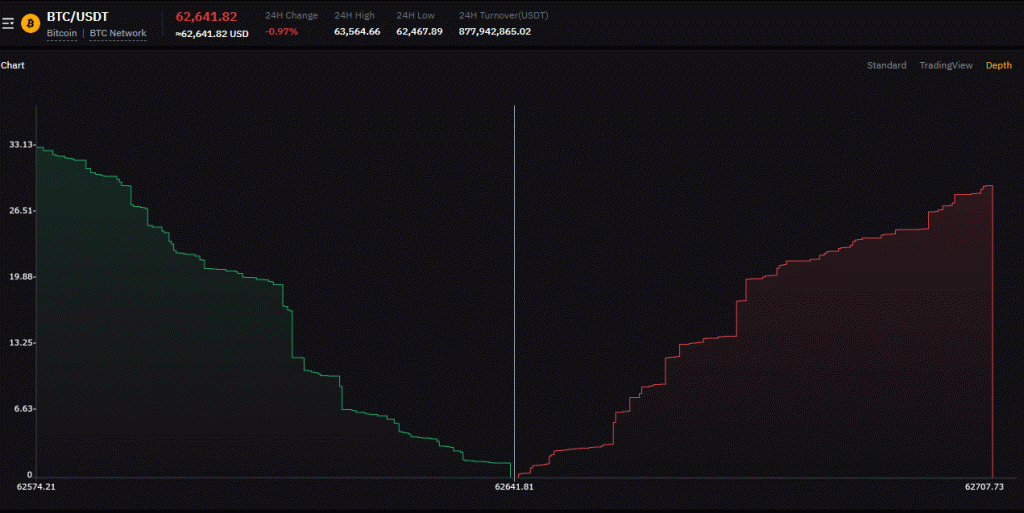
Mastering order book liquidity mechanics is the single most vital skill for traders who refuse to watch slippage cannibalize their hard-earned capital. Most market participants glance at a screen, observe an asset quoted at a specific dollar figure, and assume that number represents the price they will actually receive upon execution. That naive assumption costs billions of dollars across institutional desks and self-directed portfolios every single trading session. A displayed price is not an ironclad guarantee. It is simply an ephemeral advertisement of someone’s willingness to transact at the thinnest outermost layer of the market.
Behind the flickering digits of any modern exchange sits a continuous, double-sided auction known as the limit order book. Every purchase order and sell order must pass through an electronic matching engine that pairs eager buyers with patient sellers. When an aggressive market order hits the book with more size than the immediate top quote can absorb, the matching engine does not politely wait for more supply to appear. It instantly marches through the queue, consuming resting orders at progressively worse prices until the entire order is filled. This brutal reality is market slippage, and surviving it requires an intimate knowledge of auction physics.
The Invisible Engine Driving Modern Price Discovery
Understanding order book liquidity mechanics reveals why a seemingly stable quote can evaporate the moment a sizable market order hits the matching engine. At its core, an electronic limit order book is organized into two opposing columns: the bid side, representing participants willing to buy at specified price levels, and the ask side, representing those willing to sell. The gap separating the highest available bid from the lowest available ask is the bid-ask spread. This spread represents the immediate cost of immediacy for anyone demanding an instantaneous trade.
Exchange matching engines govern these interactions using precise deterministic sorting rules. The most common protocol is price-time priority, frequently called first-in, first-out or FIFO. Under this regime, the exchange prioritizes orders first by price—rewarding buyers who bid highest and sellers who ask lowest. When multiple participants submit resting orders at the exact same price tick, priority falls to whichever order arrived at the exchange first. Other venues utilize pro-rata allocation models, where orders are filled proportionally based on their displayed size rather than their arrival timestamp, fundamentally altering how market makers position their capital.
When institutional participants analyze order book liquidity mechanics, they do not just glance at top-of-book quotes; they inspect depth profiles across multiple ticks. Top-of-book data, traditionally known as Level 1 data, displays only the prevailing best bid and best offer along with their immediate quantities. Level 2 data peels back the curtain to reveal resting interest across multiple price increments above and below the spread, while full order-by-order Level 3 depth exposes individual order tickets within the queue. Liquidity is never a static pool. It is an adversarial, highly fluid continuum where resting limit orders provide passive liquidity and aggressive market orders consume it.
Four Proven Rules to Defeat Ruinous Slippage and Adverse Selection
Modern execution algorithms leverage order book liquidity mechanics to predict where price discovery will stall or accelerate. Without concrete rules to counteract mechanical friction, trading size directly into a live book guarantees severe price impact. Implementing strategic execution protocols preserves alpha and protects trade execution from opportunistic counterparties.
Measure Market Impact Across Cumulative Depth Instead of Best Bid and Offer
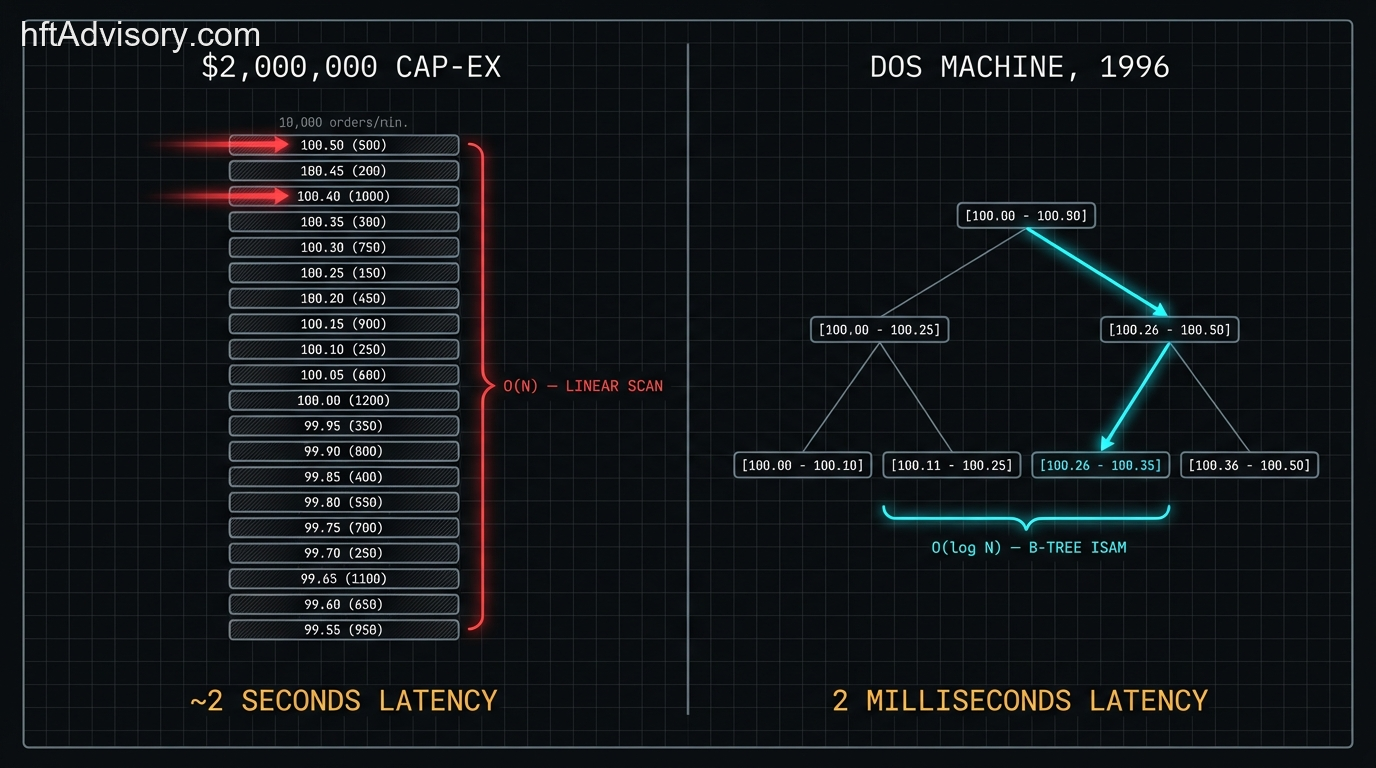
Evaluating an asset based solely on its prevailing bid or ask creates a fatal blind spot. If an equity displays a best ask of one hundred dollars with an advertised size of two hundred shares, attempting to buy two thousand shares with a market order will instantly trigger an aggressive sweep. The matching engine fills the first two hundred shares at one hundred dollars, but the remaining eighteen hundred shares must walk up the order book ladder, absorbing resting sell orders at one hundred dollars and five cents, one hundred dollars and twenty cents, or even higher.
To calculate real execution costs, professional desks calculate the cumulative volume-weighted average price across the entire depth chart prior to order routing. By computing cumulative depth across five to ten price levels, traders can accurately forecast their expected price impact before committing capital. If the cumulative liquidity within an acceptable price band cannot cover the order size, sending an unconstrained market order is an unforced error that directly donates equity to resting market makers.
Track Queue Priority and Fleeting Passive Order Cancellation Ratios
A deep order book can be completely illusory. High-frequency algorithms frequently flood the order book with passive limit orders to capture market-making rebates or project artificial support, only to cancel those orders milliseconds before an aggressive trade lands. In highly automated venues, the order-to-trade ratio often exceeds thirty cancellations for every single filled execution. Relying on displayed depth without accounting for order persistence leads to devastating execution traps.
Observing order flow dynamics requires monitoring the velocity of cancellations relative to executed trades. When bid-side cancellation rates spike while aggregate volume stagnates, resting liquidity is actively fleeing the scene. Attempting to lean on resting orders during high cancellation spikes results in adverse selection, meaning your order only executes when the market has already moved against you, leaving you holding an asset whose underlying support has vanished.
Deploy Dynamic Volume-Weighted Execution Schedules
Blasting a large trade into an order book in a single block invites predatory algorithmic intervention. High-frequency trading firms continuously monitor market data feeds for large trades that exhibit mechanical repetition or aggressive imbalances. In high-stakes trading, aggressive market makers hunt exposed limit orders much like coaches design defensive traps. Just as Ice hockey forechecking mechanics and 4 proven tactics that crush opponent breakouts box in opponents along the boards to force catastrophic turnovers, predatory execution algorithms squeeze ill-timed market orders against barren order books to force expensive liquidations.
Without a functional grasp of order book liquidity mechanics, algorithmic execution models risk sweeping thin layers and triggering flash crashes. Breaking large orders into randomized micro-child orders distributed through Volume-Weighted Average Price or Time-Weighted Average Price execution schedules mitigates this risk. By capping order participation at a strict percentage of real-time trading volume, typically under ten percent of average minute volume, capital enters the market quietly without alarming automated market makers or blowing out the prevailing bid-ask spread.
Navigate Fragmented Venues to Uncover Hidden Resting Liquidity
Modern asset markets rarely clear through a single centralized exchange. Liquidity is heavily fragmented across primary lit exchanges, alternative trading systems, multilateral trading facilities, and dark pools. Lit exchanges display their limit order books publicly to the entire market, inviting immediate price discovery. In contrast, dark pools allow institutional participants to place resting orders with zero pre-trade transparency, preventing front-running on large institutional blocks.
Smart order routers inspect multiple execution venues simultaneously to seek out non-displayed liquidity, including iceberg orders that hide their true size behind a small displayed fraction. By routing child orders through crossed or midpoint dark pools before touching lit books, traders interact with institutional natural liquidity without showing their hand to the broader market. This dual approach eliminates unnecessary market impact and dramatically compresses aggregate slippage.
Microstructure Traps That Drain Institutional Capital
Even seasoned traders fall victim to structural vulnerabilities baked directly into modern electronic matching architecture. The most insidious of these traps is adverse selection. Adverse selection occurs when your resting limit order is filled exclusively because informed traders possess faster information, correctly identifying that the asset’s fair value has dropped below your bid. You receive an immediate fill, but you instantly experience an unrealized loss because you traded against toxic order flow.
Another classic microstructure trap involves predatory order book manipulation, such as layering and spoofing. Although explicitly illegal across regulated jurisdictions, market manipulators still exploit microsecond latency gaps by placing massive non-bona-fide limit orders deep on one side of the book to simulate overwhelming buying or selling pressure. Unsuspecting retail algorithms react to this phantom imbalance by panic-buying or panic-selling, driving the market straight into the spoofer’s genuine, contrarily positioned orders. Ultimately, decoding order book liquidity mechanics allows capital allocators to bypass predatory high-frequency algorithms that hunt predictable order flow.
Building a Professional Execution Protocol for Volatile Markets
Constructing a resilient execution strategy requires treating order entry as a sophisticated engineering challenge rather than a casual administrative click. Elite trading desks employ strict post-trade transaction cost analysis to measure their implementation shortfall—the difference between the asset price at the precise moment the investment decision was made and the final net price achieved across all child fills.
Authoritative empirical investigations, including the comprehensive Bank for International Settlements research on electronic trading and market microstructure, emphasize that genuine liquidity is characterized by three core dimensions: tightness, depth, and resiliency. Tightness measures the narrowness of the bid-ask spread, depth captures the volume available without moving the price, and resiliency reflects how rapidly quotes regenerate after being exhausted by an aggressive wave of selling or buying.
Before executing any trade of meaningful size, establish clear execution boundaries. Set hard limits on maximum slippage tolerance, utilize pegged orders that automatically drift alongside the spread without crossing it, and never deploy unconditional market orders in volatile or illiquid environments. Respecting order book liquidity mechanics transforms volatile executions from a blind gamble into a controlled, highly calculated science.