Bicycle drafting mechanics and 4 proven rules to crush devastating aerodynamic drag
Air resistance claims up to ninety percent of a cyclist’s forward energy at race pace. Understanding the physical mechanics of aerodynamic slipstreams allows riders to conserve vital wattage and ride faster with significantly less strain.
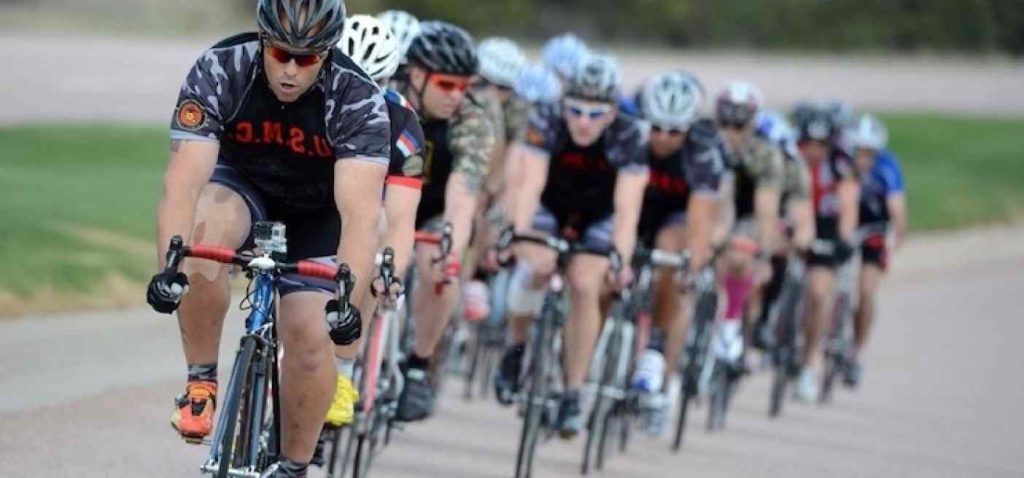
Mastering bicycle drafting mechanics allows endurance athletes to slice through wind resistance, transforming sheer physical exhaustion into effortless kinetic momentum across demanding open roadways. On flat terrain at high velocity, air resistance is not merely an inconvenience. It is an overwhelming thermodynamic tax. When a cyclist accelerates beyond thirty kilometers per hour, aerodynamic drag accounts for nearly ninety percent of total energetic resistance, rendering rolling friction and bearing resistance virtually negligible by comparison. Every watt delivered through the pedals fights against a stubborn, unseen fluid that refuses to part easily.
Riders who fail to comprehend this fluid environment burn through their glycogen reserves long before the finish line. Those who understand the physics of aerodynamic sheltering ride substantially faster while expending a mere fraction of the muscular force. Drafting is not an esoteric trick reserved for WorldTour stage races. It is a fundamental manipulation of pressure zones, turbulent wake structures, and fluid momentum that reshapes how human beings interact with atmospheric resistance.
The invisible wall of fluid dynamics on two wheels
When cyclists dissect bicycle drafting mechanics, they quickly realize that air is not an empty void, but a viscous fluid with measurable density. As an isolated rider moves forward, their body and equipment function as an unstreamlined blunt body. Air molecules slam into the rider’s chest, helmet, and front tire, generating a localized zone of high pressure known as stagnation pressure. As the air forces its way around the irregular contours of the rider’s shoulders and hips, it cannot stay attached to these surfaces.
Instead, the boundary layer separates violently, leaving behind a massive, chaotic low-pressure void filled with turbulent swirling vortices. The net result is pressure drag, often called form drag. The high pressure pushing against the front combined with the low-pressure suction pulling from behind creates an invisible net dragging the cyclist backward. To sustain competitive speeds, a solo rider must continually burn metabolic fuel simply to displace air and overcome this perpetual pressure deficit.
Entering the slipstream of a leading cyclist fundamentally reorganizes this air pattern. The front rider takes on the arduous physical burden of punching the initial hole through the atmosphere, absorbing the high-pressure headwind. Directly behind that lead rider lies a moving pocket of low-pressure air traveling at nearly the same velocity as the bicycles. A following rider who slots into this sheltered pocket faces vastly reduced frontal stagnation pressure. The energy required to move forward plunges immediately, dropping heart rates and lactic acid accumulation within seconds.
The double bubble phenomenon and pressure drag reduction
Popular cycling folklore often assumes that drafting benefits only the trailing athlete, but fluid dynamic testing reveals a far more fascinating cooperative reality. Delving into the bicycle drafting mechanics behind this interaction demonstrates that both athletes travel inside an altered fluid regime. When two bicycles travel in tight formation, they cease behaving as two isolated blunt bodies and begin acting as a single, elongated aerodynamic entity.
The trailing rider physically obstructs and fills the low-pressure void created behind the leader. By occupying this space, the second cyclist prevents atmospheric air from rushing violently inward to collapse the leader’s wake. This stabilizes the wake boundary, delays turbulent flow separation, and raises the static pressure directly behind the front rider’s back. Consequently, the suction force pulling the lead rider backward drops by roughly two to three percent. While the follower enjoys the lion’s share of energetic savings, the lead rider actually travels measurably faster and with greater efficiency than they ever could riding solo.
Much like the fluid principles explored in emulsion sauce mechanics and 4 proven rules to stop catastrophic kitchen breaks, where boundary layer interactions dictate physical stability, cycling aerodynamics relies on managing the fragile interface between laminar airflows and swirling wakes. Comprehensive wind tunnel investigations and aerodynamic drag measurements in cycling pelotons published in the Journal of Wind Engineering and Industrial Aerodynamics have proven that aerodynamic drag drops by up to forty percent for trailing riders who maintain precise spacing. Harnessing this protective physical bubble, however, requires rigid technical discipline and complete spatial awareness.
Four proven aerodynamic rules to maximize drafting efficiency
Executing sound bicycle drafting mechanics demands both physical nerve and an instinct for fluid motion. Slipstreams are not rigid tunnels of calm air. They are dynamic, shifting cones of low-pressure fluid that oscillate according to wind vectors, bike speeds, and terrain changes. To extract the maximum mechanical advantage without compromising personal safety, riders must follow four precise rules on the road.
Collapse the wheel gap to minimize turbulent separation
The distance between the trailing rider’s front tire and the leader’s rear tire directly determines the magnitude of drag reduction. Aerodynamic modeling reveals that drafting benefits decay exponentially as the wheel gap expands. At fifteen to twenty centimeters, a follower captures peak pressure shielding, reducing drag by thirty to forty percent. Expanding that gap to a single meter cuts the energetic advantage almost in half.
At larger gaps, high-velocity atmospheric air rushes sideways into the vacuum, breaking down the sheltered wake and generating localized buffeting. Trailing riders must cultivate the micro-adjustments needed to ride smoothly within inches of the leader’s wheel without sudden surges or abrupt braking. Steady cadence and calm upper bodies keep this gap tight and mathematically optimal.
Offset lateral positioning to harvest crosswind slipstreams
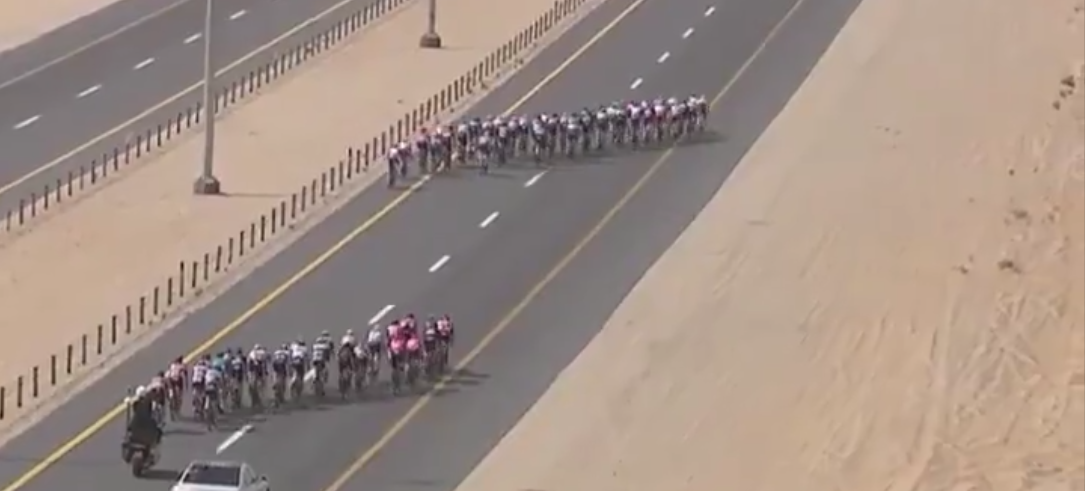
True head-on headwinds are rare occurrences on outdoor roads. More often, moving air hits the peloton at an angle, introducing what aerodynamicists call the yaw angle. When a crosswind strikes the front rider, the protective low-pressure pocket does not trail directly behind their rear wheel. It is blown downwind, forming an angled slipstream cone off to the side.
Maintaining a direct inline position during a crosswind exposes the follower to harsh atmospheric resistance while missing the drafting cone entirely. Riders must form an echelon, offsetting their front wheels behind and to the leeward side of the rider ahead. Reading the wind direction through roadside foliage or jersey ripples allows trailing riders to shift their line laterally, ensuring their bodies remain centered squarely inside the moving low-pressure wash.
Align torso profiles to streamline boundary layer transitions
A slipstream is shaped by the physical geometry of the lead cyclist. If a petite rider leads a broad-shouldered, upright companion, the follower’s outer shoulders and helmet protrude directly into the undisturbed, high-velocity airflow flanking the wake. This protruding surface area generates massive localized skin friction and destroys the streamlined continuity of the system.
To overcome this mismatch, trailing riders must adjust their aerodynamic tuck to match or sit beneath the profile of the rider ahead. Bending the elbows to ninety degrees, dropping the chest toward the top tube, and tucking the head down aligns the trailing body within the lead rider’s wake. Matching torso angles transforms two disparate riders into an integrated aerodynamic capsule, eliminating parasitic drag around the margins.
Exploit multi-rider pacelines to amplify cumulative wake sheltering
When cycling in an extended group, bicycle drafting mechanics scale dramatically to reshape the energy demands of the entire pack. While a single follower gains significant drag relief, placing third, fourth, or fifth in a continuous paceline compounds the aerodynamic sheltering. Each successive bicycle continues to displace air, stretching the low-pressure corridor and progressively flattening the pressure gradient along the entire line.
Riders sitting deep inside a paceline can experience aerodynamic drag reductions approaching fifty to seventy percent compared to riding alone at identical speeds. In these protected positions, sustaining race speeds requires astonishingly little power. Cyclists must treat the paceline as an unbroken living chain, avoiding erratic movements or gaps that disrupt the cumulative flow and force downstream riders to bridge physical voids.
Micro-adjustments and the neurological cost of close quarters riding
Beyond raw fluid physics, bicycle drafting mechanics impose an intense cognitive tax on the trailing rider. Traveling inches from another bicycle at fifty kilometers per hour leaves zero margin for sensory lag or motor delay. Inexperienced riders frequently succumb to target fixation, staring nervously at the spinning rubber of the rear tire directly ahead of them. This narrow visual focus creates jerky reactions, late braking, and catastrophic accordion effects that ripple through a group.
Seasoned athletes look through and past the lead rider’s shoulders, absorbing road hazards, surface changes, and grade shifts several seconds before they impact the formation. Rather than feathering the mechanical brakes to regulate speed, experienced drafters modulate their velocity using subtle aerodynamic adjustments. Sitting up slightly into the airflow uses the rider’s own chest as an air brake, scrubbing speed instantly without touching the levers. Widening the knees or momentarily easing pedal pressure achieves fine speed control without disrupting the fluid coherence of the following paceline.
Translating wind tunnel science into pure road speed
Aerodynamic efficiency in endurance sport is rarely won through raw muscular wattage alone. The athletes who cross the line with energy in reserve are those who treat the surrounding atmosphere not as an immovable wall, but as a fluid puzzle waiting to be unraveled. True cycling prowess balances physiological power with mechanical conservation.
Ultimately, honing your bicycle drafting mechanics converts volatile wind resistance from a punishing barrier into a tactical shield. By respecting pressure zones, honoring crosswind echelons, maintaining razor-thin wheel gaps, and sustaining calm micro-adjustments, you harness the profound power of aerodynamic physics to ride farther, faster, and smarter on every single mile.