Secretary of State Battles Reveal 5 Critical Pressures Shaping Global and Local Power
From foreign capitals to county election bureaus, the office of the secretary of state faces unprecedented administrative scrutiny. Discover how international diplomacy, ballot safeguards, and commercial regulation are colliding.
Understanding the modern role of the secretary of state requires examining both geopolitical diplomacy abroad and administrative vigilance across local domestic districts. While public discourse often treats governance as a monolith, the duties associated with this title span two radically distinct spheres of authority. At the international level, the position serves as the nation’s chief diplomatic architect, managing high-stakes foreign partnerships, bilateral trade corridors, and regional security pacts. Concurrently, across individual American states, executive officials holding the exact same title function as the supreme operational custodians of democratic machinery, commercial entity registration, and public transparency.
This dual identity has brought the position into sharp focus as major administrative challenges unfold simultaneously across multiple jurisdictions. On the international front, diplomatic engagements demand rapid, strategic maneuvers to solidify international treaties and reassure allies. Domestically, state-level executives find themselves managing election mechanics under intense public scrutiny, addressing logistical errors in real time, and navigating court battles that redefine statutory authority. The resulting pressures highlight an office that sits squarely at the fault lines of modern civic stability.
Global Diplomacy and the Expanding Foreign Policy Portfolio
According to official transcripts published by the U.S. Department of State, Secretary of State Marco Rubio addressed the diplomatic corps and reporters during an official overseas press conference, underscoring the relentless pace of modern bilateral diplomacy. The high-profile engagement marked Rubio’s second major mission to India within a span of just a few months, demonstrating a rapid acceleration in strategic cooperation. Such sustained international travel highlights how foreign policy execution requires perpetual, in-person negotiation to maintain delicate balances of power.
During the press briefing, international correspondents pressed the diplomatic chief on the strategic intentions behind consecutive visits to New Delhi. Bilateral discussions between the two nations encompass critical security frameworks, supply chain reshoring, intelligence sharing, and regional stability across the Indo-Pacific. When foreign offices operate at this tempo, their objective centers on reinforcing alliances against emerging geopolitical competitors while solidifying trade channels that insulate domestic economies from external shocks. The diplomatic portfolio is not merely ceremonial; it is an active mechanism of statecraft that requires immediate response to shifting global alignments.
Domestic Integrity and the Mechanics of State Balloting
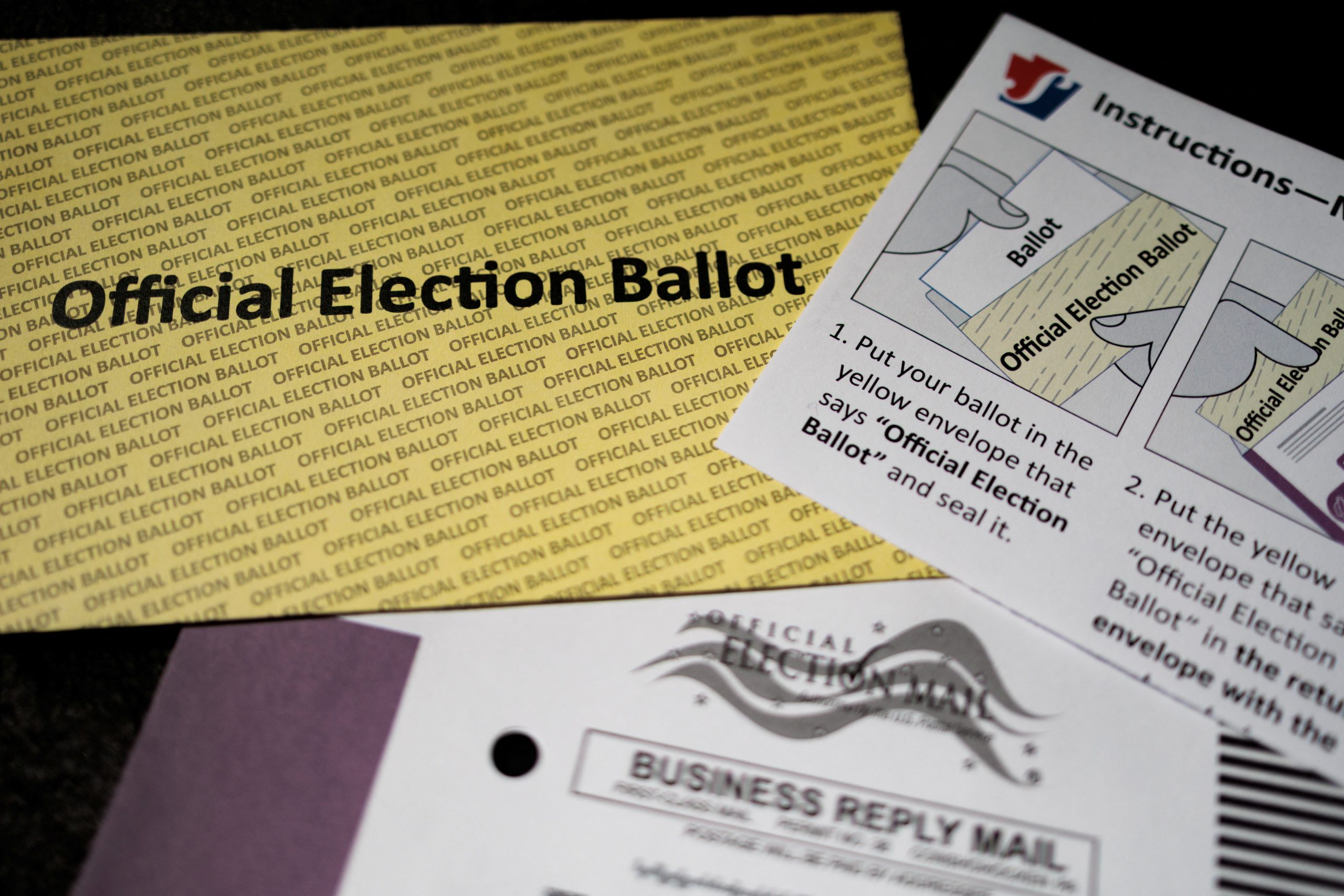
As reported by KCCI, Iowa Secretary of State Paul Pate stepped forward to address a ballot distribution error after 613 Warren County residents unexpectedly received duplicate absentee ballots in the mail. In an era where every procedural anomaly can trigger intense public skepticism, the response from state election officials must be decisive and transparent. Pate moved swiftly to reassure the electorate that multi-layered verification systems remain operational, confirming that internal controls prevent any voter from casting more than one counted ballot.
The administrative breakdown in Warren County illustrates the razor-thin margin of error confronting domestic election chiefs. When printing errors or database misalignments occur at the county level, state-level leadership must coordinate immediate remediation. Pate outlined specific protocols to track, void, and reconcile duplicate mailings before canvas boards convene. This operational pressure demonstrates that the credibility of an election does not hinge solely on statutory law, but on the precise execution of physical and digital ballot custody.
Five Critical Battlegrounds Redefining the Modern Office
The current operational landscape proves that administrative leadership is undergoing an unprecedented stress test. From international negotiations to commercial fleet regulation, executive authorities are managing diverse portfolios that directly impact national security and voter confidence.
Bilateral Alliances and Diplomatic Realignment in India
The rigorous diplomatic itinerary maintained by Rubio illustrates the heightened stakes of international engagement. Returning to New Delhi for the second time in rapid succession reflects a concentrated push to deepen defense interoperability and diplomatic coordination. In an increasingly polarized global climate, maintaining direct personal channels with key regional partners serves as an essential buffer against geopolitical volatility.
Administrative Safeguards and Warren County Absentee Ballots
The technical mishap in Iowa highlights the absolute necessity of rigorous ballot auditing. When more than six hundred Warren County voters received duplicate absentee forms, state election administrators immediately activated tracking safeguards. The primary objective was transparent containment: isolating the anomalous mailings, providing unambiguous instructions to voters, and ensuring that county election boards reconcile every individual ballot barcode prior to tabulation.
Postal Transit Warnings and Early Voting Timelines in Vermont
Reporting from WPTZ revealed that the Vermont secretary of state urged citizens not to rely on postal transit as the general election timeline tightened. With early voting underway and the general contest approaching, state election officials issued direct public guidance warning that the practical window for mailing ballots had expired. Officials encouraged voters to utilize secure physical drop boxes or return their materials directly to municipal clerk offices to ensure timely processing, reflecting ongoing concerns regarding mail delivery transit schedules.
Wyoming Data Centers and Court Battles Over Ballot Procedures
A high-profile candidate debate covered by WyoFile showed three contenders for secretary of state wrestling with modern technological infrastructure alongside election law. The Wyoming forum moved beyond traditional voting mechanics to examine the massive influx of industrial data centers consuming municipal energy resources. The candidates debated statutory authority, pending court battles over election rules, and how state business registries should manage corporate filings from high-tech entities that reshape local communities.
Commercial Oversight and Trucking Regulations in Indiana
Coverage by WTHR highlighted how contenders for Indiana secretary of state engaged in sharp debate over corporate regulation and transportation safety. Candidate Engling detailed ongoing discussions with state lawmakers regarding enhanced oversight of commercial trucking operations. Because state offices oversee commercial registrations and business entity compliance, the role increasingly intersects with commercial accountability, consumer protection, and public safety enforcement on state transit corridors.
Technological Disruption and the Infrastructure of Governance
The friction emerging across state administrative divisions reveals how traditional government oversight is colliding with complex technological ecosystems. In Wyoming, debates over energy-intensive data centers reflect a growing administrative burden: state officials must balance business registry compliance against infrastructure sustainability. Regulatory bodies find themselves adjudicating complex digital footprints, corporate transparency filings, and commercial liability frameworks that legacy statutes were never designed to govern.
This systemic strain extends into the realm of election logistics, where cybersecurity and automated processing systems demand constant modernization. As demonstrated by recent research showing how Artificial Intelligence Triggers 5 Critical Shifts That Threaten Global Control across institutional systems, the modern administrative architecture faces relentless operational transformation. When local jurisdictions deploy high-speed ballot sorters, manage digital voter registries, and oversee automated logistics networks, administrative leadership must continuously adapt its security posture to protect public trust from unexpected technical failure.
The Institutional Resilience of Administrative Leadership
The simultaneous challenges confronting state and federal executives highlight a pivotal reality of modern governance: procedural competence remains the primary defense against systemic instability. When foreign policy negotiations accelerate in international capitals, clear communication prevents dangerous diplomatic misunderstandings. When local ballot printing errors emerge in municipal election offices, immediate and transparent audit trails preserve voter faith in democratic outcomes.
Whether coordinating multi-billion-dollar bilateral trade discussions or overseeing the logistical verification of a single county’s absentee returns, these administrative leaders occupy the front lines of institutional integrity. The convergence of commercial regulation in Indiana, infrastructure debates in Wyoming, ballot transit alerts in Vermont, and clerical safeguards in Iowa proves that administrative details carry profound consequences. Ultimately, whether managing strategic alliances abroad or preserving election safeguards at home, the secretary of state remains the ultimate custodian of institutional legitimacy.