IndiGo Power Bank Fire Flight Sparks 4 Dangerous Cabin Realities Mid-Air
A mid-air lithium battery blaze forced an IndiGo domestic flight to make an emergency diversion to Hyderabad. Here is the operational breakdown of how cabin crews managed the fire and what it means for airline safety.
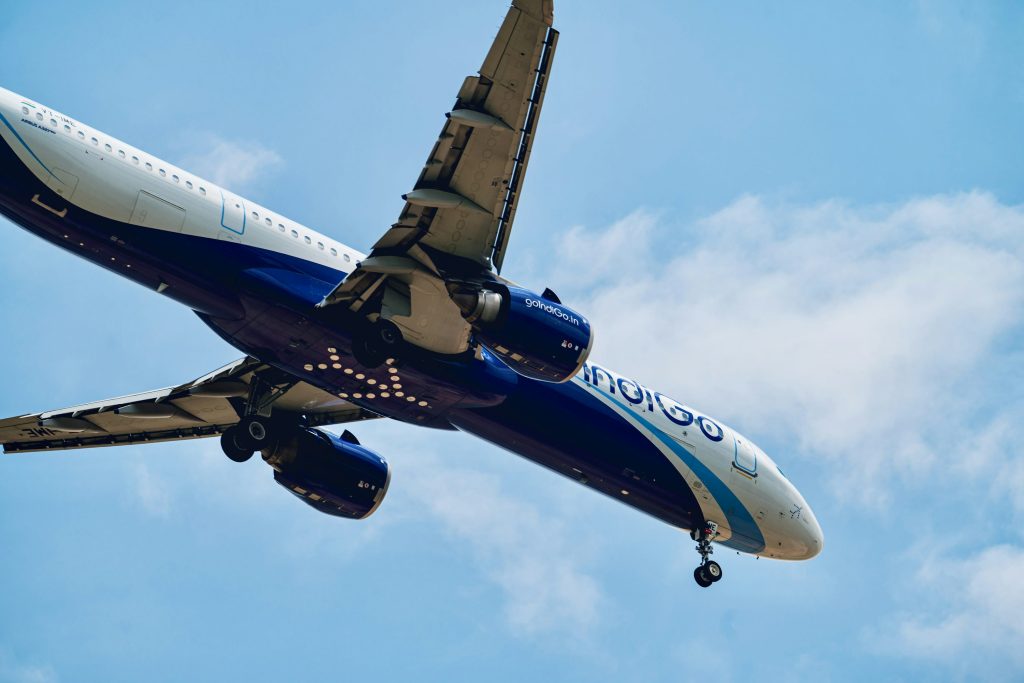
The terrifying IndiGo power bank fire flight incident unfolded mid-air as smoke and flames erupted from a passenger electronic accessory inside the cabin. While traveling between New Delhi and Chennai, the commercial aircraft suddenly faced an urgent hazardous materials emergency thousands of feet above central India. Reports from The New Indian Express and NDTV confirmed that the domestic carrier was forced into an immediate emergency diversion toward Hyderabad after crew members and travelers identified an active blaze originating from a portable battery pack. With roughly 180 passengers aboard the crowded aircraft, as detailed by People.com, the unexpected mid-flight fire triggered moments of acute distress across the passenger rows before trained flight attendants managed to contain the thermal ignition.
Aviation safety experts frequently emphasize that lithium-ion battery failures present one of the most volatile non-structural hazards aboard modern commercial airliners. Unlike standard cargo compartment threats that rely on built-in automated Halon suppression systems, an open-cabin battery blaze demands split-second human intervention. As flight recorders and preliminary aviation authority filings begin to catalog the sequence of events, this dramatic Delhi-to-Chennai diversion illustrates how quickly a routine domestic trip can escalate into a high-stakes emergency descent. Understanding the mechanics behind this mid-air battery failure sheds light on passenger risks and the rigorous protocols commercial airliners employ to prevent catastrophic cabin infernos.
Anatomy of the Delhi to Chennai Emergency Diversion
The scheduled IndiGo service departed Indira Gandhi International Airport in New Delhi with Chennai International Airport as its destination. Cruising at operational altitude over the central corridor of the subcontinent, travelers and flight attendants suddenly detected an unmistakable acrid odor of scorching plastic, followed rapidly by visible gray smoke billowing from a passenger seat row. As documented by Rediff and The Independent, a passenger personal power bank had experienced sudden thermal runaway, emitting intense heat and igniting nearby combustible materials.
Upon confirming an active flame inside the pressurized cabin, the cockpit crew immediately notified regional air traffic controllers and initiated priority diversion maneuvers. The pilots coordinated with ground controllers at Rajiv Gandhi International Airport in Hyderabad, declaring an operational urgency to clear their descent path. Safely redirecting an airliner carrying approximately 180 passengers requires precise navigation, weight balancing, and adherence to strict descent gradients. Every passing second during an in-flight fire introduces the threat of toxic fumes circulating through the cabin air filtration loops. The flight deck performed a controlled yet urgent descent, touching down safely on the Hyderabad tarmac where ground emergency teams and airport fire services stood on high alert.
The successful touchdown marked an enormous relief for the shaken travelers. Although emergency landings disrupt flight networks across regional hubs, the swift execution averted what could have been a catastrophic escalation. The reality of the IndiGo power bank fire flight reveals how quickly localized battery malfunctions can force complex air traffic rerouting across an entire national airspace sector.
How Cabin Crew Extinguished the Blaze at Thirty Thousand Feet
While pilots coordinated the emergency approach into Hyderabad, the primary battle against disaster occurred in the passenger aisle. Modern flight attendants undergo rigorous recurrent training to manage thermal runaway events, a phenomenon where an overheated lithium cell initiates a self-sustaining exothermic chain reaction. Primary reporting from The New Indian Express and NDTV highlights that flight attendants responded within moments of the alarm, isolating the burning power bank and applying onboard fire suppression equipment.
Cabin crews utilize specialized dry chemical or Halon extinguishers alongside non-flammable cooling liquids to dissipate extreme core temperatures. Lithium-ion fires cannot be stopped solely by smothering oxygen because they generate their own oxygen through chemical decomposition as cathode materials break down. Therefore, cooling the device with abundant water or aqueous agents is vital to prevent adjacent battery cells from cascading into flame. Flight attendants swiftly placed the scorched device into a thermal containment bag or a liquid-filled receptacle to suppress latent thermal re-ignition.
Eyewitness accounts reported by The Independent highlighted the initial panic that swept through the cabin as travelers witnessed open flames in such an enclosed space. Despite the understandable fear, crew discipline kept the cabin from descending into chaos. Managing such panic while dousing an active electrical fire requires extraordinary composure. The decisive operational defense mounted during this IndiGo power bank fire flight demonstrates why commercial aviation safety depends as much on well-drilled human execution as it does on aerospace engineering.
4 Critical Safety Lessons from the Hyderabad Mid-Air Crisis
Analyzing the close call provides vital operational insight into commercial aviation protocols, consumer electronics manufacturing, and passenger awareness. Just as high-performance sports organizations scrutinize every tactical choice under pressure, as examined in how Josue De Paula Ignites 4 Critical Reasons the Dodgers Trust Him in October, aviation investigators dissect mid-air incidents to safeguard future operations. The emergency diversion exposes four fundamental safety realities every passenger and airline operator must confront.
Lithium Ion Battery Thermal Runaway Volatility
Lithium-ion cells pack immense energy into minuscule packages, relying on microscopic separator membranes between anode and cathode layers. When an internal short circuit occurs, whether caused by manufacturing flaws, physical impact, or overcharging, internal temperatures can spike beyond 1,100 degrees Fahrenheit in seconds. This runaway effect transforms everyday consumer power banks into energetic hazards. Once thermal runaway begins, standard air exclusion does not extinguish the internal reaction, necessitating continuous cooling with liquid agents.
The Hidden Peril of Unregulated Charging Accessories
The proliferation of budget, non-certified charging banks sold on unverified online storefronts poses an expanding danger to global travel. Lower-tier manufacturers frequently omit crucial thermal shutoff sensors, overcurrent protections, and short-circuit interrupt mechanisms that standard international safety standards demand. When high-capacity batteries lacking internal circuit safeguards are charged or discharged aboard high-altitude pressurized cabins, micro-tears in separator layers can trigger disastrous thermal failures.
Rapid Fire Containment Protocols Above Cloud Level
The onboard response underscored the absolute necessity of specialized thermal containment protocols inside modern cabins. Traditional fire blankets or standard waste receptacles are utterly insufficient for handling burning lithium batteries; without continuous water cooling, extinguished cells can re-ignite up to several hours later. Aviation safety boards have continuously updated cabin fire drill standards, directing crew members to aggressively saturate burning electronics with water rather than relying entirely on dry chemicals, ensuring the core temperature drops below the re-ignition threshold.
Why Commercial Aviation Enforces Strict Carry-On Luggage Mandates
The near-tragedy reinforces why global aviation authorities strictly prohibit loose lithium-ion power banks in checked baggage. Had this malfunctioning battery ignited inside the aircraft cargo hold, buried beneath hundreds of synthetic fabric suitcases, automatic cargo fire suppression systems would have faced an impossible uphill struggle. Because the battery was in the cabin, humans noticed the smoke instantly and suppressed the flames before structural damage occurred. This IndiGo power bank fire flight provides vivid proof that the mandate keeping batteries in hand luggage saves lives every day.
Global Aviation Regulations for Portable Power Banks
International regulators including the International Civil Aviation Organization, the Federal Aviation Administration, and India Directorate General of Civil Aviation maintain rigid guidelines regarding personal power banks. Passengers are generally restricted to power banks with capacities below 100 watt-hours, with special airline approval required for units up to 160 watt-hours. Devices exceeding that capacity are strictly prohibited from flying under any circumstances.
Furthermore, airlines mandate that spare power banks remain strictly within carry-on luggage, protected against accidental activation and short-circuiting. Aviation regulators also actively discourage passengers from using power banks to charge portable devices during critical flight phases, such as takeoff and landing, when cabin evacuation might be immediately necessary. In light of the recent IndiGo power bank fire flight, regulators across multiple jurisdictions are expected to review whether current watt-hour limits and onboard storage instructions offer sufficient defense against deteriorating battery chemistry.
Aviation analysts note that incident frequencies involving personal electronic devices have grown parallel to consumer device adoption. As millions of passengers carry multiple high-capacity gadgets on long-distance flights, airport security screeners must remain vigilant against counterfeit, swollen, or structurally damaged lithium packs passing through terminal checkpoints. Preventing defective units from ever crossing the boarding gate remains the first and most critical barrier of defense.
Crucial Takeaways for Passengers Navigating Battery Safety
For modern air travelers, battery safety can no longer be treated as an afterthought or a bureaucratic airline formality. Travelers should inspect their portable chargers prior to boarding, checking for any signs of physical bulging, casing separation, unusual warmth, or loose ports. If a power bank or mobile device slips between aircraft seats, passengers are explicitly instructed never to adjust their seat mechanically, as crushing a lithium battery against seat tracking mechanisms is a leading cause of mid-flight fires.
Whenever an electronic device exhibits extreme heat or emits smoke during travel, alerting cabin staff without delay is essential. Attempting to hide a smoldering gadget out of embarrassment or fear of regulatory penalty only magnifies the hazard for everyone onboard. The prompt resolution of the IndiGo power bank fire flight demonstrates that clear communication, rapid crew compliance, and uncompromising safety standards can successfully defuse terrifying mid-air perils before tragedy strikes.