NASCAR Standings Rattled by 4 Major Playoff Shocks at Phoenix
Tyler Reddick’s victory at the Freeway Insurance 500 has completely upended the Cup Series championship picture. Here is an in-depth breakdown of how the Phoenix desert drama reshuffled playoff contenders ahead of Talladega.
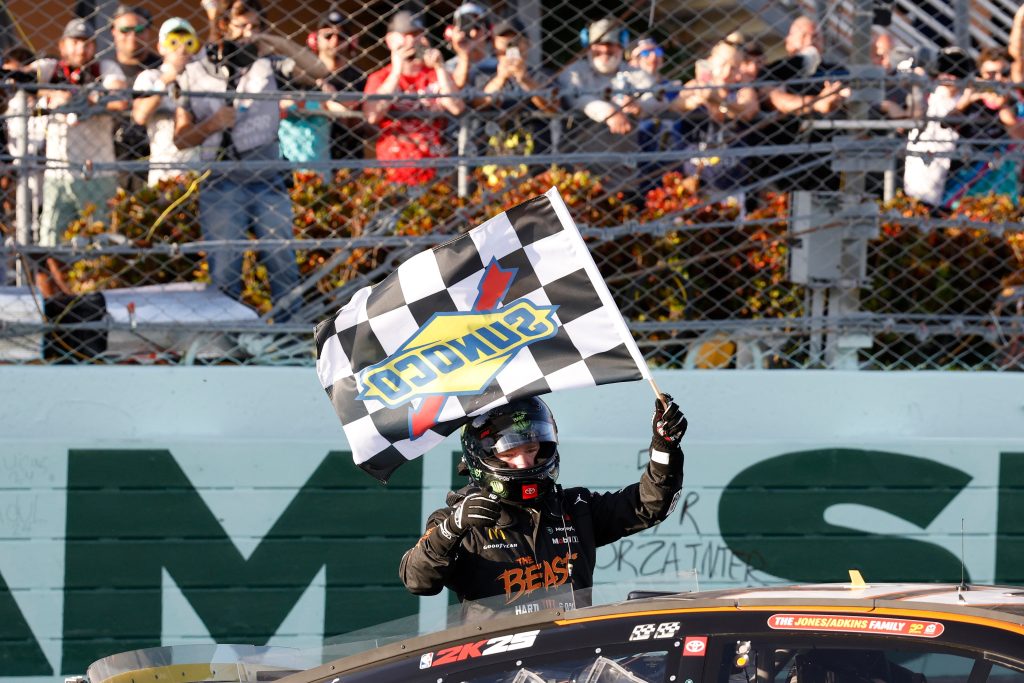
Scrutiny across the latest nascar standings reached fever pitch on Sunday night after the Freeway Insurance 500 dramatically reshuffled the 2026 Cup Series postseason picture. As the championship hunt descended on the one-mile tri-oval of Phoenix Raceway for race seven of the grueling ten-race playoff calendar, drivers knew that any mechanical failure, pit-road miscalculation, or handling imbalance could instantly derail their season. The Arizona desert delivered unyielding drama, culminating in a dominant performance by Tyler Reddick that disrupted postseason projections and left title frontrunners scrambling for breathing room.
With only three events remaining before a champion is officially crowned, every single point harvested during stage racing has evolved into gold dust. Contenders arrived in Avondale aware that Phoenix rewards surgical precision over sheer horsepower, demanding immaculate throttle modulation through the flat turns and aggressive bravery through the dogleg. When the dust settled, the updated championship leaderboard reflected both remarkable resilience and crippling setbacks across the garage area.
The Phoenix Crucible and Tyler Reddick Dominant Desert Run
As reported by On3 and the Daytona Beach News-Journal, Tyler Reddick captured the checkered flag at the 2026 Freeway Insurance 500, converting exceptional long-run pace into a pivotal postseason statement. Throughout the 312-lap contest, Reddick navigated turbulent air and intense restarts, demonstrating the operational maturity that has increasingly defined his playoff campaign. The victory not only sent shockwaves through the paddock but fundamentally recalibrated the postseason math for everyone chasing him.
When analyzing how the nascar standings absorbed the desert collision, Reddick’s clinical drive stands out as both a mechanical triumph and a tactical ambush. Entering Sunday’s showdown, several rival stables had banked on conservative stage-point accumulation to preserve their playoff positioning. Reddick discarded caution entirely, attacking the low line and executing precise entry angles that minimized tire wear on Phoenix’s abrasive asphalt. By the time the final laps ticked away, his victory slammed the door on bubble drivers hoping to advance purely on points calculations.
High Stakes and Devastating Setbacks in the Playoff Hierarchy
Behind the celebratory burnout, the points battle revealed intense emotional extremes across legacy organizations. According to The Tennessean, veteran perennial contender Denny Hamlin suffered a crippling blow to his title hopes, falling further behind the cutoff bubble after a punishing afternoon where track position consistently slipped away. In the playoff format, losing ground during race seven creates an mathematical abyss that is nearly impossible to climb out of without a walk-off win.
Conversely, Hendrick Motorsports secured crucial stability through a resolute performance from Chase Elliott. As confirmed by Hendrick Motorsports post-race reports, Elliott drove a composed, methodical race to secure a top-five finish. By harvesting crucial stage points and managing tire degradation across long green-flag runs, Elliott fortified his cushion. Every position gained or lost on the backstretch rippled through the nascar standings with devastating mathematical consequence, setting up an explosive dynamic as the garage prepares to pack haulers for superspeedway madness.
4 Major Shifts Defining the Cup Series Championship Hunt
The aftermath of the Freeway Insurance 500 reshapes the championship landscape into distinct tiers of security and desperation. Beyond the Flag highlighted Phoenix as the pivotal pivot point of the postseason, and the race delivered tactical disruptions that have altered expectations across four critical fronts.
Tyler Reddick Secures Total Championship Momentum
Reddick did not merely win in the desert; he altered the psychological hierarchy of the entire Cup Series garage. Securing a clutch playoff triumph during race seven removes the crushing burden of mathematical stage-point anxiety, allowing his crew to aggressively calibrate car setups for the remaining rounds. The triumph highlights how peak mechanical synergy between driver and crew chief can overcome track-position disadvantages on low-wear intermediate courses.
Chase Elliott Stabilizes the Hendrick Motorsports Campaign
Elliott’s top-five finish served as a defensive masterclass in race management. By dodging opening-lap skirmishes and maintaining clean air during intermediate stages, Elliott preserved his machinery while rival teams burned their tires searching for speed. The result cushions his buffer above the cutline, granting Hendrick Motorsports the operational flexibility to employ strategic tire conservation strategies in the volatile rounds ahead.
Denny Hamlin Plunges Closer to Elimination Danger
Few developments from Phoenix carry heavier historical weight than Denny Hamlin’s costly regression. Hamlin’s plunge down the nascar standings creates an acute vulnerability that rival teams are eager to exploit. Sapped of momentum by handling struggles during midday heat cycles, Hamlin now faces an all-or-nothing ultimatum where advancing to the title decider will almost certainly require an outright victory rather than passive points accrual.
Talladega Superspeedway Looms as the Ultimate Wildcard
With Phoenix in the rear-view mirror, the championship battle moves directly into the unpredictable theater of Talladega Superspeedway. Phoenix tested downforce, throttle discipline, and balance; Talladega will test survival, aerodynamic drafting packs, and raw luck. For drivers clinging to slim points buffers, heading to the high-banked Alabama superspeedway creates absolute dread, as a single multi-car accident can erase fifty points of security in less than a second.
Desert Shadows and the Technical Artistry of Modern Racing
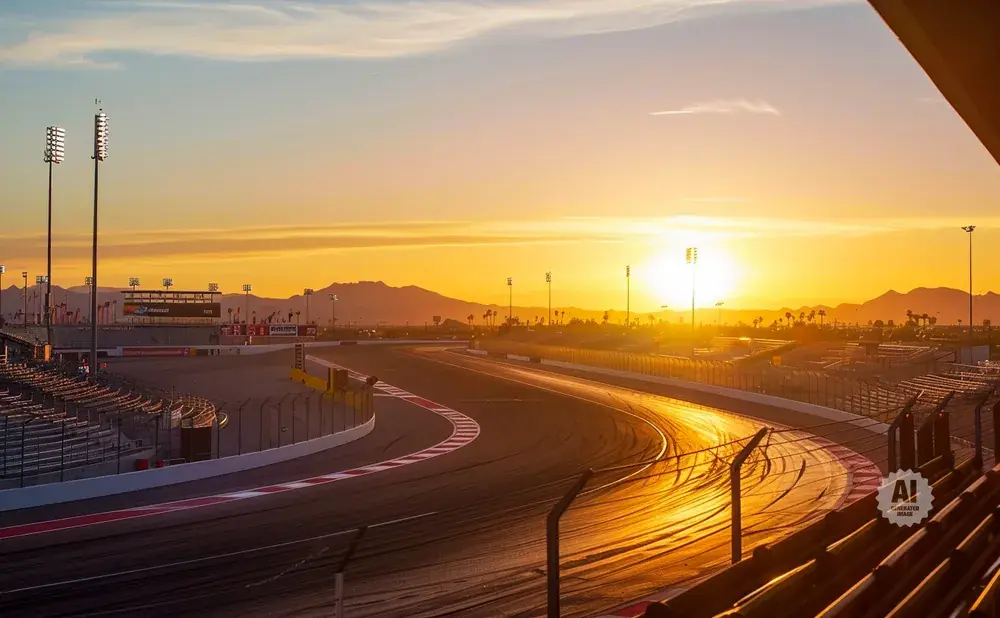
The visual spectacle of the Freeway Insurance 500 provided an unforgettable aesthetic backdrop to this ruthless sporting chess match. As afternoon heat gave way to cool desert dusk, the changing track temperatures fundamentally altered how Goodyear radials adhered to the Phoenix surface. Track grip spiked, corner exit speeds surged, and handling loose conditions transformed into tight, push-heavy handling characteristics that forced crew chiefs to frantically dial in chassis adjustments during lightning-fast pit stops.
Television coverage captured every ripple of this atmospheric transformation, utilizing ground-level tracking cameras and sweeping overhead wire rigs to broadcast the raw mechanical violence of 36 stock cars darting across the apron. The resulting visual drama mirrored the psychological tension felt across the nascar standings, capturing drivers battling shadows and glare at 150 miles per hour. Capturing that level of high-contrast sports cinematography under shifting ambient sky light requires an understanding identical to mastering Cinematic lighting techniques and 4 proven setups that create breathtaking visual depth, illuminating the razor-thin margins separating glory from catastrophe.
The Road Ahead to Talladega and the Cutoff Reality
Heading toward Alabama’s high-banked tri-oval, the nascar standings will face their most volatile trial yet. Talladega represents the great equalizer of stock car racing, an amphitheater where an underfunded single-car operation possesses identical win equity to multi-million-dollar four-car juggernauts. For contenders hovering near the elimination boundary, the upcoming 500-mile drafting marathon represents both their greatest salvation and their most terrifying existential threat.
Crew chiefs are already running risk-reward simulations. Drivers with secure cushions can afford to drop to the tail of the lead draft during dangerous intermediate stages, avoiding chaotic mid-pack accordion crashes that frequently dismantle championship hopes. Conversely, drivers stranded below the elimination line must fight for every solitary stage point from the opening green flag, running three-wide at 195 miles per hour with zero room for hesitation.
The Freeway Insurance 500 proved once again that track-specific dominance can upend months of consistent baseline performance. Tyler Reddick executed perfection in the Sonoran desert, Denny Hamlin tasted the bitter sting of postseason attrition, and Chase Elliott proved that tactical maturity remains a lethal playoff weapon. With only three races remaining before a champion is crowned, the nascar standings remain a volatile battleground where legacy and heartbreak collide with every revolution of the engine.