Justin Herbert Faces 4 Critical Pressures as Trade Rumors and Scary Hits Collide
A scary collision in Kansas City and persistent trade speculation have thrust the Los Angeles Chargers into the national spotlight. Here is the complete breakdown of the roster realities, injury concerns, and front office decisions shaping the franchise.
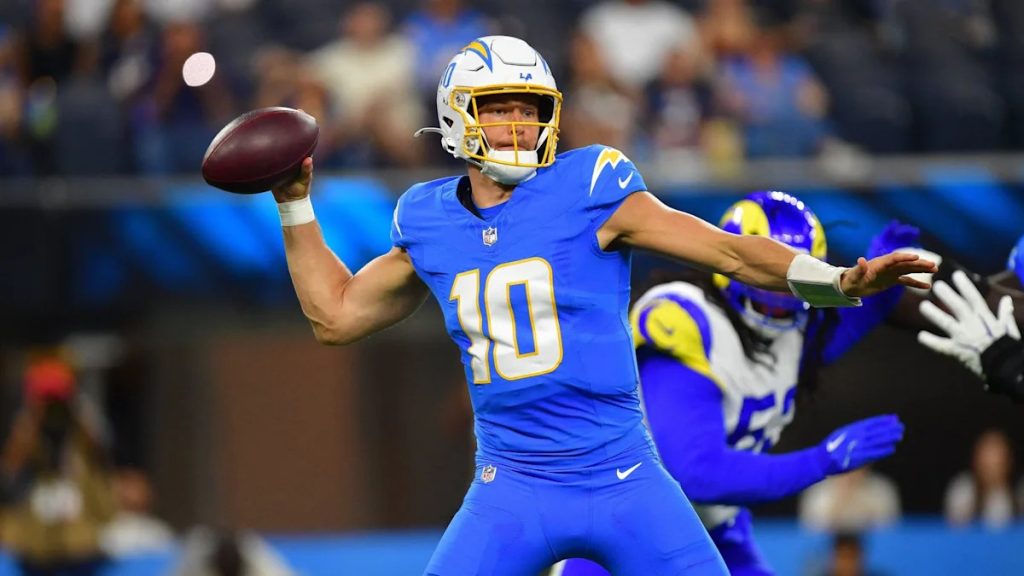
When Los Angeles Chargers quarterback Justin Herbert stepped onto the field for a grueling Week 6 matchup against the undefeated Kansas City Chiefs, the atmosphere felt unusually suffocating. Facing an 0-5 mark in their most recent meetings against their AFC West tormentors, the Chargers entered the contest carrying an exhausting burden of expectations, roster attrition, and external scrutiny. The pressure cooker intensified exponentially throughout the week as speculative trade chatter began linking the franchise cornerstone to distant franchises across the NFC, culminating in a dramatic Sunday that saw medical personnel rushing to the turf after a horrifying collision.
Modern professional sports rarely allow struggling franchises to conduct their rebuilds in peace. In an era dominated by hyperactive news cycles and rapid fan sentiment shifts, high-profile passers often find themselves positioned at the center of organizational turbulence. For Los Angeles, the convergence of physical vulnerability on the field and aggressive trade hypotheses off it marks one of the most tumultuous stretches since the franchise relocated, creating a critical test for the coaching staff, the front office, and the player himself.
The Terrifying Slide Hit in Kansas City and Immediate Health Concerns
The turning point of an already fraught divisional encounter arrived on an ordinary scramble. As reported by Yahoo Sports, the Chargers signal-caller scrambled toward the open field, initiated a standard feet-first slide to yield the play, and took an accidental, violent flying knee directly to the helmet from a closing defender. The sickening impact immediately hushed the hostile Kansas City crowd as teammates and medical officials sprinted to the hash marks to assess the damage. Quarterbacks slide precisely to avoid the catastrophic impacts of modern NFL collisions, yet when high-speed defensive backs commit their momentum downhill, the margin between a clean stop and a direct head impact shrinks to fractions of an inch.
The sequence sparked instant alarm across the league, putting the physical durability of Justin Herbert under an intense microscope after weeks of playing through an array of painful lower-body ailments. The Chargers have demanded immense grit from their quarterback over his five-year professional career, routinely watching him play through fractured ribs, finger injuries, and high-ankle sprains. However, impacts to the head and neck represent an entirely different tier of athletic peril. The NFL concussion protocol is uncompromisingly strict, forcing team doctors and independent neurological consultants to make swift determinations about player safety regardless of the scoreboard or game situations.
Beyond the medical assessment, the terrifying play underscored the systemic vulnerabilities plaguing the Los Angeles offense. Entering the contest without three primary starters, as documented by NDTV Sports, the Chargers entered the Arrowhead Stadium showdown with an offensive line stretched past its structural breaking point. When pass protection collapses and wide receivers fail to generate rapid separation, even the most composed pocket passers are forced into improvisation. Every scramble outside the hashes amplifies exposure to reckless collisions, turning routine downs into high-risk medical gambles.
4 Critical Realities Driving League-Wide Speculation
The collision in Kansas City arrived against a backdrop of unprecedented external noise. Throughout the days leading up to kickoff, mainstream sports talk radio and digital outlets circulated aggressive trade hypotheses regarding whether Los Angeles might actually consider moving their prized signal-caller. Dissecting the genuine dynamics behind this speculative frenzy reveals four distinct structural pillars governing the franchise.
The Minnesota Vikings Speculation and Insider Pushback
The most prominent hypothetical landing spot emerged in the Upper Midwest, where speculative pieces suggested the Minnesota Vikings could emerge as an aggressive suitor. However, reporting from Heavy.com and analysis from Bring Me the Sports highlighted significant skepticism from respected NFL insiders regarding whether Minnesota would actually pursue such an earth-shattering move. While casual observers fantasize about pairing an elite arm talent with superstar receiver Justin Jefferson, seasoned analysts pointed out that the Vikings are actively managing their own long-term quarterback trajectory under head coach Kevin O’Connell.
Furthermore, insiders quickly scrutinized whether trading for Justin Herbert made structural sense for Minnesota when evaluating the prohibitive draft capital and astronomical salary commitments required. The Vikings front office has spent several consecutive offseasons intentionally clearing bloated veteran money to build a balanced, sustainable roster. Surrendering multiple first-round picks alongside premium defensive assets to onboard a massive veteran extension would instantly dismantle Minnesota’s carefully crafted roster architecture. For insiders close to the situation, the theoretical marriage between the player and the Vikings remains far more entertaining as speculative digital content than as a practical front-office objective.
Jim Harbaugh and the Unshakable Foundation in Los Angeles
The second reality neutralizing the trade rumor mill lies within the building in El Segundo. When Jim Harbaugh agreed to leave the national champion Michigan Wolverines to return to the NFL, the presence of an elite, young passer was universally recognized as the decisive catalyst. Harbaugh did not arrive in Southern California to oversee an arduous, tear-it-down quarterback search; he took the reins specifically to sculpt a physical, run-heavy powerhouse around a transcendent talent.
According to updates provided by Yahoo Sports regarding the internal dynamic, Jim Harbaugh has repeatedly framed Justin Herbert as the foundational anchor of the entire franchise. Harbaugh’s entire coaching philosophy relies on pairing a rugged offensive front with a fearless field general capable of delivering pinpoint throws on high-leverage third downs. Trading away an established superstar in his athletic prime would run completely counter to Harbaugh’s track record and immediate competitive mandate. Front offices do not recruit championship-caliber head coaches on historic contracts only to hand them an empty quarterback room in year one.
Severe Roster Depletion and Persistent Pass Protection Woes
The root cause of the Chargers struggles during their difficult stretches is not quarterback performance, but widespread personnel depletion. The team entered their Week 6 clash severely undermanned, missing key contributors along the offensive line and in the skill positions. Without dependable perimeter separation and consistent interior blocking, the entire passing attack becomes stilted and predictable, leaving Justin Herbert exposed to relentless pass rushes against elite defenses like Kansas City.
When an offensive unit is down multiple starters, offensive coordinators are forced to call conservative, protective game plans designed to avoid catastrophic mistakes rather than attacking vertical seams. The resulting statistical dips fuel outside criticism from casual commentators who look solely at box scores without evaluating the tape. The harsh reality in Los Angeles is that the roster is currently navigating a painful transitional bridge where depth remains scarce following years of top-heavy salary cap allocations.
Astronomical Financial Commitments and Contractual Realities
Beyond locker room loyalty and tactical schemes, the NFL operates under rigid financial mathematics. The lucrative contract extension signed by the Chargers passer carries massive dead cap consequences if altered or moved prematurely. Modern front offices cannot simply pick up the phone and ship an elite quarterback away without incurring devastating financial penalties that paralyze their ability to sign free agents for multiple seasons.
Any acquiring team would need to assimilate an enormous financial footprint into their own salary cap sheet, severely limiting their capacity to construct a championship-caliber supporting cast. Conversely, the Chargers would be left with historic dead cap hits while searching for an answer at the most important position in North American sports. The prohibitive financial penalties alone make a mid-season or immediate offseason divorce functionally impossible within the boundaries of conventional roster management.
League Pressure Cookers and Cross-Conference Parallels
The intense scrutiny currently surrounding the Chargers locker room mirrors a broader trend sweeping across the professional football landscape. When high-profile organizations fail to match early-season expectations or find their key personnel battling injuries, outside speculation immediately shifts toward radical roster overhauls. This exact dynamic unfolds weekly across the league, showing striking similarities to how the Browns Record Faces 3 Crucial Battles as Roster Pressures Mount during challenging transitional stretches where injuries and quarterback questions dictate public perception.
In both cases, front offices find themselves caught between long-term strategic plans and the immediate emotional reactions of fan bases exhausted by divisional dominance from rivals. The swirling noise around Justin Herbert reflects how modern NFL front offices must maintain institutional composure while external pundits demand immediate, dramatic maneuvers. Successful teams resist the temptation to make panic-driven decisions, recognizing that continuity, health, and targeted player development remain the only reliable path to sustainable contention.
The Immediate Road Forward for Los Angeles
The immediate focus for the Chargers organization must center on health, stability, and schematic adjustment. Recovering from an alarming on-field collision requires thorough medical diligence, and the coaching staff cannot afford to rush their prized asset onto the field if lingering symptoms persist. The long-term trajectory of the franchise far outweighs the outcome of any individual regular-season contest.
Tactically, the offensive coaching staff must prioritize schematic tweaks that minimize unnecessary contact. Incorporating quicker passing concepts, establishing a heavier commitment to two-tight-end sets, and adjusting slide timing will be paramount to preserving quarterback longevity behind an evolving offensive line. The external trade noise will inevitably dissipate once key offensive starters return to health and the offense rediscovers its operational rhythm.
Los Angeles possesses the foundational leadership and elite talent necessary to weather this mid-season storm. The coming weeks will reveal the true mettle of Jim Harbaugh’s program, ensuring that Justin Herbert remains protected both physically on the gridiron and culturally within an organization determined to write a new championship chapter.