Meat Brining Mechanics and 4 Proven Rules to Eliminate Dry Poultry Forever
Discover the hidden molecular science behind salt diffusion and water retention in muscle tissue. Master practical brining protocols to guarantee deeply seasoned, succulent meat with zero guesswork.
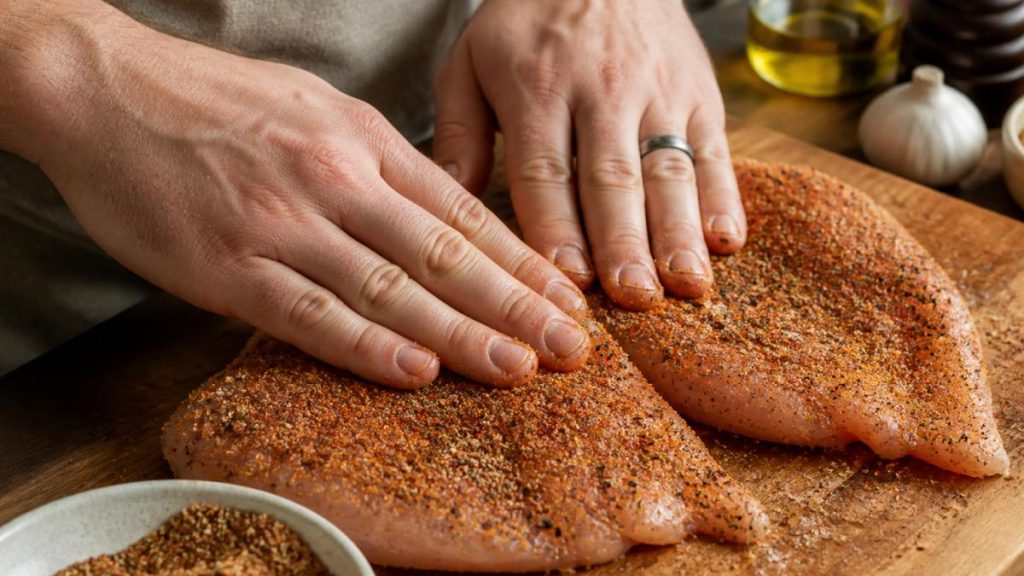
Mastering meat brining mechanics can instantly transform a chalky, overcooked chicken breast into an intensely juicy, seasoned centerpiece. Home cooks and professional line chefs alike have long dreaded the punishing margin of error inherent in lean proteins. A whole heritage turkey or a thick-cut pork loin can pivot from tender perfection to parched cardboard in a matter of minutes. The culprit is not merely excessive oven heat; it is an uncalibrated relationship with moisture dynamics at the cellular level.
Salt has served as humanity’s primary preservative for millennia, yet its modern culinary value lies in cellular engineering. When applied with intention, dissolved salt ions dismantle the defensive architecture of muscle fibers, fundamentally expanding their ability to hold water under the duress of thermal expansion. Understanding how this process unfolds allows you to banish stringy, dry poultry from your table permanently, replacing superstition with predictable kitchen science.
The Cellular Battle Inside Muscle Tissue During Salting
To grasp why lean meat dries out during cooking, one must view muscle tissue not as a solid mass, but as a dense network of fluid-filled cables. Skeletal muscle consists of bundles called fascicles, which house individual muscle fibers packed with microscopic protein filaments known as actin and myosin. In a living animal, these overlapping proteins contract and relax to generate locomotion. In the kitchen, these same protein filaments act as an elastic net trapping approximately seventy-five percent water inside their cellular weave.
Heat is the mortal enemy of this delicate storage system. Once internal meat temperatures rise above 140 degrees Fahrenheit, myosin begins to denature, coagulate, and violently twist. By the time the temperature climbs past 155 degrees, actin contracts with ferocious mechanical force. This contraction behaves like a tightening fist squeezing a wet sponge, wringing intracellular water out through the cell walls and sending it evaporating into the hot cooking environment. Without structural intervention, the meat loses up to thirty percent of its total weight in lost liquid.
This is where sodium and chloride ions mount their rescue operation. When salt dissolves across the surface or enters through a liquid solution, these tiny, electrically charged ions migrate through the meat tissue. Sodium ions disrupt the electrical charges that knit myosin filaments tightly together. By weakening these structural bonds, the protein filaments relax and separate from one another, generating vast microscopic voids that readily absorb and lock in water. Even after fierce thermal contraction during roasting or grilling, the disrupted protein matrix retains significantly more moisture than untreated muscle.
Why Traditional Culinary Folklore Gets Brine Diffusion Wrong
Delving into fundamental meat brining mechanics reveals that osmosis is actually only half the story. Generations of introductory cookbooks lazily summarized brining as simple osmosis, claiming that water rushes into the meat cells because the meat is hungrier for moisture than the surrounding liquid. That explanation defies basic chemistry. In reality, a standard wet brine possesses a far higher solute concentration than the fluid inside raw muscle tissue. If osmosis operated unchecked without opposing forces, water would flee the meat into the brine, shriveling the cut into leather.
The true physical driver of brining is solute diffusion governed by Fick’s second law. The dissolved sodium and chloride ions move from an area of high concentration in the brine into areas of lower concentration inside the muscle fibers. In the initial phase of submersion, a small amount of water does indeed escape the meat to dilute the surrounding brine. However, once salt ions successfully breach the cellular barriers and dismantle structural proteins, the internal osmotic pressure reverses entirely. The newly denatured filaments establish an electrostatic charge that hungrily binds free water.
Capillary action then takes over the heavy lifting. The expanded interstitial space between filament bundles draws liquid deep into the meat through physical suction. This multi-stage mechanical progression explains why soaking meat in plain unsalted water yields soggy, tasteless results, while soaking in salted water produces a dense, juicy bite. As documented in Michigan State University Extension research on brining science, salt fundamentally alters muscle protein solubility, increasing hydration capacity far beyond what plain water could ever accomplish.
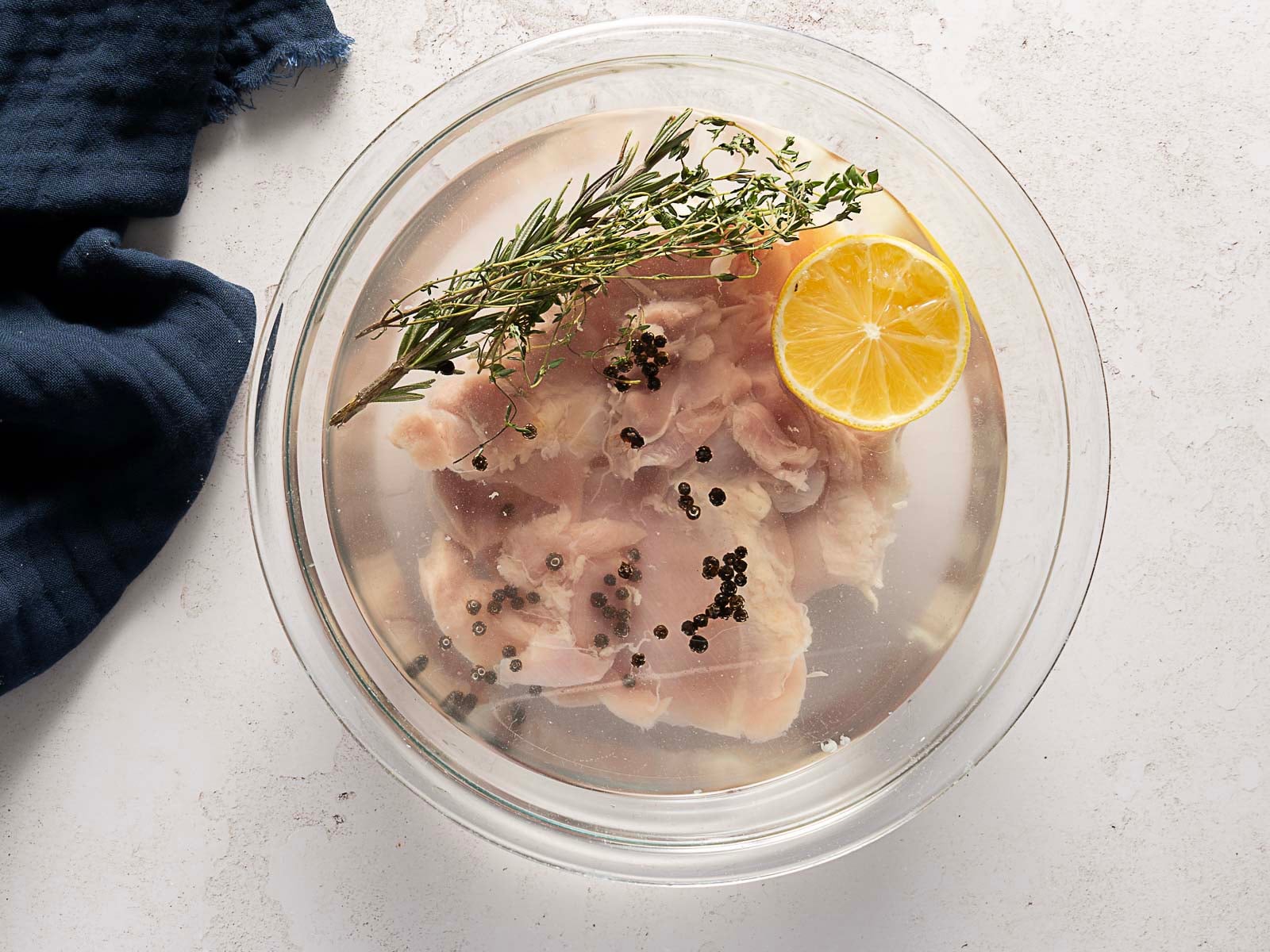
Four Proven Rules That Govern Modern Brining Success
Applying core meat brining mechanics to everyday cooking requires shifting from blind recipe adherence to controlled variables. Precision replaces guesswork when you respect the mathematical laws that dictate how ions penetrate living tissue.
Calibrate Precise Salinity Ratios Rather Than Guessing By Volume
Measuring salt by tablespoons or cups is an invitation to culinary ruin. A cup of fine table salt weighs nearly twice as much as a cup of coarse flaky kosher salt due to crystalline packing density. When preparing a submerged brine, rely strictly on digital gram scales. The gold standard for modern submerged brining is an equilibrium calculation ranging between five and eight percent salinity by total water weight for rapid soaking, or a gentler one-and-a-half to two percent if performing an equilibrium soak where meat and liquid reach complete balance over several days.
Respect Denaturation Timelines to Avoid Mushy Muscle Fibers
More time in a brine does not yield a progressively better texture. When muscle fibers remain exposed to high sodium concentrations for excessive durations, the structural proteins do not merely relax; they completely dissolve. Myosin transitions from an elastic net into a formless gelatinous sludge. This degradation gives poultry a rubbery, chalky, ham-like consistency that collapses unpleasantly on the palate. For standard chicken cuts, four to six hours is plenty. A whole twenty-pound turkey requires twelve to twenty-four hours at most. Exceeding these thresholds destroys the clean, distinct toothsome bite of good poultry.
Harness Ambient Equilibrium Instead of Rushing Salt Penetration
Diffusion is a cold, slow physical process. Salt ions penetrate muscle tissue at a glacial pace of approximately one millimeter per hour under standard refrigeration temperatures. Impatient cooks often attempt to accelerate penetration by heating their brine or leaving meat on ambient countertops. Doing so creates lethal food safety hazards and causes surface proteins to degrade long before core fibers see a single sodium ion. This phenomenon forms the heart of meat brining mechanics, proving that patience dictates texture. Maintain an uninterrupted refrigeration temperature between 34 and 38 degrees Fahrenheit throughout the process to guarantee uniform penetration without bacterial proliferation.
Combine Osmotic Pull With Surface Dehydration for Superior Crusts
The ultimate paradox of wet brining is that while the interior turns delightfully succulent, the skin absorbs excessive surface water. Water is the sworn enemy of the Maillard reaction, the complex chemical dance between amino acids and reducing sugars that creates deep browning and crisp skin. To overcome this hurdle, remove brined poultry from its bath, pat it thoroughly dry with clean towels, and rest it uncovered on a wire rack inside your refrigerator for eight to twelve hours. This cold airflow forms a delicate, tacky skin layer known as a pellicle, ensuring blisteringly crisp skin alongside fully hydrated meat.
The Eternal Debate Between Submersion and Surface Salting
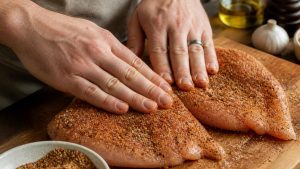
While submerged wet brines enjoy historical prestige, dry brining has earned ferocious loyalty among professional kitchen innovators. Dry brining involves rubbing a precise quantity of coarse salt directly onto the raw meat surface without adding a drop of liquid water. Comparing these two approaches illuminates how meat brining mechanics operate under different physical constraints.
During dry brining, the high osmotic pull of surface salt rapidly draws intracellular meat juices outward. The salt crystals dissolve entirely within these concentrated meat juices, creating an intensely concentrated, micro-thin brine layer on the exterior. Over several hours, this concentrated natural brine is pulled back into the muscle tissue via diffusion, carrying salt deep into the interior while leaving the native meat flavors undiluted. Wet brining inevitably introduces exterior tap water into the equation, which can slightly mute the intense savory depth of high-grade poultry or heritage pork.
Choosing between these methods comes down to culinary intent. Wet brining excels at plumping up exceptionally lean, commercially raised poultry that needs an aggressive moisture buffer. Dry brining reigns supreme for game birds, roasts, and thick steaks where concentrated beefy or avian savoriness and glass-brittle skin are the primary targets. Balancing fluid dynamics across cell membranes demands an awareness of equilibrium, much like how Secretary of State Battles Reveal 5 Critical Pressures Shaping Global and Local Power under competing domestic and international cross-currents. Every boundary in science and diplomacy responds directly to osmotic tension.
Critical Pitfalls That Sabotage Brined Meats Before Cooking
A common failure in applying meat brining mechanics stems from ignoring protein density differences across varied cuts. Treating a thin duck breast with the same brine concentration and timing as a thick bone-in pork shoulder inevitably results in an inedible salt lick. Thin cutlets possess a massive surface-area-to-volume ratio, causing them to absorb sodium at breakneck speeds compared to dense, connective-tissue-heavy roasts.
Another catastrophic error is repurposing pan drippings from wet-brined birds into gravies without tasting. Because traditional gradient brines load the meat tissues with sodium, the juices released during roasting carry substantially elevated salt levels. If an unsuspecting cook reduces these pan drippings down into a concentrated sauce or adds salted butter to a roux, the final gravy becomes intensely unpalatable. Always taste your drippings prior to building pan sauces, adjusting with unsalted stocks or acid to preserve balance.
Pre-seasoned commercial meats present a hidden trap for the unwary cook. Many supermarket chickens and supermarket turkeys come pre-injected with a commercial solution of water, salt, and sodium phosphates, frequently labeled as enhanced or tenderized. Submerging an already injected bird into an artisanal brine doubles down on sodium levels, resulting in spongy, over-salted meat that ruins holiday dinners. Always inspect packaging labels meticulously to verify that your protein is raw and completely unadorned before initiating any brining regimen.
Mastering Moisture Retention for Effortless Kitchen Consistency
Transforming kitchen science into intuitive habit changes the way you approach every cut of meat. Rather than viewing a roast as an unpredictable hazard that might dry out under high heat, you begin to see it as a programmable biological matrix ready to be reinforced against thermal damage. Salt stops being a mere finishing condiment and assumes its true role as an architectural tool.
When you command meat brining mechanics with confidence, kitchen anxiety over dry roasts completely vanishes. By calculating salt percentages by weight, adhering strictly to tissue diffusion rates, and prioritizing skin dehydration, you ensure predictable, repeatable juiciness across every culinary challenge. The stove and oven cease to be instruments of unpredictable destruction, becoming reliable tools that highlight the rich, succulent textures locked within perfectly engineered meat.