Tennis serve mechanics and 4 proven rules to unlock devastating court velocity
Discover how the physics of the kinetic chain transforms ordinary tennis serves into explosive weapons. Learn the structural adjustments that protect your shoulder while unlocking authentic court pace.
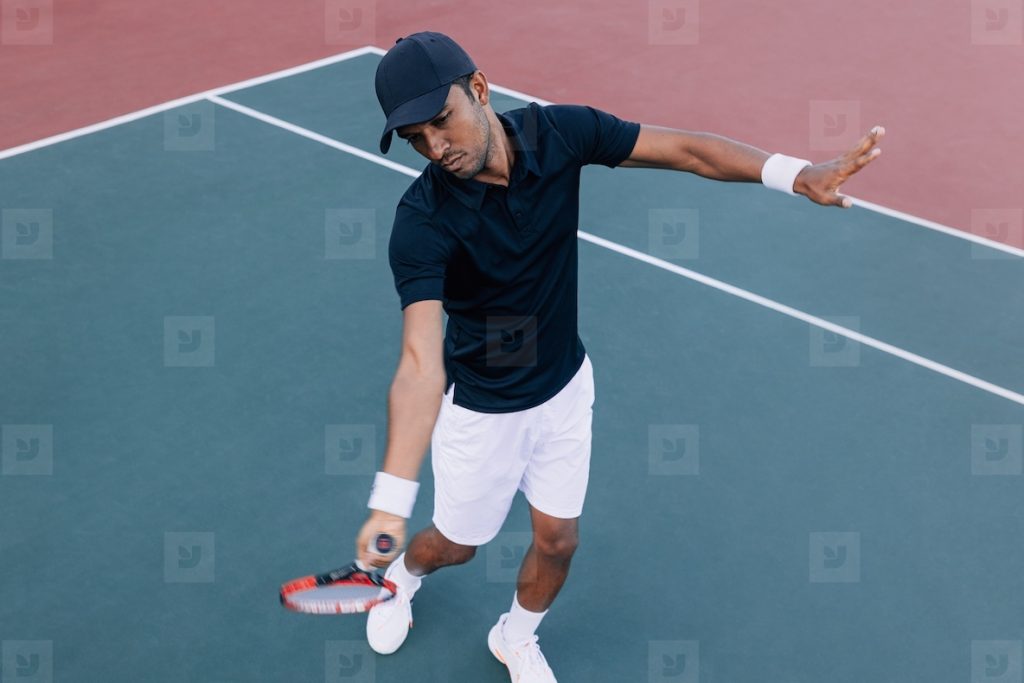
Mastering elite tennis serve mechanics requires understanding that raw racket speed is not generated by shoulder muscle alone, but through a linked kinetic chain. Most recreational and intermediate competitors approach the service line with an aggressive instinct to muscle the ball across the net. They grip the racket handle with white-knuckled tension, whip their dominant arm forward, and wonder why their fastest delivery registers at a pedestrian pace while their shoulder throbs with chronic inflammation. The overhead serve is not an arm strike. It is a total-body ballistic whip that begins with the soles of your feet gripping the court surface and culminates in a supersonic snapping release hundreds of milliseconds later.
When you watch world-class competitors strike an overhead ace, the motion appears fluid and almost effortless. That perceived ease is not an aesthetic trick. It is the direct visual result of mechanical efficiency. Every joint in the human skeleton possesses a specific operational capacity for storing and transferring kinetic energy. When these physiological segments fire in precise, unhurried succession, power compounds exponentially as it travels upward toward the racket head. Conversely, when a single link in that biological sequence falters, the entire movement pattern fractures, forcing smaller, delicate joints to shoulder an unnatural workload.
The Unforgiving Kinetic Chain of Overhead Ballistics
Energy can neither be created nor destroyed within athletic movement; it can only be harvested, directed, and transferred. When coaches analyze world-class tennis serve mechanics, they immediately observe that velocity originates long before the racket moves upward. The process initiates against the rigid concrete or clay of the baseline. By driving the lower extremities downward into the court surface, the athlete summons ground reaction force, converting vertical drive into rapid pelvic tilt and hip rotation.
This rotational energy does not stop at the waist. As the pelvis snaps open toward the net, the torso coils like a high-tension torsion spring. The abdominal wall, latissimus dorsi, and pectoral musculature stretch across the anatomical axis, accumulating elastic strain energy. By the time this surging wave reaches the glenohumeral joint, the racket head is trailing far behind the body, waiting to be unleashed through the narrowest temporal window in sports. Just as stabilizing delicate microscopic phases demands unwavering structural coherence—a reality explored in Emulsion Stability Mechanics and 4 Proven Rules to Defeat Broken Sauces Forever—coordinating multi-segment kinetic momentum requires that neither joint integrity nor muscle tension slips out of balance.
If any intermediate link misfires—such as opening the chest prematurely or collapsing the forward knee—the unbroken conduit of force dissolves instantly. Biomechanical telemetry reveals that over fifty percent of total kinetic energy delivered to the tennis ball should originate in the legs, hips, and core trunk. When an athlete fails to harvest ground force, the upper limb is forced to manufacture velocity out of thin air, precipitating technical failure and severe orthopedic degradation.
Why Arm Dominant Serving Destroys Rotator Cuffs
Relying on isolated upper-body muscular effort completely undermines healthy tennis serve mechanics and places excessive torque on vulnerable connective tissue. The human shoulder is the most mobile ball-and-socket joint in the body, engineered for three-dimensional adaptability rather than absorbing massive repetitive shock loads. When a player bypasses the lower chain and slashes at the ball with an arm-driven stroke, the rotator cuff musculature must work beyond its intended biological threshold simply to accelerate and decelerate the limb.
The primary culprit behind structural breakdown is internal impingement accompanied by glenohumeral internal rotation deficit. During an arm-dominated serve, the server frequently fails to achieve full thoracic extension and proper shoulder tilt. Instead of rotating the torso upward into an angled plane, the upper arm bone repeatedly pinches the supraspinatus tendon and labrum against the acromion bone. Over thousands of repetitions, this abrasive friction causes microscopic tearing, chronic tendonitis, and catastrophic labral fraying.
Furthermore, many struggling players labor under the dangerous geometric delusion that they must hit downward into the service box. Basic court geometry exposes this fallacy immediately. Unless a server stands seven feet tall, hitting in a straight downward trajectory from a standard contact point will drive the ball directly into the net mesh. True power serves launch slightly upward before gravity, aerodynamic drag, and topspin drive the projectile into the box. Striving to hit down compresses the shoulder joint capsule at the worst possible angle, creating agonizing pain while robbing the ball of depth and offensive clearance.
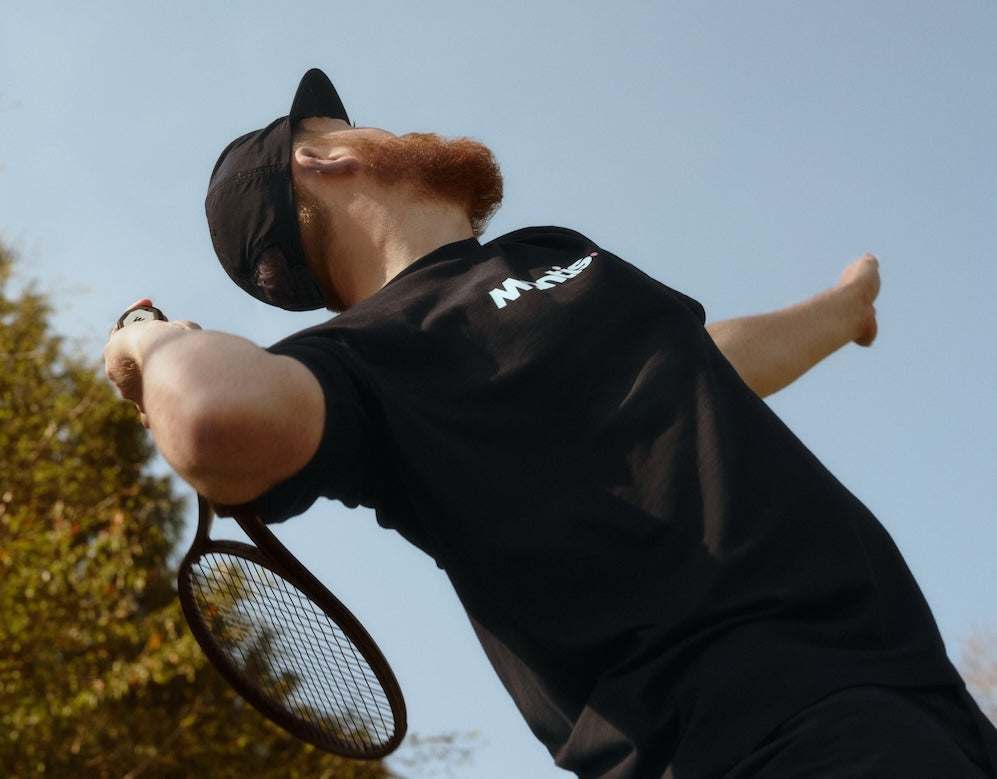
Four Proven Disciplines That Transform Overhead Power
Rebuilding your movement pattern through proven tennis serve mechanics demands isolating and refining each segment of the kinetic sequence. Implementing small, targeted biomechanical adjustments creates compound gains in racket head speed while insulating your joint structures against wear. These four foundational disciplines represent the non-negotiable structural pillars shared by the most effective servers in the history of the game.
Optimize Ground Reaction Forces Through Deep Elastic Knee Flexion
A dynamic serve begins in the dirt. Achieving real explosive power requires adopting a balanced stance—either platform or pinpoint—where the center of mass drops smoothly as the toss ascends. Deep knee flexion does not mean an artificial static squat. It is a rapid, elastic loading phase where the quadriceps, glutes, and calves act like cocked springs.
The critical technical metric here is the angle and timing of the leg drive. You must drive your body upward and forward into the court before your arm begins its final throwing movement. This vertical leap is not designed merely to gain height at contact. Its primary scientific function is to create a massive upward velocity gradient that stretches the shoulder and chest muscles, initiating the stretch-shortening cycle that automates racket acceleration.
Master the Trophy Pose to Build Maximum Stored Energy
The trophy pose is the definitive checkpoint of athletic readiness in the serving sequence. At this exact millisecond, both arms have performed their synchronized separation. The tossing arm extends fully toward the sky, guiding the ball upward while creating lateral shoulder tilt where the hitting shoulder drops noticeably below the tossing shoulder.
Concurrently, the hitting elbow must rest comfortably at approximately shoulder height, with the forearm forming a stable ninety-degree angle and the racket face tilted slightly inward toward the back of your head. This arrangement preserves vital subacromial space inside the shoulder socket. It prevents premature shoulder opening and allows the torso to remain fully coiled until the precise moment of uncoiling, locking tremendous potential energy into the core musculature.
Coordinate Rapid Internal Shoulder Rotation and Forearm Pronation
The final acceleration phase of the racket does not rely on flexing the wrist downward like a hammer. Doing so produces an unpredictable contact point and strains the wrist flexor tendons. Instead, elite velocity is delivered via internal rotation of the humerus combined with rapid forearm pronation. This violent rotational sequence is the distinguishing hallmark of advanced tennis serve mechanics that separates club players from elite servers.
During the upward swing path, the racket travels edge-first toward the ball as if cutting through the air like an axe blade. In the final split-seconds before impact, the forearm twists outward—pronating smoothly so that the stringbed squares up precisely at contact. Immediately following contact, the hitting side of the racket faces toward the outside fence. This internal twisting action produces blistering racket speed with minimal joint strain, allowing you to blast flat, slice, or heavy kick serves using the exact same underlying arm dynamics.
Calibrate the Ball Toss for Uncompromised Contact Geometry
The most immaculate kinetic sequence in the world cannot compensate for an erratic ball toss. The toss dictates where, when, and how your body transfers its momentum into the ball. If the toss drifts too far behind your head, your lower back arches dangerously, bleeding forward energy and inducing severe lumbar strain. If it falls too far forward, your chest collapses prematurely, clipping your hitting arc.
For a standard offensive serve, the ball should be released from fingertips held at eye level with an extended arm, rising without spin. The optimal contact apex must hover approximately twelve to eighteen inches inside the baseline and directly in line with your dominant shoulder at full vertical extension. Striking the ball at full extension ensures you harvest the long mechanical lever of your arm and racket, maximizing torque while establishing an unassailable angle over the net.
Diagnostic Drills to Eliminate Costly Energy Leaks
Diagnosing errors in your tennis serve mechanics requires looking at transition points rather than the outcome at ball impact. The human eye struggles to track events occurring across milliseconds, making focused, diagnostic drills essential for retraining your neuromuscular system. When working on movement recalibration, practicing at thirty percent speed exposes balance faults and spatial misalignment that remain invisible during full-throttle execution.
One transformative diagnostic routine is the deep-drop towel drill. Replace your racket with an ordinary gym towel tied in a knot at one end. Hold the opposite end with your standard continental grip and initiate your regular service windup. Because the towel possesses zero structural rigidity, any sudden jerking motion, grip tightness, or premature shoulder push will cause the towel to tangle awkwardly around your neck or slap your tricep. A smooth kinetic transition, characterized by fluid leg drive and effortless trunk rotation, causes the towel to whip through the contact zone with a sharp, resonant snap.
High-resolution motion analysis has fundamentally redefined modern coaching paradigms. Extensive clinical biomechanics research published by the National Institutes of Health demonstrates that servers who exhibit continuous racket acceleration through the drop phase generate significantly less peak glenohumeral stress than those with halting, hitch-filled windups. Filming your service motion from both the side profile and directly behind the baseline allows you to verify that your racket head drops freely down your spine before firing vertically into the ball.
Sustainable Velocity Across Decades of Competitive Play
Power in athletics is meaningless if it breaks the machine generating it. Ultimately, maintaining fluid tennis serve mechanics across a lifetime of competition depends on respecting the deceleration phase as much as acceleration. For every muscle group that contracts explosively to throw the racket forward, an antagonistic muscle group must fire eccentrically to stop the limb from dislocating after contact.
The posterior deltoid, rhomboids, lower trapezius, and external rotators bear the brunt of this eccentric deceleration braking force. If your follow-through terminates abruptly across your chest or gets choked off to avoid striking your front leg, these braking muscles absorb tremendous, unbuffered impact spikes. A natural, healthy follow-through must allow the racket to swing fully across your body, finishing loose and relaxed down past your non-dominant hip, while your back leg kicks outward behind you to maintain dynamic landing balance.
When you align the mechanics of your motion with the physical laws of nature, velocity ceases to be an exhausting physical battle. The racket transforms into a seamless mechanical extension of your skeletal frame, accelerating smoothly through the ball with crushing pace and laser precision. You step up to the baseline not with frantic muscular tension, but with the quiet, devastating confidence of an athlete whose technique is anchored in pure physical science.