Kratom Regulation Sparks 4 Critical Battles Over Gas Station Opioids
Federal agencies and industry lobbyists are locking horns over potent synthetic extracts marketed alongside traditional botanical products. Here is how emergency DEA proposals and science-based thresholds are redrawing the legal map.
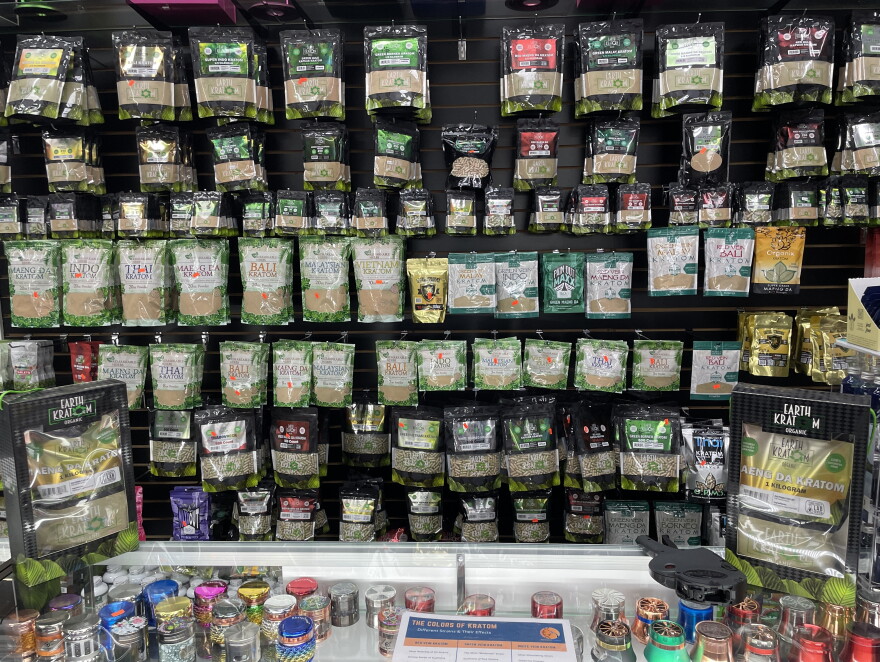
As federal authorities unleash sweeping restrictions, kratom regulation has entered an explosive phase across the United States. Across thousands of gas station counters, suburban strip malls, and specialty smoke shops, brightly packaged bottles promise fast-acting pain relief, boundless energy, and tranquility. Yet behind the botanical facade lies a rapidly escalating chemical arms race that has triggered emergency actions from the nation’s highest drug enforcement bodies. Public health officials are no longer treating the market as a uniform landscape of raw Southeast Asian foliage. Instead, federal and state agencies are taking aim at hyper-potent synthetic derivatives that pack concentrated punches far removed from the tree leaves traditionally brewed into teas for generations.
The sudden shift marks a profound turning point in modern substance control policy. For more than a decade, the conversation around the tropical evergreen plant Mitragyna speciosa revolved around whether the raw leaf itself should face nationwide prohibition. Today, that debate has fractured into an intense regulatory and legal struggle between legacy botanical purveyors and modern laboratory chemists. Federal health authorities, law enforcement agencies, and trade lobbyists have converged on a single urgent objective: drawing an enforceable line between naturally occurring alkaloids and semi-synthetic, highly concentrated formulations that mimic prescription narcotics.
The Federal Hammer Falls on Altered Alkaloids
The opening salvo in this new chapter came directly from the nation’s premier health research infrastructure. In an official communication released by the U.S. Department of Health and Human Services (HHS), officials recommended science-based thresholds specifically designed to target dangerous, chemically enhanced products. Rather than seeking an indiscriminate, blanket prohibition against every botanical product derived from the leaf, the federal health agency advised establishing strict molecular boundaries. Their guidance singles out ultra-potent metabolites that present elevated risks of dependence, acute toxicity, and severe physiological harm.
The enforcement wing followed almost immediately. As reported by Reuters, the U.S. Drug Enforcement Administration (DEA) responded by proposing the strictest drug controls on products linked to the plant that exceed these specific chemical thresholds. Under the proposal, items formulated with supercharged alkaloid levels would be placed under maximum federal drug scheduling, subjecting manufacturers and unauthorized retailers to severe criminal penalties. By anchoring enforcement directly to lab-verified saturation levels, the DEA aims to bypass the lengthy legislative stalemates that previously derailed attempts to schedule the natural plant as a whole.
This coordinated administrative push reflects a stark tactical pivot. Previous efforts by federal regulators to ban the plant outright in 2016 sparked furious consumer backlash, congressional pushback, and scientific debate over personal autonomy and harm reduction. By narrowing the scope toward modified chemical isolates, public health officials realized that traditional frameworks could no longer handle the issue, prompting HHS to recommend a revised model of kratom regulation centered on chemical potency. The new standard separates raw crushed leaf from modern, semi-synthetic concoctions designed to flood opioid receptors with unprecedented affinity.
How Synthetic Extracts Splintered an Underground Market
To understand why federal watchdogs mobilized with such urgency, one must look at the rapid commercial evolution of products dubbed “gas station opioids.” As detailed by The Hill, federal authorities and healthcare providers have raised alarms over two specific chemical isolates: 7-hydroxymitragynine (commonly known as 7-OH) and mitragynine pseudoindoxyl (MGPI). In natural botanical leaves, mitragynine is the dominant active compound, while 7-OH occurs in only microscopic, negligible traces. MGPI is practically undetectable in raw plant material.
Over the past two years, specialized extraction operations and chemical laboratories began isolating and artificially synthesizing 7-OH and MGPI at industrial scale. Commercial operations packaged these isolates into high-potency tablets, liquid shots, and dissolvable strips that deliver concentrated alkaloid doses hundreds of times stronger than traditional whole-leaf powder. In the human body, 7-OH acts as a potent partial agonist at mu-opioid receptors, displaying potency levels significantly greater than morphine on a milligram-for-milligram basis.
The commercial result was catastrophic for public safety oversight. Unsuspecting consumers seeking mild herbal relaxation frequently purchased these synthetic isolates without understanding their pharmacological potency. Emergency rooms, addiction medicine specialists, and poison control centers began logging reports of acute dependence, severe withdrawal syndromes, respiratory complications, and hospitalizations linked directly to branded 7-OH tablets. By divorcing the active molecules from the complex natural matrix of the whole plant, manufacturers created commercial products that behave far more like synthetic narcotics than traditional botanicals.
Inside the Multi-Million Dollar Lobbying War
The escalating federal crackdown is not solely a top-down mandate from government agencies. In a remarkable twist of commercial warfare, traditional industry players are actively financing the campaign against synthetic extracts. According to an investigative report by the New York Post, the mainstream botanical industry has engaged in a multimillion-dollar lobbying effort to ban synthetic versions while pushing lawmakers to keep the natural, unadulterated plant legal and accessible.
Traditional vendors and advocacy coalitions have poured substantial capital into state legislatures and political campaigns across the country. Their motivation is clear: survival. For years, natural botanical distributors worked to pass state-level versions of the Kratom Consumer Protection Act, establishing age restrictions, labeling standards, and bans on toxic adulterants. When lab-manufactured 7-OH tablets flooded convenience store shelves under identical retail categories, legacy trade organizations recognized that high-profile overdoses from synthetic isolates threatened to bring down the entire botanical sector.
Rather than defending the entire commercial ecosystem, industry groups have actively courted lawmakers to enact aggressive kratom regulation that outlaws semi-synthetic concentrates while protecting ordinary powder. Legacy distributors are deliberately distancing whole-leaf tea bags and crushed leaves from hyper-potent tablets. By aggressively lobbying for strict regulatory bans against synthetics, traditional leaf purveyors hope to demonstrate corporate responsibility, pacify federal regulators, and preserve their core market from sweeping prohibition.
Four Pivotal Frontlines Shaping the National Crackdown
The sudden convergence of federal health warnings, drug enforcement notices, and state bills has accelerated kratom regulation into four distinct battlefields across the American marketplace.
Federal Thresholds Targeting 7-OH and MGPI Concentrations
The foundational frontline rests on analytical chemistry. Under the science-based thresholds recommended by HHS, federal regulators are establishing precise mathematical cutoffs for 7-OH and MGPI ratios relative to total alkaloid volume. If an extract contains alkaloid concentrations that cannot be produced through standard botanical drying and milling processes, it automatically crosses into the restricted category. This molecular boundary removes the legal gray area that manufacturers previously exploited by claiming synthetic tablets were merely natural extracts.
The DEA Strategy for Maximum Drug Schedules
The enforcement hammer represents the second frontline. By leveraging the specific concentration limits established by health scientists, the DEA’s proposal reported by Reuters bypasses broad legislative debates. Instead, it positions concentrated isolates directly into the strictest federal controlled substance tiers. This tactical approach permits federal prosecutors to treat vendors, distributors, and clandestine extractors of high-potency 7-OH in the exact same manner as illicit synthetic opioid traffickers, drastically escalating the legal stakes for retail distribution networks.
Industry Survival Tactics Splitting Natural Leaf from Synthetics
The third frontline unfolds in legislative corridors and political action committee war chests. As revealed by the New York Post, the commercial split between legacy leaf importers and synthetic extract manufacturers has erupted into an expensive lobbying battle. Natural botanical trade groups are writing draft legislation, funding scientific safety studies, and advising state attorneys general on how to identify synthetic isolates on store shelves. The survival strategy centers on offering up synthetic extractors to regulatory authorities in exchange for long-term legal security for traditional leaves.
Local Main Street Bans and North Carolina Retail Resistance
The final frontline is playing out at cash registers and municipal council chambers nationwide. Local reporting from WNCT in North Carolina highlights how retail smoke shops, convenience store operators, and local medical experts in cities like Greenville are navigating the chaos. Store owners argue that blanket local ordinances punish law-abiding businesses that enforce voluntary age checks, while addiction specialists point out that unregulated retail access makes it far too easy for teenagers and vulnerable adults to develop chemical dependencies. At the municipal and state level, local lawmakers view emergency kratom regulation as the only immediate defense against unvetted shop counter inventory.
Navigating the Complex Horizon for Consumers and Retailers
The days of unregulated, wild-west commercialization across American retail shelves are drawing to an abrupt close. The alliance between federal regulatory agencies and legacy botanical lobbyists has boxed synthetic extract producers into an increasingly narrow legal corner. For retail storefronts, convenience chains, and online distributors, carrying lab-altered 7-OH tablets or synthetic MGPI isolates now carries existential legal liabilities, ranging from civil asset forfeiture to federal controlled substance indictments.
Strategic execution under acute pressure will decide which market operators withstand the regulatory storm. Just as competitive entities must navigate unforgiving pressure where every operational decision counts—an exacting reality explored when Maria Sakkari Faces 3 Critical Tests in a High Stakes Wuhan Open Clash—retailers and manufacturers must now adapt to an unforgiving legal landscape. Businesses that fail to purge unapproved synthetic concentrates from their shelves risk facing severe federal enforcement actions as the DEA moves to formalize its proposed controls.
Consumers who turned to these products for pain relief, anxiety management, or opioid cessation are entering an equally turbulent transition. As federal and state bans eliminate hyper-potent products from convenience counters, thousands of regular users may experience acute withdrawal symptoms, driving renewed demand for formal addiction medicine resources. Ultimately, the trajectory of kratom regulation will determine whether the botanical trade can survive modern pharmacology, or whether the rise of synthetic extracts will finally bring down the curtain on the entire commercial market.