Emulsion sauce mechanics reveal 4 proven secrets to conquer silky sauces without heartbreaking failures
Discover the physical chemistry behind stable culinary emulsions and learn why oil and water separate. Master four mechanical rules to craft flawless hollandaise, mayonnaise, and pan sauces every single time.
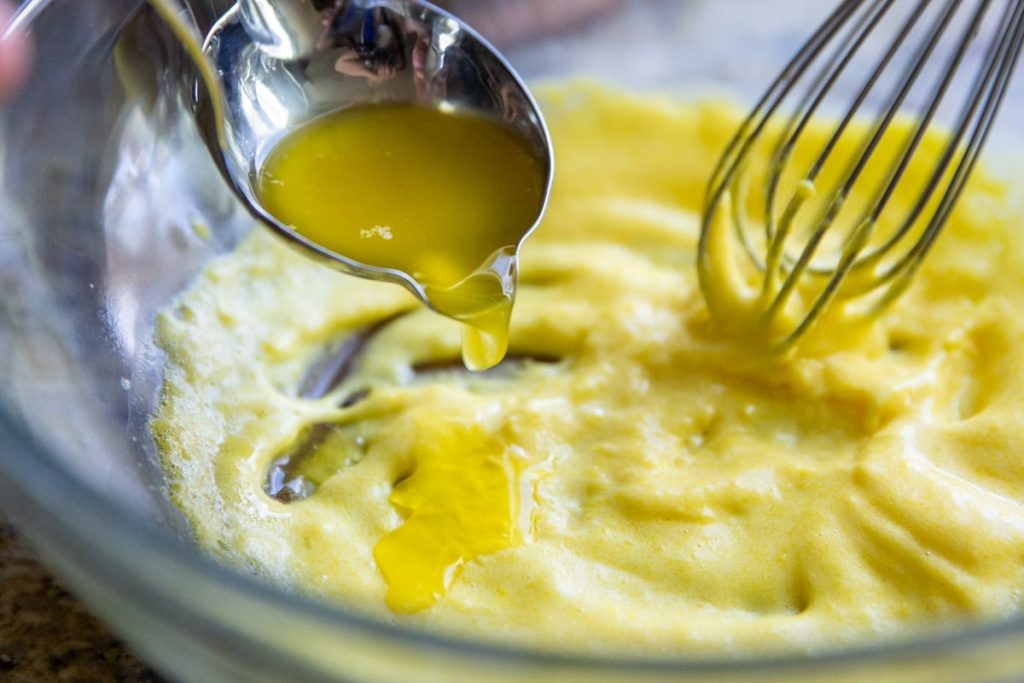
Mastering emulsion sauce mechanics transforms ordinary kitchen panic into utter culinary confidence whenever fat and water threaten to violently separate. Every cook has watched in quiet dread as an ostensibly rich hollandaise curdles into a grainy, greasy puddle, or a bright vinaigrette fragments into clear vinegar beneath a slick pool of olive oil. That moment feels like bad luck, but chemistry does not run on chance. What sits in your bowl is not a single liquid, but two sworn enemies forced into an unstable truce. Water molecules cling fiercely to one another through tight hydrogen bonds, ruthlessly squeezing out nonpolar fat molecules that lack the electrical charges required to mingle.
When you understand the hidden dynamics that govern these mixtures, culinary anxiety evaporates. You stop relying on superstitious rituals like whisking exclusively clockwise or whispering prayers over a double boiler. Sauces such as mayonnaise, béarnaise, beurre blanc, and classic pan pan-sauces cease to be finicky hazards. Instead, they become predictable structural systems that you can command, assemble, and rescue with effortless poise.
The Physics of Forcing Oil and Water into Peaceful Coexistence
Liquids in their resting state seek the lowest possible energy state. For water and fat, that energetic paradise means minimizing contact with one another. When poured into the same vessel, water drops to the bottom while oil floats to the top, exposing only a single flat plane of surface area where the two phases meet. Forcing those liquids to interlock requires working against this thermodynamic law.
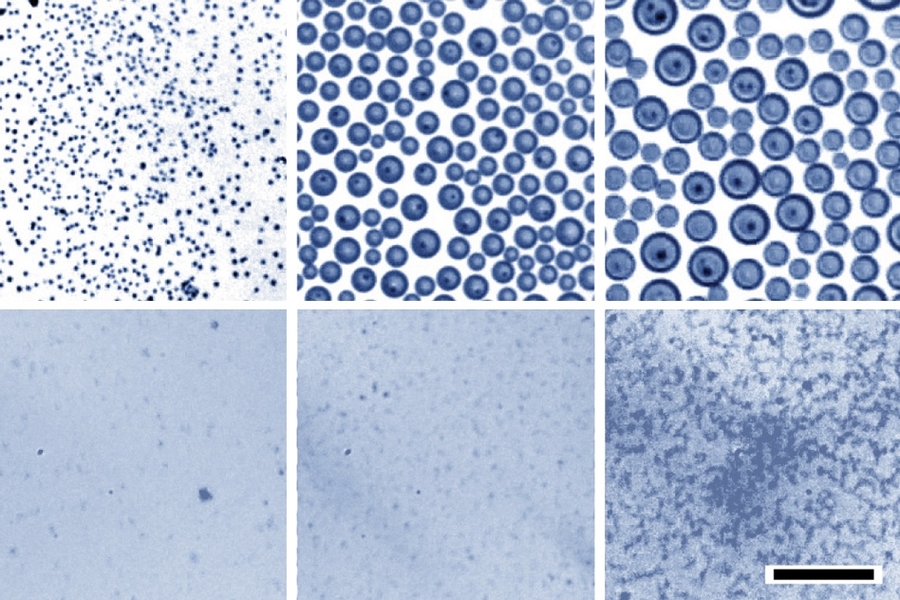
To create a suspension, you must shatter one liquid into billions of microscopic droplets and scatter them throughout the other. The liquid that breaks into droplets is the dispersed phase, while the surrounding liquid is the continuous phase. In culinary sauces, the dispersed phase is almost always fat—clarified butter, olive oil, or neutral vegetable oils—and the continuous phase is water, often carrying acids like lemon juice, wine reductions, or vinegar.
The sheer magnitude of physical area created during this breakdown is staggering. A single cup of oil broken down into microscopic globules increases its total surface area by several thousand times. Every newly exposed surface wants nothing more than to smash back into its neighbor to reduce surface energy. This tension sits at the heart of emulsion sauce mechanics, where thermodynamic resistance must be conquered by physical force and molecular mediators. Without kinetic energy to pull droplets apart and chemical shields to keep them separated, the system rapidly collapses back into its preferred state of separation.
The Core Architecture of Stable Culinary Suspensions
Recipes often instruct you to whisk briskly and drizzle slowly, yet few explain the mechanical realities occurring beneath the tines of the fork. Just as discounted cash flow mechanics reveal 4 proven rules to value enduring assets through meticulous evaluation of time and risk, building a permanent sauce requires looking past surface illusions to evaluate how each phase develops over the course of preparation. Success hinges on a systematic mastery of emulsion sauce mechanics that professional sauciers execute without second thought.
The Dispersed Phase Rate Dictates Droplet Geometry
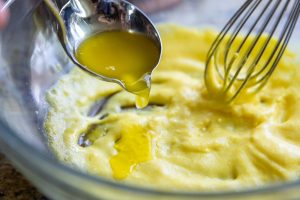
The most common route to sauce destruction occurs within the first thirty seconds of assembly. When you dump a heavy stream of oil into an aqueous base, the fat forms thick, undulating rafts rather than isolated spheres. Your whisk merely slides through these massive ribbons, pushing them around the bowl rather than tearing them apart. To build an enduring suspension, the dispersed phase must be fed into the continuous phase one single drop at a time until a baseline matrix forms.
Mechanical shear—the physical tearing force produced by the rapid passage of wire tines through liquid—can only shatter fat droplets when the volume of free water dwarfs the volume of free fat. As the whisk accelerates, it stretches oil droplets into fragile filaments that snap into sub-microscopic spheres. Once these tiny spheres establish their territory, subsequent additions of oil can flow slightly faster. The initial drizzle is not culinary theater; it is a mechanical prerequisite for calibrating droplet geometry before the liquid matrix becomes saturated.
Amphiphilic Surfactants Form an Unbreakable Molecular Shield
Whisking with furious intensity creates microscopic droplets, but kinetic energy alone cannot keep them apart. Left to their own devices, two colliding fat droplets will immediately coalesce into a larger sphere to shed surface tension. Enter the emulsifier: a specialized amphiphilic molecule equipped with a water-loving hydrophilic head and an oil-loving lipophilic tail.
Egg yolk contains nature’s most formidable culinary surfactant in lecithin, accompanied by a host of low-density lipoproteins. When suspended in the bowl, these molecules dart to the borderline between the two hostile liquids. Their fatty tails plunge into the oil droplet, while their charged heads project outward into the surrounding water. This orientation creates a protective electrostatic and steric armor around every oil bead, causing nearby droplets to bounce off one another rather than merge. According to Harvard John A. Paulson School of Engineering and Applied Sciences food science research, the interfacial tension plummets when these surface-active agents saturate the boundary layer. This molecular shield remains the bedrock of emulsion sauce mechanics, providing the structural glue that prevents droplets from recombining.
Thermal Windows Control Viscosity and Protein Integrity
Warm emulsions like hollandaise and béarnaise introduce a fragile variable that cold sauces never confront: the denaturing kinetics of animal proteins. Egg yolks must be heated sufficiently to unravel their coiled globular proteins, allowing them to form a cohesive, thickened web that suspends water. If the temperature stays below 55 degrees Celsius, the proteins remain tightly folded, providing minimal viscosity to hold the butter in check.
Push the heat past 68 degrees Celsius, however, and tragedy strikes. The unfolded proteins bind irreversibly to each other, forming rigid cross-linked clumps known as scrambled eggs. As the protein matrix contracts, it violently expels the water trapped within its mesh—a phenomenon food scientists call syneresis. Deprived of its continuous water phase, the butterfat breaks free in oily torrents. Keeping your sauce within the narrow sweet spot of 57 to 62 degrees Celsius maintains fluid mobility while preventing the fatal over-coagulation that tears emulsions apart.
The Phase Volume Ratio Preserves the Continuous Medium
There is a mathematical limit to how many spheres you can pack into a given volume of liquid before they crash into one another by sheer geometric constraint. When rigid spheres are packed into a container, they cannot exceed roughly seventy-four percent of the total volume without deforming into multifaceted polyhedrons. In an emulsion, once oil occupies more than three-quarters of the mixture, the droplets begin pressing directly against one another, squeezing out the thin film of continuous water separating them.
When this critical threshold is breached, catastrophic phase inversion occurs. The sauce either turns into a greasy, unyielding paste or splits entirely because there is simply not enough free water to envelop the fat. Professional chefs prevent this failure with a simple physical intervention: adding a teaspoon of water, vinegar, or citrus juice the moment the sauce begins to pull away from the bowl with a greasy, glass-like sheen. Introducing free water expands the continuous phase, giving crowded fat droplets room to glide freely without violent collisions.
Practical Diagnosis and Instant Rescue for Broken Sauces
Even seasoned kitchen veterans occasionally misjudge heat or rush a stream of oil. The difference between an amateur and a master lies not in never breaking a sauce, but in recognizing the warning signs and repairing the structure before pride turns into waste. Sauces communicate their internal stress long before they collapse. A healthy emulsion displays a satiny, matte sheen and rolls off the whisk in supple ribbons. An overstressed sauce develops a high-gloss, greasy perimeter and begins shedding tiny droplets around the edge of the bowl.
When total separation strikes, do not toss the liquid into the sink. Every component needed for a luxurious sauce is still in the pan; the geometry has merely fallen out of alignment. Because you understand the diagnostic side of emulsion sauce mechanics, a broken sauce is never a lost cause.
To execute an effortless rescue, establish a new continuous phase in a clean, warmed bowl. Whisk a single teaspoon of warm water or an extra egg yolk until slightly frothy. This fresh base provides an abundance of uncrowded continuous liquid and unattached surfactants. Now, treat your broken sauce not as garbage, but as your oil supply. Slowly drizzle the split mixture into the fresh base while whisking steadily. The newly liberated surfactants seize the incoming fat droplets, locking them back into micro-suspension and restoring a flawless, velvety body within two minutes.
Elevating Everyday Kitchen Technique Through Mechanical Fluency
Culinary confidence grows when you stop viewing recipes as arbitrary commands and begin seeing them as physical operations. Once the underlying forces make sense, kitchen tools stop being passive utensils and become mechanical instruments. You quickly realize why a wide, round-bottomed stainless steel or copper bowl yields a vastly superior emulsion compared to a narrow pot: it allows the whisk tines to sweep through the maximum volume of liquid, maximizing shear force with every rotation.
You also understand why securing the bowl over a damp towel ring is not a stylistic habit, but an essential ergonomic measure that frees both hands—one to pour the dispersed phase in a microscopic trickle, and the other to drive the whisk at peak velocity. With an intuitive grasp grounded in sound emulsion sauce mechanics, cooking ceases to be an act of anxious superstition. You approach the stove with the calm assurance of someone who knows exactly how liquids talk to each other, turning fundamental molecular physics into the most luscious sauces imaginable.