Emulsion sauce mechanics reveal 4 proven rules to prevent disastrous kitchen splits
Discover the physical chemistry behind velvet culinary emulsions and learn why delicate sauces collapse. Master the kinetic and thermal secrets to guaranteeing flawless sauces every single time.
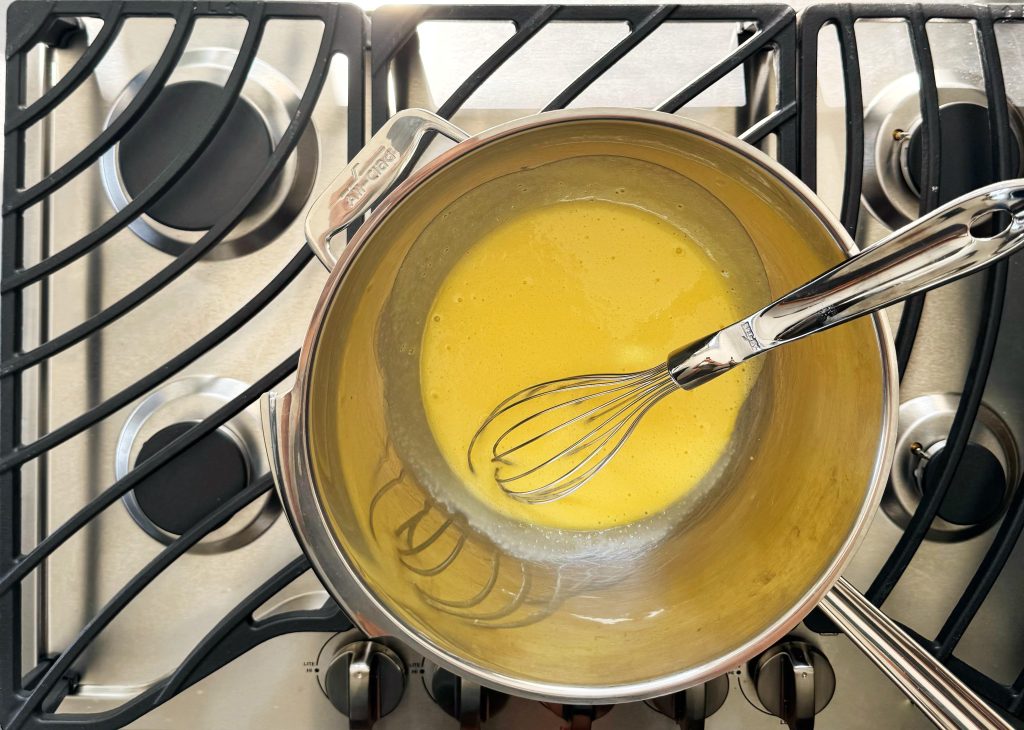
Understanding emulsion sauce mechanics transforms nervous cooks into fearless sauciers who command fat and water with chemical precision and effortless kitchen confidence. Few kitchen catastrophes feel as abrupt or humiliating as watching a silky sauce curdle into an oily puddle. You stand over a warm bowl, whisking vigorously, watching golden ribbons of hollandaise or glossy peaks of mayonnaise form, only for the entire suspension to suddenly shatter. The glossy sheen vanishes, replaced by a greasy pool floating above grainy, curdled sludge.
Most home cooks attribute this failure to bad luck or faulty recipes, but sauces do not break because of spite. They collapse because of fundamental physics. At its core, an emulsion represents an unnatural truce between two fluids that naturally despise one another. Lipids and water do not want to coexist. Forcing billions of hydrophobic fat droplets into an aqueous medium requires mechanical shear, physical barriers, and thermal control. The microscopic reality of emulsion sauce mechanics hinges on a constant struggle between thermodynamic entropy and physical containment.
The microscopic battle between fat droplets and liquid surface tension
Every culinary emulsion consists of two primary characters: the continuous phase and the dispersed phase. In almost every classic sauce, water forms the continuous phase, while fat serves as the dispersed phase. When you make vinaigrette, vinegar or citrus juice acts as the continuous ocean, and olive oil acts as the fleet of tiny droplets drifting across it. In mayonnaise, the continuous base is water derived from lemon juice, vinegar, and egg yolks, while neutral vegetable oil serves as the dense cargo suspended within it.
Thermodynamics dictates that liquid molecules prefer hanging out with their own kind. Water molecules possess electrical polarity, clinging tightly to one another through strong hydrogen bonds. Lipid molecules, conversely, are non-polar and hydrophobic. When forced into water, oil droplets experience massive interfacial tension. The laws of nature encourage these droplets to find one another, merge, and minimize their total exposed surface area, which is why an unassisted mixture of oil and vinegar separates into distinct layers within seconds.
To prevent this natural coalescence, cooks introduce surfactants, commonly known as emulsifiers. These microscopic mediators possess an amphiphilic molecular structure, featuring a hydrophilic head that bonds with water and a lipophilic tail that buries itself into oil. When you disperse oil into water in the presence of an emulsifier, these molecules coat each tiny oil sphere. Their hydrophilic heads project outward into the surrounding water, creating electrostatic and steric repulsion that stops colliding fat droplets from fusing together.
Why delicate culinary suspensions suddenly collapse under pressure
Emulsions exist in a metastable state. They are held together not by absolute chemical permanence, but by a delicate physical barrier. When an emulsion breaks, it means the rate of droplet coalescence has overwhelmed the protective surfactant shield. This failure occurs across three distinct vulnerabilities: thermal shock, shear insufficiency, and phase inversion.
Thermal collapse is the classic nemesis of egg-yolk-based warm sauces like béarnaise and hollandaise. The underlying emulsion sauce mechanics explain why temperature thresholds are non-negotiable for egg-based sauces. Egg yolks provide lecithin and low-density lipoproteins, which act as world-class emulsifiers. However, yolk proteins begin unfolding and coagulating between 145 and 158 degrees Fahrenheit. If the pan exceeds this threshold, the proteins denature irreversibly, twisting into tight knots that squeeze out water and abandon the fat droplets to coalesce. Conversely, if butter-based sauces drop below room temperature, the clarified butterfat solidifies into jagged crystalline structures that physically slice through the emulsion matrix.
Phase inversion represents an even more common blunder. This happens when a cook dumps oil into the bowl faster than the continuous phase can surround it. Every droplet needs sufficient free water to float independently. If the volume of dispersed fat overwhelms the available water volume before adequate shear is applied, the phases abruptly invert. The oil suddenly becomes the continuous medium, trapping tiny pockets of water within an uncontrollable slick of grease.
Just as complex digital systems suddenly crash when microscopic timing loops fall out of alignment, culinary suspensions fail instantly when tiny procedural parameters slide out of tolerance. When unexpected digital disruptions occur, such as when a Google Play System Update Glitch Sparks Confusion with 3 Critical Android Surprises, users are reminded that invisible micro-routines dictate high-level system stability. In the kitchen, a momentary hesitation with the whisk or pouring oil three seconds too fast sparks the exact same cascading breakdown.
Proven rules that guarantee unbreakable culinary emulsions
Achieving absolute mastery over sauces requires abandoning superstitious ritual in favor of physical principles. Applying foundational emulsion sauce mechanics eliminates guesswork, converting volatile preparations into dependable culinary staples through disciplined kinetic and chemical execution.
Master the ratio of continuous liquid before introducing fat
An emulsion cannot form without sufficient water volume to physically space out the incoming oil droplets. A single egg yolk contains roughly two to three grams of water, along with a dense payload of natural emulsifiers. In theory, that single yolk can bind several liters of oil, provided enough external water is added along the way. However, many cooks make the mistake of whisking oil directly into raw, undiluted yolks.
To build an indestructible foundation, always whisk a tablespoon of water, acid, or stock directly into your yolks before adding a solitary drop of fat. This initial volume provides an expansive aqueous highway. Without this liquid cushion, the viscosity climbs too quickly, suffocating the mechanical movement needed to tear fat into micro-droplets. A reliable rule of thumb is maintaining at least one part continuous water volume for every three to four parts oil added over the course of the preparation.
Control kinetic energy through disciplined mechanical shear
Pouring oil into an emulsion is an act of dispersion, not mixing. Stirring a sauce lazily in circles does nothing to reduce droplet size. What creates a stable suspension is shear force, the mechanical tearing action generated when adjacent layers of liquid move at drastically different velocities.
Here, fine-tuning your emulsion sauce mechanics requires respecting droplet dispersion rather than brute muscle. When using a wire whisk, whip back and forth across the widest diameter of the bowl rather than swirling in circular paths. This rapid back-and-forth cutting motion forces the fluid through the whisk tines at maximum velocity, shredding incoming fat into droplets measured in micrometers. Smaller droplets possess vastly higher aggregate surface area and collide with significantly less momentum, drastically reducing the odds of accidental coalescence.
Maintain the critical thermal window between freezing and coagulation
Temperature controls both viscosity and molecular stability. Warm emulsions like hollandaise require a narrow thermal operational window between 120 and 140 degrees Fahrenheit. Below this threshold, clarified butter begins to crystallize, losing its fluidity and disrupting the liquid film. Above this threshold, yolk proteins coagulate, destroying their surfactant capabilities and scrambling the eggs.
Cold emulsions like mayonnaise and remoulade perform best with room-temperature ingredients. Cold oil drawn straight from the refrigerator possesses higher viscosity, which resists mechanical shear and demands significantly more physical force to break into micro-droplets. Room-temperature oil shears effortlessly, allowing immediate encapsulation by the egg yolk surfactants.
Deploy amphiphilic surfactants with surgical timing
While egg yolk is the undisputed king of kitchen surfactants, secondary ingredients can lend extraordinary structural support to your sauce. Prepared mustard contains mucilage, a complex polysaccharide that physically swells in water, dramatically increasing the viscosity of the continuous phase. This thickened aqueous background physically slows down the movement of oil droplets, making collisions far rarer.
Garlic provides a similar stabilizing effect in authentic Mediterranean aioli. Crushed raw garlic releases micro-particles and pectins that physically wedge themselves between lipid droplets. By deploying these supplemental surfactants at the very beginning of the emulsification process, you establish a resilient physical scaffold that protects the sauce against minor pouring errors later on.
Diagnostic steps to effortlessly rescue a broken sauce
Even seasoned professional chefs occasionally experience a broken emulsion during high-intensity service. When you master emulsion sauce mechanics, a broken sauce is never a culinary tragedy but merely an easily reversible mechanical slip. Because the fat and water have simply separated rather than vanished, every component remains intact within the bowl.
To resurrect a split mayonnaise or hollandaise, fetch a clean, dry bowl. Add a single teaspoon of room-temperature water or fresh lemon juice. Take a single wire whisk and introduce your broken sauce into the fresh liquid, starting with literal drops. Whisk vigorously. The fresh puddle of water establishes an immediate, unencumbered continuous phase.
As you whisk the broken mixture into this new continuous base, the existing emulsifiers in the broken sauce instantly re-orient themselves around the newly sheared droplets. Once you observe a creamy, opaque core forming in the center of the bowl, you can accelerate your pouring speed, streaming the remaining broken sauce directly into the new matrix. Within sixty seconds, the entire split volume will snap back into a velvety, flawless suspension.
Cultivating an instinctive kitchen rhythm beyond rigid recipes
Culinary mastery is rarely about memorizing ingredient gram weights from a dog-eared reference text. Real confidence emerges from understanding the physical forces at play within your cookware. When you watch an emulsion form, observe how the light reflects off the surface. A transparent sheen signals exposed fat, while a milky, satiny opacity proves that light is scattering off billions of suspended micro-droplets.
Pay attention to the resistance against your whisk. A properly built emulsion thickens naturally as the density of packed droplets increases, creating a distinct dragging sensation that speaks directly to your forearm. As detailed in the Harvard Science and Cooking public lectures on soft matter physics, these culinary phases behave as complex soft materials governed by measurable mechanical principles. Ultimately, an instinctive grasp of emulsion sauce mechanics frees you from rigid recipes and grants complete creative freedom over texture, allowing you to whip up decadent pan sauces, dressings, and dips on absolute culinary instinct.