The Mosquito Bowl Details 4 Major Truths Behind Peter Berg Epic WWII Football Drama
Peter Berg adapts Buzz Bissinger’s true World War II chronicle into a visceral epic starring Nicholas Galitzine and Bill Skarsgård. Here is the untold history and critical reception behind Guadalcanal’s legendary Christmas Eve football game.
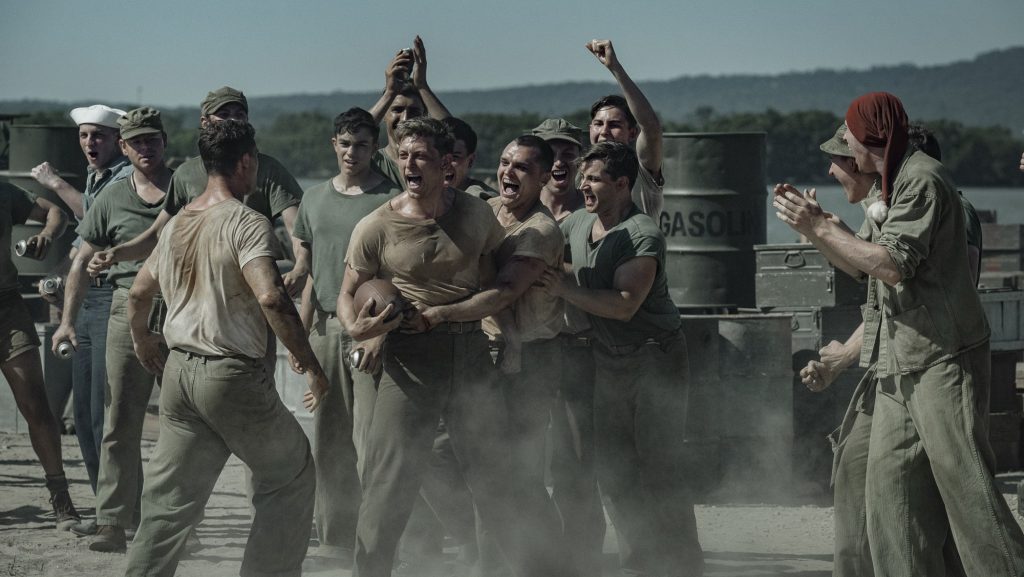
When Netflix unveiled early festival screenings this week, The Mosquito Bowl captured global attention as Peter Berg brought Buzz Bissinger’s harrowing World War II history to the screen. The sudden surge across international search trends highlights a production that merges collegiate athletic lore with the unforgiving brutality of the Pacific theater. Rather than delivering a routine military celebration or an embellished sports fable, the project adapts one of the most poignant, neglected chapters of American wartime camaraderie.
The narrative revolves around an extraordinary, full-contact football match played on Christmas Eve 1944 on the island of Guadalcanal. Two regiments of United States Marines staged the game to pass time and steel their nerves before shipping out to what would become the bloodiest amphibious invasion in the Pacific. With a cast led by Nicholas Galitzine, Bill Skarsgård, Ray Nicholson, and Tom Francis, the film has quickly emerged as an awards-season contender following its premiere screenings at AFI Fest and a sequence of exclusive military presentations.
The Guadalcanal Gridiron That Changed Military Legend
To modern audiences conditioned by choreographed war cinema, the raw historical reality that underpinned The Mosquito Bowl was neither romanticized myth nor casual sideline folklore. By late 1944, Guadalcanal had already witnessed ferocious fighting that broke Japanese expansion southward. Yet thousands of newly reorganized Marines remained stationed across its damp, malaria-ridden encampments. The 4th Marine Regiment and the 29th Marine Regiment, both folded into the 6th Marine Division, found themselves locked in an agonizing holding pattern while awaiting their deployment orders.
Within those regiments sat an astonishing concentration of elite sporting talent. Before trading collegiate jerseys for olive drab utilities, scores of these young men were household names across the United States. They had served as captains, All-Americans, and Heisman Trophy contenders for powerhouse programs including Notre Dame, Wisconsin, Purdue, and the Ivy League. In the stifling Solomon Islands heat, rivalry flared between the units, prompting commanding officers to sanction an unpadded, regulation-rules gridiron showdown that would transform into military legend.
Peter Berg Reunites With Buzz Bissinger for Netflix War Saga
In directing The Mosquito Bowl, Peter Berg reunited with celebrated author Buzz Bissinger, marking their first major narrative collaboration since the modern sports classic Friday Night Lights. Bissinger spent years researching military archives, family correspondence, and tactical battle logs to construct his 2022 non-fiction volume. Berg, known throughout his directorial career for combining visceral physical realism with deep emotional restraint in works such as Lone Survivor, approached the material as both a celebration of athletic brotherhood and an unflinching memorial to youthful sacrifice.
As reported by Deadline from AFI Fest, the production intentionally rejects cinematic gloss in favor of suffocating kinetic intensity. Rather than treating the Guadalcanal match as a triumphant third-act climax, Berg structures the narrative so the football contest serves as a haunting prelude to combat. Just as high-pressure tactical preparations define high-stakes athletic showdowns where Barcelona Faces 4 Critical Tests in High Stakes Clásico Clash, Berg demonstrates how the split-second instincts forged on civilian fields were violently redirected toward battlefield survival.
4 Crucial Realities Defining The Mosquito Bowl War Drama
Examining the narrative engine of The Mosquito Bowl requires examining four foundational layers that separate this true Pacific saga from conventional Hollywood war epics.
Elite College Athletes Traded Gridiron Glory for Combat
Unlike today’s era of lucrative professional contracts and athletic deferments, the generation of 1944 recognized no functional distinction between athletic privilege and civic obligation. Promising draft prospects and established college heroes willingly enlisted into the Marine Corps infantry, actively seeking frontline roles over domestic physical training postings. Figures such as Tony Butkovich, a record-setting fullback out of Purdue, and Dave Schreiner, a decorated two-time All-American end from Wisconsin, walked away from national acclaim. The film captures their stubborn insistence on being treated strictly as riflemen rather than celebrity mascots, providing an authentic portrait of generational ethos.
Brutal Realities of Guadalcanal Replaced Regulation Rules
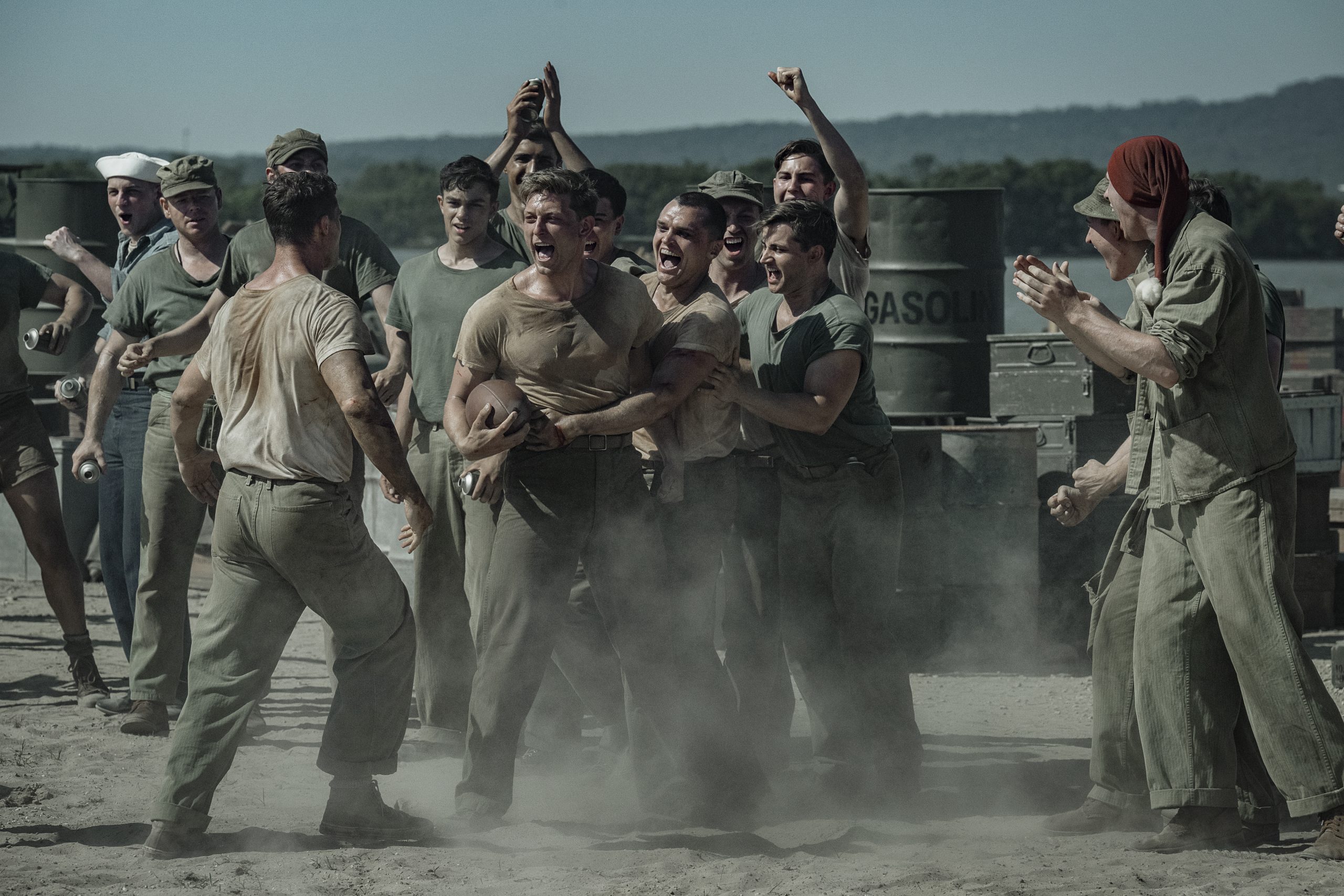
The physical environment of Guadalcanal in late December 1944 stood in stark contrast to the manicured stadiums of the Big Ten or the Rose Bowl. Marines cleared an improvised field using bulldozers and machetes, marking boundaries with lime from supply tents and packing coral dust beneath tropical humidity. Playing without shoulder pads, helmets, or formal protective equipment, the men delivered punishing collisions that drew thousands of spectators from surrounding infantry and naval support groups. The game ended in a scoreless standoff, capturing the sheer physical endurance of men who refused to concede a single yard.
The Shadow of Okinawa Cast Over the Final Whistle
The tragedy etched into the historical record is that Guadalcanal served merely as the staging staging ground for an unimaginable catastrophe. Barely four months after the final whistle blew on Christmas Eve, the 6th Marine Division took part in the amphibious assault on Okinawa in April 1945. During eighty-two days of relentless attritional combat against entrenched Japanese defenders, the division suffered staggering casualties. Fifteen men who participated in the Guadalcanal contest were killed in action on Sugar Loaf Hill and surrounding ridges. Berg anchors the cinematic tone around this inevitable dread, ensuring the fateful aftermath underscored why The Mosquito Bowl remains one of the Pacific theater’s most heartbreaking chapters.
Modern Stars Connected With Active Duty Marines
The emotional resonance of the project extends well beyond post-production editing suites. As detailed by People magazine in exclusive coverage, cast members Nicholas Galitzine, Bill Skarsgård, Ray Nicholson, and Tom Francis presented the film directly to active-duty service members. Screening the completed drama for real-life Marines grounded the ensemble cast in the living heritage of the Marine Corps. Galitzine and Skarsgård noted during press discussions that portraying young men who laid down their lives required intense technical diligence, weapons handling training, and respect for the surviving descendants of the 6th Marine Division.
Early Critical Reception and AFI Fest Breakthrough
Trade reviews from Hollywood trade outlets surrounding The Mosquito Bowl immediately singled out the production’s balance of grit and humanity. Writing for The Hollywood Reporter, critics noted Peter Berg’s mature tonal calibration, observing how the film transitions effortlessly from sweat-soaked athletic camaraderie to the deafening trauma of Pacific frontline tactics. Next Best Picture echoed these sentiments, highlighting the dynamic cinematography that captures unpadded hits in the mud with the same terrifying immediacy as mortar barrages on Okinawa’s limestone cliffs.
Entertainment trade MovieWeb amplified the early consensus, describing the film as a powerful and poignant historical epic that ranks among Netflix’s most ambitious original productions. Reviewers widely commended the central cast, particularly Galitzine and Skarsgård, for abandoning vanity to embody the exhausted, determined posture of 1940s infantry officers. Rather than offering sentimental platitudes, the critical consensus emphasizes that Berg honors Buzz Bissinger’s rigorous reporting by documenting the waste and tragedy of war alongside personal heroism.
Cultural Memory of Sacrifices Lost to Time
Beyond its festival credentials and streaming distribution strategy, the lasting cultural resonance of The Mosquito Bowl lies in its unflinching reminder of promise cut short. For decades, the story of the Christmas Eve contest existed primarily in yellowed regimental newsletters, Marine Corps history monographs, and fading family scrapbooks. The sudden death of so many exceptional young men on the slopes of Okinawa meant their professional athletic futures, community leadership, and personal legacies were permanently wiped from the post-war landscape.
By transforming Bissinger’s meticulous archival work into a global cinematic event, the project ensures these collegiate icons are remembered not as distant names carved into marble memorials, but as vibrant, flawed, fiercely competitive young men. The film serves as a sobering historical counterweight in an era dominated by digital escapism, reminding audiences that the freedoms enjoyed across modern civil society were underwritten by elite athletes who traded the roar of packed stadiums for unmarked coral battlegrounds.