Pastry Lamination Mechanics Reveal 4 Proven Rules to Bake Impossibly Flaky Layers
Unravel the thermodynamic and structural secrets behind puff pastry and croissants to achieve airy, golden crumb structures every time.
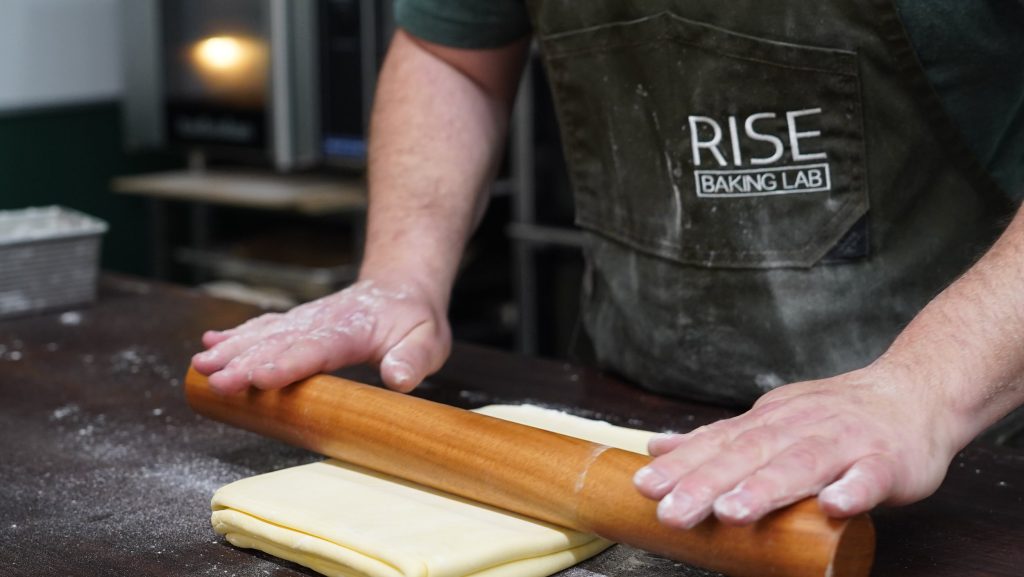
Mastering pastry lamination mechanics separates leaden, greasy doughs from crisp, ethereal croissants that shatter at the first bite. For generations, traditional cookbooks framed lamination as an arcane art passed down through whispered kitchen intuition. In reality, creating hundreds of gossamer, paper-thin strata of dough and butter is an exercise in rigorous mechanical physics. Every single press of the rolling pin, every resting window in the refrigerator, and every degree shift in ambient temperature directly influences how water, fat crystals, and gluten proteins interact under high heat.
When you bite into a fresh pain au chocolat or an authentic Mille-feuille, the resonant crunch and honeycomb interior are not happy accidents. They are the tangible output of controlled shear stress, rheology, and flash vaporization. By demystifying the forces inside the dough block, you can banish the fear of melted butter, cracked sheets, and tough textures forever. Understanding how these mechanical components align transforms laminated baking from an unpredictable gamble into a repeatable, deeply satisfying craft.
The Physics of Steam Trapped Between Sheets of Fat and Flour
When you analyze pastry lamination mechanics through the lens of thermodynamics, the process resembles structural engineering more than intuitive baking. At its core, laminated dough consists of alternating, uninterrupted layers of base dough, called the détrempe, and an elastic sheet of solid butter, known as the beurrage. These two opposing mediums possess fundamentally different moisture contents, thermal transition thresholds, and chemical compositions. The magic happens during the bake when moisture meets high heat within an enclosed oven environment.
As the dough enters a scorching oven, the water trapped within the flour sheets begins to boil rapidly. Water expands approximately 1,600 times its liquid volume as it transforms into steam. In an ordinary loaf of bread, this steam pushes upward through porous channels, escaping freely. In a laminated dough, however, every flour sheet is separated by an impervious lipid barrier. Because fat does not mix with water, the butter sheets form a continuous seal that traps the expanding water vapor beneath it. The accumulating steam pushes the upper flour layer upward, forcing the dough sheets apart into distinct micro-chambers.
Simultaneously, the heat denatures glutenin and gliadin proteins within the flour, causing the structural walls to coagulate and firm up. Starches absorb residual moisture and gelatinize, locking those expanded air pockets into a permanent, rigid scaffolding. While this structural solidification takes place, the butter melts entirely. The flour layers greedily absorb this liquid butterfat, frying each microscopic sheet from the inside out until crisp, golden, and shatteringly delicate. Detailed research documented in ScienceDirect food science analysis on laminated dough structures underscores how continuous, unruptured lipid films are essential for maximizing this volumetric expansion.
Why Fat Plasticity Dictates Every Structural Outcome
The single greatest operational challenge during lamination is managing fat plasticity. Plasticity describes the ability of a solid material to undergo permanent deformation under applied pressure without rupturing or liquefying. Butter is not a simple solid fat; it is a water-in-oil emulsion comprising roughly 80 to 84 percent milk fat, 14 to 16 percent water, and 1 to 2 percent milk solids. Within that butter matrix, solid fat crystals form a network that suspends liquid fat droplets and tiny water pockets.
Temperature dictates this crystal network with unforgiving precision. Below 13 degrees Celsius (55 degrees Fahrenheit), the crystal lattice becomes rigid and brittle. If you strike or roll butter at this temperature, it will shatter into jagged shards beneath the dough, tearing through the gluten mesh and destroying layer continuity. Conversely, above 19 degrees Celsius (66 degrees Fahrenheit), the crystal lattice collapses. The butter softens past its plastic threshold and begins to liquefy, melting into the dough like standard brioche fat rather than remaining an isolated layer.
The sweet spot for rolling butter sits squarely between 14 and 16 degrees Celsius (57 to 61 degrees Fahrenheit). At this exact thermal window, the fat bends, stretches, and flows cleanly beneath the rolling pin alongside the pliable dough. European-style butter, prized by professional viennoiserie chefs, offers higher fat concentrations (typically 82 to 84 percent) and lower moisture compared to standard supermarket varieties. This lower water content broadens the plastic range and prevents excess surface moisture from gumming up the delicate flour interfaces during heavy reduction.
Pastry Lamination Mechanics Reveal 4 Proven Rules for Unrivaled Flakiness
Building an immaculate laminated structure requires an intentional, step-by-step methodology that respects the physical behavior of your ingredients. A deep dive into pastry lamination mechanics reveals how temperature control, geometric folding, mechanical rest, and thermodynamic shock govern the final bake. By following four proven rules, you turn unpredictable kitchen experiments into masterworks of culinary engineering.
Keep Butter and Dough at Matching Elastic Viscosities
The cardinal sin of laminated pastry is rolling components with mismatched textures. If the butter is firmer than the dough, the dough flattens while the butter fractures into disconnected islands. If the dough is firmer than the butter, the rolling pin squeezes the butter out through the edges or crushes it directly into the flour crumb. To achieve uniform reduction across every single layer, the détrempe and the beurrage must possess identical deformability.
You can verify this equilibrium using a straightforward tactile test. Press a finger into the resting dough block; it should leave a firm, smooth indentation that gently resists before yielding. Press your finger into the butter block; it should yield with the exact same resistance without cracking or feeling greasy to the touch. Achieving this balance often means chilling the dough while gently beating the chilled butter with a heavy French rolling pin to align its crystal structure mechanically without introducing ambient heat.
Calculate Exact Laminar Folds to Prevent Dough Degradation
A persistent myth suggests that more folds automatically yield flakier pastry. In reality, excessive folding is the fastest way to ruin a lamination block. Every single turn multiplies the number of layers while reducing their physical thickness. In puff pastry (pâte feuilletée), a sequence of six simple letter turns produces 729 theoretical fat layers. In yeasted croissant dough, bakers typically aim for far fewer layers, often settling on one double book fold and one single letter fold, creating between 24 and 55 distinct butter layers.
Respecting pastry lamination mechanics requires recognizing the tipping point where folding turns counterproductive. When layers are compressed beyond their microscopic limit, the dough sheets become thinner than a single cell wall. Under the continuous friction of the rolling pin, the fragile gluten sheets rupture, allowing adjacent butter layers to merge. The lamination ceases to exist as discrete strata and transforms into a homogenized emulsion. Calculate your turns with precision, stick to the target fold count for your specific pastry style, and trim uneven edge margins to eliminate dead dough zones.
Manage Gluten Relaxation Intervals with Ruthless Patience
Every mechanical pass with a rolling pin applies shear stress to the détrempe. This directional elongation pulls glutenin and gliadin protein molecules taut, increasing the elastic tension of the dough matrix. If you attempt to roll out dough that is fighting back, the rubber-band effect forces you to press down with excessive downward force rather than steady outward displacement. That excessive downward pressure crushes the internal strata and causes micro-tears.
Resting the laminated dough in the refrigerator between turns serves two non-negotiable functions. First, it drops the butter temperature back into its optimal plastic stability range before friction heat destabilizes it. Second, it allows the gluten network to relax as peptide bonds rearrange and shed mechanical stress. Just as disciplined newsroom verification mechanics reveal 4 proven protocols to prevent dangerous misinformation through systematic verification, the artisan baker treats every physical parameter as verifiable data before applying the rolling pin. Test the dough elasticity before every roll; if it resists expansion, wrap it tightly and return it to the chill for another twenty minutes.
Bake with Intense Initial Thermal Shock to Trigger Rapid Steam Lift
All your meticulous folding and temperature balancing culminates in the first ten minutes inside the oven. If you introduce cold laminated dough into an oven operating at moderate heat, say 160 degrees Celsius (320 degrees Fahrenheit), the butter will liquefy long before the trapped water reaches its boiling point. Liquid butter simply leaks out of the pastry and pools in the baking pan, frying the bottom of the dough and leaving the interior dense, soggy, and compact.
Flawless lift requires an intense burst of initial thermal energy, generally starting between 200 and 220 degrees Celsius (400 to 425 degrees Fahrenheit). This sudden heat shock instantly flashes the water droplets within the butter into high-pressure steam, forcing the expanding sheets apart while the dough proteins instantly denature and set. Once maximum vertical lift has been achieved and the structure locks into place, you can lower the oven temperature to 175 degrees Celsius (350 degrees Fahrenheit) to dry out the interior crumb and allow the Maillard reaction to deepen the golden-brown crust without scorching the surface.
Common Diagnostic Failures and How to Correct Them Before Baking
Most home bakers encounter frustrating setbacks simply because they misdiagnose pastry lamination mechanics under practical kitchen conditions. Reading the symptoms of a failed batch allows you to adjust your technique on the fly before making identical errors on subsequent dough blocks.
If you notice a thick puddle of melted butter pooling under your baking sheets, the immediate culprit is either premature melting from low oven heat or severe over-proofing. During proofing for yeasted laminated doughs, ambient room temperature must remain below the melting point of your butter, ideally between 24 and 26 degrees Celsius (75 to 78 degrees Fahrenheit). Exceeding this threshold causes the internal butter barriers to liquefy on the proofing tray before they ever meet the oven.
Another classic issue is the dreaded marbled appearance during rolling, where white flakes of butter appear through the dough surface like broken marble tile. This confirms that your butter block was too cold and fractured internally during reduction. If this happens, stop rolling immediately. Let the block sit at room temperature for five to eight minutes until the butter warms into its plastic deformation zone, then resume rolling with light, rhythmic strokes from the center outward.
Bringing Precision Craft to the Home Kitchen
Executing professional-grade laminated pastry in a standard home environment is entirely attainable once you control the workspace environment. If you possess warm hands or bake in a humid kitchen, rinse your wrists in cold water, chill your rolling pin, and work over a heavy marble or granite board that holds temperature efficiently. Work with confidence and steady momentum; lingering over the dough allows kitchen warmth to degrade your hard work.
Ultimately, mastering pastry lamination mechanics demystifies one of the most intimidating frontiers in culinary arts. When you understand the delicate balance between fat crystal stability, gluten elasticity, and thermodynamics, you stop relying on luck. The rewarding crunch of a golden pastry becomes a predictable result of scientific precision and tactile mastery.