Cast Iron Seasoning Mechanics Reveal 4 Proven Secrets to Build Indestructible Cookware
Cast iron seasoning is not a mystery of grandmotherly folklore, but a precise sequence of organic chemistry and physics. Learn how thermal cross-linking turns basic plant oils into an impenetrable nonstick shield.
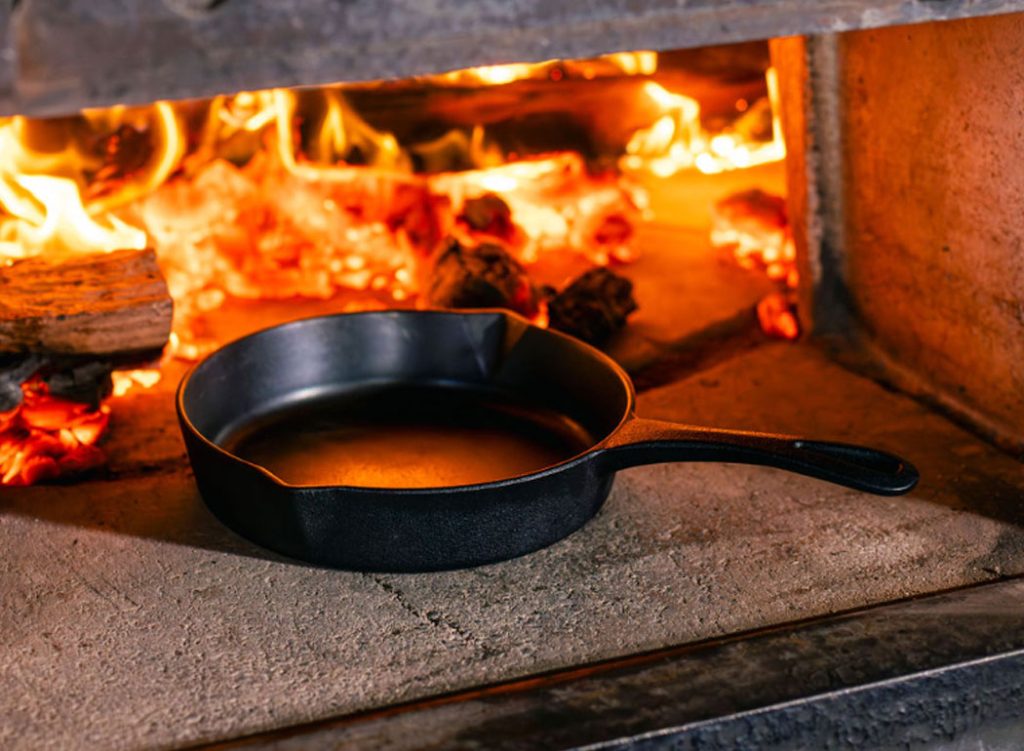
Mastering cast iron seasoning mechanics transforms a rough, gray slab of raw metal into a slick, jet-black culinary heirloom that outperforms synthetic nonstick surfaces. Most home cooks treat their heirloom skillets with superstitious reverence, whispering kitchen folklore about sacred bacon grease and generational grease layers. Yet underneath the folklore lies hard, unforgiving materials science. A pan does not become nonstick because it absorbs bacon fat or because some mystical spirit rewards your patience. It becomes slick because you have successfully orchestrated high-temperature lipid polymerization, bonding liquid fatty acids into a rigid, rock-solid plastic matrix directly over raw crystalline iron.
When this molecular process fails, the consequences are immediate and frustrating. Pans flake like sunburned skin, develop stubborn amber tackiness, smoke out your living room, or leach bitter metallic notes into tender eggs. Understanding the physical realities of thermal decomposition, free radical propagation, and surface tension will free you from cookware anxiety forever. Once you grasp how molecules behave under high thermal energy, seasoning ceases to be an act of faith and becomes a repeatable triumph of kitchen physics.
The Invisible Chemistry Behind the Black Gloss
To grasp true cast iron seasoning mechanics requires setting aside kitchen folklore and picking up an electron microscope. Freshly cast iron looks solid to the naked eye, but its microscopic landscape is jagged, rugged, and pitted with microscopic peaks, valleys, and graphite pockets. Raw iron oxidizes rapidly in the presence of ambient humidity, forming ferric oxide, which we recognize as rust. The primary objective of seasoning is twofold: sealing those microscopic canyons against corrosive atmospheric oxygen and water, while creating an ultra-smooth, low-friction glide plane for searing proteins.
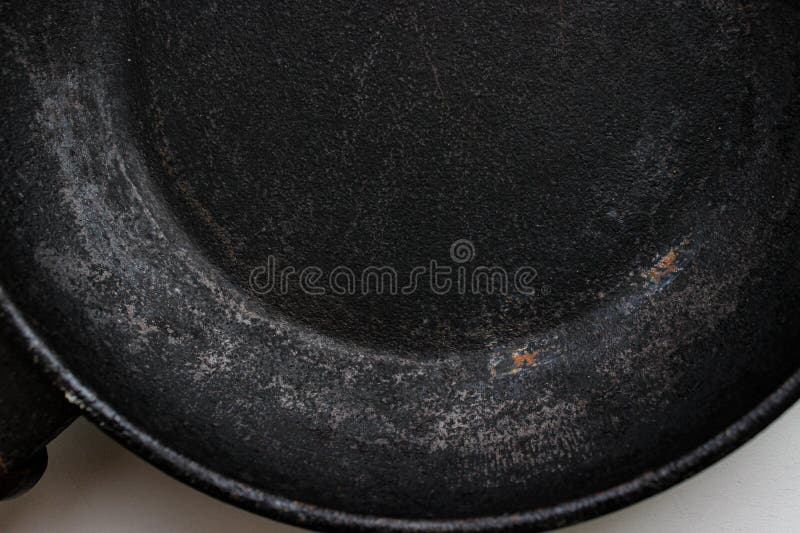
Seasoning is emphatically not oil. Cooking oil is a loose collection of liquid triglycerides floating freely across one another. Seasoning is a dry, durable, cross-linked polyalkene polymer. When an unsaturated fatty acid is heated past its thermal decomposition threshold, volatile aromatic compounds escape into the air, while remaining carbon chains cleave and recombine into three-dimensional macromolecular sheets. This transformation mimics the industrial creation of synthetic resins, but it unfolds inside your kitchen oven using culinary fats.
During this reaction, the liquid oil seeps down into the microscopic fissures of the metal through capillary action. As thermal energy climbs, oxygen molecules ignite free radical chain reactions within the fatty acid tails. The iron itself acts as a heterogeneous catalyst, accelerating cross-linking at the metal-lipid interface. The final result is not a layer sitting on top of metal like paint on drywall; it is an interconnected composite boundary where the cross-linked polyalkene matrix anchors itself inside the crystalline pores of the metal lattice.
Why Most Home Kitchens Produce Peeling Grease Instead of Patina
The single most widespread failure in home seasoning stems from applying too much oil. When cooks pour a tablespoon of oil into a pan and wipe it around with a paper towel, they leave behind a film hundreds of nanometers too thick. As this thick puddle warms, surface tension forces the liquid to pool into microscopic droplets. The outer perimeter of each droplet begins to oxidize and polymerize, sealing liquid, half-cooked fatty acids underneath a rubbery skin. Instead of a hard, vitreous enamel, the cook produces a gummy, yellow varnish that smells rancid and peels off the moment a metal spatula touches it.
Another common point of failure is rushing the temperature cycle. Thermal expansion rates between crystalline cast iron and cross-linked vegetable polymers differ significantly. If an iron skillet experiences violent temperature spikes or uneven hot spots on an undersized burner, the metal lattice expands faster than the brittle polymer film can stretch, shearing the microscopic anchors apart.
Much like how unexpected environmental travel disruptions create 5 costly realities for global jetsetters who step onto planes without understanding climate turbulence, attempting to season cold iron in an erratic oven creates brittle structural stress. Heat must penetrate evenly through the heavy iron walls, giving the fatty acids ample time to reorganize their molecular chains before the structural grid hardens permanently into place. Neglecting the underlying cast iron seasoning mechanics inevitably leaves you with a mottled, sticky skillet that flakes carbon debris straight into your morning breakfast.
Four Proven Principles That Produce an Armor Plated Finish
Building a resilient, nonstick surface requires deliberate execution across four distinct chemical parameters. By managing the lipid profile, thickness, thermal thresholds, and cooling cycles, you ensure your cookware develops a durable finish capable of withstanding years of high-heat cooking.
Select Fatty Acids with High Free Radical Polymerization Potential
When you decode cast iron seasoning mechanics, oil selection shifts from nostalgic habit to organic chemistry. You need an oil rich in polyunsaturated fatty acids, specifically linolenic and linoleic acids. Saturated fats like lard, beef tallow, and butter lack the reactive double carbon bonds required to initiate robust free radical polymerization. Saturated lipids simply liquefy, smoke, and leave behind weak, brittle, disorganized carbon residue.
Oils with high iodine values—a scientific measurement indicating the degree of unsaturation—form the hardest, most resilient polymers. Pure unrefined flaxseed oil has the highest iodine value among food-grade options, drying into an exceptionally hard glassy film. However, because flaxseed creates a polymer so hard, it can become brittle and chip if applied over uneven iron surfaces. High-smoke-point, semi-drying alternatives like grapeseed, sunflower, or refined canola oil offer a sweet spot of flexibility, toughness, and thermal tolerance. Peer-reviewed data from American Chemical Society insights on lipid polymerization demonstrate that multi-unsaturated carbon chains produce far denser cross-linked lattices than mono-unsaturated fats such as extra virgin olive oil.
Apply Nanometer Thin Coats to Prevent Viscous Puddling
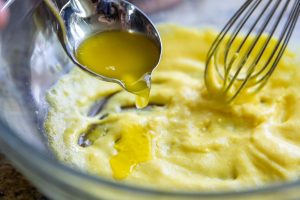
The fundamental rule of pristine seasoning is ruthlessness with a lint-free cloth. Pour a few drops of your chosen oil into the warm iron pan, scrub it across every square millimeter of cooking surface, rim, and handle, and then immediately pick up a clean, dry cotton rag and attempt to wipe all the oil back off. You must wipe the pan until it appears completely matte and dry, as if applying the oil were a catastrophic mistake you are trying to conceal.
You cannot wipe iron truly dry with cotton. Microscopic quantities of oil remain trapped within the iron pores and surface irregularities. This sub-microscopic monolayer is the exact thickness required for optimal cross-linking. When heated, this ultra-thin film allows volatile gases to evaporate instantly without forming bubbles, producing a microscopic laminate layer rather than a sticky grease puddle.
Exceed the Free Fatty Acid Smoke Point to Force Cross Linking
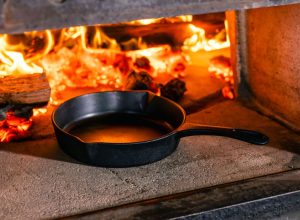
Polymerization does not occur efficiently at gentle cooking temperatures. Thermal threshold calculations anchor cast iron seasoning mechanics in chemical certainty. You must drive the pan past the smoke point of your chosen oil, typically between 425 and 475 degrees Fahrenheit (218 to 246 degrees Celsius), and sustain that temperature for at least sixty minutes.
As the oil crosses its smoke point, it breaks apart into volatile radicals, fatty acid fragments, and reactive monomers. In the absence of excessive ambient moisture, these fragments bond covalently with adjacent molecules, weaving a dense, insoluble web. If you cut the heat too early, you end up with half-polymerized grease that remains perpetually soft. Only when the oil smokes, off-gases, and stops emitting visible fumes has the reaction completed its structural cross-linking stage.
Cool Cookware Gradually to Guard Against Micro Fractures
The cooling phase is as critical as the heating cycle. Once the hour-long bake is finished, turn off the oven and do not open the door. Leave the pan inside the insulated cavity to cool down alongside the oven over three or four hours. Cast iron possesses tremendous thermal mass, and cooling it gradually relieves internal structural stresses.
When iron cools rapidly, the metallic core contracts inward before the surface polymer can adapt. This uneven shrinkage snaps microscopic polymer bridges, leaving invisible micro-fractures in your fresh seasoning. The next time you heat the pan to sear a steak, cooking moisture creeps into those micro-fissures, boils into steam, and blows the seasoning straight off the iron surface. Slow, controlled cooling gives the polymer matrix time to settle against the cooling metal crystal boundary.
Daily Cooking Habits That Harden Rather Than Destroy Your Finish
A pristine polymer layer does not stop evolving once you pull the skillet from the oven. Seasoning is a dynamic, living layer that responds to everyday culinary practices. One of the most stubborn kitchen myths claims that dish soap permanently strips seasoned pans. This belief originated a century ago when household soaps contained high concentrations of caustic lye, which chemically dissolves ester bonds in organic polymers. Modern commercial dish soaps are gentle surfactants designed to lift unbound surface oils without affecting fully cross-linked polyalkenes.
Wash your skillet with warm water, mild soap, and a non-abrasive scrubber without hesitation. Daily kitchen stewardship rooted in cast iron seasoning mechanics prevents the heartbreak of premature rust and keeps the surface sanitary. What truly damages seasoning is not soap, but prolonged soaking in the sink, steam trapping under lids, or boiling aggressive acids like red wine and tomato sauce before the patina matures.
Every time you preheat your seasoned pan slowly with a teaspoon of high-heat cooking fat, you initiate a mini-polymerization cycle. The fat from your seared mushrooms, smashed burgers, and pan-roasted vegetables breaks down under radiant cooking heat and incorporates directly into the existing matrix. Over months of routine cooking, these layered micro-applications build a dense, mirror-black patina that laughs at sticking batter and delicate proteins.
The Lifelong Reward of Cooking on True Polymer Glass
Approaching cookware maintenance through the lens of physics and chemistry removes all the guesswork from cast iron stewardship. There are no cursed pans, mysterious family secrets, or ruined heirlooms. There is only raw iron, clean lipids, thermal energy, and the immutable laws of cross-linking.
When your eggs skate across bare black iron without leaving a trace of albumen behind, you are witnessing the practical triumph of polymer science over culinary superstition. Embracing timeless cast iron seasoning mechanics rewards you with cookware that improves with every sizzle, standing ready to serve your kitchen for decades to come.