Bread hydration mechanics reveal 4 proven secrets to bake magnificent artisan loaves
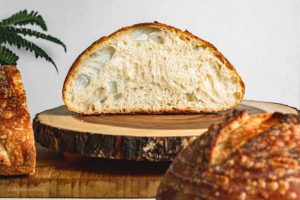
Diving deep into dough water ratios transforms guesswork into culinary mastery. Discover how manipulating flour thirst, protein networks, and steam dynamics unlocks bakery-grade open crumb.
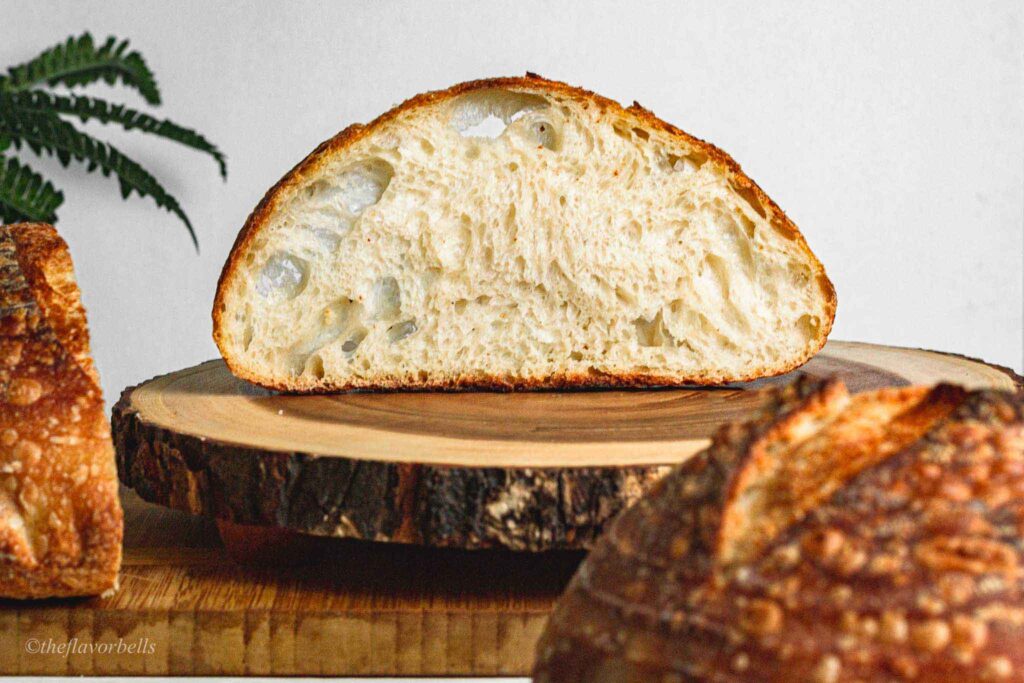
Mastering bread hydration mechanics separates the frustrated home baker pulling dense, gummy bricks from the oven from the artisan who commands airy, blistered loaves. Water is never a passive filler in dough. It is the universal solvent, molecular lubricant, and primary catalyst for every biological and chemical reaction that converts raw flour into an open, custardy crumb. Yet many ambitious bakers plunge straight into extreme hydration percentages pulled from online forums, only to watch their dough melt into an unmanageable puddle across the counter.
Achieving breathtaking oven spring and delicate honeycomb crumb requires far more than blindly pouring water into a mixing bowl. Water changes how starch granules swell, governs the enzymatic breakdown of complex sugars, and sets the tensile limits of gluten networks. When you treat hydration as a dynamic mechanical force rather than a static recipe percentage, your relationship with flour shifts from anxious hope to calculated precision.
The Physics Behind Flour Thirst and Protein Networks
Every bag of flour possesses an intrinsic thirst determined by its botanical origins, milling style, and microscopic composition. Flour consists predominantly of insoluble starches, damaged starch fragments, and two dormant protein families known as glutenin and gliadin. In their dry state, these proteins resemble tightly coiled, tangled springs sitting inert among starch granules. The moment water touches the flour, these coils absorb moisture, relax, and begin sliding against one another.
Understanding how bread hydration mechanics operate at the microscopic level demystifies the entire kneading process. Gliadin contributes plasticity, providing dough with the fluid stretchiness needed to expand without tearing. Glutenin supplies elasticity, generating the snappy recoil that holds a rounded shape against the relentless pull of gravity. Water molecules slip between these peptide chains, forming hydrogen bonds and allowing sulfur atoms to seek out one another to create durable disulfide bridges. Without sufficient water, proteins remain jammed together in rigid clusters, unable to link across distances. Conversely, excessive water floods the spaces between chains, pushing them so far apart that they can no longer hold tension.
Flour extraction and ash content fundamentally change this equation. Whole wheat flour contains bran and germ, both loaded with pentosan fibers that absorb up to three times their weight in water compared to endosperm proteins. While this makes whole grain dough feel deceptively dry initially, those same jagged bran flakes act like microscopic razor blades that slice through delicate gluten strands. Roller-milled white bread flour absorbs less total water initially but channels that moisture directly into building an impervious gluten sheath.
Why Higher Water Percentages Threaten Structural Integrity
The contemporary baking movement frequently glorifies ultra-high hydration, pushing home cooks toward dough formulas exceeding eighty percent water. The baker’s percentage system calculates all ingredients relative to total flour weight, meaning eighty grams of water to one hundred grams of flour constitutes eighty percent hydration. While wet dough undeniably yields a thinner, crisper crust and a glossy, open crumb, pushing past the absorption capacity of your specific flour guarantees structural collapse.
Dough stability operates on a bell curve. As moisture rises, dough extensibility increases, allowing gas bubbles generated by yeast or wild microbes to inflate cell walls with minimal resistance. Past a critical threshold, however, excess water over-dilutes the dough matrix. Free water that is not chemically bound to starch or trapped within the protein scaffold pools in micro-fissures. This causes the dough mass to lose surface tension and slump outward rather than upward, a common pitfall when exploring bread hydration mechanics without respecting gluten limits.
High moisture also accelerates enzymatic activity. Amylase enzymes convert complex starches into fermentable maltose at breakneck speed, while protease enzymes dismantle the very protein webbing you spent hours constructing. In a high-water environment, extended fermentation can cause proteases to liquidate the gluten network entirely, transforming a shaped batard into a shapeless, un-scoreable paste before it ever meets the oven.
Four Fundamental Secrets Governing Moisture Dynamics in Dough
Transforming water from an unpredictable adversary into your most powerful culinary asset demands systematic technique. Rather than chasing arbitrary recipe numbers, mastering these four core pillars of bread hydration mechanics will transform your baking outcomes across every style of loaf.
Selecting Flour Varieties Based on Water Absorption Capacity
Flour is not a standardized commodity. The protein percentage printed on the package indicates total nitrogenous matter, not the physical quality or hydration potential of those proteins. A twelve percent protein all-purpose flour milled from soft winter wheat behaves radically differently from a twelve percent flour ground from hard red spring wheat. Hard wheats possess superior glutenin quality capable of holding extensive water within a taut three-dimensional lattice.
Damaged starch content also governs absorption. Industrial steel roller mills crush a small fraction of starch granules during processing, increasing their instantaneous water absorption capacity by hundreds of percent compared to intact granules. Stone-milled flours, by contrast, feature larger particle sizes and lower starch damage, meaning they absorb water slowly over hours rather than minutes. Matching your target hydration to the unique mechanical profile of your flour prevents early dough degradation and under-developed structures.
Employing the Autolyse Phase to Maximize Enzymatic Hydration
Dumping water, flour, salt, and leaven into a bowl simultaneously creates unnecessary friction. Salt is hygroscopic, competing directly with gluten proteins for available water molecules while tightening the gluten network prematurely. By initiating an autolyse—mixing only flour and water and resting the mass for thirty to sixty minutes before adding salt or yeast—you give water uninhibited access to every starch granule and protein coil.
During this quiet rest period, endogenous enzymes wake up. Protease gently clips excessively rigid protein chains, relaxing the dough without degrading it. When you return to the bowl, dough that initially felt stiff, shaggy, and resistant will have miraculously transformed into a smooth, supple, cohesive sheet without a single stroke of mechanical kneading. This natural hydration phase drastically cuts down on manual mixing time, preventing the destructive oxidation that bleaches flour carotenoids and strips bread of its nutty, buttery aroma.
Building Structural Tension Through Timed Mechanical Development
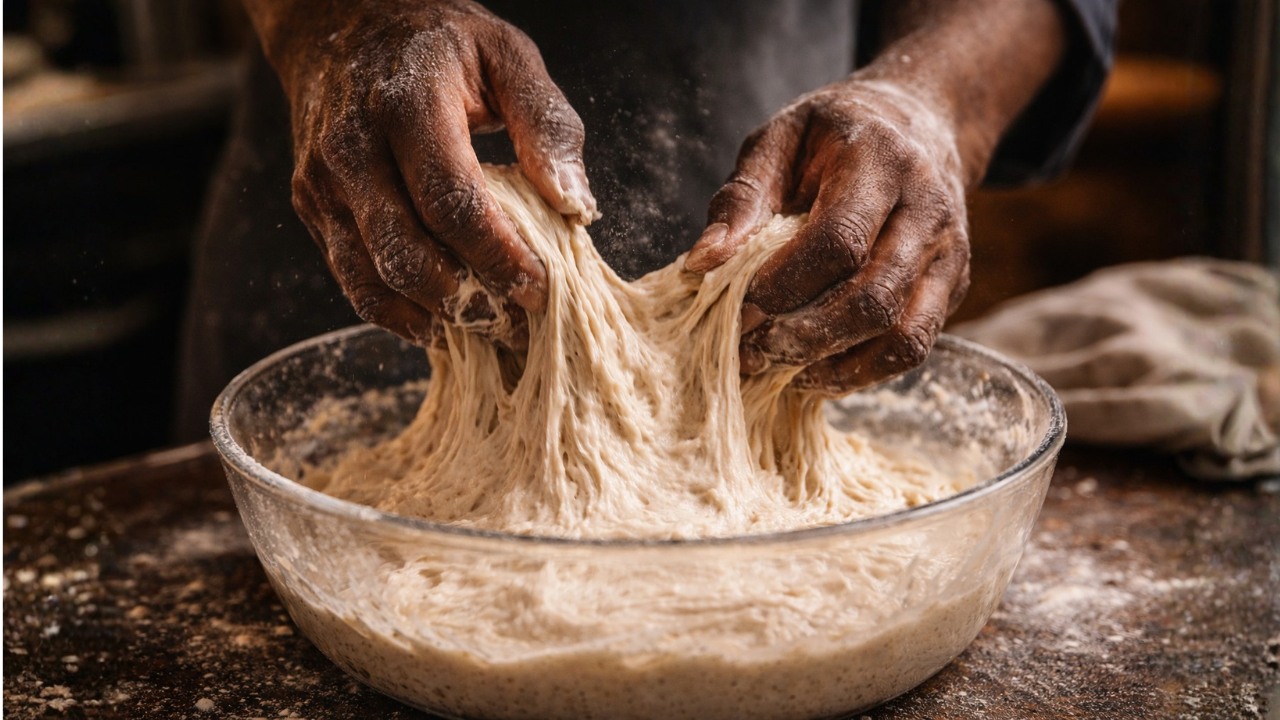
Wet dough cannot be kneaded using traditional tabletop methods without dumping cups of dry flour onto the bench, an error that instantly ruins hydration calculations. Instead, high-moisture dough demands gentle, intermittent tension-building techniques performed over several hours. Coil folds and stretch-and-folds coax wet dough into alignment by repeatedly drawing the gluten strands taut and folding them back onto themselves.
Just as studying how emulsion stability mechanics reveal 4 proven secrets to stop heartbreaking sauce breaks helps cooks balance oil and water interfaces, understanding dough hydraulics helps bakers manage free moisture against gluten elasticity. Each fold realigns the protein fibers along parallel axes, creating surface tension that traps free water inside microscopic chambers. Over the course of bulk fermentation, this mechanical manipulation builds an elastic skin around the exterior of the dough, preventing water from evaporating prematurely or causing the loaf to puddle flat during the final transfer.
Harnessing Steam Mechanics to Maximize Explosive Oven Spring
The journey of water inside the loaf reaches its climax inside the screaming heat of the oven. During the first ten minutes of baking, the exterior temperature of the dough leaps from room temperature to the boiling point of water. As internal temperatures pass fifty-five degrees Celsius, trapped fermentation gases expand violently according to basic gas laws, while water dispersed throughout the dough flash-vaporizes into steam.
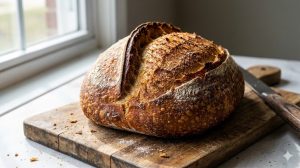
Steam provides hundreds of times more expansion force than carbon dioxide alone. For this explosive oven spring to push the loaf skyward, the outer crust must remain soft, cool, and supple during the initial expansion phase. Introducing external steam or baking inside a sealed, preheated Dutch oven saturates the baking environment. Water vapor condenses onto the cooler dough skin, transferring latent heat while keeping the starch pliable and stretchy. Furthermore, this surface condensation gelatinizes the starches on the skin, producing the thin, crackling, micro-blistered crust prized by master bakers worldwide. This demonstrates the critical leverage of bread hydration mechanics during the final bake.
Diagnosing Hydraulic Failures Across the Artisan Bake Cycle
When a bake goes wrong, water distribution is almost always the silent culprit. Learning to read the visual and textural symptoms of hydraulic imbalance allows you to correct course on subsequent bakes with diagnostic clarity.
A gummy, gelatinous crumb that clings to your bread knife often points to incomplete starch gelatinization caused by an over-hydrated core that never reached the necessary internal baking temperature. Water demands massive amounts of energy to evaporate. If a loaf contains excessive moisture and the baking time or temperature is cut short, internal starches fail to set into a dry crumb matrix. The core remains damp and dense, creating an unpleasant gummy texture regardless of how well the dough was fermented.
Conversely, a thick, leathery crust that resists cutting often indicates an absence of baking steam or a dough that lost its exterior moisture during an un-covered final proof. When dry heat hits the surface of a loaf too early, starch granules cook into a rigid armor before the loaf finishes expanding. The trapped steam inside breaks through the weakest available seam, creating jagged blowouts along the bottom rim instead of an elegant, controlled bloom along your score mark. Systematic troubleshooting through bread hydration mechanics prevents repeated bakes burdened by these structural faults.
Elevating Daily Baking Into an Intuitive Culinary Craft
Baking exceptional artisan bread is ultimately a study in fluid dynamics, protein chemistry, and thermodynamic control. Moving beyond rigid recipe adherence requires paying close attention to environmental conditions. Ambient kitchen humidity, seasonal temperature shifts, and natural variations across flour batches mean that seventy-five percent hydration on a humid summer afternoon will handle entirely differently than the exact same formula mixed during a dry winter morning.
True baking mastery develops when your hands recognize the threshold where flour can accept no further water without structural surrender. By treating bread hydration mechanics not as a set of rigid instructions but as an adaptable dialogue between flour, water, and heat, you unlock the ability to bake loaves with commanding height, deep caramelization, and an open crumb that sings with authentic flavor.