Maillard reaction mechanics reveal 4 proven secrets to unlock unbelievable flavor and crust
Surface browning is not simply cooking food at high heat; it is an intricate cascade of organic chemistry. Discover how moisture control, thermal mass, and pH manipulation govern the ultimate sear.
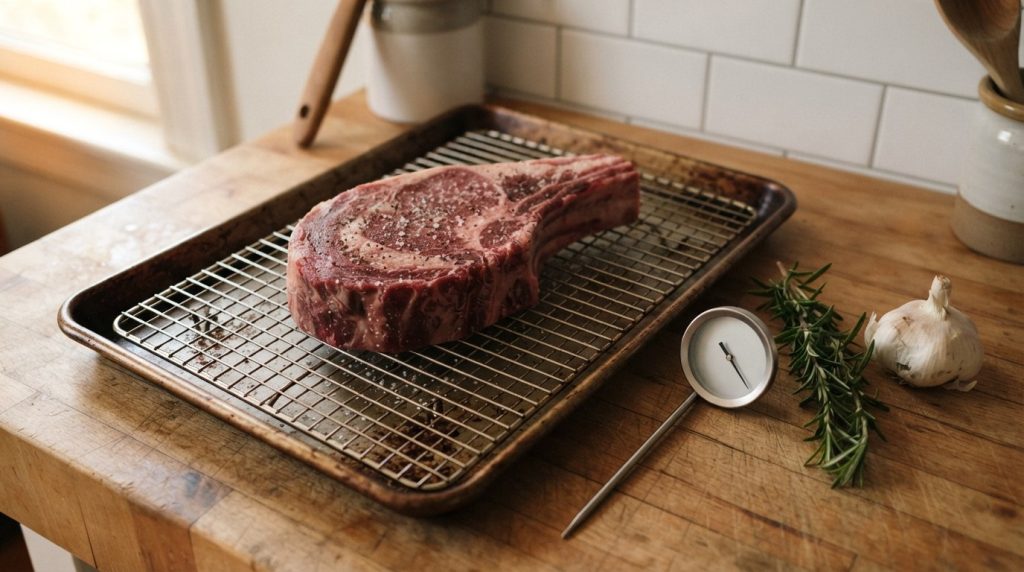
Mastering Maillard reaction mechanics gives every cook the power to convert pale, uninspired ingredients into deeply savory culinary treasures with extraordinary aromatic depth. When raw meat strikes a blazing skillet, or bread dough enters a radiant oven, the surface undergoes a profound metamorphosis. What registers on our palates as rich, roasted, savory deliciousness is not an accident of culinary luck. It is the tangible result of thermal physics and molecular collision operating under strict physical constraints.
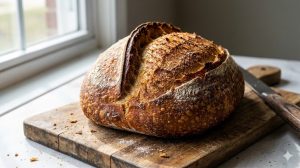
Most home cooks mistake this transformation for simple frying or, worse, confuse it with caramelization. Yet caramelization involves nothing more than the thermal decomposition of pure sugars at intense temperatures. The phenomenon responsible for the savory crust of a dry-aged steak, the intoxicating aroma of freshly baked sourdough, and the savory undertones of dark roux operates on an entirely distinct scientific plane. By decoding the underlying sequence of this reaction, you stop guessing whether an ingredient will brown and begin dictating exactly how and when that flavor develops.
The Molecular Dance Behind Every Golden Crust
In 1912, French physician and chemist Louis-Camille Maillard stumbled upon this reaction while attempting to model biological protein synthesis. Instead of an inert laboratory mixture, he observed a spontaneous shift toward amber and brown hues accompanied by complex aromas. He had uncovered a fundamental metabolic exchange between carbonyl groups derived from reducing sugars and nucleophilic amino groups from proteins. When thermal kinetic energy pushes these molecules together, they kick off a cascade of hundreds of individual intermediate compounds.
The sequence begins when a reducing sugar, such as glucose or fructose, bonds with an amino acid. This initial conjugation produces an unstable glycosylamine, which immediately undergoes an Amadori rearrangement to stabilize its internal bonds. From that pivotal crossroad, the chemical pathways fracture into countless branches. Some molecules fragment into dicarbonyls; others dehydrate into furfurals, while others undergo Strecker degradation, stripping nitrogen from amino acids to synthesize pyrazines, pyrroles, and thiophenes. Detailed breakdowns, including an American Chemical Society analysis of food browning chemistry, illustrate how these volatile aromatics register as nutty, roasted, savory, and floral notes to human olfactory receptors.
Eventually, these small volatile fragments condense and polymerize into large, complex macromolecules called melanoidins. Melanoidins are the dark brown pigments that form the actual physical crust on food. They are non-volatile, staying firmly anchored to the food surface to deliver toothsome structural resistance and lingering mouthfeel. While amateur cooks view browning as a visual cue, understanding the core physics of Maillard reaction mechanics dispels that mystery by revealing how heat transforms simple nutrients into hundreds of volatile compounds.
Moisture Is the Hidden Enemy of High Heat Chemistry
Water is the single greatest adversary of efficient surface browning. Liquid water cannot exceed 212°F (100°C) under standard atmospheric pressure, because any additional thermal energy simply converts liquid into vapor via the latent heat of vaporization. This phase change requires an astounding amount of energy: approximately 2,260 joules of heat are consumed just to turn one single gram of boiling water into steam. Consequently, as long as unbound water saturates the surface of your food, that surface remains locked at boiling temperature.
The molecular cascade responsible for deep savory flavor requires temperatures ranging between 280°F and 330°F (140°C to 165°C) to overcome its activation energy barrier. If a wet chicken breast or damp scallop drops into a skillet, the cooktop’s heat does not create brown crust. Instead, that energy is squandered vaporizing surface moisture while the exterior fibers stew and turn gray. Just as mastering meat brining mechanics and 4 proven secrets to lock in incredible juiciness protects cellular hydration before meat ever touches a pan, controlling surface moisture dictates whether your sear browns crisp or turns gray.
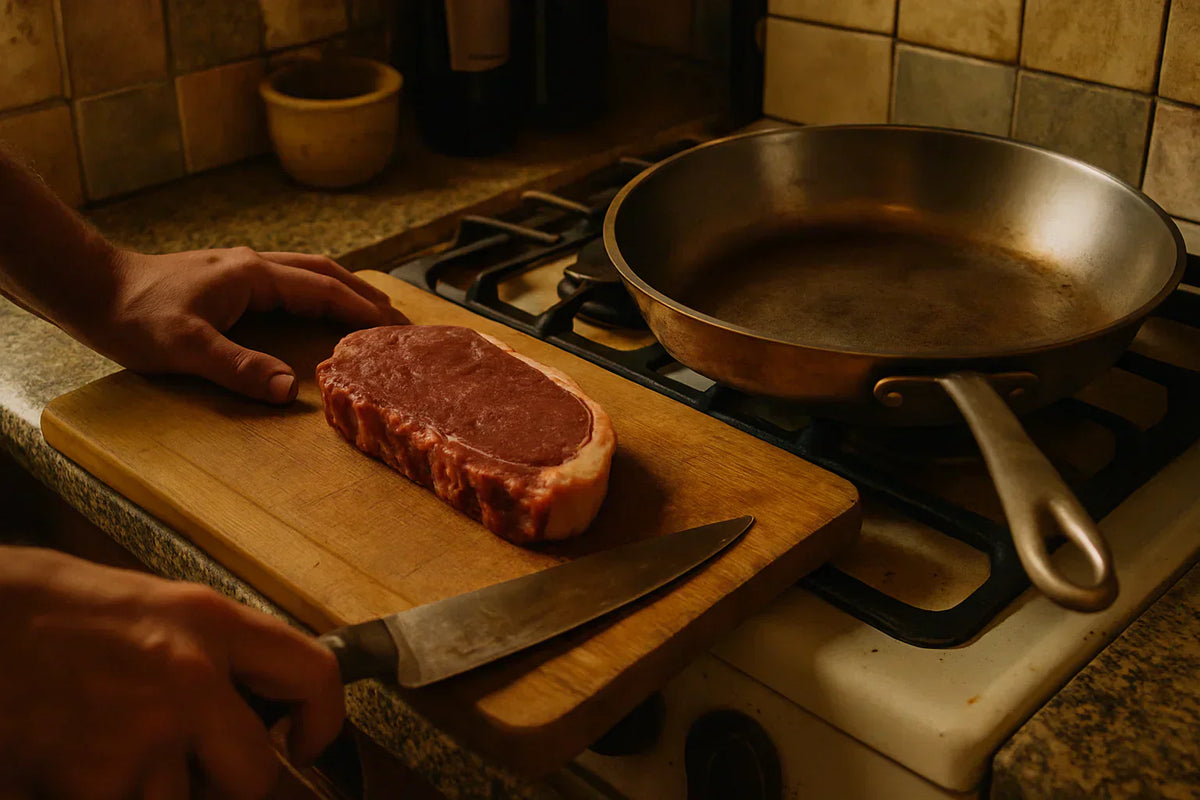
Eliminating this vapor barrier is the foundational prerequisite for rapid browning. When surface water is stripped away prior to cooking, every calorie of thermal energy transfers directly into the amino acids and sugars residing in the outer cellular layer. The temperature of that micro-thin boundary surges past 280°F within seconds, initiating the Amadori cascade before internal heat conduction can overcook the delicate proteins nestled underneath.
Mastering Maillard Reaction Mechanics Across Four Decisive Kitchen Principles
Harnessing this molecular reaction requires deliberate control over surface conditions, energy transfer, and environmental chemistry. When exploring Maillard reaction mechanics in everyday kitchen prep, the fundamental bottleneck is rarely heat generation; it is energy dissipation. By executing four technical principles, you can manipulate the rate and character of this reaction with surgical precision.
Surface Dryness Dictates Whether Food Browns or Steams
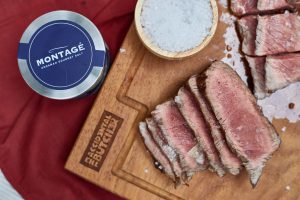
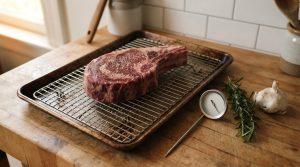
Blotting meat with paper towels offers a crude start, but it leaves significant interstitial moisture clinging to surface folds. Professional kitchens rely on evaporative desiccation through cold air circulation. By resting salted steaks, whole poultry, or pork roasts uncovered on a wire rack inside a refrigerator for twelve to twenty-four hours, the low relative humidity of the appliance pulls unbound moisture out of the surface tissue.
This process creates a microscopically thin, dry skin known as a pellicle. Because the pellicle contains virtually zero surface water, it eliminates the delay caused by the latent heat of vaporization. The moment food touches a hot cooking surface, melanoidin synthesis ignites instantly. You secure an intensely crisp, mahogany crust in less than half the cooking time, preventing heat from penetrating too far inward and leaving the core perfectly tender.
Thermal Mass Holds the Temperature Window Open
Dropping cold meat into an underpowered, featherweight nonstick skillet causes an immediate thermal crash. The cold mass absorbs heat faster than thin aluminum can replenish it, dropping surface temperatures well below the 280°F threshold. The meat weeps intracellular juice, flooding the pan floor and condemning the food to boil in its own exudate.
Preventing this thermal collapse demands cookware endowed with substantial thermal mass, such as heavy cast iron, carbon steel, or thick clad stainless steel. These dense materials act as thermal capacitors, storing immense kinetic energy across their crystal lattices. When raw proteins land on the metal, the stored heat overwhelms the cold surface shock, maintaining pan temperatures well within the sweet spot for browning while recovering lost heat rapidly.
Amino Acids and Reducing Sugars Require the Right Canvas
Not all proteins brown with equal speed because not all ingredients carry identical ratios of reducing sugars and free amino groups. Red meat possesses abundant myoglobin and amino chains, but relatively low concentrations of free reducing sugars. Starchy vegetables like potatoes, parsnips, and onions harbor abundant carbohydrates, but their complex starches must first break down into simple sugars like glucose before they can interact with amino acids.
Understanding this balance allows you to introduce strategic partners. A minute glaze containing amino-rich soy sauce, fish sauce, or dairy solids introduces the exact precursor molecules required to jump-start the cascade. When you dust slow-cooking onions with a pinch of dry milk powder, you supply an abundance of lactose and whey proteins. This simple addition produces deeply browned, intensely complex caramelized onions in twenty minutes rather than forty-five.
Subtle Alkalinity Accelerates Deep Pigment Formation
The speed of this reaction is exquisitely sensitive to pH levels. Under acidic conditions, the amino groups in proteins pick up extra hydrogen ions, becoming protonated. A protonated amino group carries a positive electrical charge, which physically repels the carbonyl carbons on reducing sugars, effectively grinding the browning reaction to a halt. Conversely, an alkaline environment strips away those extra protons, leaving amino groups neutral, nucleophilic, and eager to bond with sugars.
Applying this pH shift produces astonishing practical results. Adding a scant quarter-teaspoon of sodium bicarbonate (baking soda) to ground meat or shredded onions raises the surface pH slightly. This modest chemical nudge drastically accelerates intermediate Amadori rearrangements. The food browns twice as fast, forming rich aromatics without requiring extended cooking times that dry out delicate muscular fibers.
Critical Errors That Turn Golden Sear Into Scorched Carbon
A frequent misinterpretation of Maillard reaction mechanics involves mistaking acrid blackening for flavor development. The reaction window operates comfortably between 280°F and 330°F (140°C to 165°C). Once surface temperatures surpass 355°F (180°C) and crawl toward 400°F (204°C), the reaction degrades into pure pyrolysis. Pyrolysis is the thermal destruction of organic matter in the absence of functional culinary nuance.
During pyrolysis, delightful pyrazines and nutty melanoidins disintegrate into bitter polycyclic aromatic hydrocarbons, acrolein, and pure carbon. Charring has its place in tiny bursts of flame-licked pizza crusts, but an entire steak coated in scorched black crust tastes acrid, astringent, and metallic. Maintaining moderate surface heat, moving the food when necessary, and utilizing cooking fats with appropriate smoke points shields delicate flavor compounds from thermal destruction.
Another universal mistake is overcrowding the cooking vessel. Packing six chicken thighs into a ten-inch pan traps escaping steam in the narrow gaps between the meat. Even if your pan has immense thermal mass, the trapped steam saturates the local atmosphere at 212°F, insulating the meat from the dry conductive heat of the pan floor. Give food generous breathing room; air circulation allows liberated steam to disperse, keeping the cooking surface bone-dry and receptive to high-heat synthesis.
Transforming Everyday Dinners Through Intentional Browning
Once you perceive cooking through the lens of reaction kinetics, daily kitchen decisions become intuitive and repeatable. You no longer roast vegetables at low temperatures hoping they will soften and brown simultaneously. Instead, you toss carrots or cauliflower in oil, space them widely across heavy sheet pans, and blast them with high convective heat. The moisture evaporates rapidly, triggering a burst of nutty pyrazines across the outer ridges while preserving a crisp-tender interior.
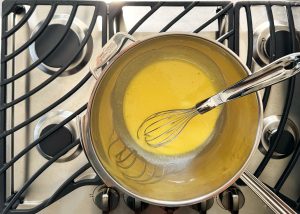
In sauce preparation, the residue left stuck to the bottom of your pan—the fond—is a concentrated reservoir of polymerized melanoidins. Deglazing that golden crust with wine, stock, or water dissolves those complex macromolecules back into the liquid phase. The resulting pan sauce carries an architectural backbone of savory depth that cannot be replicated by simply boiling liquids in a clean pot.
Rather than relying on timer alarms, harnessing Maillard reaction mechanics requires constant sensory engagement with sound, aroma, and surface texture. Listen for the vigorous, crackling sizzle that signifies the rapid expulsion of moisture without temperature collapse. Breathe in the shifting aromas as raw meat musk yields to the rich, toasted scent of pyrazines. Once you calibrate your instincts to Maillard reaction mechanics, cooking ceases to be an anxious gamble against the clock. Every sear becomes an exercise in deliberate flavor architecture, yielding the gorgeous crusts and comforting savory depth that distinguish true mastery from basic sustenance.