Foley sound mechanics reveal 4 brilliant secrets that fool every listener
Behind every bone-crunching punch and whisper of silk on screen lies an ingenious tactile illusion. Discover the acoustic physics and sensory trickery that bring cinematic worlds to life.
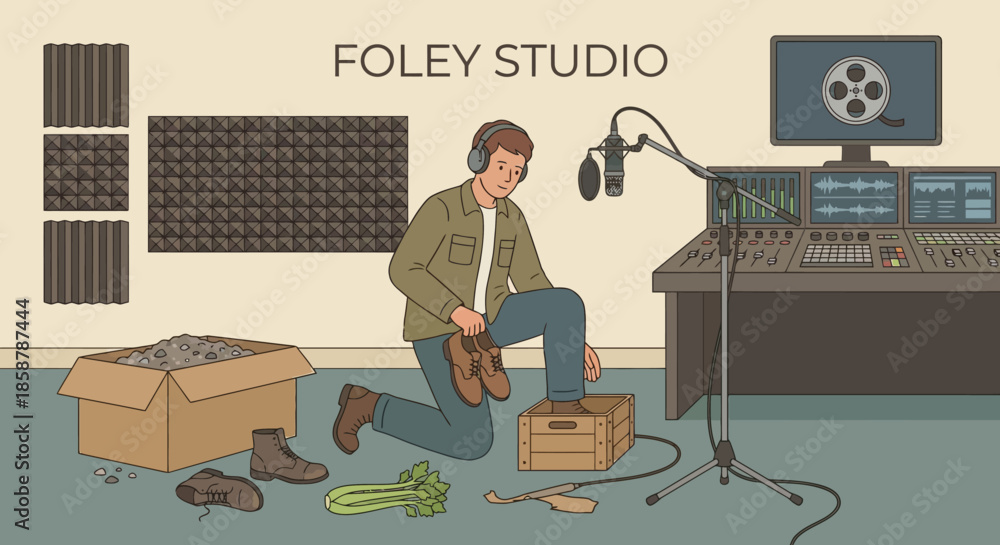
Diving deep into foley sound mechanics reveals why the human brain accepts artificial studio noises as raw, unfiltered acoustic reality. When you watch a protagonist sprint across wet cobblestones, pull a rusty revolver from an oiled holster, or snap a frozen branch in a moonlit forest, your brain assumes you are hearing the genuine acoustics of that physical event. In truth, almost none of that audio was recorded on set. The footsteps were stomped by a performer wearing vintage dress shoes into a wooden trough filled with gravel, the gun was an antique door latch, and the branch was a stalk of celery snapped inches away from an ultra-sensitive condenser microphone.
Named after early cinema sound pioneer Jack Foley, this discipline transforms ordinary materials into vivid acoustic tapestries. When synchronous sound arrived in motion pictures, filmmakers quickly discovered that real life rarely sounds like what the audience expects. Without physical props manipulated in absolute synchronization with on-screen actors, films feel detached, hollow, and disorientingly artificial.
Why Raw Production Audio Leaves Movies Soulless and Empty
On any bustling film set, the primary objective of the production sound mixer is singular and uncompromising, capturing clean, intelligible spoken dialogue. Directional boom microphones and miniature lavaliers are tuned specifically to isolate vocal frequencies while rejecting off-axis noise. If a set recording captured the full sonic weight of shuffling boots, clinking teacups, and rustling wool coats, the dialogue would become a muddy, unusable soup of conflicting frequencies.
Modern film preservation and audio engineering show that foley sound mechanics are not a luxury but an absolute structural requirement of cinema. When editors strip out background room tone and ambient set noise to clean an actor’s speech, the scene collapses into an unnatural acoustic vacuum. Humans are hyper-attuned to sensory congruence. If your eyes register a heavy iron gate swinging shut, but your ears receive only a muffled rattle buried beneath dialogue, a profound cognitive dissonance occurs. The illusion of cinematic immersion shatters instantaneously.
Four Fundamental Secrets Behind Tactile Sound Illusions
Deconstructing foley sound mechanics demonstrates how artists synthesize complex emotional narratives through physical movement, material properties, and acoustic physics. These foundational pillars allow simple studio oddities to masquerade as epic cinematic events.
Psychoacoustic Suggestibility and Cross Modal Sensory Binding
Human perception is remarkably gullible when sight and sound converge. In cognitive science, this phenomenon is recognized as cross-modal sensory binding or the ventriloquism effect. When the visual cortex registers an impact, the auditory cortex immediately interprets whatever acoustic transient accompanies that frame as the literal sound of the object. According to Audio Engineering Society research on psychoacoustics, visual dominance overrides minor acoustic discrepancies, allowing sound designers to substitute bizarre items for on-screen objects with staggering success.
Consider the cinematic fight scene. A real human fist striking facial tissue produces a dull, quiet, wet thud that barely registers in a chaotic environment. Audiences, however, expect an explosion of cartilage and kinetic force. Foley artists construct this sensation by slapping a wet leather jacket against a wooden bench, layering it with a cracked head of cabbage, and topping it with a quick snap of dry spaghetti. Even across broadcast media and athletic entertainment, where unexpected athletic pressures reshape careers much like how Chad Patrick Faces 3 Major Realities After Shocking Brewers World Series Decision, sonic sweetening works tirelessly in the background. The brain synthesizes these disparate tactile triggers into a unified sensation of devastating physical violence.
Material Texture Substitution and Prop Wizardry
The secret weapon of any elite sound artist is not digital software, but a warehouse packed with everyday junk. Real-world items rarely sound convincing when captured by high-fidelity studio microphones. Snow is a classic example. Walking through fresh winter powder on location produces a faint, muffled swish that lacks definition through cinema speakers. Foley artists resolve this by filling small leather pouches with cornstarch or flour, rhythmically kneading and stepping on them to produce that distinct, crisp squeak of sub-zero snow.
Flapping bird wings are commonly performed using vintage leather gardening gloves flicked rapidly back and forth. Creature carapaces and alien movement frequently rely on wet pinecones, damp rags, and broken walnut shells. Wet chamois leather provides the slippery, glistening audio signature of internal organs or reptilian skin. Prop selection is an organic puzzle where the physical behavior of an item under kinetic stress matters far more than its visual identity.
Acoustic Transduction and Microphone Proximity Dynamics
A masterclass in foley sound mechanics requires intimate understanding of microphone physics, specifically how sound waves behave across varying distances within controlled acoustic spaces. Foley artists do not simply perform sounds; they dance with the microphone polar pattern. By manipulating the proximity effect, where directional microphones dramatically amplify low-end bass frequencies as a sound source moves closer, an artist can give an ordinary boot step the menacing weight of an armored giant.
Conversely, stepping back several feet introduces room air and softens hard transients, naturally replicating an actor moving into the background of a scene. Performers continuously modulate their body angles relative to the microphone capsule. Angling an impact slightly off-axis rolls off piercing high frequencies, creating the acoustic sensation of an event happening around a corner or behind a closed door without requiring digital equalization.
Layering Density and Micro Timing Shifts
A solitary sound effect almost always feels thin and fake. Complex cinematic events require meticulous vertical layering, where multiple discrete acoustic textures combine into a single perceptual identity. The iconic unsheathing of a sword reveals this layered brilliance. Steel sliding against leather scabbards produces almost no sound in real life. On screen, that same movement is constructed from three distinct layers: a coarse grinding stone for friction, a flat metallic scraper for mid-range bite, and a lightly struck orchestral chime for high-frequency shimmer.
Foley artists execute these layers with subtle micro-timing offsets. Stacking all three sounds at the exact same millisecond results in phase cancellation and an artificial, robotic wall of noise. Offsetting each transient by ten to twenty milliseconds mimics the chaotic, sequential energy release found in nature, tricking the ear into perceiving authentic acoustic depth.
The Architecture of the Foley Stage and Studio Physics
When stepping inside a custom recording theater, the physical environment of foley sound mechanics becomes immediately obvious. Unlike standard music studios designed for balanced reverberation, a dedicated performance stage is an acoustically deadened cavern engineered to eliminate unwanted room reflections. Acoustic baffling covers walls and ceilings, driving reverberation times down to near-zero levels so the captured audio can later be placed into any virtual cinematic space using digital convolution reverbs.
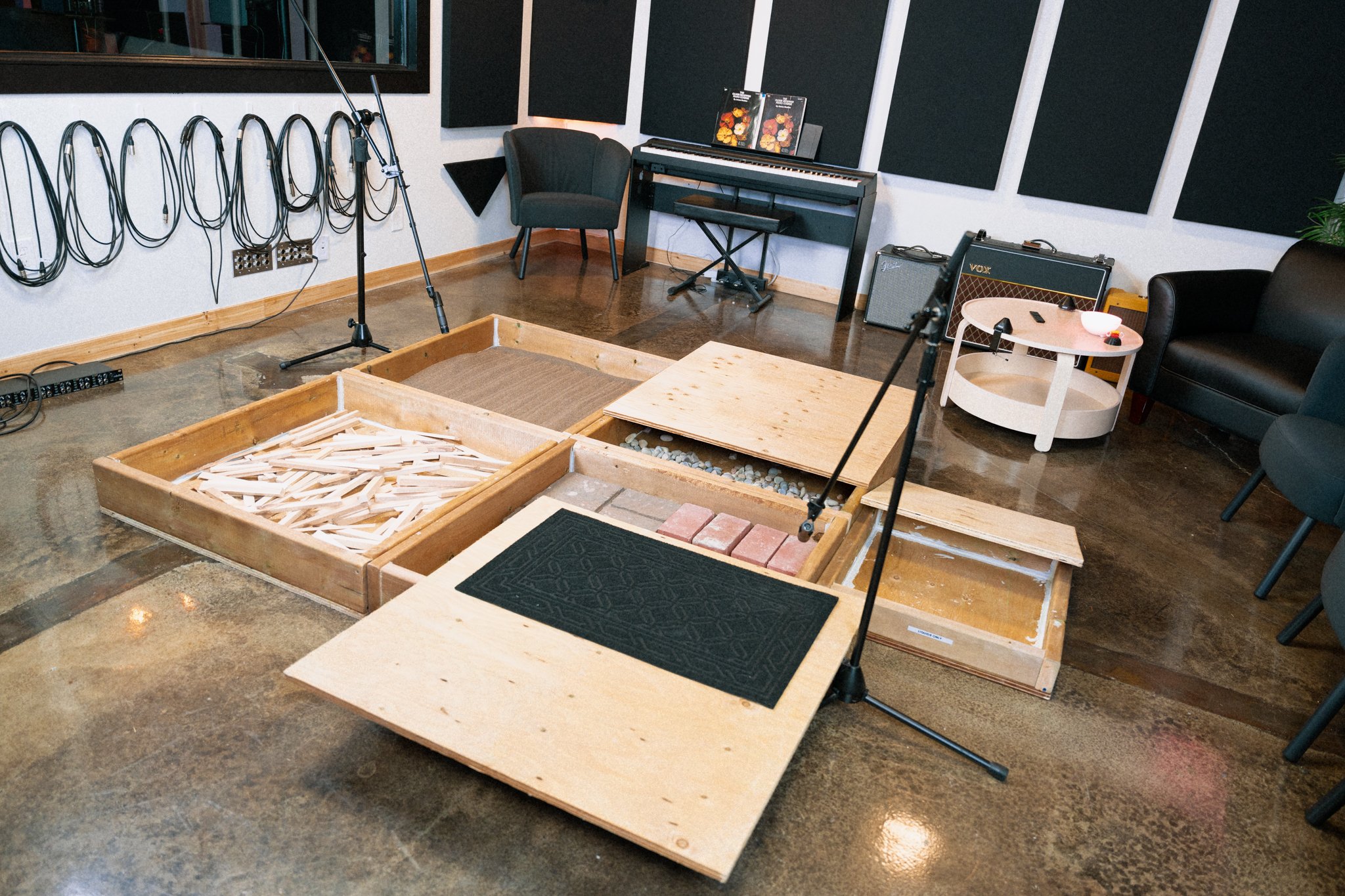
The floor of a foley stage resembles an elaborate construction site divided into specialized containment pits. One pit contains smooth river stones; another holds crushed red brick, damp soil, coarse beach sand, loose gravel, or squeaky parquet flooring. Beside these pits sits a massive wardrobe stuffed with thousands of shoes, spanning heavy combat boots with worn rubber heels, vintage wooden clogs, stilettos, and soft velvet slippers.
Because footwear weight, sole material, and stride pacing communicate age, emotional state, and physical exhaustion, the performer must internalize the character completely. A panicked sprint across flagstones requires a completely different kinetic heel-to-toe roll than a stealthy predator stalking prey through the same corridor. The artist watches a massive projection screen while performing directly into the pits, matching every stride, shuffle, and weight shift frame by frame.
The Unseen Artistry That Shapes Human Perception
In an era dominated by synthetic audio synthesis and algorithmic sound design, physical studio performance remains irreplaceable. Digital sound libraries offer hundreds of thousands of pre-recorded footsteps and impacts, yet sound supervisors continuously rely on living performers working in tactile environments. Pre-recorded digital assets carry static acoustic footprints that quickly feel monotonous when repeated across an extended scene. A human performer introduces infinite, microscopic variations in velocity, texture, and cadence that mimic the unpredictable beauty of physical reality.
Ultimately, foley sound mechanics remind us that human hearing is fundamentally an emotional instrument. We do not simply process decibels and frequencies; we interpret visceral narratives coded into subtle acoustic vibrations. By bending everyday materials to their will, sound artists build an invisible emotional bridge between the screen and the viewer. The next time a movie makes your spine tingle with the snap of a twig or the wet slide of a knife, remember the studio magician standing in a gravel pit, waving a leather glove, and quietly sculpting the sounds of your imagination.