Foley sound design mechanics reveal 4 essential secrets behind breathtaking movie magic
Discover the physical science and psychoacoustic wizardry that turn cornstarch and leather into bone-crunching movie moments. Here is how master Foley artists craft believable sonic illusions that trick the human brain.

Mastering Foley sound design mechanics transforms ordinary studio props into the visceral, bone-rattling audio textures that anchor modern cinematic storytelling. When a weary detective trudges through a slushy alleyway or an armored knight collapses onto frozen mud, human ears instinctively believe the impact. Viewers assume the boom microphone on location captured every crunch, squish, and metallic scrape. In reality, production sets are acoustic graveyards for subtle movement, stripped clean of ambient nuance so dialogue remains pristine.
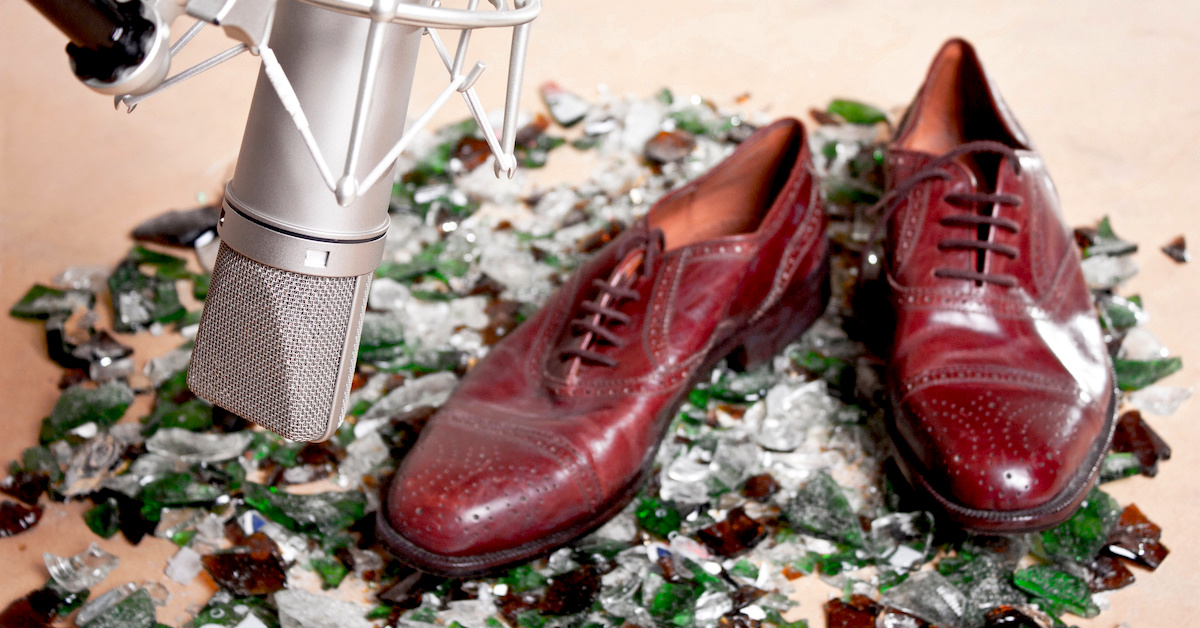
What audiences actually hear is an elaborate physical simulation performed on a soundstage months after cameras stopped rolling. An artist clutching a leather pouch packed with cornstarch kneels before a condenser microphone, watching the detective’s gait on a projection screen. Every stride, slip, and stumble is tracked frame by frame, translated through muscular memory into an acoustic duplicate.
This craft is neither accidental nor merely eccentric theater. Examining the underlying Foley sound design mechanics reveals an astonishing collision of physics, psychoacoustics, and kinesthetic performance. It is an exacting discipline where raw materials are weaponized to trigger specific emotional responses inside the human central nervous system.
The Acoustic Failure of Production Microphones on Set
Location filming presents an unforgiving acoustic environment. Directors prioritize spoken dialogue above all else, deploying highly directional shotgun microphones aimed squarely at the actors’ mouths. Sound recordists intentionally minimize the presence of footsteps, clothing movement, and incidental prop handling. If an actor’s shoe squeaks loudly during an intimate whisper on set, that audio take becomes unusable in the editing room because it cannot be cleanly excised or leveled.
Modern sound stages introduce their own sonic liabilities. Set floors are frequently hollow platforms built over wooden risers or concrete studio slabs treated with glossy resin. A villain stepping across what appears to be ancient gothic stone produces a thin, hollow clatter instead of a menacing, resonant thud. Air conditioning units hum in the background, camera dollies rumble across track seams, and wind generators batter the microphone diaphragms.
By the time a film reaches the post-production phase, the production audio track has been scrubbed down to dialogue stems. Without replacement sound, the actors look like weightless apparitions gliding through an uncanny, hermetically sealed void. Foley artists step into this void to reconstruct reality from scratch, engineering an artificial world that feels far more real than actual reality.
The Psychoacoustics of Believable Artificial Sound
The human brain does not process sensory data in clean, isolated streams. Instead, it relies on cross-modal sensory integration, continuously negotiating between optical signals and acoustic vibrations. Cognitive scientists frequently study the ventriloquism effect, a perceptual phenomenon where visual cues capture and anchor auditory perception. If a screen shows a heavy iron door slamming shut, our neural processing immediately looks for a sudden acoustic transient to pair with the visual collision.
When analyzed through psychoacoustics, Foley sound design mechanics exploit a fundamental perceptual glitch: the brain prefers sonic caricature over sonic literalism. If a recording engineer points a studio microphone at an actual fist striking a human jaw, the resulting sound is shockingly anticlimactic. It registers as a dull, wet, low-frequency slap that lacks cinematic danger. Audiences conditioned by decades of audio storytelling reject it as weak or unconvincing.
To satisfy the brain’s expectation of violence, the artist must disassemble the psychological concept of an impact into discrete auditory components. High-frequency transients communicate the sharp snap of skin contact, mid-frequency density conveys muscular density, and a sharp low-frequency thud delivers kinetic weight. Snapping a thick stalk of celery wrapped inside a wet chamois leather cloth satisfies this perceptual equation instantly, tricking the auditory cortex into feeling pain that never occurred.
Four Core Pillars Governing Foley Sound Design Mechanics
To dissect how Foley sound design mechanics function on a daily production stage, one must look beyond the novelty of peculiar props. The craft rests on four structural pillars that govern how physical kinetic energy translates into psychoacoustic belief.
Dynamic Velocity and Tactile Material Pairing
Sound begins with kinetic transfer. A common beginner mistake involves searching for an identical material: using gravel to make gravel sounds, or glass to make glass sounds. Professional artists recognize that microphone diaphragms react differently than human ear canals, meaning physical density must be carefully translated.
Much like the biomechanics explored in our breakdown of Tennis serve mechanics and 4 proven secrets to build explosive power, a Foley walker must calibrate physical kinetic chains to deliver force cleanly without introducing unwanted incidental creaks or body noise. Striking a prop with an uncontrolled wrist produces erratic acoustic tails that ruin dialogue intelligibility.
Material pairing requires acute lateral thinking. Wet, sticky pine cones twisted between gloved hands become the cracking joints of an awakening monster. A heavy canvas tarp shaken with measured rhythmic snap creates the booming sail of an offshore schooner. The physical resistance of the material dictates the envelope of the sound, dictating attack, decay, sustain, and release before any electronic equalization touches the signal.
Transient Shaping and Acoustic Geometry Matching
Every room leaves a permanent acoustic fingerprint on sound waves. When characters run through an echoing marble cathedral, a dry, sterile studio recording recorded four inches from a microphone immediately breaks the film’s immersion. Foley artists and their recording engineers manage acoustic geometry through physical placement rather than relying solely on digital reverb plugins.
The relationship between the performer and the microphone capsule dictates the ratio of direct sound to reflected sound. Moving closer leverages the proximity effect, artificially boosting low frequencies to give an intimate, threatening quality to a character’s breathing or leather jacket creaks. Backing off three feet and angling the microphone toward the studio ceiling captures diffused room reflections, placing the movement naturally into a wide-angle landscape shot.
Engineering bodies like the Audio Engineering Society have extensively documented how early acoustic reflections inform human spatial awareness. Foley teams respect this physics by physically angling props against studio baffling, ensuring the sound waves blossom into three-dimensional space before entering the capsule.
Micro-Sync Timing and the Science of Subconscious Lag
Standard theatrical film runs at 24 frames per second, which allocates roughly 41.6 milliseconds to each visual frame. While computer software allows sound editors to snap audio transients directly onto the exact frame of visual contact, doing so often produces an uncanny, robotic feel.
Light travels instantaneously across a screening room, but sound crawls through air at approximately 343 meters per second. In physical reality, a spectator standing fifty feet from a falling tree sees the impact fractions of a second before hearing the crash. Human evolution has trained our neural wiring to accept acoustic events that lag visual stimuli by 20 to 40 milliseconds.
Conversely, an audio cue that arrives even a single frame early feels jarring, distracting, and visibly fake. Master performers deliberately ride the trailing edge of visual movement. They drag their steps or impacts by a hairsbreadth, allowing the subconscious mind of the viewer to register the physical action visually before delivering the sonic confirmation.
Psychoacoustic Caricature and Subconscious Emotion
The ultimate goal of Foley is not documentary reproduction, but narrative reinforcement. A protagonist fleeing an attacker does not simply make running footsteps; their shoes express panic, fatigue, and desperation. The artist communicates this emotional subtext through micro-variations in heel-to-toe balance, scraping dragging soles, and erratic cadences.
Consider the sonic weight assigned to character costumes. A corporate villain does not merely walk across an office; their expensive wool trousers produce an aggressive, crisp swish that commands space, performed using dense silk taffeta rubbing against heavy suiting fabric. A vulnerable character, by contrast, moves with barely a murmur, their presence muffled by soft cottons and hesitant shifts in weight. The prop becomes an extension of dramatic motivation.
The Physical Architecture of an Elite Foley Stage
Executing these Foley sound design mechanics with pinpoint precision requires a dedicated, acoustically dead environment. Unlike musical recording rooms that celebrate natural resonance, a premier Foley live room acts as an acoustic vacuum, eliminating outside noise and internal reverberation so engineers can capture dry, malleable signals.
The floor of a professional stage resembles an eccentric construction site. Built into the ground are walking pits, typically measuring four feet wide by six feet long and deep enough to prevent structural vibrations from coupling with the subfloor. One pit contains sharp decomposed granite, another loose river gravel, a third smooth hardwood parquet, and others contain dirt, sand, asphalt, and concrete.
Water tanks with variable depth settings allow artists to simulate everything from puddles to deep marshland wading without water splashing onto sensitive electronic gear. Along the walls sit massive prop libraries containing thousands of everyday artifacts: vintage rotary telephones, rusted automotive leaf springs, heavy chains, antique suitcases, cutlery, and an extensive shoe archive spanning high-heeled stilettos, military combat boots, and worn sneakers with varying rubber densities.
Why Human Tactile Performance Defeats Digital Audio Samples
In an era dominated by artificial intelligence and digital audio workstations packed with millions of pre-recorded sound effects, one might wonder why studios still pay human performers to stomp around in gravel pits. The answer lies in the impossibility of pre-recording human variability.
When a human walks, no two footsteps are identical. The angle of the ankle, the distribution of body mass, the slight twist of the knee, and the changing texture of the ground create perpetual micro-variations in sound pressure and frequency balance. Triggering a static audio sample from a keyboard repeatedly creates the notorious machine-gun effect, where the identical acoustic waveform alerts the listener’s brain that the sound is synthetic and lifeless.
Ultimately, the enduring vitality of Foley sound design mechanics rests in the spontaneous friction between human limbs and physical objects. It is a live dance performed in synchronization with shadows projected on a screen. By wedding the laws of physics to deep human empathy, these unsung sonic artisans ensure that when an illusion appears on the silver screen, our ears accept it as absolute truth.