Baseball curveball mechanics reveal 4 proven secrets to baffle elite hitters
A devastating curveball looks like magic, but its late break is pure kinetic physics. Discover how spin rate, seam alignment, and ocular biology combine to baffle hitters.
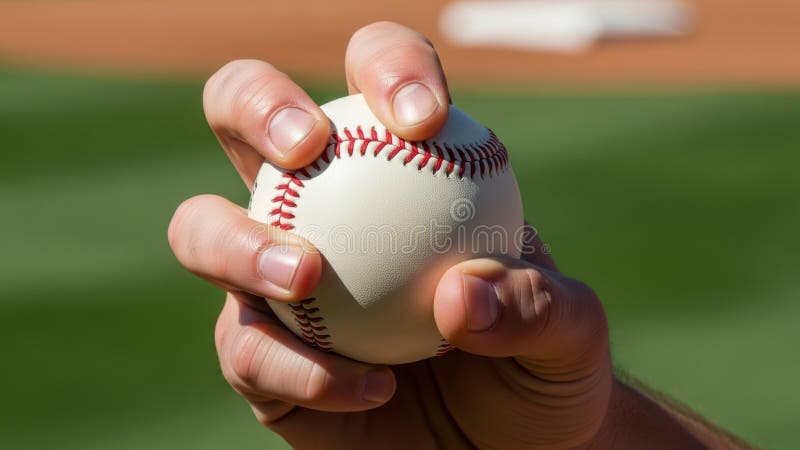
Mastering baseball curveball mechanics transforms a standard pitch into an optical illusion, bending sixty feet of clear air into an impossible obstacle. From the grandstands, the ball seems to casually tumble out of the pitcher’s hand before plummeting off an invisible cliff directly over home plate. Batters brace for a waist-high strike, initiate their kinetic swing sequence, and end up corkscrewed into the dirt, hacking through thin air while the catcher gathers the ball ankle-high. For generations, hitters accused pitchers of throwing a supernatural trick, insisting the drop was a hallucination born of panic. High-speed optical tracking has laid that dispute to rest: the late downward snap is entirely real, governed by precise fluid dynamics and uncompromising body mechanics.
Throwing an elite curveball does not happen through wild arm speed or violent, joint-shredding wrist snaps. The pitch demands calculated kinetic sequencing, micro-adjustments in fingertip pressure, and a deep appreciation for the interaction between raised cowhide seams and atmospheric air pressure. When executed properly, it becomes one of the most mechanically elegant maneuvers in competitive sports. To appreciate why this trajectory defies human reaction time, one must tear down the pitch from its aerodynamic roots to the anatomical levers that generate top-tier spin.
The invisible physics of asymmetric airflow
When physicists examine baseball curveball mechanics, they discover that a spinning sphere does not travel through inert space; it actively manipulates the medium. The entire flight path hinges on the Magnus effect, a physical phenomenon discovered in the nineteenth century that explains why rotating cylindrical or spherical objects deviate from their expected ballistic paths. As a baseball travels forward with rapid forward rotation, commonly known as topspin, it forces the fluid air surrounding it into two distinctly different speed zones.
Air passing over the top of the advancing ball collides directly against the forward-churning cowhide surface, creating friction, turbulence, and an immediate deceleration of airflow. Conversely, the air flowing underneath moves in the exact same direction as the rotating bottom surface. This underlying airstream accelerates smoothly past the leather. Bernoulli’s principle dictates that faster-moving fluid generates lower static pressure, while slower-moving fluid generates higher static pressure. The result is a substantial pressure differential across the sphere: high pressure accumulates on top, while a low-pressure pocket develops underneath.
Nature demands equilibrium, pushing the sphere forcefully toward the low-pressure pocket. Gravity already pulls every thrown baseball downward at an acceleration of roughly thirty-two feet per second squared, but a well-executed curveball layers several hundred pounds of aerodynamic Magnus force directly on top of gravitational pull. As documented in the NASA Glenn Research Center analysis of curveball aerodynamics, this combined downward vector causes the baseball to shed altitude at an accelerating rate that dramatically outpaces the visual brain’s early predictive calculations.
The kinetic chain from rubber to release point
Proper baseball curveball mechanics reject the archaic instruction to violently snap the wrist upon release. For decades, misinformed coaches instructed young athletes to turn the doorknob or crank the wrist inward at the instant of release to create spin. High-speed biomechanical capture has proved this cue is not only physiologically impossible at game speeds, but it also creates severe valgus stress across the ulnar collateral ligament. The wrist does not twist during the release window; it remains remarkably firm and pre-set.
The true kinetic chain begins hundreds of milliseconds earlier, originating from the driving rear leg against the pitching rubber. Energy travels upward through pelvic rotation, transfers across the torso through explosive hip-shoulder separation, and ripples through the chest into the shoulder capsule. By the time the throwing arm reaches maximum external rotation, the forearm is already pre-supinated. The pitcher locks the wrist into an angled, supportive position before the arm even accelerates forward. The arm acts as a flexible whip, and the hand serves as the stable launch platform.
As the arm sweeps forward toward the target, the hand maintains its orientation without uncoiling prematurely. The ball does not roll off the flat palm like a four-seam fastball; instead, it is pulled off the fingers. The pitcher pulls down on the front hemisphere of the ball, utilizing the middle finger as an aggressive pivot point. The release looks less like a shove and more like an archer sliding their fingers smoothly off a taut bowstring.
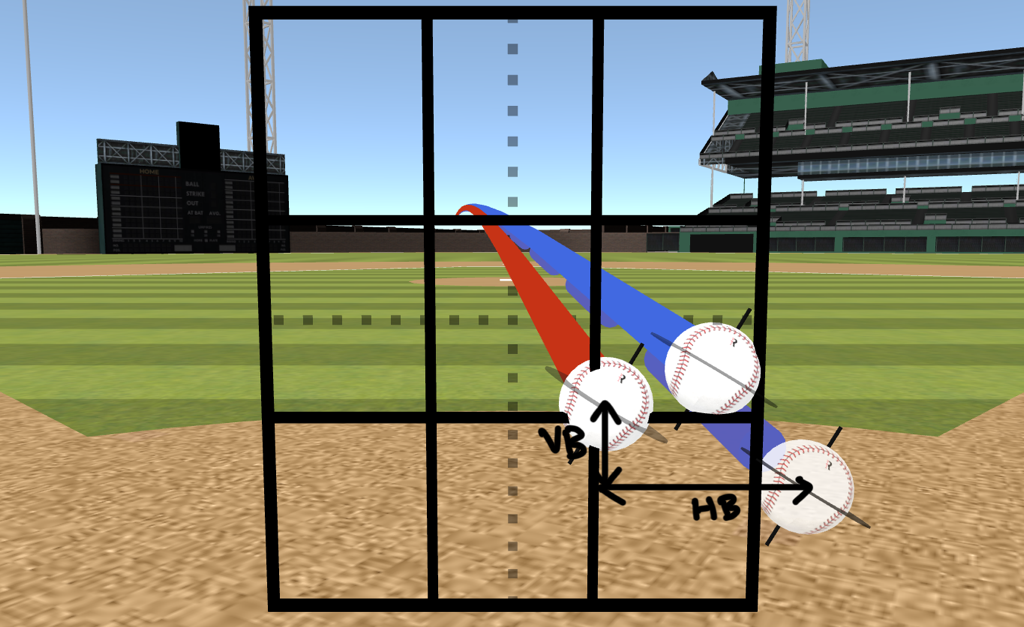
Four proven secrets behind devastating curveball movement
Deconstructing elite baseball curveball mechanics highlights four specific mechanical realities that turn ordinary rotation into an unhittable plunge. These principles separate mediocre, floaty breaking pitches from sharp, biting weapons that leave hitters frozen in the batter’s box.
Seam orientation dictates turbulent wake stability
A baseball features 108 double-stitched red cotton seams raised slightly above the smooth grain of the leather. These seams are not decorative; they are boundary layer agitators. When a pitcher sets their grip across the horseshoe orientation of the ball, the rhythmic passage of raised seams trips the oncoming laminar airflow into a turbulent boundary layer. Turbulent air sticks to the curvature of the ball far longer than smooth air before detaching into the trailing wake.
If the ball rotates with clean seam symmetry, the air separation points remain perfectly balanced across the lateral flanks. This funnels the trailing aerodynamic wake directly upward, maximizing the reciprocal downward force. A sloppy seam orientation introduces irregular wobble, causing air to detach unevenly and bleeding precious downward Magnus force into harmless side-to-side drift. True masters of the breaking ball align their grip so the seams punch through the airstream like tiny rudders, stabilizing the turbulent wake and ensuring maximum downward acceleration.
Middle finger traction drives pure top-down spin
The middle finger is the primary engine of the curveball. While the index finger rests lightly alongside for stability, the middle finger must exert tremendous pressure against the inner edge of a raised seam. Pitchers often develop dense, thick calluses on the distal joint of this finger because it bears the full frictional load of the release. The thumb, positioned underneath the baseball, provides the counter-fulcrum, pinching the ball firmly against the middle finger.
At the instant of release, the pitcher rips the middle finger down the front face of the ball while the thumb punches upward. This dual-lever action imparts thousands of revolutions per minute of clean forward spin. If the index finger applies equal pressure, it dilutes the torque and introduces bullet spin, which kills vertical bite. Precision fingertip traction transforms simple arm velocity into rotational energy, converting kinetic momentum into devastating break.
The visual cliff exploits human saccadic eye movement
Understanding how baseball curveball mechanics exploit human ocular biology explains why hitters claim the ball fell off an invisible cliff. A batter does not track an incoming pitch with a continuous, smooth visual stream; the human eye cannot process rapid motion at sixty feet in a continuous feed. Instead, the ocular system relies on rapid predictive jumps called saccades, gathering snapshot data during the first third of the ball’s flight path and predicting where it will cross the plate.
During the first twenty feet of travel, a curveball resembles a high fastball because it pops slightly upward out of the pitcher’s hand before settling into its trajectory. The batter’s neurological prediction engine charts a linear parabolic arc based on this early visual information. However, aerodynamic drag slows the ball down as it approaches the plate. Because Magnus force remains constant while forward velocity drops, the downward deflection accelerates exponentially in the final fifteen feet. The ball dives just as the hitter switches their gaze to the anticipated contact zone, creating the terrifying optical impression that the ball dropped off an edge.
Decoupling arm slot from pitch deception preserves arm health
Many amateur throwers believe that throwing an overhand twelve-to-six curveball requires dropping their torso or unnaturally raising their elbow into an uncomfortable vertical slot. Forcing an artificial arm angle places destructive rotational torque on the anterior capsule of the shoulder and breaks the pitcher’s natural release tunnel. Elite arms do not alter their arm slot to throw a breaking pitch; they match their fastball slot identically.
Just as precision engineering in rugged sports equipment demonstrates how high-stress components must endure repetitive shocks—detailed in how the Casio G-Shock GMC-2500 Redefines Luxury Sports Design with 5 Crucial Shifts—a pitcher’s kinetic chain requires structural resilience to withstand hundreds of foot-pounds of torque without degrading. Pitchers who force their elbow above their natural shoulder plane invite rapid fatigue and catastrophic tissue failure. By maintaining an identical arm slot across fastballs and breaking pitches, a pitcher keeps their natural biomechanics safe while giving the batter zero visual clues before the ball leaves the hand.
How modern analytics reshaped pitch design and spin efficiency
The digital tracking era completely revolutionized baseball curveball mechanics by measuring active spin efficiency down to the single digit. High-speed optical cameras and radar arrays revealed that total spin rate is only half the battle. A pitcher might produce 2,800 revolutions per minute, but if half of that spin operates as gyroscopic rifle spin like a spiraling football, it generates zero Magnus movement. Gyro spin cuts through the air without generating pressure differentials.
Modern pitch design focuses obsessively on spin axis and active spin percentage. By tilting the axis of rotation mere millimeters, pitching labs help athletes achieve ninety-five percent spin efficiency, ensuring nearly every bit of rotational energy contributes directly to vertical drop or lateral sweep. Pitchers now adjust their finger placement against the leather based on immediate camera feedback, refining their tilt until the aerodynamic wake pulls the ball along the sharpest possible trajectory.
Furthermore, contemporary biomechanical labs emphasize release height consistency. If a pitcher releases their fastball at six feet above the dirt and their curveball at five feet eight inches, elite hitters instantly pick up the mechanical discrepancy out of peripheral vision. Today’s training regimens utilize motion sensors to ensure that the release point coordinates match within fractions of an inch, forcing the batter to guess blind until the spin takes physical control of the flight path.
The perpetual art of commanding the bottom of the zone
A devastating breaking pitch means little without tactical command. Throwing a curveball that bounces three feet in front of the plate produces occasional swings and misses against undisciplined hitters, but veteran competitors will simply watch it tumble into the dirt for an easy ball. True mastery requires the ability to start the pitch at the batter’s eye level, inducing a defensive freeze, before the Magnus effect pulls the sphere into the lower third of the strike zone for a called strike.
Alternatively, the pitcher can start the pitch at the knees, daring the batter to commit to what looks like a hittable fastball, only to watch the pitch bury itself in the dirt beneath the swing path. This vertical tunneling completely disrupts the hitter’s timing, pairing low-speed visual deception against explosive high-velocity fastballs. Ultimately, refining baseball curveball mechanics is not about chasing brute force or circus movement. It is an exacting marriage between kinetic discipline and fluid dynamics, proving that the most dominant weapon on the diamond is the one that bends the laws of flight to its will.