News verification mechanics and 4 proven rules that defeat dangerous disinformation
Behind every reliable headline lies a relentless engine of forensic fact-checking and source interrogation. Discover the hidden mechanics that separate investigative truth from digital chaos.
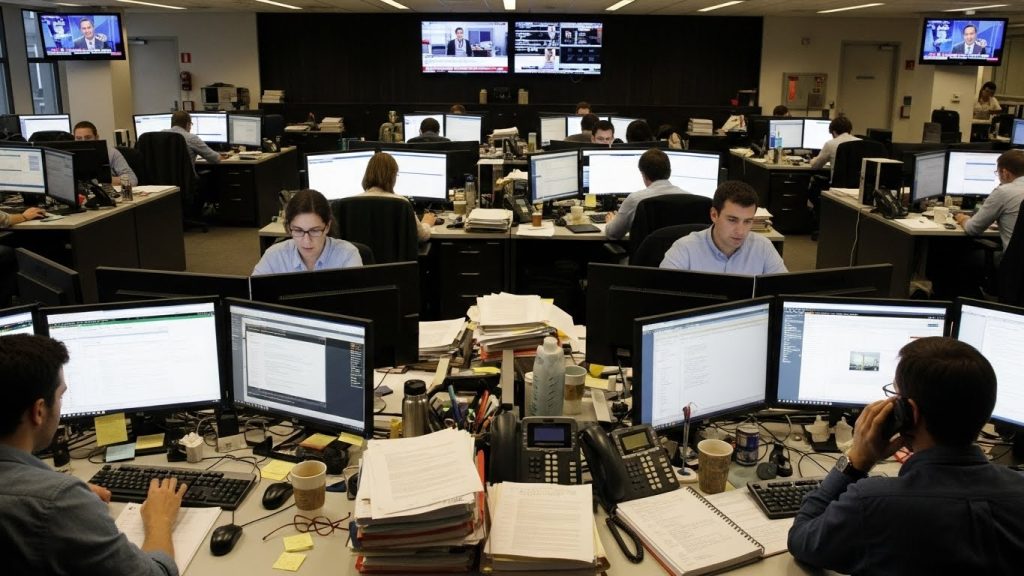
Mastering news verification mechanics is the single greatest barrier separating credible, democracy-sustaining reporting from the destructive chaos of viral online falsehoods. When a massive story breaks, the digital atmosphere fills instantly with a toxic fog of frantic speculation, fabricated video clips, and weaponized half-truths. Reporters do not possess magic wands or infallible instincts; instead, they rely on a rigorous architectural framework built over decades of trial, error, and catastrophic mistakes. Before an alert flashes across millions of smartphone screens, an invisible war between speed and certainty takes place inside the newsroom.
Understanding this process changes how you consume information forever. In an era where digital tools allow any bad actor to generate authentic-looking legal documents, fabricate audio recordings, or manipulate breaking footage, the burden on editorial desks has never been heavier. The process is not about merely asking a spokesperson whether a claim is accurate. It is an adversarial, forensic discipline designed to withstand intense legal pressure, political fury, and the relentless gravitational pull of social media echo chambers.
The Invisible Filter Behind Every Trusted Headline
At its foundational core, understanding news verification mechanics requires viewing every incoming dispatch as unverified raw data rather than actionable fact. When a tip lands on an editor’s desk, whether from a whisper network, an encrypted messaging drop, or an anonymous telephone call, it represents a hypothesis waiting for forensic disproof. Seasoned journalists operate on an ethos of structural skepticism, assuming that every piece of information has arrived with a motive, an incomplete angle, or a subtle layer of distortion.
Historically, newsrooms relied on the monolithic power of the central copy desk. Copy editors functioned as uncompromising gatekeepers who interrogated every proper noun, cross-referenced physical phone directories, and scrutinized paper archives before hot lead hit the printing press. While the tools have evolved from leather-bound reference books to satellite imagery databases and cryptographic verification platforms, the baseline logic remains unchanged. A claim must build an unbroken evidentiary chain from its initial utterance to observable, verifiable physical or documentary reality.
This verification machinery functions as an intellectual immune system. It intercepts manufactured outrage, filters out confirmation bias, and isolates coordinated influence operations before they can contaminate the broader public consciousness. When this filter functions properly, the public rarely notices; the sensational false stories simply vanish into the editorial trash bin, unacknowledged and powerless.
The High Cost of the First to Publish Fallacy
The greatest adversary of sound reporting has always been the intoxicating siren call of velocity. When editorial leaders compromise disciplined news verification mechanics to chase algorithmic engagement spikes, the systemic damage unfolds with terrifying speed. In the digital economy, the first outlet to blast a breaking update captures the lion’s share of search engine traffic, social platform amplification, and syndication royalties. Yet that fleeting commercial triumph often comes at the direct expense of truth.
Premature publication has repeatedly humiliated prestigious media institutions throughout modern history. Erroneous reports claiming dead hostages were alive, inaccurate tallies of casualties following industrial disasters, and misidentified suspects during violent crises all share a single root cause: confirmation bias fueled by competitive panic. When a reporter desperately wants a scoop to be true, their critical faculties naturally soften, rendering them blind to glaring factual inconsistencies and fabricated evidence.
The stakes multiply exponentially when political machinery enters the fray. As demonstrated when observing how Karoline Leavitt reveals 4 critical truths behind her White House exit and rising spotlight, the boundary between strategic narrative crafting and objective fact requires relentless dissection. Institutional press offices exist to frame events favorably, which makes the reporter’s adversarial scrutiny not just helpful, but utterly mandatory. Unchecked statements from official podiums are merely public relations; journalism only begins when independent verification pulls back the curtain.
Four Proven Rules That Safeguard Journalistic Integrity
Implementing four disciplined news verification mechanics provides an unyielding defense against fabrications, half-truths, and coordinated spin. These rules have been forged through decades of high-stakes investigative breakthroughs and public failures, providing a concrete operational standard for evaluating complex claims.
The Golden Triangle of Independent Triangulation
The foundational law of investigative reporting requires three mutually independent sources whose lines of knowledge never intersect. In casual reporting, two confirmations are often considered standard, but experienced investigators know that two sources frequently rely on the exact same unseen original informant. If Source A and Source B both heard the same rumor from Source C at a Washington cocktail party, presenting them as two independent corroborations is a disastrous editorial failure.
True triangulation demands distinct origins. A legitimate triangular confirmation might link an eyewitness testimony with a signed corporate banking ledger and an unredacted internal government email obtained through an open records request. None of these components can depend on the other to exist. If one leg of the evidentiary stool collapses under cross-examination, the other two must possess enough structural integrity to keep the central thesis standing firm.
Forensic Metadata Deconstruction and Visual Forensics
In the digital landscape, images and video recordings can no longer be evaluated at face value. Video evidence of a riot, an environmental disaster, or a violent arrest must undergo comprehensive digital interrogation before it earns a place in a broadcast feed. Reporters start by stripping the file down to its raw exchangeable image file format (EXIF) metadata, analyzing camera sensor signatures, creation timestamps, and geographic coordinates.
Because bad actors frequently strip or forge metadata, visual investigators cross-reference physical clues visible within the frames. They analyze the angle and length of shadows cast by streetlights to calculate the exact solar elevation at the moment of recording. They match utility poles, curb cuts, storefront signage, and distant skylines against high-resolution commercial satellite passes. When an online video claims to show an event unfolding in real time, visual forensics either confirms its timeline within minutes or exposes it as recycled archival footage from a completely unrelated event half a world away.
Motivation Vetting and Deep Background Stress Testing
Why is this person handing me this document right now? That is the mandatory question every investigative reporter must answer before publishing leaked material. Modern news verification mechanics treat source motivation not as an automatic disqualifier, but as an essential metric that demands rigorous contextualization. Whistleblowers rarely act purely out of saintly altruism; they often possess professional grudges, personal grievances, financial incentives, or political agendas.
Acknowledging an informant’s bias prevents reporters from becoming unwitting instruments in a hostile proxy war. If a corporate insider hands over smoking-gun evidence of environmental dumping, the files may be entirely authentic, but the source may have selectively omitted documents demonstrating that company executives remedied the violation weeks later. Vetting motivation requires investigators to aggressively seek out the counter-evidence that the leaker conveniently failed to disclose, ensuring the final narrative reflects systemic truth rather than targeted retaliation.
The Deliberate Friction of Adversarial Red Teaming
Before a major investigative project goes live, top-tier news organizations subject the draft to an institutional stress test known as adversarial red-teaming. An editor or senior reporter who had absolutely no involvement in reporting the story is assigned a single mission: to completely destroy the draft. This adversarial reader assumes the posture of an aggressive corporate defense attorney seeking grounds for a devastating libel lawsuit.
The red-teamer challenges every single adjective, demands the primary source document for every numeric assertion, and cross-examines the lead reporters on their underlying assumptions. If a sentence claims an executive acted knowingly, the red team demands documentary evidence proving state of mind. If the reporting team cannot definitively back up an assertion within ten minutes, the phrase is either rewritten with precise caveats or excised entirely. This internal friction is uncomfortable, but it guarantees that flaws are discovered in the private confines of the newsroom rather than under the blistering light of public retraction.
The Forensic Toolkit Modern Investigators Rely Upon
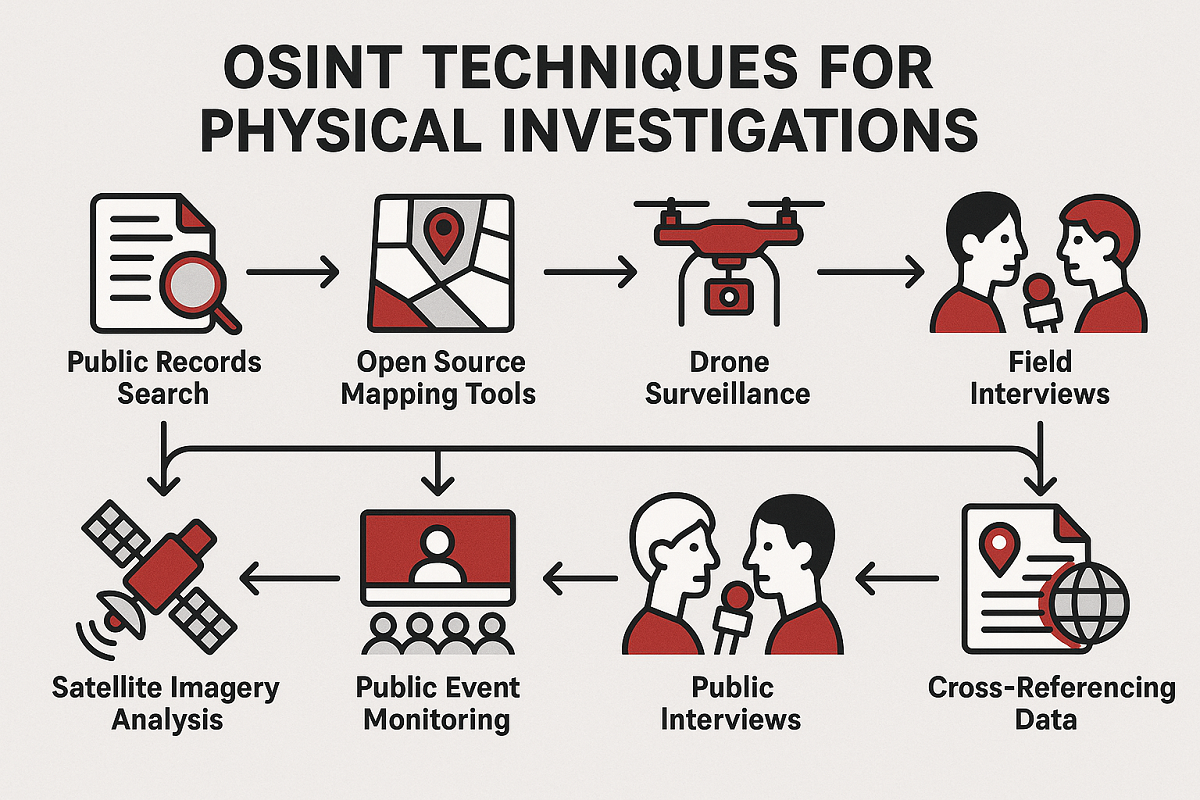
Beyond gut instinct, comprehensive news verification mechanics rely on specialized forensic software and meticulous open-source intelligence practices. The modern investigative desk looks less like a smoky 1970s print office and more like a forensic crime laboratory. Reporters trace corporate registration histories across offshore jurisdictions using public registries, monitor maritime automated identification systems to track illicit cargo shipments, and interrogate commercial aviation databases to verify the movements of corporate private jets.
Academic research groups and industry watchdogs regularly track these evolving analytical standards. Organizations like the Reuters Institute for the Study of Journalism consistently emphasize that transparency of methodology is just as critical as the final finding. When a news outlet publishes an investigation, providing annotated document viewers, raw datasets, and satellite coordinates allows readers to verify the findings independently, transforming passive consumption into active, verifiable civic participation.
These open-source toolkits dismantle the traditional secrecy of backroom leaks. By pairing private whistleblower documents with verifiable public records—such as municipal building permits, public contracts, and international trade manifests—reporters eliminate single-source dependency entirely. The documents do not merely support the story; they serve as an immutable, public audit trail that defies political spin.
Preserving Public Truth in an Era of Synthetic Realities
The dawn of generative synthetic media represents the most profound operational challenge media verification has ever confronted. Deepfake audio, hyper-realistic video generation, and autonomous disinformation networks capable of generating thousands of coordinated articles in seconds threaten to drown the public in manufactured unreality. When reality itself can be simulated with convincing precision, the old visual and auditory verification metrics begin to buckle.
The response to this technological challenge is not panic, but a return to fundamental human tradecraft supported by cryptographic provenance. News organizations are actively developing digital watermarking consortiums and cryptographic ledger standards that authenticate raw footage directly from the camera sensor to the publication platform. Yet, technology alone cannot salvage credibility. The ultimate barrier against manipulation remains the relentless, personal labor of human investigators who knock on doors, interview witnesses in person, inspect physical archives, and refuse to accept uncorroborated digital claims.
Ultimately, resilient news verification mechanics are far more than specialized tradecraft for professional reporters; they represent the epistemic foundation of an informed public. When newsrooms invest in structural skepticism, prioritize accuracy over viral velocity, and relentlessly interrogate their own biases, they perform an indispensable public service. In an information landscape poisoned by manufactured noise, the disciplined pursuit of verified reality remains the only enduring light.