Tyler Herro Text Dispute Escalates Across 3 Critical Legal Clashes
NBA guard Tyler Herro has firmly pushed back after his former partner Katya Elise Henry requested judicial intervention over alleged inappropriate text messages. Here is an investigative breakdown of the court filings, parental custody proceedings, and legal defenses shaping the dispute.
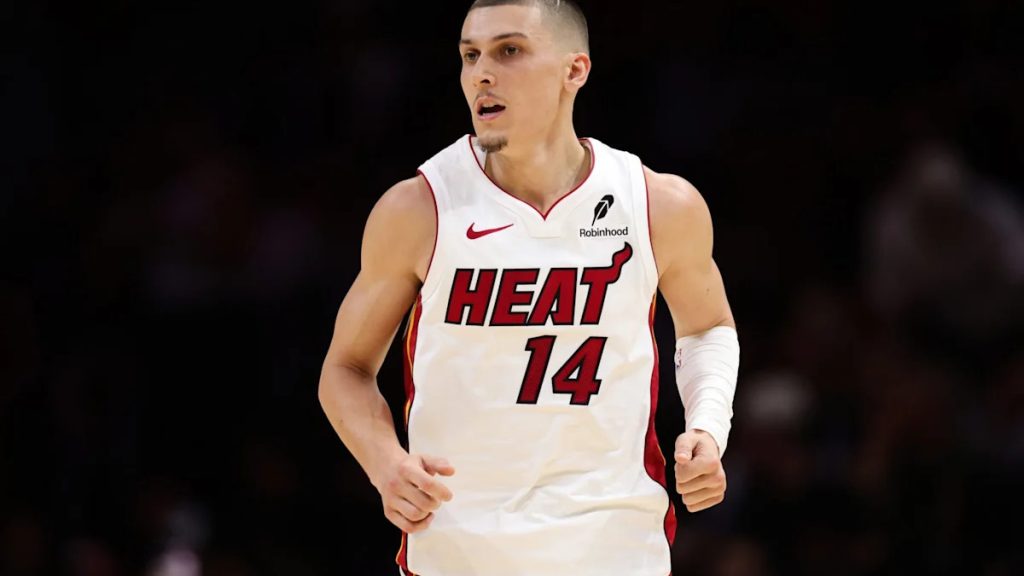
The high-profile Tyler Herro text dispute erupted into public scrutiny after legal filings revealed contentious claims regarding communication between the NBA star and his former partner. The controversy surfaced when Katya Elise Henry, the fitness entrepreneur and mother of Herro’s children, submitted court documents asking a presiding judge to intervene over alleged inappropriate text messages sent by the athlete. The revelation immediately sparked widespread discussion across sports and entertainment platforms, shedding light on the private tensions that frequently simmer behind the public personas of elite professional athletes.
Herro responded without hesitation, mounting a vigorous defense to repudiate the characterization of his messages. As public reporting by outlets including TMZ and Yahoo detailed, the Miami guard pushed back firmly against Henry’s assertions, denying that he had engaged in improper digital communication. The rapid escalation from private disagreements to formal judicial motions highlights how modern parental conflicts can quickly spill into the public arena, turning the Tyler Herro text dispute into an immediate subject of national entertainment and sports reporting.
Behind the Public Clash Between Tyler Herro and Katya Elise Henry
The relationship between Tyler Herro and Katya Elise Henry has long unfolded under the unforgiving microscope of modern social media. Having first connected in early 2020, the couple navigated the intense media attention that accompanied Herro’s rapid ascension into an elite NBA scoring talent. Over several years, the pair shared milestones publicly, including welcoming two children together. However, public relationship milestones were accompanied by recurring rumors of friction, periodic separations, and subsequent reconciliations that frequently captivated their collective followers across social networks.
The current legal confrontation marks a distinct and more serious shift from past social media speculation. According to reporting from ClutchPoints and TMZ, Henry chose to bring matters before a legal tribunal rather than confining the grievances to cryptic online commentary. By lodging a formal complaint centered on allegedly inappropriate digital communications, Henry elevated what had been an intermittent relationship dialogue into an active family court proceeding. The transition from private discourse to public court records creates an entirely new set of reputational and procedural challenges for both parties.
For Herro, an athlete competing at the highest level of professional basketball, off-court legal entanglements introduce complex personal distractions. When family dynamics enter a courtroom setting, casual texts and heated exchanges undergo forensic scrutiny by legal counsel and judicial officials. What one party interprets as inappropriate or crossing boundaries may be characterized by the defense as standard co-parenting friction or taken entirely out of context.
The Judicial Request and Custody Court Filings
The substantive heart of the matter lies within the family division where custody protocols are established and maintained. As detailed in investigative reporting by Complex, Henry petitioned the court specifically to request judicial oversight regarding Herro’s communications. In family law jurisprudence, asking a judge to step in regarding communication typically signals an impasse in standard dispute resolution protocols. Such filings are commonly employed when one co-parent alleges that established communication norms have broken down or crossed permissible legal thresholds.
Legal filings of this nature often request tailored remedies, including the mandate to conduct all future communication through specialized court-approved co-parenting applications. Applications designed for high-conflict parental management preserve digital records, log delivery timestamps, and ensure that every interaction remains accessible to attorneys and the bench. While the specific remedies requested in Henry’s submission reflect her perspective on the communication climate, the core evidentiary question in the Tyler Herro text dispute centers on documented interactions rather than subjective characterizations.

Judicial officers handling domestic disputes prioritize the emotional and physical stability of the children above personal grievances between parents. When faced with claims of inappropriate messaging, family court judges typically examine the context, frequency, and content of the texts in question. Isolated instances of frustration or sharp disagreement between former romantic partners do not automatically warrant court sanctions. Conversely, sustained patterns of improper messaging or content that undermines parental cooperation can lead to formal judicial admonishments, protective communication orders, or restructured custody arrangements.
Three Critical Friction Points Driving the Legal Confrontation
To grasp why this domestic dispute has commanded such extensive media coverage, it is necessary to examine the three distinct operational layers underpinning the legal standoff between Herro and Henry.
Allegations of Inappropriate Communication
The primary catalyst for the current public conflict stems directly from Henry’s claims that Herro directed inappropriate text messages toward her. By formally asking a judge to step in, as reported across sports and legal outlets, Henry established a public record asserting that Herro crossed boundaries of acceptable parental communication. While the explicit verbatim transcripts have remained largely insulated within court dockets, the filing itself serves as an assertive procedural gambit designed to compel judicial intervention and establish tighter communication parameters moving forward.
The Formal Rebuttal and Complete Denial
Herro did not remain passive in the face of these claims. Rather than allowing the allegations to stand unchallenged in the court of public opinion or in the legal record, the NBA star slammed the assertions and mounted an assertive denial. Reporting from Yahoo and TMZ confirmed that Herro clapped back at the accusations, categorically refuting that he sent improper texts to Henry. Herro’s decisive counter-position suggests that his legal representation is prepared to present contextual evidence to demonstrate that his conduct remained within reasonable bounds, framing the allegations as baseless or exaggerated, and escalating the Tyler Herro text dispute into a contentious courtroom battle.
Custody Proceedings Under Judicial Scrutiny
Beyond the immediate exchange of allegations and denials lies the overarching matter of long-term co-parenting governance. The communication grievances were raised within the framework of ongoing custody proceedings. Custody determinations evaluate a broad spectrum of parental conduct, including each parent’s willingness to foster a cooperative relationship with the other. A dispute over text messages often serves as a proxy for deeper disagreements regarding visitation schedules, decision-making authority, and parental autonomy, ensuring that the judicial outcome will dictate how the former couple interacts for years to come.
The Intersecting Pressures of Professional Sports and Private Legal Battles
High-profile professional athletes operate under rigorous physical and mental demands, making off-court litigation a formidable obstacle to sustained competitive performance. Maintaining tactical discipline while navigating family court hearings requires immense compartmentalization. Just as elite competitors must block out external noise when Tommy Paul Dominates 4 Crucial Battles Across the ATP Tour and Beyond, team sport athletes face intense focus testing when family court disputes enter the public domain.
The immediate fallout from the Tyler Herro text dispute illustrates how off-court friction can overlap with high-stakes athletic schedules. In the modern NBA landscape, franchises invest hundreds of millions of dollars in their core rotation players, viewing private stability as an essential component of professional reliability. While personal family matters rarely trigger league disciplinary action unless criminal conduct is alleged, the glare of entertainment reporting can generate unnecessary organizational noise that coaches and teammates must navigate alongside the athlete.
Furthermore, digital interactions between celebrities possess an enduring life on social media platforms. Fans and online observers frequently dissect court motions, taking sides based on fragmented reporting. This public theater often complicates private resolution, as both parties feel compelled to issue public denials or clarifications to protect their commercial partnerships, professional branding, and public image.
What Lies Ahead for Both Parties in Family Court
As the legal process unfolds, the dispute will transition from public statements back into the structured environment of judicial review. Family courts follow methodical evidentiary pathways, requiring parties to authenticate messages, demonstrate the operational context of disputed exchanges, and prove tangible harm or boundary violations. In most jurisdictions, courts encourage or mandate mediation before adjudicating communication disputes, seeking to establish binding co-parenting agreements that avoid lengthy evidentiary hearings.
If the parties cannot achieve a mutual consensus through structured dialogue, the presiding judge possesses broad statutory discretion to issue enforceable communication protocols. Such determinations routinely involve directing all non-emergency parental correspondence through designated platforms, establishing explicit boundaries regarding discussion topics, and evaluating the Tyler Herro text dispute through documented digital records rather than social media exchanges.
For Herro and Henry, the coming weeks will likely involve behind-the-scenes legal negotiations aimed at stabilizing their co-parenting framework away from the headlines. While Herro’s forceful public and legal denials demonstrate an unwillingness to accept unverified accusations, the broader resolution of the Tyler Herro text dispute will reflect the intricate legal mechanics governing modern athlete co-parenting agreements.