Michelle Tafoya Faces 4 Crucial Shifts in a Tight Minnesota Senate Clash
Donald Trump’s high-profile rally endorsement of Michelle Tafoya has upended Minnesota’s quiet Senate race against Peggy Flanagan. Here is an inside look at the numbers, the history, and the state’s shifting battleground.
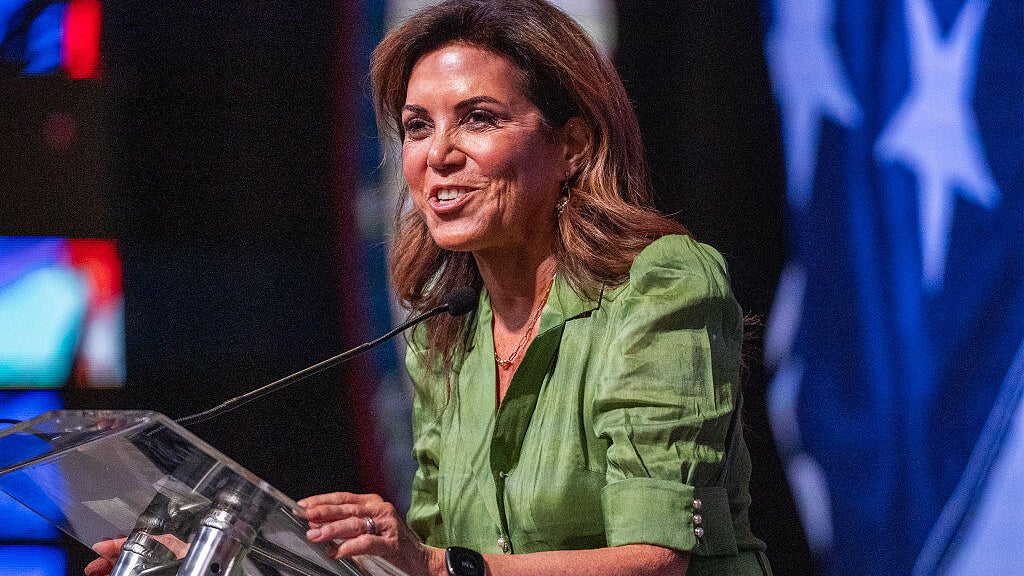
Former sideline reporter Michelle Tafoya has stepped into the center of national political discourse following an unexpected high-profile endorsement in the Upper Midwest. At a packed campaign rally in Youngstown, Ohio, Donald Trump officially endorsed the Republican contender in Minnesota’s high-stakes U.S. Senate race, delivering an endorsement that sent immediate ripples across state and national party lines. The move, corroborated by reporting from CBS News and KTTC, represents a dramatic turning point for a contest that had spent weeks operating beneath the national media radar.
The political alliance carries undeniable tension. As CBS News highlighted following the Ohio announcement, the candidate had previously urged Trump not to seek the presidency again, making this public backing a stark demonstration of party realignment and tactical calculation. In the fast-moving landscape of Minnesota politics, the formal endorsement of Michelle Tafoya by former President Donald Trump marked a pivotal turn toward consolidating conservative enthusiasm ahead of an increasingly competitive general election showdown against Democratic nominee Peggy Flanagan.
The Youngstown Announcement and a Complicated Political Past
The scene in Youngstown, Ohio, served as an unusual launchpad for Minnesota state politics. While speaking before thousands of supporters, Trump extended his public blessing to the Republican ticket in Minnesota, choosing to elevate a candidate whose prior television career had made her a household name long before she entered electoral politics. Local station KTTC confirmed the endorsement, underscoring that the announcement signaled a renewed national focus on the battleground state.
What makes this political development captivating to historians and campaign strategists alike is the prior public record, where Michelle Tafoya previously offered unsparing commentary about the former president during her evolution into political commentary. Tafoya had openly expressed skepticism regarding another presidential run by Trump, suggesting at the time that the Republican party needed fresh voices and forward-looking momentum. Overcoming past public friction in exchange for a unified general election push illustrates how modern campaign imperatives often supersede personal grievances when control of the U.S. Senate hangs in the balance.
Trump’s willingness to bestow his endorsement despite that public record demonstrates a clear strategic goal: flipping a Minnesota seat that Republicans have struggled to capture for decades. By throwing his weight behind a recognizable media figure with crossover appeal among suburban moderates, Trump’s team is gambling that name recognition combined with conservative base turnout will create an upset victory in a traditionally Democratic-leaning state.
Behind the Muted Campaign Trail in Minnesota
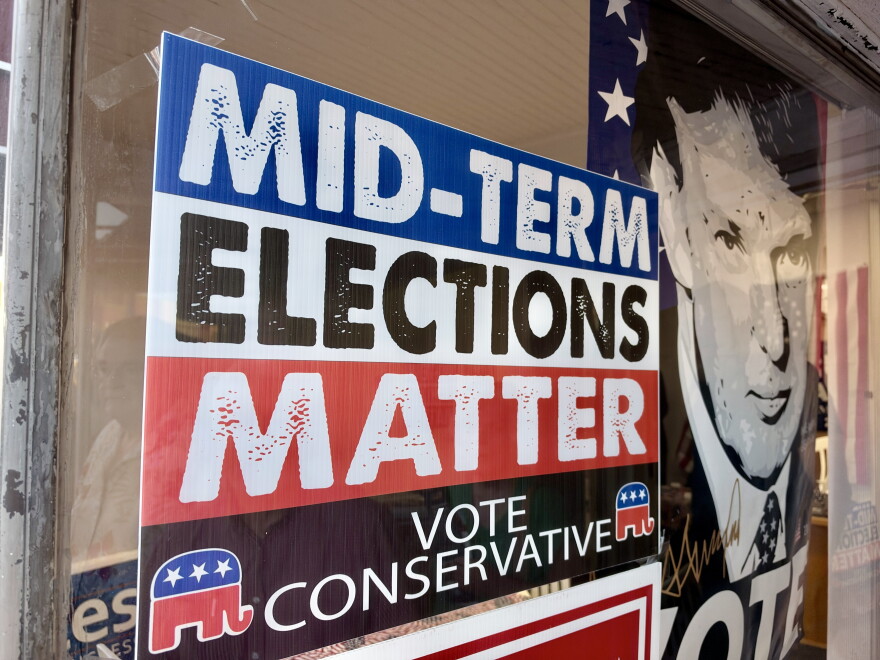
Prior to this week’s sudden surge in national headlines, Minnesota voters were witnessing an anomalous phenomenon. An investigative review published by MPR News revealed that the general election race had been unusually quiet throughout late summer and early autumn. Campaign trackers noted remarkably few public rallies, scarce candidate appearances, and only a smattering of broadcast television advertisements running across major Twin Cities and regional media markets.
Both primary campaigns had spent considerable energy navigating their respective nominating conventions and August primary ballots. NBC News live tracking of the Minnesota primary results demonstrated how the field consolidated, with Peggy Flanagan sweeping through the Democratic column alongside prominent primary figures like Craig, while the Republican side rallied decisively around their celebrity newcomer. Yet once the primary dust settled, both headquarters appeared to pull back from aggressive retail campaigning, prompting widespread speculation among political observers about ground game readiness.
Much like how understanding Maillard reaction mechanics and 4 proven rules that create unforgettable savory flavor requires tracking the interplay of underlying heat and timing rather than surface sizzle, political analysts know that a low-volume campaign often conceals sudden, volatile transformations beneath the surface. Behind closed doors, campaign war chests were quietly building, voter contact programs were being fine-tuned, and internal polling operations were testing messages before launching an expensive closing push. In the weeks following that prolonged lull, as MPR News observed, Michelle Tafoya and her Democratic opponent had kept an uncharacteristically low profile precisely because both sides were husbanding critical resources for an intense late-autumn sprint.
4 Crucial Factors Reshaping the 2026 Senate Battle
As the campaign enters its decisive closing stretch, the race has shifted from a dormant regional contest into a premier national referendum. Four distinct dynamics are currently driving the state’s electoral trajectory.
The Paradox of Donald Trump Backing an Outspoken Former Critic
The dynamics of high-stakes party politics frequently require pragmatic compromises. Trump’s decision to endorse a former critic highlights a calculated risk aimed at winning the general electorate. For the Republican nominee, securing Trump’s backing solidifies support among the conservative grassroots who demand complete party loyalty, effectively silencing potential third-party or write-in threats from the hard right. However, carrying the Trump banner in Minnesota—a state that has consistently rejected his presidential bids—creates a delicate balancing act when appealing to swing voters in critical suburban counties surrounding Hennepin and Ramsey.
A Dead Heat Inside the InsiderAdvantage Polling Data
Public opinion data indicates that Minnesota voters are far more evenly divided than previous statewide margins might have suggested. An InsiderAdvantage survey published by The Hill revealed a statistical dead heat in the contest, showing Michelle Tafoya garnering 45 percent against Flanagan’s 46 percent among likely voters. With Flanagan holding merely a single-point advantage—well within the survey’s margin of sampling error—the findings rattled Democratic strategists who had anticipated a more comfortable cushion in late autumn.
The polling underscores that independent voters and undecided moderates remain entirely up for grabs. An electorate split by a single percentage point means that even minor shifts in voter enthusiasm, third-party splintering, or localized regional turnout can determine the final outcome. The razor-thin polling numbers have rapidly elevated Minnesota from a tier-two target to an urgent defensive front for national party committees.
The Strategy Behind an Unusually Quiet General Election Cycle
The prolonged absence of continuous saturation advertising and barnstorming rallies, detailed by MPR News, reflects a modern data-driven campaign model. Rather than burning capital on expensive, low-yield summer television buys, modern campaign directors are investing heavily in targeted digital micro-targeting and hyper-localized door-knocking operations. By preserving broadcast advertising budgets until early voting begins in earnest, both camps are waiting for optimal timing to deploy their most potent opposition messaging.
This deliberate restraint also shielded the candidates from premature exposure to sustained negative ad cycles. In a race where one candidate is an established statewide executive and the other is a former sports journalist, keeping the temperature temporarily low allowed both camps to conduct message testing without triggering immediate counter-narratives across regional networks.
The Contrast Between Sideline Celebrity and Grassroots Clout
The personal backgrounds of the two leading contenders present Minnesota voters with starkly contrasting resumes. Peggy Flanagan brings institutional governing credentials as the state’s sitting lieutenant governor, drawing on deep relationships with progressive labor unions, Indigenous communities, and veteran party organizers. Her campaign infrastructure relies heavily on institutional party discipline and long-established precinct organizing.
Conversely, the transition of Michelle Tafoya from sports media icon to political candidate provides an alternative path to electoral relevance. Decades of reporting from NFL sidelines gave her an authentic, familiar public presence that bypassed traditional partisan pipelines. For disaffected voters exhausted by career politicians, an outsider who established national prominence through sports storytelling offers an engaging counterweight to standard party platforms.
What Lies Ahead on the Road to November
With the Youngstown endorsement now reshaping campaign narratives and polling reflecting an effective tie, Minnesota’s Senate battle is poised for an explosive finale. Political spending from external political action committees is anticipated to surge, ending the period of quiet reserve documented by state journalists throughout September. The race now commands prime positioning on the national electoral map.
Ultimately, the general election will test whether a high-profile media background can overcome the durable organizational machinery of Minnesota’s Democratic-Farmer-Labor coalition. As early voting windows open and rallies ramp up across the state, the ultimate test for Michelle Tafoya will hinge on converting general voter curiosity and a coveted national endorsement into an historic statewide victory.