Azerbaijan School Hijab Ban Triggers 4 Major Crises Across Baku and Ankara
A newly enforced school uniform decree in Azerbaijan has sparked rare street protests after girls wearing hijabs were barred from classes. The move has triggered an unprecedented diplomatic feud with longtime ally Turkey.
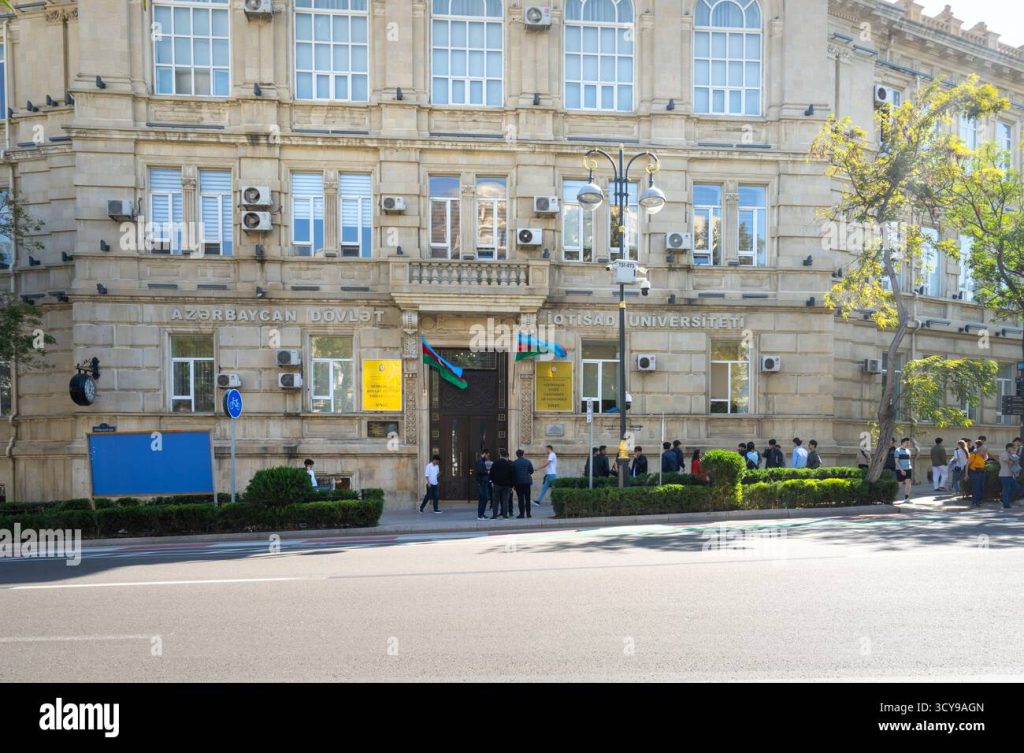
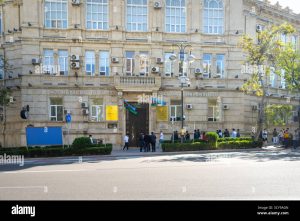
The enforcement of the Azerbaijan school hijab ban has ignited rare public protests across the nation as classrooms turn away pupils and teachers. Over the past several days, government directives mandating standardized student attire have materialized at school gates as strict physical barriers, preventing observant Muslim girls from entering educational facilities. Demonstrations outside academic buildings have rapidly escalated into a heated national dialogue over state secularism, human rights, and the boundaries of administrative authority in the South Caucasus.
The policy has reverberated far beyond domestic classroom gates, igniting an explosive diplomatic row between Baku and Ankara. For three and a half decades, Azerbaijan and Turkey have maintained a fiercely protective bilateral partnership, operating under the celebrated ethos of a single nation divided into two sovereign states. That historically bulletproof alliance is now confronting unprecedented turbulence as Turkish officials and public commentators express open dismay over Baku’s sudden administrative crackdown on Islamic headscarves.
The Classroom Clashes Sparking Public Outcry in Baku
The immediate flashpoint of the Azerbaijan school hijab ban arrived during morning roll calls across multiple regional municipalities and state schools in Baku. As reported by BBC News, security personnel and school administrators began barring entry to young female students who arrived wearing headscarves, informing their families that religious head coverings violated newly formalized dress guidelines. Parents accompanying their children stood in disbelief at perimeter gates as school officials refused to compromise, turning pupils away and ordering them to return home unless they removed their coverings.
The administrative barriers were not confined to the student body. Reporting by Al Jazeera revealed that educational staff members have encountered identical ultimatums, with observant teachers prevented from accessing staff rooms and instructional halls. Videos circulating across independent regional channels show distraught mothers and community elders gathering directly outside school perimeters, demanding immediate meetings with school principals and regional education directors. Radio Free Europe/Radio Liberty documented tense verbal confrontations on school grounds where parents asserted their children were being stripped of their fundamental right to public education.
Such public demonstrations remain remarkably uncommon in Azerbaijan, where public assembly is closely regulated by state authorities. The willingness of conservative families and civic sympathizers to stage visible, vocal street gatherings illustrates the deep emotional and cultural resonance of the policy. Demonstrators have maintained physical vigils outside affected campuses, insisting that their daughters will not abandon their religious convictions simply to satisfy bureaucratic mandates.
Behind the State Uniform Decree and Secular Defense
Official state organs moved rapidly to explain the parameters of the decree, defending the Azerbaijan school hijab ban through the lens of standardized educational attire. According to GlobalPost, Azerbaijani government representatives issued detailed statements maintaining that public schools operate under strictly secular mandates designed to cultivate absolute equality among students. Officials argued that the uniform codes represent a neutral standard intended to erase socio-economic and sectarian distinctions among children, rather than a targeted assault on religious observance.
Under the statutory defense mounted by educational authorities, state-funded primary and secondary institutions are legally classified as secular spaces. Regulators contend that individual outward religious symbols undermine the universal character of the mandatory uniform. Authorities maintain that uniform compliance is legally compulsory for every child enrolled in the state system, framing the refusal to remove headscarves as an administrative violation initiated by parents rather than institutional exclusion conducted by schools.
Legal scholars and rights advocates offer a sharply contrasting interpretation, classifying the uniform enforcement as an effective de facto ban on the hijab. Critics point out that while the formal text of the dress code emphasizes uniform consistency, its practical execution operates as an ideological checkpoint at school entrances. By refusing to accommodate small, non-disruptive religious head coverings within the framework of the standard uniform, the government has created an insurmountable impasse for observant families.
4 Major Fallout Dynamics Unfolding Across the Region
Analyzing the escalating fallout reveals how the Azerbaijan school hijab ban cuts across local society, international diplomacy, and basic human rights. The collision between administrative secularism and religious expression has generated four critical systemic shocks.
Rare Public Protests and Domestic Civil Pushback
Public assemblies challenging state administrative policy in Azerbaijan are historically infrequent, making the current wave of protests an extraordinary civic event. Across multiple educational districts, parents have coalesced into grassroots protest groups, gathering on sidewalks and in front of educational directorates to voice their grievances. The protests have disrupted morning school routines and drawn substantial attention across independent digital networks. By openly confronting educational administrators, these families have shattered the conventional quietude surrounding state administrative rollouts, demonstrating that religious modesty remains a fiercely defended boundary line for significant segments of the Azerbaijani populace.
An Unprecedented Diplomatic Spar with Longtime Ally Turkey
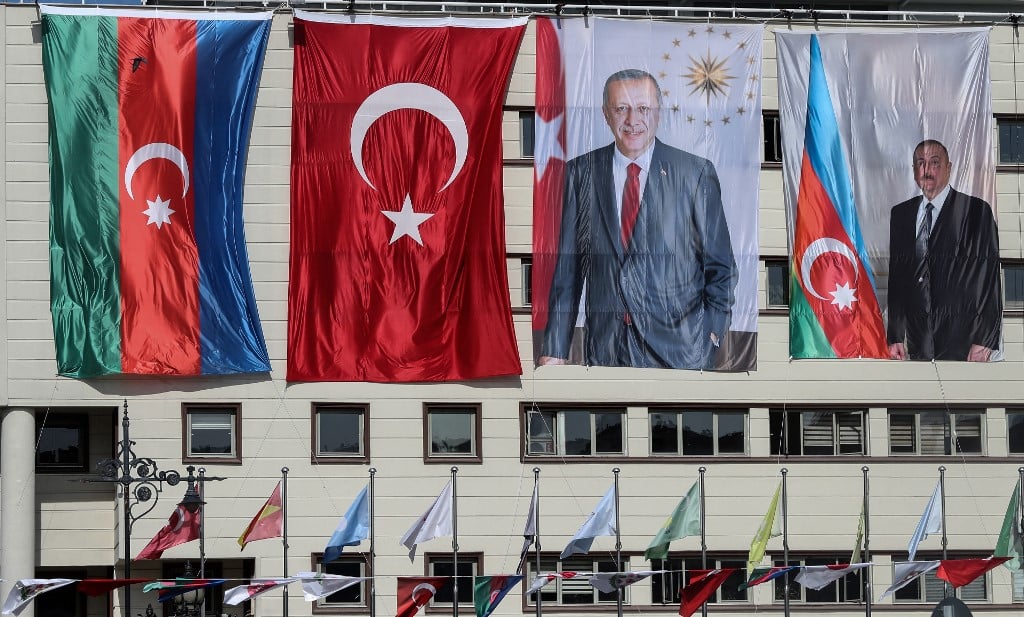
The most startling external consequence has been the sudden diplomatic friction surrounding the Azerbaijan school hijab ban between Baku and Ankara. As highlighted by Eurasianet, Azerbaijan and Turkey have stood as inseparable geopolitical allies for 35 years, coordinating closely on military campaigns, pipeline infrastructure, and regional diplomacy. However, Turkey’s governing political establishment has spent decades rolling back secular headscarf restrictions within its own borders, viewing the right to wear the hijab as a fundamental civil freedom. The sudden ban in Azerbaijan has provoked severe pushback from Turkish media figures, religious institutions, and political commentators, sparking unprecedented bilateral tension between two capitals that rarely air public disagreements.
Intensifying Legal Battles Over Constitutionality and Religious Freedom
The operational enforcement of the dress code has precipitated a sharp constitutional clash between state secularism and fundamental civil liberties. Radio Free Europe/Radio Liberty reported that human rights attorneys and affected families are preparing legal challenges based on Azerbaijan’s constitutional guarantees of religious freedom and compulsory education. Litigants argue that administrative dress codes occupy an inferior legal standing compared to constitutional mandates that protect a citizen’s freedom of conscience. By effectively denying children access to state classrooms over personal apparel, the government risks establishing an unconstitutional prerequisite for public education.
Classroom Exclusion and the Threat to Female Education Access
The human cost of the dispute is felt most acutely by young female students who find themselves locked out of classrooms during critical developmental years. Educational observers warn that rigid enforcement risks triggering an alarming spike in female absenteeism and early dropouts among conservative households. Families faced with an unyielding choice between religious obligations and state-mandated secular dress may opt for informal or home-based schooling, disproportionately curtailing educational and economic opportunities for young women. Rights groups emphasize that transforming school gates into ideological checkpoints directly undermines national educational attainment goals.
Broader Geopolitical Ramifications for the South Caucasus
The domestic friction surrounding the Azerbaijan school hijab ban also carries critical implications for the broader South Caucasus geopolitical landscape. Azerbaijan has long calibrated a complex balancing act, preserving an aggressively secular domestic legal framework inherited from the Soviet era while simultaneously cultivating partnerships with Islamic states and projecting cultural pride across the Turkic world. Baku’s decisive enforcement of secular uniform codes serves as an unmistakable signal that the state will tolerate zero creeping religious influence inside public institutions.
Yet that internal posture comes at a considerable diplomatic price. While commercial entertainment organizations carefully calibrate audience expectations to prevent friction—as demonstrated when the Savannah Bananas Reveal 4 Major Moves Fueling Their Unstoppable 2027 Tour Momentum through transparent operational pivots—state bureaucracies often face severe backlash when imposing sudden mandates on sensitive cultural terrain. Turkey’s sharp, vocal irritation demonstrates that cultural policies implemented in Baku are no longer purely domestic matters; they instantly resonate within the domestic politics of its closest international protector.
Furthermore, regional rivals and political analysts are scrutinizing the dispute for signs of institutional vulnerability. The public protests demonstrate that despite robust centralized governance, social issues tied to religious identity retain the capacity to mobilize citizens into public defiance. If the diplomatic rift with Ankara deepens, it could introduce friction into broader bilateral strategic projects, testing the durability of an alliance that forms the geopolitical backbone of the South Caucasus corridor.
The Long-Term Outlook for Secular Policy and Civil Rights
As international human rights bodies and regional allies evaluate the policy, the ultimate endurance of the Azerbaijan school hijab ban will signal whether Baku intends to harden its secular boundaries or engineer pragmatic administrative concessions. The Ministry of Science and Education has so far displayed minimal inclination to reverse its directives, maintaining that uniforms preserve order, parity, and state-sanctioned equality across all learning environments. School administrators remain instructed to enforce uniform guidelines rigorously, even as classroom absenteeism mounts in conservative suburbs.
The path forward poses severe risks for social cohesion. Should the government maintain absolute prohibition without dialogue, localized protests could consolidate into broader civil resistance networks, drawing in religious organizations and civil liberties advocates. Alternatively, if authorities allow regional school directors discretionary latitude to accommodate headscarves within standardized color palettes, the immediate crisis could subside. What remains certain is that the conflict at Azerbaijan’s classroom doors has permanently altered the domestic conversation, testing the precise limits of state secular authority against the unyielding conviction of its citizens.