Editorial fact checking mechanics and 4 proven rules that prevent catastrophic newsroom blunders
Behind every unshakeable investigative report lies an invisible, adversarial auditing system. Discover the operational mechanics and discipline top newsrooms use to catch falsehoods before publication.

Rigorous editorial fact checking mechanics separate respected investigative reporting from reckless rumors that destroy institutional credibility overnight. In an era dominated by rapid-fire distribution algorithms, the pressure to publish first and verify later has ruined careers, triggered multimillion-dollar defamation lawsuits, and eroded public faith across the broader media ecosystem. Sustainable journalism does not rely on good intentions or the natural charm of a gifted writer. It survives solely on cold, systematic friction inserted directly between a reporter’s notebook and the printing press.
Many casual readers conflate fact checking with copy editing, yet the two disciplines fulfill entirely different mandates. A copy editor evaluates syntax, cadence, narrative rhythm, and conformity to house style guides such as the Associated Press or Chicago manuals. An editorial fact checker functions as an internal forensic auditor. Checkers operate under the constructive assumption that every assertion, timestamp, proper noun, and mathematical calculation in an article is potentially false until proven otherwise by verifiable documentation.
The invisible barrier between verification and reputation collapse
The historical architecture of professional newsrooms evolved this friction intentionally. At venerable publications such as The New Yorker, Der Spiegel, and major metropolitan dailies, checking departments were deliberately organized as independent bodies outside the reporter’s immediate editorial chain of command. If an investigative reporter spent eight months embedded with confidential sources, a checker did not treat that reporter as an unquestioned authority. Instead, the checker treated the draft manuscript as an unproven thesis requiring line-by-line evidentiary support.
This adversarial posture prevents the cognitive biases that inevitably trap even the most experienced journalists. When writers spend weeks chasing an explosive narrative arc, confirmation bias naturally creeps into their synthesis. They emphasize the single document supporting their dramatic angle while minimizing contradictory disclosures buried in public archives. Dedicated checking desks remove that emotional investment. Their sole professional loyalty is to demonstrable accuracy, serving as a firewall between a writer’s enthusiasm and the public record.
When this firewall fails, the damage is rarely cosmetic. A single fabricated quote or erroneous financial figure can trigger libel litigation, force humiliating front-page retractions, and permanently taint every legitimate story previously published by that news organization. The real purpose of checking is not merely catching typographical slips, but systematically stress-testing every claim against the highest standards of legal and historical scrutiny.
The structural anatomy of primary source verification
To understand how high-caliber journalism survives scrutiny, one must inspect the internal editorial fact checking mechanics that guide dedicated research desks. The process begins with the checker receiving an annotated manuscript alongside the reporter’s raw research bundle. This bundle contains interview recordings, full interview transcripts, public court records, corporate registry extracts, scientific papers, and FOIA disclosures. Every factual assertion in the copy is marked with a specific footnote linking directly to an underlying piece of evidence.
Checkers adhere to a strict hierarchy of evidence that places primary records at the summit and secondary media reports near the bottom. A pervasive failure mode in modern digital publishing is the citation cascade, where outlet A repeats a claim made by outlet B, who based their reporting on an unverified post from outlet C. Within disciplined newsrooms, referencing another news outlet’s reporting as proof of an empirical fact is strictly forbidden. The checker must bypass all secondary aggregation and inspect the foundational artifact itself.
Even when dealing with lighthearted enterprise features or popular culture movements, such as the strategic spectacle unpacked in the Savannah Bananas Reveal 4 Major Moves Fueling Their Unstoppable 2027 Tour Momentum, professional newsrooms refuse to settle for second-hand press releases. Checkers cross-reference municipal stadium leases, ticket distribution audits, and corporate registration documents to verify business metrics rather than accepting promotional hype at face value.
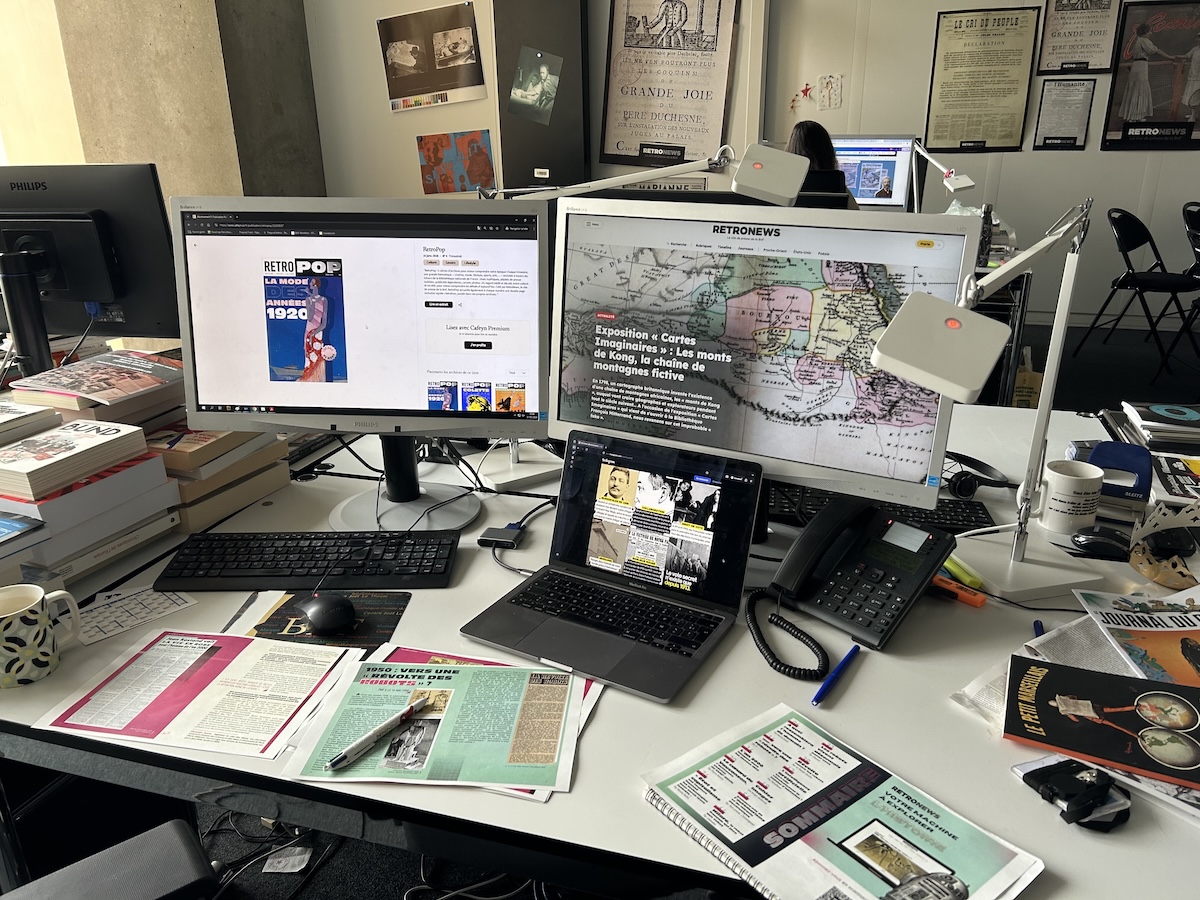
Four proven operational rules that safeguard news accuracy
When organizations codify their editorial fact checking mechanics into daily desk habits, errors drop precipitously. These four non-negotiable operational principles have preserved institutional integrity across decades of high-stakes reporting.
Rule one enforces independent cross checking of primary documentation
Human memory is notoriously malleable, self-serving, and prone to distortion. A witness may passionately swear an altercation occurred at midnight during torrential rain, only for weather radar records and municipal street camera logs to demonstrate the night was cloudless. Independent document verification dictates that whenever an empirical claim can be anchored to official records, those records take precedence over human recollection.
Checkers pull property deeds directly from county recorder offices, verify corporate affiliations via state secretarial databases, and inspect federal court filings through official repositories like PACER. If a corporate executive claims their company grew revenue by two hundred percent, checkers demand audited balance sheets and regulatory filings rather than corporate slide decks. Corroborative independence means establishing that your two sources do not secretly rely on the exact same originating memo.
Rule two mandates strict confirmation of source identity and access
Evaluating an interview subject requires more than assessing their immediate credibility or polished vocabulary. Checkers conduct source pedigree audits to evaluate whether an interviewee actually had direct, unmediated access to the events they describe. Did the source witness the boardroom dispute in person, or did they hear about it secondhand during a watercooler conversation three days later?
For confidential or background sources, checking desks conduct direct outreach to verify credentials. The checker independently contacts the source, confirms their title, validates their employment dates, and reviews employment documentation while rigorously guarding their identity from public disclosure. This ensures reporters cannot invent fictional composite characters or exaggerate the seniority of junior staff members to artificially elevate the authority of an anonymous leak.
Rule three isolates facts from speculative narrative framing
Writers frequently blend objective facts with loaded interpretive modifiers. A sentence stating that an official stormed out of a legislative hearing injects an emotional interpretation into a physical movement. Modern editorial fact checking mechanics demand that researchers strip away rhetorical flourishes to expose the raw empirical skeleton. Did the official slam doors and shout, or did they merely gather their papers and step into the corridor?
By separating concrete actions from subjective impressions, checkers protect the publication from creeping editorial bias. Every adjective describing emotional state, intent, or motivation must be explicitly accounted for through source attribution or direct sensory observation. If the source did not explicitly state they felt furious, the reporter cannot safely characterize their quiet demeanor as simmering rage.
Rule four requires adversarial reading of draft manuscripts
The final layer of defense involves the adversarial read, an exercise where the checker deliberately assumes the role of a hostile opposing litigant. Checkers comb through the manuscript looking for unsupported extrapolations, gaps in chronology, and alternative explanations that the reporter dismissed too casually. If an investigative article alleges systemic fraud, the checker examines the counterarguments that a defense attorney would raise in court.
During this stage, checkers contact the subjects of critical reporting to present the specific, detailed allegations being made against them. This is not a superficial courtesy call. The outreach details the precise facts, figures, and timelines the outlet plans to publish, giving the subject an opportunity to provide documentary rebuttals or point out factual misunderstandings before the story enters production.
Navigating modern disinformation traps and synthetic media
The mechanics of verification have been forced to evolve rapidly in response to sophisticated digital manipulation. Generative imagery, voice cloning, scrubbed metadata, and coordinated astroturfing campaigns mean that seeing is no longer believing. A digital photograph submitted as evidence can no longer be trusted simply because it appears unretouched to the naked eye.
As synthetic audio and doctored video flood public discourse, modernized editorial fact checking mechanics must incorporate digital forensics alongside human interviews. Checkers now utilize reverse-image search engines across multiple indexing databases, extract EXIF camera data to confirm sensor types and capture timestamps, and deploy satellite imaging tools to corroborate shadow angles and foliage patterns against reported dates.
When visual or auditory artifacts cannot be forensically authenticated to their original recording hardware, they are withheld from publication. The foundational guidelines outlined in the Society of Professional Journalists Code of Ethics require practitioners to take extraordinary care to test the accuracy of information from all sources and exercise caution to avoid inadvertent error. In an era where bad actors actively seed newsrooms with fabricated digital leaks to discredit their reporting, skepticism toward unsolicited files is an indispensable survival skill.
Cultivating an enduring culture of newsroom accountability
Ultimately, institutional editorial fact checking mechanics are not merely bureaucratic roadblocks designed to frustrate ambitious writers. They constitute the moral foundation of credible storytelling. A publication that refuses to invest in verification inevitably transforms into an echo chamber for calculated public relations campaigns and weaponized rumors.
True verification culture also requires structural transparency when honest errors do occur. No system composed of fallible human beings can attain absolute perfection. When a mistake slips past the checking desk, an ethical news organization corrects the public record prominently, detailing what was wrong, what the accurate information is, and how the error occurred, rather than silently scrubbing paragraphs under cover of darkness.
Public trust is not an entitlement granted by virtue of holding a press card. It is an asset accumulated slowly over decades through millions of individual verified sentences, and it can be destroyed in a few reckless minutes. By upholding these disciplined editorial fact checking mechanics, media institutions protect their readers, defend themselves against existential legal threats, and secure public faith in the vital craft of investigative reporting.