Margin call liquidation mechanics and 4 costly traps that wreck leveraged traders
Leverage accelerates portfolio growth right until market turbulence triggers an automated liquidation cycle. Unpack the mechanical gears behind collateral haircuts, maintenance thresholds, and cascading forced sales.

Demystifying margin call liquidation mechanics reveals how sudden asset repricing transforms borrowed money into an uncontrollable cascade of forced selling across modern financial markets. When an investor buys securities using borrowed funds, they enter a binding contract governed by cold mathematical ratios rather than patient market optimism. The process feels benign while asset prices ascend, yet the underlying plumbing operates on ruthless systemic self-defense. The moment market pricing breaches collateral boundaries, the broker or clearinghouse ceases to act as a partner and becomes an executioner tasked with preserving counterparty capital.
Understanding this architecture separates enduring market participants from those who vanish during inevitable liquidity contractions. To comprehend margin call liquidation mechanics, an investor must look past the superficial concept of borrowing cash to purchase securities and instead examine the plumbing of collateral pledging, haircut calibrations, and continuous variation margin settlement. Leverage is an asymmetric tool that compresses time, turning what would otherwise be a survivable cyclical correction into an instant, irreversible wipeout of invested capital.
The brutal architecture of modern debt leverage
Every margin position rests upon a delicate tripartite foundation comprised of cash equity, borrowed principal, and pledged collateral. When an account opens a leveraged position, the broker extends a line of credit secured by the assets within that account. To guard against counterparty default, regulatory bodies and prime brokerages enforce strict initial margin requirements, dictating the minimum percentage of equity an investor must deposit to establish market exposure.
Once a trade goes live, the dynamic nature of mark-to-market accounting takes control. Financial institutions do not assess risk at quarterly intervals; they recompute risk continuously throughout the trading day. Collateral posted against a loan is subject to a haircut, which represents a percentage discount subtracted from the market value of the asset to account for potential selling friction. Highly liquid sovereign debt might enjoy a minimal haircut of two percent, whereas volatile equities or high-yield credit instruments can face haircuts exceeding thirty percent. If the market value of pledged collateral declines, the haircut widens, instantly reducing the effective purchasing power and equity buffer of the borrower.
The critical fulcrum of this arrangement is the maintenance margin threshold. Set firmly below the initial margin requirement, the maintenance level represents the absolute baseline ratio of equity to total position value that the account must preserve. Crossing beneath this boundary invalidates the borrowing agreement, stripping the trader of autonomy and initiating a process designed solely to protect the lending institution from absorbing losses.
The mathematical threshold dividing solvency from forced sale
The transition from a floating paper loss to an operational emergency occurs through an exact algebraic formula. The margin ratio of an account is calculated by dividing total account equity—the current market value of assets minus the borrowed balance—by the total current market value of the positions held. When this quotient falls beneath the broker-mandated maintenance margin percentage, a deficiency exists. The broker calculates the precise dollar shortfall required to restore the account to compliance, producing the formal demand known throughout financial history as a margin call.
In standard textbook finance, a margin call offers a brief window for the borrower to wire fresh, unencumbered cash or deposit high-grade securities. In live execution environments, that luxury evaporates during extreme volatility. Prime brokerage agreements routinely contain contractual stipulations granting the custodian absolute discretion to liquidate holdings without prior notification. The calculation governing the liquidation price point illustrates this fragility. If an investor uses maximum leverage, a relatively small percentage decline in the underlying asset completely erases the equity cushion, triggering an automated liquidation sequence designed to close positions before the loan balance itself is impaired.
Understanding how this formula operates in live environments clarifies why margin call liquidation mechanics operate with such non-linear ferocity once a critical threshold is breached. As positions are unwound, the sales hit prevailing market bids. If the broker must sell into a declining market, the actual realized execution prices regularly fall below the theoretical liquidation calculation, exacerbating losses and consuming any remaining residual equity.

Four costly traps that accelerate catastrophic margin liquidations
Leveraged market participants often believe they can manage downturns by monitoring headline volatility indices or placing stop-loss orders. Structural market plumbing behaves far differently during systemic disruptions, generating localized microstructures where standard risk controls fail completely.
The sudden evaporation of order book depth
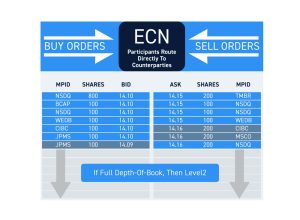
When asset values experience rapid downward momentum, market makers and liquidity providers systematically withdraw limit orders from exchange order books to protect themselves from adverse selection. What appeared on screen as deep market liquidity five minutes earlier collapses into a hollowed-out vacuum. When forced liquidations hit these depleted books, market orders cascade downward through vacant price levels, triggering catastrophic execution slippage. The margin engine does not wait for bids to replenish; it sweeps the existing bids down to whatever price level absorbs the mandated liquidation volume, locking in devastating drawdowns.
Collateral haircut spikes enforced by risk-averse clearinghouses
Traders frequently assume collateral parameters remain fixed throughout market cycles. Clearinghouses and prime brokers adjust their risk models dynamically in response to market wide volatility. During severe shocks, clearing corporations mandate overnight increases in initial margin requirements while hiking collateral haircuts on non-cash assets. A portfolio that was safely compliant at noon can find itself deeply deficient by the closing bell solely because the lender increased the maintenance threshold from twenty percent to thirty-five percent. This arbitrary regulatory recalibration forces immediate asset sales even if the underlying portfolio experienced negligible price movement.
Cross-asset contagion driving correlated liquidation spirals
When an investor receives a margin call on a distressed, illiquid position, they rarely have the luxury of selling that specific asset at an acceptable price. To raise immediate cash, risk officers liquidate their most liquid, high-performing positions instead. This dynamic demonstrates how structural margin call liquidation mechanics extend far beyond single assets to pollute entirely unrelated balance sheets. Excellent corporate bonds or resilient equities are aggressively sold off simply because they can be converted to cash within minutes to satisfy margin calls originating in alternative markets.
This exact collateral spiral routinely manifests in physical commodity derivatives. When extreme supply disruptions shake underlying energy contracts—a phenomenon observed whenever a Diesel Fuel Shock Sparks 4 Major Economic Clashes That Threaten Energy Markets—clearing brokers instantly elevate maintenance thresholds to insulate their own balance sheets from non-performance. Empirical evidence compiled in Bank for International Settlements research on margin calls and liquidity risk illustrates how non-bank financial institutions frequently face cash demands exceeding their immediate liquid reserves during stressed volatility regimes.
Algorithmic liquidation sweeps executing into liquidity vacuums
Modern clearing systems rely on automated liquidation engines engineered to de-risk accounts without human intervention. When maintenance ratios breach programmed parameters, these algorithms break distressed positions into aggressive child orders routed across all accessible trading venues. Because automated liquidation algorithms prioritize execution speed and risk mitigation over execution cost, they trigger localized feedback loops. The algorithmic dumping of assets depresses market prices further, tripping adjacent margin thresholds for other leveraged funds, producing a self-perpetuating mechanical cascade known as a liquidation waterfall.
How institutional risk desks insulate portfolios against systemic runs
Professional asset managers who deploy leverage over multidecade horizons build defensive architectures aimed specifically at neutralizing liquidation mechanics. Survival requires detaching an organization from the immediate fluctuations of prevailing market liquidity through structural portfolio insulation.
The foundational defense lies in maintaining substantial allocations of unencumbered liquidity. Unencumbered cash refers to money unpledged to any broker, swap counterparty, or financing facility. While holding idle cash generates an unappealing cash drag during bull markets, it provides the essential dry powder needed to meet sudden variation margin calls without touching underlying core holdings. Institutional treasury desks that study margin call liquidation mechanics do not merely focus on asset volatility; they obsess over counterparty liquidity terms and repo market access, ensuring their funding sources remain operational when prime brokers tighten terms across the financial sector.
Furthermore, sophisticated risk governance incorporates dynamic stress testing based on historical tail events rather than standard normal distribution assumptions. Risk managers model the combined impact of simultaneous price collapse, widening haircuts, and drying secondary market liquidity. By evaluating how an account would perform if margin requirements doubled while asset values dropped thirty percent, desks enforce strict debt ceilings well beneath regulatory limits. They ensure that their maintenance thresholds sit outside the reach of statistical market anomalies.
Strategic principles for preserving capital during severe drawdowns
The fatal mistake shared by overleveraged market participants is treating debt as a benign accelerator rather than a fundamental shift in ownership rights. The moment an entity accepts leverage, it relinquishes full autonomy over its exit timeline. The clearinghouse, broker, and repo dealer hold senior claims that can be exercised precisely when the borrower is least capable of negotiating favorable terms.
Preserving long-term solvency demands rigorous risk budgeting. Position sizing must account for the reality that market liquidity is transient, vanishing precisely when broad liquidation pressure peaks. Portfolios must never rely on theoretical asset sales to meet intraday margin demands; liquidity must exist before the crisis unfolds. Ultimately, mastering margin call liquidation mechanics requires accepting that leverage does not merely magnify percentage returns—it alters the timeline under which solvency is measured. When market volatility surges, those who respect margin call liquidation mechanics survive because they maintain the liquidity to endure the storm without surrender.