Film score leitmotif mechanics and 4 proven rules that craft unforgettable musical storytelling
A masterfully placed musical theme does far more than accompany a scene; it whispers secrets before characters speak. Explore the psychological craft of leitmotif composition and the mechanics that forge cinematic immortality.
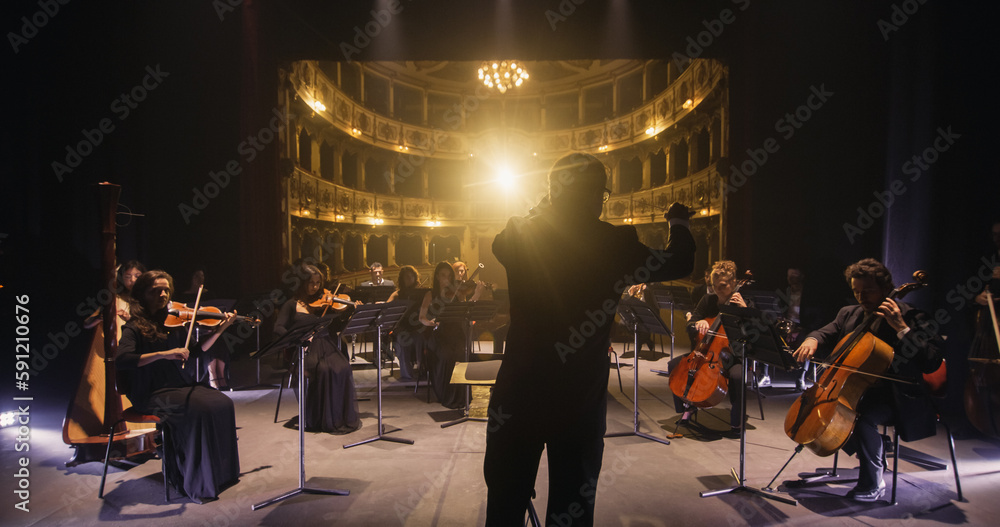
Mastering film score leitmotif mechanics allows composers to plant subconscious narrative anchors directly into an audience’s emotional memory long before dialogue ever clarifies the plot. When a character steps into a shadowy doorway, spoken words cannot instantly convey thirty years of hidden grief, betrayal, or rising madness. A single musical phrase, however, achieves this in less than two seconds. The technique is neither background noise nor opportunistic ear candy. It functions as an invisible co-author operating in pure vibration, bypassing cognitive skepticism to target the raw nervous system of the listener.
Too many emerging filmmakers treat film music as an afterthought, pasting generic orchestral swells over dramatic moments to force an unearned tear. That clumsy approach exposes narrative insecurity. Great dramatic scoring treats a recurring motif not as a static label pasted onto an actor’s forehead, but as a living biological entity. The melody must breathe, suffer trauma, mutate under narrative pressure, and disintegrate when the world shatters. When done right, the audience feels the story unfolding in their pulse long before their rational mind catches up with the camera.
The Subconscious Architecture of Musical Identity
Long before synchronized sound allowed actors to speak from silver screens, 19th-century operatic drama cracked the code of narrative music. Richard Wagner championed the concept of the leading motif, weaving intricate networks of short, malleable melodic fragments throughout multi-hour epics. When European composers fled mid-century political chaos and landed on Hollywood studio scoring stages, they transported this operatic vocabulary straight into cinema. Artists like Max Steiner and Erich Wolfgang Korngold understood that visual cuts create spatial dislocation. A steady, intelligent thematic current bridges those visual gaps, gluing disjointed camera angles into a unified narrative consciousness.
For serious screenwriters and directors, a rigorous study of film score leitmotif mechanics demonstrates that melody is never merely decorative wallpaper. Instead, a thematic motif acts as musical semiotics. Consider how an audience internalizes meaning through sonic association. If an innocent four-note woodwind line accompanies a child’s safe home in act one, that melody absorbs the narrative weight of home, innocence, and safety. When that exact melody returns in act three played by a lone, rasping contrabassoon over a dissonant chord, the audience instantly grasps that innocence has been permanently poisoned without needing an explanatory monologue.
The motif operates as a time machine within the edit. It can trigger nostalgia, foreshadow impending doom, or reveal that a smiling mentor is secretly the architect of the protagonist’s misery. Because music processes through human sensory pathways far faster than spoken dialogue, a theme can contradict an actor’s line to deliver dramatic irony. When the visual screen shows tranquility but the score whispers an antagonist’s harmonic progression, the audience recognizes danger instantly. That psychological friction is where cinematic tension truly lives.
The Perceptual Science Behind Recurring Melodic Cues
The human brain is fundamentally an organic prediction engine, constantly scanning sensory input to forecast what happens next. At an anatomical level, the neurological power of film score leitmotif mechanics lies in how human brains process pattern recognition and tonal anticipation. When sound waves hit the cochlea, auditory signals travel swiftly into the brainstem, thalamus, and auditory cortex, quickly sparking activity in the amygdala and hippocampus. This physiological pathway explains why music triggers vivid episodic memory and intense physical reactions far quicker than abstract logic ever could.
A melodic motif functions by establishing what cognitive psychologists describe as a tonal schema. The listener memorizes the contour of the intervals, the rhythmic spacing, and the tonal center. Once that sonic signature is filed into working memory, every subsequent repetition creates an emotional payoff. When the score resolves a previously suspended interval, the brain experiences a subtle surge of dopamine. Conversely, when a composer deliberately wrenches the motif away from its expected harmonic landing place, the brain perceives visceral distress.
According to comprehensive Berklee College of Music cinematic composition analysis, thematic resonance depends on striking an exact balance between familiarity and novelty. If a theme repeats identically twenty times throughout a two-hour film, sensory habituation takes over. The brain classifies the music as predictable background chatter and tunes it out. But if the core motivic seed remains recognizable while undergoing structural transformation, the nervous system stays locked in active engagement, chasing the emotional evolution of the sound across every cut.
Four Proven Rules That Transform Simple Themes Into Narrative Power
Synthesizing dynamic film score leitmotif mechanics requires an intimate balancing act between consistency and transformation. A motif cannot remain a brittle, unyielding museum artifact; it must flex and evolve alongside character arcs. By applying four distinct composition and arrangement principles, storytellers ensure their thematic cues deepen dramatic resonance rather than cluttering the sonic landscape.
Anchor Distinct Harmonic Intervals to Irreversible Character Shifts
A memorable motif rarely requires thirty elaborate bars of melody; it lives or dies by its first two or three intervals. The human ear remembers intervallic relationships far better than absolute pitches. Think of the ominous rising minor second that drives deep-sea dread, or the soaring upward perfect fifth that signals classic swashbuckling heroism. These intervals carry innate acoustic tension that commands immediate human response.
When developing a motif for a complex protagonist, anchor specific intervallic leaps to their underlying psychological wound. If their central theme opens with an upward major sixth—an interval bursting with unvarnished optimism—watch what happens when their worldview shatters midway through the story. By flattening that single note into a minor sixth, the entire character trajectory shifts from bright idealism to mournful weariness. The audience may not possess formal music theory training, but their instincts instantly register the internal fracture.
Alter Orchestral Timbre to Mirror Psychological Decay or Growth
A common rookie mistake is assuming that a theme must always belong to the same instrument. Melody represents the conceptual idea of a character, but timbre represents their physical and spiritual state. A trumpet fanfare projects authority, clarity, and imperial power. Take that identical sequence of notes and play it on an intimate, breathy wooden flute, and the character becomes vulnerable, fragile, and exposed.
This is where sophisticated film score leitmotif mechanics truly elevate a production above standard genre fare. In a psychological thriller, a protagonist’s theme might debut on an upright acoustic piano with crystalline clarity. As paranoia grips their mind across subsequent scenes, the composer can reintroduce that motif bowed across an electric cello, run through an analog tape delay, or doubled with screeching bowed cymbals. The structural melody remains intact, providing continuity, but the decaying sonic texture reveals that the character’s sanity is coming apart at the seams.
Deploy Deceptive Rhythmic Modulation to Subvert Audience Expectation
Pacing is emotion. If a motif is forever locked inside a standard four-four time signature at an unvarying moderate tempo, it turns stale before the second act concludes. Great film composition distorts the metric scaffolding beneath the theme to telegraph narrative instability. Stretching notes out across time creates longing or dread; compressing them produces panicked urgency.
Metric modulation allows a composer to bend time without breaking thematic recognition. By shifting a stately triple-meter waltz into a jagged five-eight meter, the underlying rhythmic stability evaporates. The notes of the theme arrive slightly ahead of or behind schedule, forcing the listener onto edge. The audience cannot settle comfortably into a rhythmic groove because the protagonist’s world has lost its equilibrium. Rhythm speaks to the body, and altering it shakes the viewer’s physical sense of comfort.
Practice Deliberate Thematic Restraint to Maximize Narrative Climax
The true power of a motif lies in when you choose not to play it. Constant repetition dulls emotional impact faster than silence ever could. If an audience hears a hero’s triumphant theme every time they tie their boots, buy groceries, or jump over a fence, the music becomes background noise. True dramatic weight emerges when a theme is withheld, held in reserve until the narrative dam breaks.
Just as an athlete must gauge when to conserve stamina—a mental calculation examined closely when Maria Sakkari Faces 3 Critical Tests in a High Stakes Wuhan Open Clash—a composer must resist the urge to deploy thematic firepower during every dramatic beat. By deliberately keeping a motif dormant during scenes of quiet preparation, its eventual explosion in the final act lands with devastating clarity. Withholding a theme builds acoustic thirst; satisfying that thirst at the precise narrative tipping point leaves an audience breathless.
Navigating the Pitfalls of Thematic Overexposure
In modern cinema, the most catastrophic failure in film score leitmotif mechanics occurs when an orchestrator treats a theme like commercial branding. This mechanical pitfall, historically dubbed Mickey-Mousing, involves relentlessly mimicking physical action rather than exploring psychological truth. When an upbeat flourish plays every single time an eccentric character wiggles their eyebrows, the score ceases to be cinema. It degrades into an irritating cartoon soundtrack that patronizes the viewer.
Another subtle danger lies in harmonic overcrowding. In contemporary film production, sound design occupies enormous real estate across theater sound systems. Deep sub-bass rumbles, explosive practical effects, and intimate dialogue tracks leave narrow frequency corridors for musical themes to inhabit. If a composer writes an overly dense, contrapuntal leitmotif packed with complex moving inner lines, it turns into an indistinguishable wall of muddy noise during final mixing.
Mastery requires compositional economy. A clean, distinct melodic silhouette cut with laser precision cuts straight through chaotic battle sequences and intricate dialogue scenes without clashing against essential sound design. Great film music does not fight the sound mix; it carves out its own distinct frequency pocket, relying on crystalline thematic shape rather than brute orchestral volume to stamp its presence onto the story.
The Enduring Mastery of Thematic Screen Composition
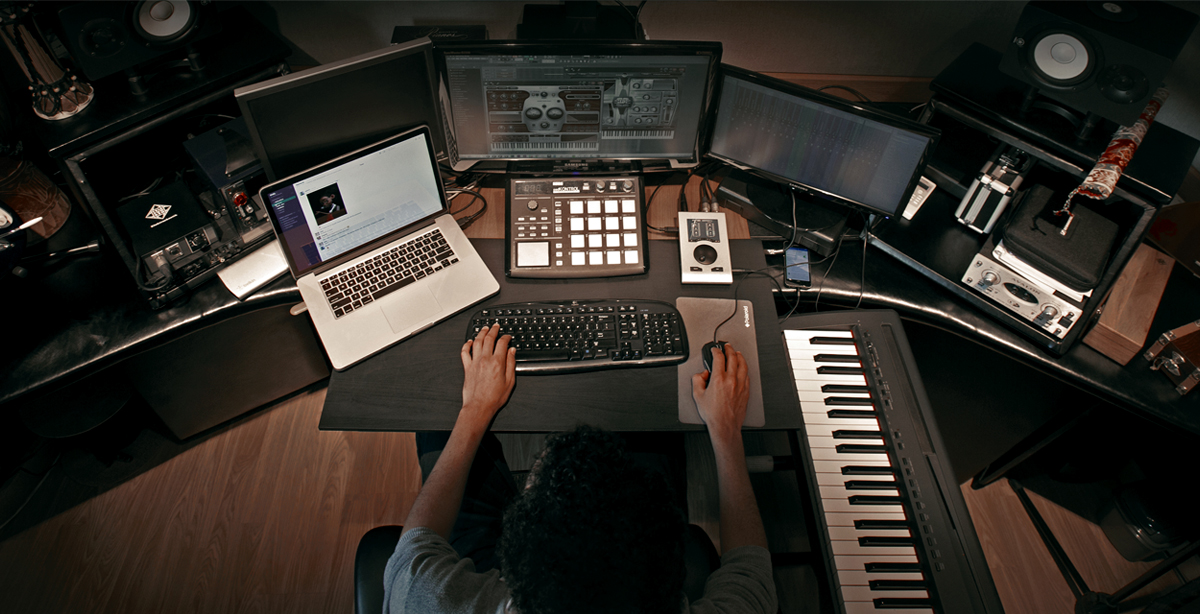
Technology continues to reshape post-production at breakneck speed. Digital audio workstations provide composers with endless gigabytes of hyper-realistic sampled instruments, synth modules, and automated mixing tools. Yet despite this sea of digital horsepower, the fundamental craft of moving a human heart has not changed in over a century. No algorithm can automatically invent a melody that pierces the soul, nor can a preset patch determine precisely when silence serves a scene far better than an eighty-piece brass section.
Ultimately, understanding the depth of film score leitmotif mechanics reminds us that cinema remains a synesthetic art form. Images and sounds are not two separate tracks marching alongside one another down an editing timeline; they are reciprocal mirrors that transform each other in real time. A flat shot gains monumental majesty under the right harmonic chord, while a beautiful visual sequence falls utterly limp under an insensitive, generic score.
When narrative filmmakers and composers collaborate with an acute respect for thematic architecture, the resulting work outlasts visual trends and outlives generational shifts. Long after an audience walks out of the theater, long after specific dialogue lines fade from memory, that haunting three-note melody lingers in the chest, humming quietly in the dark and reminding us of who we were when the lights went down.