Farmers Almanac Winter Forecast Details 4 Crucial Cold Shifts That Will Shock Millions
Long-range weather outlooks are colliding as the latest winter forecasts project dramatic atmospheric swings across the country. Here is what regional predictions, oceanic oscillations, and historical records reveal about the upcoming cold season.
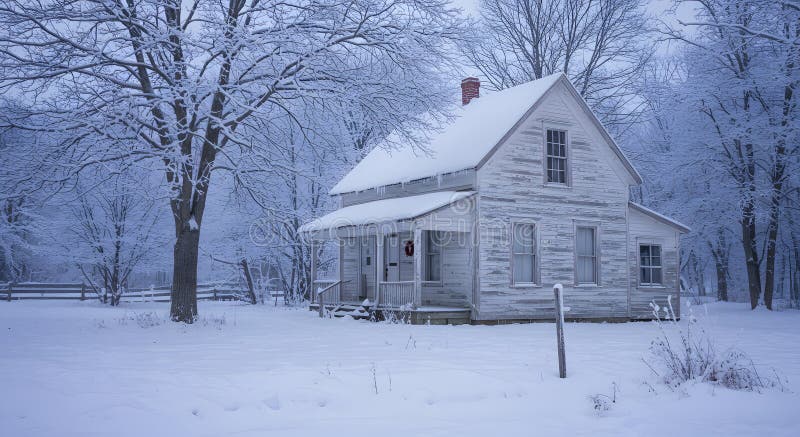
Analyzing the newly published farmers almanac winter forecast reveals how Americans are bracing for volatile weather swings, surging heating costs, and unexpected holiday precipitation. Long before satellites tracked swirling pressure ridges from low Earth orbit, communities relied on regional almanacs to schedule autumn harvests and insulate livestock barns. As the 2026 and 2027 season approaches, historical barometers and modern computational meteorology are once again squaring off to project what kind of chill will grip North America.
The debate extends far beyond casual conversational fodder. Energy grid operators, commercial freight networks, municipal public works departments, and everyday homeowners depend on seasonal projections to allocate millions of dollars in resources. With recent updates from the Farmers’ Almanac predicting sharp geographical contrasts alongside conflicting computer models from federal agencies, understanding the mechanisms behind these seasonal expectations has become an urgent public interest.
The Clash Between Ancient Formulae and Contemporary Meteorology
Founded in 1818 in Lewiston, Maine, the Farmers’ Almanac has built an extraordinary multi-century legacy upon a proprietary mathematical formula. Originally formulated by its founding editor, David Young, this clandestine methodology calculates weather patterns by monitoring sunspot cycles, tidal dynamics, planetary alignments, and long-wave atmospheric motions. For generations, readers have sworn by its distinctive regional breakdowns, attributing uncanny foresight to its calculated outlooks.
Yet, modern atmospheric science views these century-old formulas through an entirely different lens. The National Oceanic and Atmospheric Administration relies on thousands of daily radiosonde balloon launches, sea-surface thermal sensors, supercomputer fluid dynamic simulations, and satellite arrays to construct probabilistic forecasts. Federal scientists routinely caution that projecting specific snow events or localized freezes months in advance pushes against the chaotic boundaries of physical predictability. The tension between historical folklore and statistical modeling explains why the farmers almanac winter forecast retains such an enduring grip on the public imagination, offering definitive expectations where modern meteorologists prefer broad percentages.
Four Regional Weather Disruptions Shaping the 2026 Season
This year, the Farmers’ Almanac warns of sharp climatic divides spanning the continent. Rather than delivering a uniform deep freeze, the forecast outlines dramatic swings between raw precipitation, slushy coastal disturbances, and bone-dry chills across different quadrants of the United States.
Northeast Braces for Wet Snow and Unpredictable Coastal Gales
Forecasters are warning residents across New York, New England, and the upper Atlantic corridor to prepare for a winter that defies easy categorization. As reported by Syracuse.com, the official farmers almanac winter forecast points to a turbulent sequence of moisture-heavy coastal lows rather than stable arctic air. This dynamic creates a notoriously difficult scenario where temperature lines hovering near the freezing threshold dictate whether communities receive crippling heavy snow or destructive, freezing rain.
These borderline storms represent serious logistical nightmares for public infrastructure. Wet snow clings aggressively to utility lines and tree canopies, triggering widespread power outages far more readily than the powdery accumulations typical of mid-winter interior storms. The Northeast appears situated right on the storm track boundary, where slight shifts in oceanic barometric pressure could swing a week’s forecast from a mild drenching to an immobilizing blizzard.
Midwest Battles Polar Plunges Under a Super El Nino Pattern
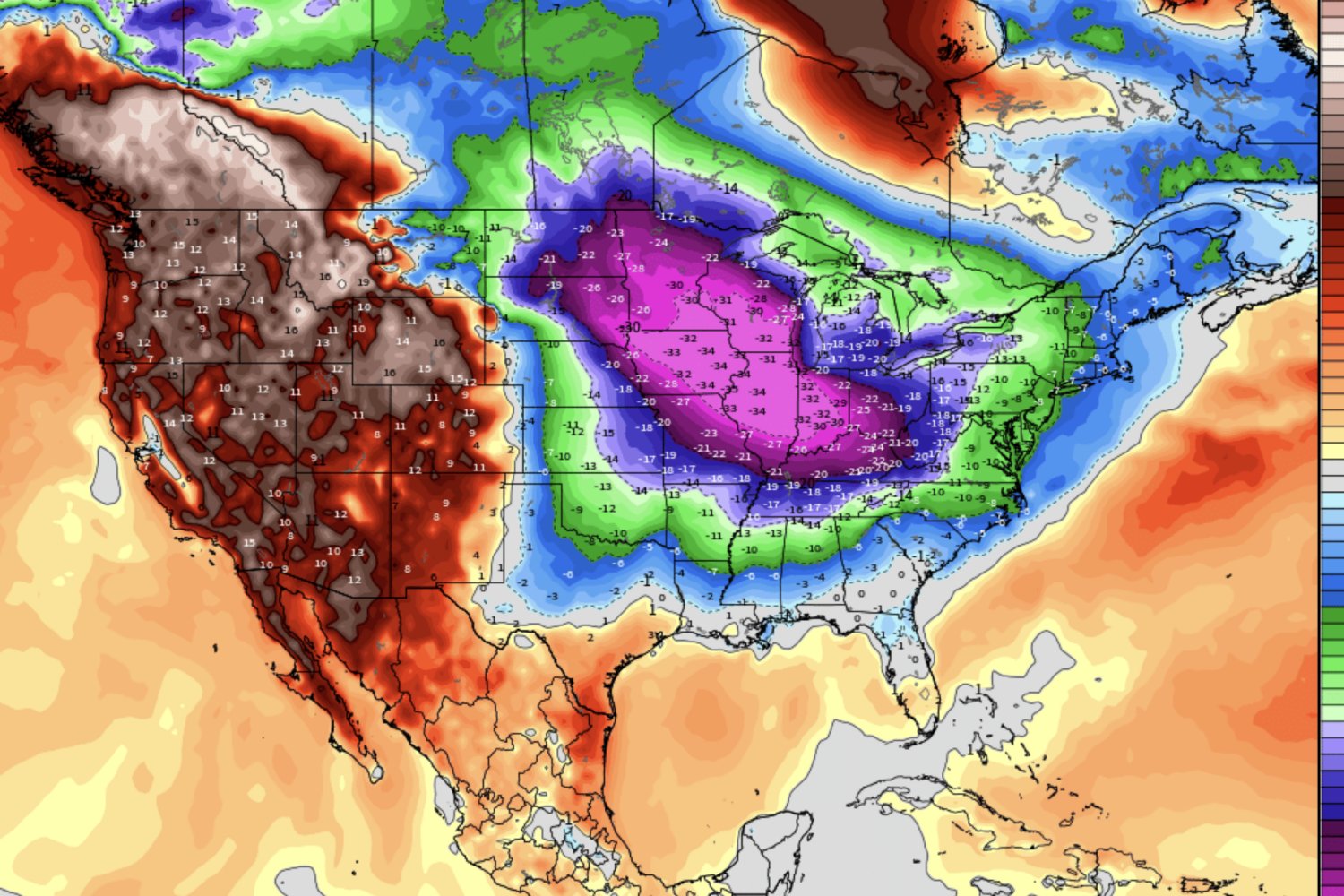
Further west, the central states face a meteorological tug-of-war. According to reporting from the IndyStar, meteorologists in Indiana and neighboring Midwestern states are closely watching the arrival of a powerful Pacific El Niño pattern, assessing how warmer equatorial waters will reshape the polar jet stream. While federal forecasts suggest that strong El Niño years frequently deliver milder, drier conditions across the northern tier of the Midwest, regional almanacs suggest a far bumpier ride.
The almanac outlines intense cold snaps that could periodically dive out of central Canada, breaking through the warm Pacific barrier to trigger severe freezes across the Ohio Valley and Great Lakes basins. For Midwestern agriculture, these sudden temperature plunges pose major risks to winter wheat crops if snowpack cover proves insufficient to insulate root systems against subzero ground temperatures.
Southern Chill and Saturated Valleys Strain Regional Power Grids
Southern communities that traditionally escape prolonged winter hardship may face their own logistical challenges. The Tennessean notes that state meteorologists have cross-referenced the farmers almanac winter forecast against national baselines, highlighting a potential convergence of cold northern troughs with saturated subtropical moisture streaming up from the Gulf of Mexico.
When deep cold penetrates into regions like Tennessee, northern Alabama, and Georgia, heating infrastructure experiences extreme stress. Many southern residences rely on heat pump systems that lose thermal efficiency when ambient temperatures plummet into the teens. If prolonged wet spells coincide with sudden polar intrusions, the risk of destructive ice accumulation across southern timber corridors and transportation arteries increases dramatically.
Mid Atlantic Freezes Face Early Flurries Ahead of Thanksgiving
The transition between autumn and mid-winter is expected to arrive earlier than normal for mid-Atlantic communities. Analysis from Delawareonline.com highlights predictions from the competing Old Farmer’s Almanac, which was founded in 1792 and operates out of Dublin, New Hampshire, suggesting that Pennsylvania, Delaware, and Maryland could experience early snow flurries well before the Thanksgiving holiday.
These early flurries often catch municipalities off-guard before road crews transition salt spreaders and plowing equipment into active service. An early start to the freezing season also complicates agricultural harvest completions and seasonal home winterization routines across rural sectors of Pennsylvania and the Delaware Valley.
How Oceanic Currents Challenge Traditional Almanac Accuracy
The primary driver complicating all seasonal modeling this cycle is the rapid evolution of sea-surface temperatures in the equatorial Pacific. A surging El Niño event fundamentally alters the global circulation of air, dragging the subtropical jet stream south and frequently leaving northern regions warmer than historic averages. Long before the modern farmers almanac winter forecast began circulating across digital channels, marine temperature fluctuations routinely disrupted local climatology in ways that celestial tables could not easily account for.
NOAA forecasters emphasize that when ocean-atmosphere coupling reaches extreme levels, typical historical analogies break down. A super El Niño redistributes immense heat reserves into the upper atmosphere, generating persistent high-pressure ridges that can divert cold air masses away from populated corridors. When proprietary mathematical algorithms compete against massive global thermal forces, local weather outcomes often yield startling surprises that deviate from traditional folklore.
Household Budgets and the True Cost of Severe Weather Surprises
Seasonal weather predictions are not mere curiosities; they carry immediate financial consequences for household checkbooks. Searing cold snaps drive up natural gas, propane, and electricity demand, leading to sudden utility bill spikes during months when family budgets are already strained by holiday obligations. At the same time, preparing for the conditions described in the farmers almanac winter forecast requires real capital, from servicing heating furnaces and replacing roof shingles to purchasing snow-clearing equipment and ice-melt compounds.
These unpredictable seasonal outlays highlight the necessity of aggressive, disciplined long-term household financial planning. Homeowners seeking financial flexibility to handle home emergency repairs and volatile heating expenses often discover that restructuring recurring overhead provides the fastest route to durable liquidity. Reviewing fundamental balance-sheet strategies, such as Mortgage amortization mechanics and 4 proven rules that slash costly loan interest, illustrates how early principal debt reductions can free up substantial monthly cash reserves to absorb unforeseen seasonal disruptions.
Separating Folklore From Hard Atmospheric Realities
The enduring popularity of seasonal weather almanacs reflects a profound human desire for certainty in an unpredictable natural world. Whether one looks to the woolly bear caterpillar, the thickness of persimmon seeds, or the yellow pages of historic regional guides, people intuitively seek early signals to prepare for the elements. Atmospheric science has advanced by leaps and bounds, yet seasonal forecasters still openly acknowledge the inherent unpredictability of chaotic fluid systems.
Ultimately, treating the farmers almanac winter forecast as an advisory benchmark rather than an infallible certainty provides the most balanced approach for households and community planners alike. Combining historical curiosity with real-time alerts from local meteorologists and federal observation centers ensures that whether the season brings heavy slush, bitter polar vortex dips, or surprisingly temperate sunny interludes, communities remain resilient, protected, and financially secure.