Emulsion mechanics and 4 proven secrets to rescue delicate sauces
Understanding the physics of fat and water turns temperamental sauces into effortless kitchen staples. Discover how shear rate, temperature, and surfactant chemistry prevent culinary catastrophe.
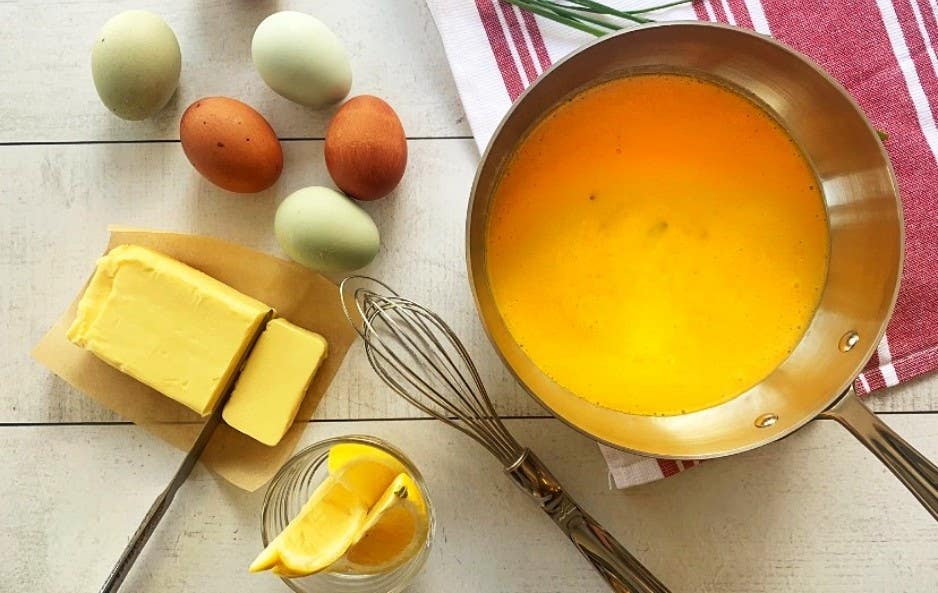
Mastering emulsion mechanics transforms how you navigate volatile kitchen sauces, turning fragile gravies, glossy hollandaise, and rich vinaigrettes from nerve-wracking gambles into predictable victories. Every cook has experienced that sinking pit of dread when an otherwise immaculate sauce suddenly shatters into a murky puddle of curdled grit and pale, oily slickness. In that frantic moment, culinary folklore urges you to pray, whisk faster, or throw an ice cube into the pan. Yet panic never solved a thermodynamic problem. Sauces do not break because the culinary gods are fickle; they break because fundamental physical boundaries were pushed beyond their structural tolerance.
When you look past recipe steps and examine what happens at the boundary where fat meets liquid, the kitchen ceases to be a place of superstitious ritual. It becomes an interactive laboratory where you control molecular geometry. By diagnosing how suspended fat globules interact with water molecules and surface-active proteins, you gain absolute mastery over texture, mouthfeel, and stability. You can construct sauces with silkiness that holds through service, and more importantly, you can systematically resurrect an emulsion that appears ruined beyond repair.
The microscopic tug of war between water and fat
Liquids in a pan obey the cold laws of chemical polarity. Water molecules are intensely sociable creatures bonded by energetic hydrogen networks, constantly pulling toward one another in tight electrical attraction. Fats, lipids, and neutral cooking oils are non-polar hydrocarbons that cannot participate in this electrostatic dance. When tossed together into a bowl, the water molecules squeeze the fat out of their network to maximize their own internal bonding energy. Left to their own devices, the oil droplets drift upward, collide, and merge into a monolithic sheet to minimize their surface area of contact with the water.
When you deconstruct true emulsion mechanics, you realize that oil and water do not simply hate each other; they obey thermodynamic laws that favor minimal surface area. An emulsion is an unnatural, high-energy ceasefire forced upon these two reluctant neighbors. To keep trillions of microscopic fat droplets suspended inside a watery matrix without them instantly coalescing, you must overcome surface tension through physical force and reinforce the fragile new boundary with protective molecular shields known as surfactants. Without those shields, your sauce is living on borrowed time.
Every emulsion features two distinct participants: the dispersed phase and the continuous phase. In a standard culinary oil-in-water emulsion like mayonnaise or hollandaise, the dispersed phase consists of millions of microscopic oil droplets, while the continuous phase is the fluid network of water, lemon juice, or vinegar that surrounds them. The thickness of your sauce does not originate from the fat being inherently dense. Viscosity emerges because the sheer multitude of sheared droplets crowds together so tightly that they obstruct one another from moving freely, transforming two runny liquids into a plush, spoon-coating velvet.
Why classical culinary emulsions collapse without warning
Instability in an emulsion rarely arrives out of nowhere; it develops along a clear physical timeline. The first subtle stage of failure is flocculation, where suspended oil droplets drift into clusters like schools of fish, yet still maintain their individual boundaries. If left unchecked, flocculation progresses to coalescence. Here, the thin interfacial films between clustered droplets rupture, allowing the lipid cores to melt together into larger and larger globules. Once these globules grow heavy enough, creaming occurs, sending the less dense fat floating to the top surface while the dense watery phase sinks to the bottom.
At its core, this structural failure occurs when the underlying emulsion mechanics dictate that individual fat globules collide faster than the continuous phase can isolate them. This collapse is almost always accelerated by excessive heat, rapid evaporation, or a sudden flood of oil. Pouring a cup of melted butter into warm egg yolks all at once simply overwhelms the available water volume, starving the droplets of space and triggering an immediate physical phase inversion into an unappealing, greasy soup.
Much like reading headlines where Braces Surge Online as 5 Major Crises Threaten Global Stability, kitchen novices tend to view a broken sauce as an apocalyptic surprise, rather than a predictable thermodynamic breakdown triggered by a missing stabilization agent. Once you recognize that sauce failure is simply droplet coalescence run wild, you stop blaming your equipment and start diagnosing the physical catalyst that compromised the suspension.
Core strategies to guarantee silky culinary stability
Securing a resilient, glossy sauce demands deliberate control over mechanical energy, thermal limits, and biochemical ratios. Once these operational levers are aligned, creating or rescuing an emulsion becomes completely repeatable.
Temperature boundaries that protect fragile surface tension
Heat alters the behavior of both fat droplets and the proteins assigned to guard them. In an egg-yolk-based emulsion like Béarnaise, the proteins must partially uncoil to form a stabilizing mesh around the butter droplets. However, if your pan creeps beyond 65 degrees Celsius, those egg proteins denature completely, twisting into rigid, water-squeezing knots that push moisture out and dump the butterfat into an oily sheen. Conversely, dropping below the melting point of butterfat causes the droplets to solidify into sharp, jagged crystalline clumps that puncture interfacial membranes. Respecting this thermal window represents a subtle shift in emulsion mechanics that prevents premature protein aggregation.
Mechanical shear rate and droplet dispersion dynamics
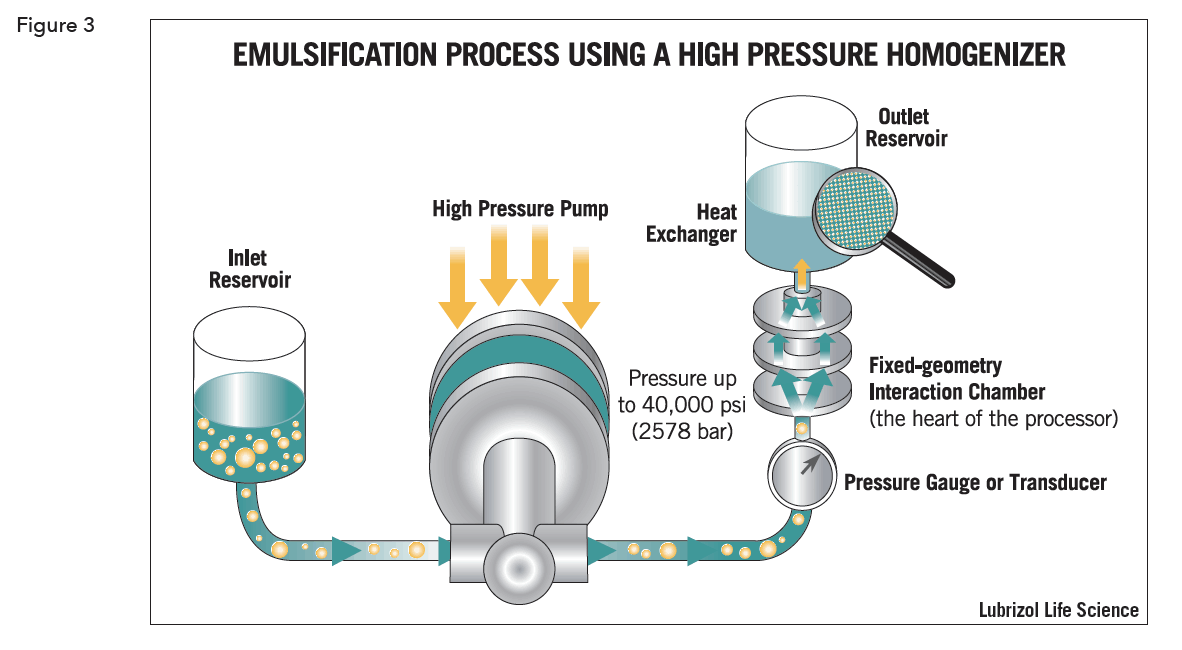
Whisking is not merely about stirring ingredients together; it is an act of mechanical shearing. To create a stable emulsion, you must physically tear large oil droplets down into sub-micron particles. The smaller the droplet diameter, the greater the internal Laplace pressure resisting deformation, and the slower those droplets will drift together. While an ordinary balloon whisk relies on the speed of your forearm to generate shear forces, an immersion blender spins blades at thousands of revolutions per minute, creating intense hydraulic cavitation. This mechanical shear rips lipid pools into uniformly microscopic spheres in seconds, establishing immense structural stability that a hand whisk can rarely match.
Emulsifier ratios that anchor hydrophobic molecules
A pure mixture of sheared water and oil will eventually split no matter how furiously you blend it. Long-term stability requires amphiphilic molecules possessing both a water-loving head and an oil-loving tail. Lecithin, a phospholipid found abundantly in egg yolks, is the gold standard of culinary surfactants. The lipophilic tail burrows deeply into the interior of the fat droplet, while the hydrophilic head sticks outward into the surrounding water, building an electrically charged barrier that causes neighboring droplets to bounce off one another rather than fuse. Achieving optimal surfactant coverage is a foundational principle of emulsion mechanics, ensuring that every newly sheared lipid globule is instantly coated.
Phase inversion manipulation for effortless sauce recovery
When a sauce breaks, the dispersed oil phase has overwhelmed the continuous water phase, causing the mixture to flip inside out into a water-in-oil emulsion. You can exploit phase inversion to stage an effortless rescue. Take a fresh bowl, add a single tablespoon of warm water or lemon juice, and slowly whisk in the broken sauce drop by drop. Because the fresh water establishes a generous continuous phase from the start, the incoming broken mixture is forced to re-disperse its runaway fat into manageable droplets. Within thirty seconds, the entire fractured batch is pulled back into a cohesive, mirror-like emulsion without sacrificing flavor.
Common misconceptions that ruin pan sauces and vinaigrettes
Home kitchens are full of persistent myths that derail simple pan sauces. Perhaps the most widespread error is the belief that pouring in extra oil makes a sauce thicker. While adding oil does increase viscosity by crowding the continuous phase with droplets, there is a hard geometric ceiling known as the maximum random packing limit. Once fat globules occupy roughly three-quarters of the total volume, they cannot pack any tighter. Adding another drop of fat beyond this critical packing threshold triggers sudden catastrophic phase inversion, instantly turning your creamy dressing into an oily, split mess.
Another common mistake involves shaking oil and vinegar together inside a mason jar and expecting the resulting vinaigrette to remain stable on the counter. Simple mechanical agitation can create a temporary dispersion, but without a surfactant providing steric hindrance, the droplets inevitably recombine within minutes. Introducing a dollop of Dijon mustard introduces plant mucilage and complex polysaccharides that physically wedge themselves between the lipid droplets, halting coalescence in its tracks.
According to research published in the Journal of Agricultural and Food Chemistry, interfacial rheology determines whether dispersed lipid globules resist coalescence under shear. In pan sauces, this reality exposes the flaw of relying solely on cold butter mounts without sufficient dissolved gelatin or reduced fond. Grasping these practical emulsion mechanics prevents cooks from throwing out salvageable pan drippings or over-oiling delicate veloutés.
The quiet confidence of a kitchen technician
Standing over a warm stove with a whisk in hand should never feel like a high-stakes gamble. The difference between an anxious amateur and an effortless cook comes down to sensory diagnostics. You can hear when an emulsion is forming; the chaotic splashing of liquid softens into a heavy, rhythmic slap against the walls of the bowl. You can see it in the sheen, as the dull transparency of raw oil transforms into an opaque, light-scattering ribbon that folds gracefully over itself.
When a sauce begins to look dull, greasy, or slightly grainy along the perimeter of the pan, you no longer need to worry about ruined dinners. You know immediately that the continuous phase is evaporating too quickly, and a quick splash of cool water will restore equilibrium before the interfacial film ruptures. When your culinary instincts are grounded in sound emulsion mechanics rather than superstitious habits, you never fear the whisk again.