Pan searing mechanics and 4 proven secrets to create exceptional crust
Unlocking a restaurant-grade sear is a matter of thermal physics rather than luck. Discover how managing surface moisture, pan density, and fat stability creates an unforgettable mahogany crust.
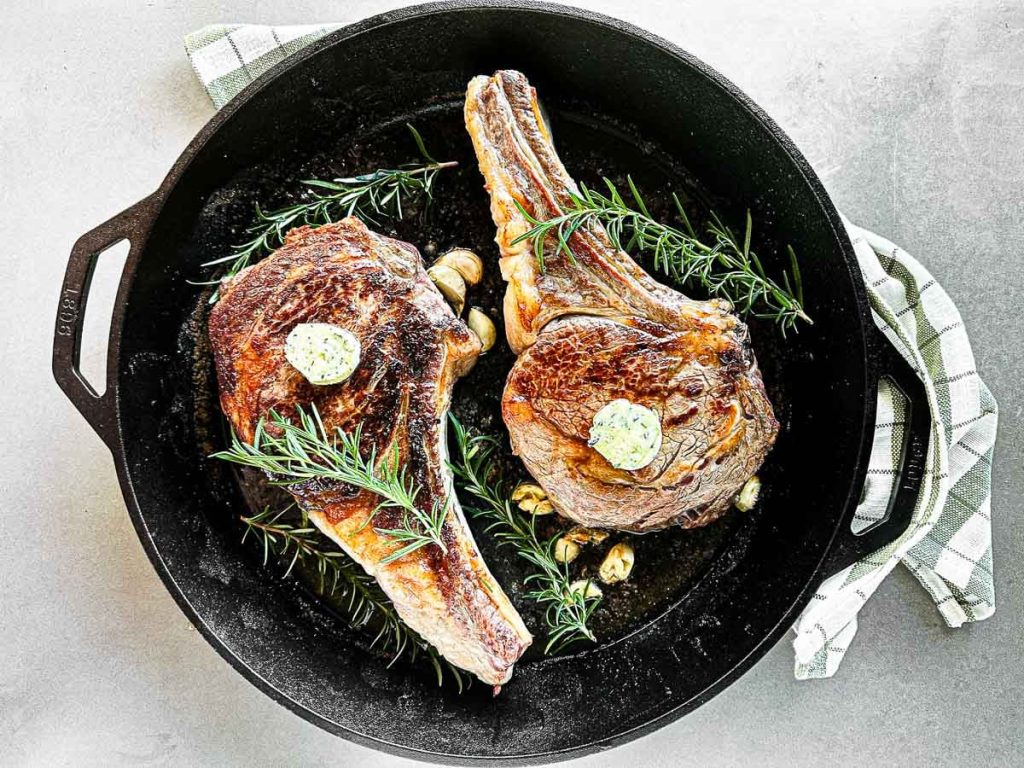
Mastering pan searing mechanics transforms an ordinary weeknight dinner into a restaurant-caliber feast through the deliberate control of thermodynamics, surface moisture, and metal conductivity. Most home cooks believe that obtaining a deep, mahogany crust on a ribeye, a sea scallop, or a king oyster mushroom is simply a matter of turning a stove dial to maximum and hoping for the best. Yet the difference between a grey, flaccid cutlet and a shattering, deeply savory sear is governed entirely by the laws of physics rather than culinary luck.
When food touches blazing metal, hundreds of distinct chemical reactions initiate within a microsecond. If you fail to manage the boundary layer of water, the temperature drops precipitously, steam builds an insulating cushion, and your protein boils in its own liberated juices. By approaching the skillet with scientific intention, you swap culinary anxiety for absolute predictability. You stop guessing when to flip and start orchestrating thermal transfer like an engineer.
The invisible thermodynamics behind the perfect golden crust
At the heart of every blistered steak or crisp chicken thigh lies the Maillard reaction. Coined by French physician Louis-Camille Maillard in the early twentieth century, this intricate chemical cascade unfolds when reducing sugars collide with amino acids under elevated heat. This transformation is distinctly different from pure caramelization, which involves only the thermal pyrolysis of carbohydrates at temperatures exceeding 320 degrees Fahrenheit. The Maillard cascade generates hundreds of newly synthesized flavor compounds, producing the nutty, roasted, savory notes that human biology instinctively craves.
However, this chemical alchemy demands a strict thermal environment. Below 280 degrees Fahrenheit, the reaction stalls to an imperceptible crawl. Above 355 degrees Fahrenheit, rapid pyrolysis begins, scorching delicate surface proteins and leaving behind bitter, acrid carbon notes. Researchers at the Harvard University Science and Cooking program frequently demonstrate that maintaining this narrow thermal window requires balancing pan heat capacity against food mass.
Here is the fundamental paradox: understanding the core pan searing mechanics reveals that browning is not simply heat applied to meat, but an ongoing battle against the laws of latent heat. While liquid water cannot rise above 212 degrees Fahrenheit at standard atmospheric pressure, it demands a staggering amount of thermal energy to convert from liquid into vapor. Every drop of surface liquid acts as a thermodynamic heat sink, trapping your skillet at boiling temperature and preventing the surface from ever reaching the threshold required for Maillard synthesis. To brown, you must eradicate that liquid barrier instantly.
Why moisture remains the ultimate enemy of surface caramelization
Water possesses one of the highest specific heat capacities of any substance on earth, alongside an immense latent heat of vaporization that requires roughly 2,260 joules of energy to vaporize just one single gram. When cold, damp meat hits a preheated pan, that surface moisture immediately saps the stored energy from the metal lattice. Instead of frying in hot oil, the protein floats on an expanding cushion of superheated steam.
This phenomenon explains why home cooks frequently produce grey, rubbery cutlets despite using blazing burners. When home cooks ignore fundamental pan searing mechanics, they inadvertently boil their proteins instead of crusting them, trapping moisture beneath the meat. The oil, which should serve as a high-temperature thermal bridge filling microscopic gaps between the food and the skillet, becomes emulsified with escaping juices, dropping the pan temperature well below the browning threshold.
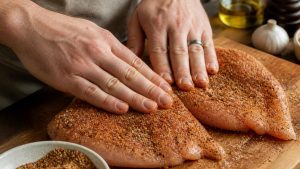
True mastery begins hours before the skillet touches the burner. By salting proteins well in advance, you initiate osmotic diffusion. Salt first pulls moisture out to the surface, dissolves into a concentrated brine, and then breaks down the surface muscle proteins—specifically myosin—allowing the seasoned liquid to be reabsorbed deeply into the cellular matrix. Leaving that meat uncovered on a wire rack inside the refrigerator exposes it to low-humidity circulating air. The surface dehydrates into a glossy, tacky skin called a pellicle. When this bone-dry exterior meets hot fat, instantaneous browning occurs without sacrificing a single joule of energy to unwanted steam.
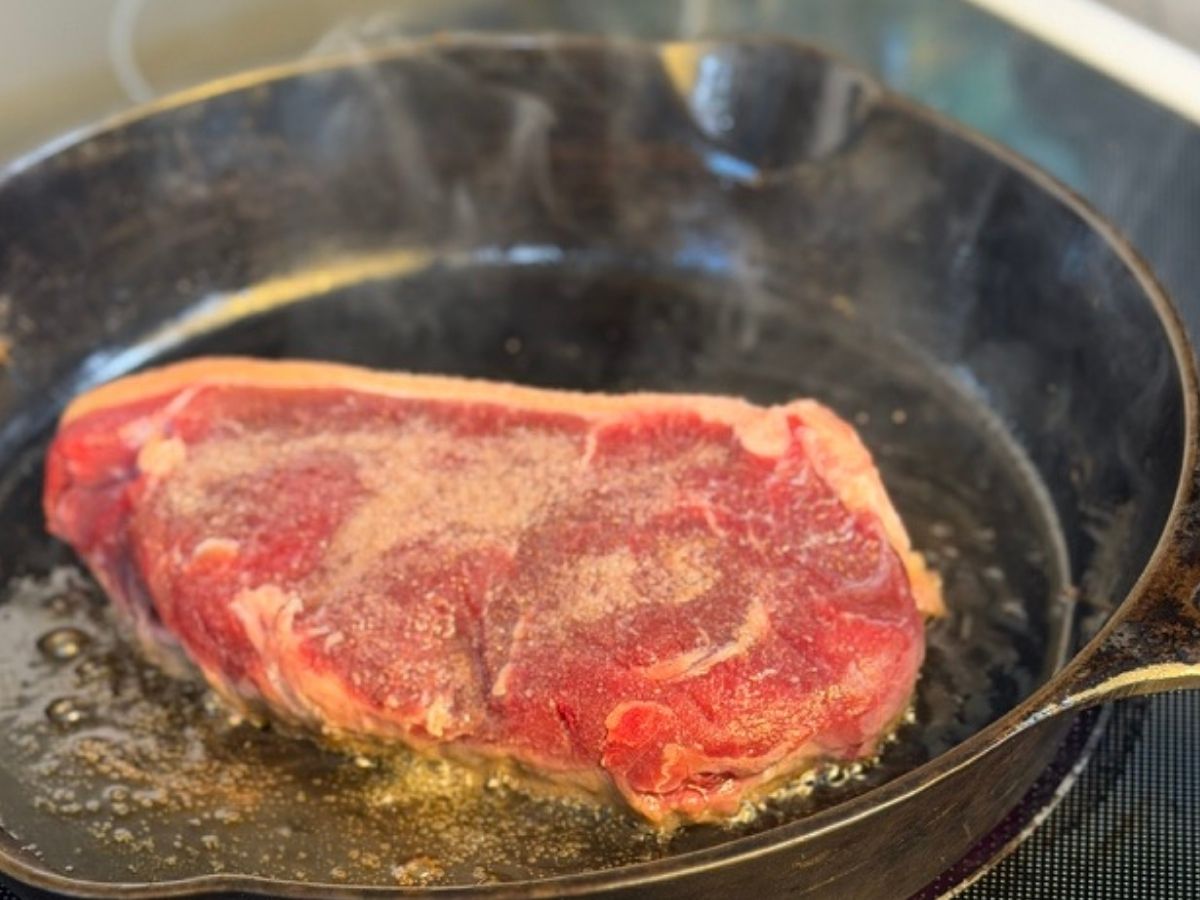
Four proven principles to elevate pan contact and thermal energy transfer
Achieving professional-grade execution requires aligning your physical technique with culinary physics. Fine-tuning these pan searing mechanics requires looking at thermal conductivity, pan composition, fat chemistry, and structural compression to guarantee an unbroken golden crust every time.
Surface dehydration and the transformative power of overnight dry brining
Wiping raw meat with a single paper towel removes only macroscopic pools of surface water while leaving cellular moisture intact. To achieve an instantaneous crust, dry brining stands as the single most effective preparatory technique in modern gastronomy. When you salt a protein at least twelve hours prior to cooking, the salt dissolves and migrates inward, redistributing seasoning evenly throughout the interior.
Simultaneously, the refrigerator evaporator coils continually strip moisture from the circulating air. This arid environment evaporates the outermost fraction of a millimeter of water from the flesh. When placed into the pan, this parched exterior crusts in seconds rather than minutes. Because the crust develops so rapidly, heat does not have time to migrate deeply inward and overcook the tender interior, drastically reducing the unsightly grey band of overcooked meat just beneath the surface.
Thermal mass selection and the dynamic equilibrium of heavy cookware
Thin stamped aluminum pans are wonderful for rapid boiling, but they spell disaster for high-heat searing. When a cold, twelve-ounce strip steak drops onto lightweight cookware, the metal temperature plummets by over a hundred degrees instantly. The burner cannot pump heat back into the pan quickly enough to recover, causing the meat to stew in its own juices.
Cast iron, carbon steel, and thick stainless steel cladded with aluminum cores possess substantial thermal mass. While cast iron has relatively poor thermal conductivity compared to copper, its sheer density and volumetric heat capacity turn it into a massive thermal reservoir. Once thoroughly saturated with heat over several minutes of steady preheating, heavy iron shrugs off the cooling impact of cold protein. The skillet sustains its heat output, flash-evaporating microscopic drops of fluid and sustaining uninterrupted contact browning.
Smoke point dynamics and selecting high stability cooking fats
Oil does not exist in a hot pan merely to prevent sticking. Metal surfaces and meat surfaces are jagged landscapes full of microscopic peaks and valleys. Without a liquid medium, the meat touches the pan only at tiny contact points, leaving air gaps that act as thermal insulators. Fat acts as a fluid heat conductor, filling those voids to transfer thermal energy uniformly across the entire surface.
However, using the wrong fat sabotages your effort. Extra virgin olive oil and unclarified butter contain water, milk solids, and delicate free fatty acids that break down and oxidize below 350 degrees Fahrenheit, creating bitter acrid smoke long before searing finishes. Instead, choose refined fats with high smoke points and elevated monounsaturated fat profiles, such as avocado oil, clarified butter (ghee), or tallow. These stable lipids withstand pan temperatures upwards of 450 degrees Fahrenheit, facilitating intense Maillard reactions without decomposing into harsh-tasting free radicals.
Deliberate downward pressure and the elimination of micro steam pockets
As muscle fibers heat up, their protein helices denature and tighten, squeezing out moisture and curling the edges of the meat upward. This cupping effect lifts the center of the protein away from the skillet floor, creating an air pocket where trapped steam boils the meat instead of roasting it.
Practicing these precise pan searing mechanics builds the same intuitive muscle memory that athletes develop; just as mastering Basketball Jump Shot Mechanics and 4 Proven Secrets to Build Lethal Accuracy relies on stable alignment and repeatable pressure, perfect pan contact requires deliberate physical stabilization. Using a heavy cast iron chef press, a small burger weight, or firm manual spatula pressure during the initial thirty seconds of pan contact forces the protein to remain completely flat. This constant downward compression maximizes surface-to-metal thermal conductance, securing an unbroken, wall-to-wall mahogany sear before the muscle fibers lock into a curled shape.
Fond recovery and unlocking complex pan sauces from remaining proteins
The final stage of pan searing mechanics centers on capturing the fond left behind. As proteins and amino acids caramelize on the hot pan floor, they dehydrate and adhere to the microscopic pores of the metal. This amber layer, known in classic French technique as the fond, represents the purest distillation of savory flavor generated during the cooking process.
Leaving this concentrated flavor residue in the sink is a culinary tragedy. Once the seared protein rests on a warm board, pour off excess surface fat and introduce a cool, flavorful liquid such as dry wine, rich stock, or aromatic vinegar. As the liquid strikes the hot pan, it boils violently, loosening the bonded proteins through thermal shock and dissolution. Scraping the bottom of the pan with a wooden spoon folds these complex flavor compounds into the reducing liquid, forming the aromatic backbone of an unctuous pan sauce finished with cold swirls of butter.
Developing culinary intuition over rigid kitchen timers
Cookbooks often mislead aspiring cooks by prescribing rigid time frames like three minutes per side. In reality, thermal transfer is a dynamic equation determined by stove burner output, pan thickness, protein water content, and starting core temperature. Relying strictly on a stopwatch almost guarantees inconsistent outcomes.
Instead, train your sensory cues to assess the state of heat transfer in real time. Listen to the pitch of the sizzle: a high-frequency, energetic hissing indicates water vapor flashing off cleanly, while a dull, muffled bubbling warns that moisture is pooling and boiling the meat. Watch the edges of the protein as the caramelization creeps upward, and touch the meat gently to feel the tension of contracting muscle fibers. Once you internalize these pan searing mechanics, your pan becomes an extension of pure culinary intent, turning simple proteins into culinary perfection every single evening.