Defensive line leverage mechanics and 4 proven rules that unlock unstoppable trench dominance
Trench battles are decided by cold Newtonian physics rather than brute muscle alone. Master the mechanical angles, strike vectors, and ground forces that allow elite defensive linemen to overpower heavier blockers.
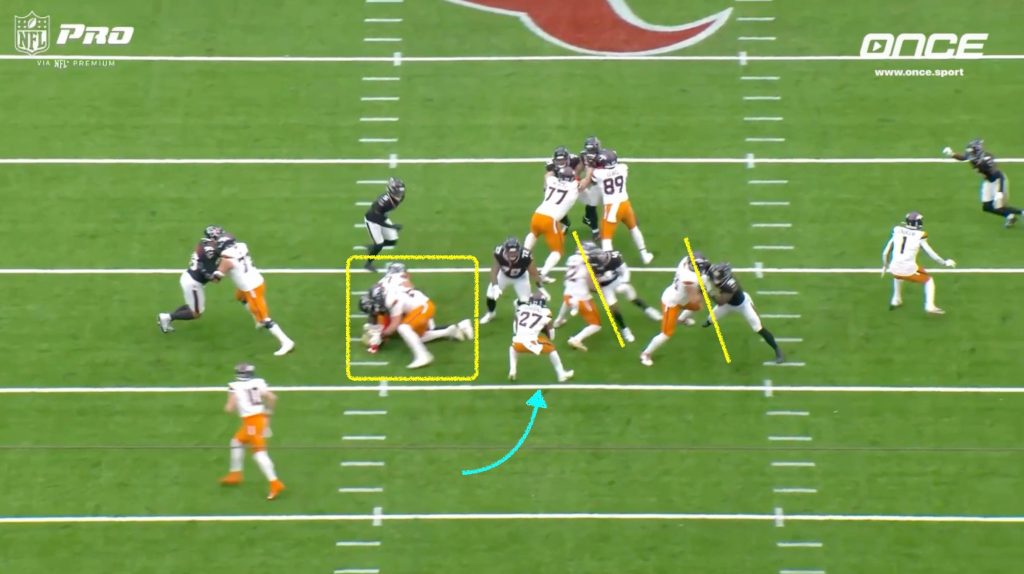
Mastering defensive line leverage mechanics separates explosive defenders who routinely collapse offensive pockets from those who merely slam into human brick walls. To the casual eye sitting high in the stadium rafters, the collision between offensive and defensive linemen resembles sheer, chaotic violence. Helmets crack, pads rattle, and three-hundred-pound athletes crash together in an explosive display of brute human force. Yet down in the grass, mere inches from the football, the line of scrimmage is governed by cold, unforgiving Newtonian physics. Size and raw power provide a starting foundation, but leverage dictates the victor before the echo of the snap whistle fades.
A lighter defender who understands force vectors, ground contact angles, and fulcrums will consistently forklift a massive blocker backward. Conversely, an undisciplined defender who stands upright at the snap surrenders every mechanical advantage, turning themselves into an easily redirected mass. When you break down line play to its kinetic roots, every snap becomes an engineering contest where the human body operates as a complex system of interconnected levers.
The brutal physics beneath the line of scrimmage
Trench warfare hinges on three non-negotiable physical elements: center of mass, angle of resultant force, and ground reaction torque. The offensive lineman enters every snap with an innate structural advantage. They know the snap count, set their base first, and generally carry more pure gravitational mass. Overcoming that static mass requires a defender to manipulate the blocker’s center of gravity while simultaneously anchoring their own.
Understanding the physics underpinning defensive line leverage mechanics transforms how players strike and shed blocks. Think of an offensive tackle as a heavy wooden wardrobe. If you push that wardrobe near its top edge while driving your feet into the floor at a forty-five-degree angle, it tips easily. If you shove it dead in the middle while standing completely upright, the wardrobe stays put while your own body absorbs the rebound shock. In the trenches, whoever keeps their center of mass lower while maintaining an unbroken kinetic chain from the turf through the palms controls the point of contact.
Force does not originate in the arms or the chest. It begins where the cleats grip the earth. When a defender drives backward against the ground, the ground pushes back with equal magnitude. If the defender’s ankle, knee, and hip joints are bent at optimal power angles—roughly between ninety and one hundred and twenty degrees—that ground force channels unimpeded through the hips, ripples along the spine, and discharges through the hands into the blocker’s sternum. The moment a joint angle collapses or straightens prematurely, the energy bleeds away, rendering the strike harmless.
Why raw bench press muscle fails against anchored mass
Weight room statistics often create a dangerous illusion on the football field. A defensive lineman might boast a five-hundred-pound bench press and squat house-like loads, yet repeatedly stall out against blockers who appear visibly less muscular. This discrepancy occurs because an offensive lineman is not a barbell moving on a fixed vertical plane. They are an active, reactionary counterweight dedicated to absorbing, displacing, and neutralizing linear energy.
Without sound defensive line leverage mechanics, an athlete generates tremendous force that simply dissipates harmlessly into the turf or deflects into empty air. Pure upper-body pressing strength relies almost exclusively on pectorals, anterior deltoids, and triceps firing from an isolated shoulder girdle. In live line play, trying to punch a 320-pound guard with arm strength alone is like firing a cannon from a canoe. Without an anchored platform and unbroken hip extension, the cannon’s recoil merely pushes the canoe backward.
Blockers actively hunt for defenders who play with high chest angles. A high chest presents a massive, stable strike plate for an offensive lineman’s hands. Once an offensive lineman clamps onto the chest plate and sinks their hips, their base widens, their center of mass drops below the defender’s, and the defensive rusher becomes completely immobilized. Losing that interior leverage wrecks defensive game plans, a reality laid bare when the Javon Hargrave Injury Delivers 3 Costly Blows to Green Bay Packers Defense, showing how the sudden loss of an elite interior technician strips an entire unit of the leverage required to control the trenches and generate pocket-crushing interior push.
Four proven rules that turn leverage into absolute pocket destruction
Applying defensive line leverage mechanics in high-stress game conditions comes down to executing fundamental mechanical laws with ruthless consistency under extreme duress.
Win the pad level war before taking the second step
Pad level is not a vague coaching cliché. It is a precise geometric measurement of your shoulder pads relative to the blocker’s sternum. The lowest man does not simply win because he is closer to the dirt. He wins because his upward-sloping force vector works directly against the blocker’s downward gravitational center. To secure this advantage, your helmet must emerge from your stance lower than the blocker’s chin, with your eyes locked firmly on their strike zone.
The critical error many young linemen commit is rising upward on their initial step to scan the backfield. That upward hop immediately elevates their center of gravity and neutralizes forward momentum. Your first step out of your stance must be a flat, violent strike that gains ground without gaining height. The crown of your helmet should track horizontally along an invisible ceiling until your hands make contact. If you allow your hips to pop straight up on snap movement, you surrender the pad level war before your cleats even settle into the turf.
Establish inside hand dominance at the breastplate
Hand placement represents the steering wheel of trench combat. If your hands land on the blocker’s outside shoulder pads, their arms remain free to clamp your ribs and establish control. Your primary objective on the strike is to place your thumbs pointed straight toward the sky, driving the heels of your palms squarely into the blocker’s sternum and collarbones. This tight, inside placement targets the blocker’s anatomical center of balance.
Once the heels of your hands bite into the chest plate, immediately lock your elbows into slight inward flexion, creating rigid shock absorbers. A locked-out, inside-hand position does two devastating things simultaneously. It prevents the blocker from gripping your jersey cloth, and it constructs a rigid triangular frame between your shoulders and their chest. Through this frame, every ounce of ground power your legs generate transmits directly into the blocker’s core, rocking their equilibrium and snapping their head backward.
Convert horizontal drive into rotational torque
Linear force alone will rarely defeat an experienced, anchored offensive lineman. Once you establish initial contact and compress the blocker’s base, you must introduce rotational force to shed the block. This torque represents a core principle within defensive line leverage mechanics that prevents defenders from getting washed down the line of scrimmage on running plays or held up on passing downs.
Torque is generated by attacking half of the offensive lineman rather than their full body width. By driving through one shoulder while simultaneously pulling or swatting the opposite arm, you create a rotational shear force that twists the blocker’s spine out of alignment. An offensive lineman cannot maintain a wide, balanced power base when their upper torso is forcibly rotated forty-five degrees away from their hips. The moment their shoulders turn, their functional base narrows to mere inches, opening a direct highway into the backfield.
Uncoil the hips directly through the contact plane
The true engine of every devastating bull rush, rip move, or block shed is violent triple extension: the simultaneous, explosive uncoiling of the ankles, knees, and hips. Think of your body as a high-tension steel spring. In your stance, that spring is tightly wound and loaded with potential kinetic energy. The instant your hands strike the opponent’s chest plate, that coiled spring must violently release in a single, continuous forward wave.
Timing this hip uncoil is everything. If you snap your hips open before your hands strike the blocker, the force fires into thin air and your body flattens out, leaving you vulnerable to being pancake-blocked. If you strike with your hands while keeping your hips back, you absorb the shock solely in your shoulders and lose all forward momentum. The hand strike and the explosive forward snap of the hips must land within the exact same microsecond, driving your pelvic girdle through the contact plane to violently lift the blocker up and off their cleats.
Correcting the fatal stance flaws that bleed forward momentum
Film study reveals that breakdowns in defensive line leverage mechanics almost always originate before the collision occurs, beginning in the pre-snap stance itself. An unstable, improperly weighted stance bleeds kinetic potential before the ball is even snapped. Linemen frequently place far too much weight onto their down hand, causing them to roll forward onto their toes. When the ball snaps, their initial motion is not a violent forward drive, but a clumsy catch-step designed simply to keep themselves from falling flat on their faces.
The opposite extreme is equally catastrophic. A defender who sits too heavily on their heels must perform a backward false-step to gather their weight before lunging forward. In modern football, a six-inch false step wastes roughly two-tenths of a second—an eternity that grants an offensive tackle ample time to establish their pass-protection set. Your stance should feature a sixty-forty weight distribution favoring the front hand, with your feet staggered at heel-to-toe width and your shins angled forward aggressively over your toes. This forward shin angle aligns directly with foundational ground reaction force research published by the National Strength and Conditioning Association, confirming that starting shin angles determine the horizontal acceleration an athlete can translate into an opponent upon impact.
Watch the athlete’s spine angle in the pre-snap crouch. The back must form a flat, unbroken tabletop from the cervical spine down to the sacrum. A rounded, hunched back inhibits the gluteal muscles from firing during the get-off, forcing the smaller lower back muscles to absorb the load. A flat back pre-tenses the posterior chain, allowing the hamstrings and glutes to launch the human frame forward like a guided projectile the millisecond the ball moves.
Sustaining trench supremacy across four grueling quarters
Dominating the line of scrimmage is not an occasional achievement born from emotional adrenaline. It is a grueling, repetitive craft executed across sixty plays in freezing mud, stifling heat, and absolute physical exhaustion. When fatigue sets in during the fourth quarter, human nature urges an athlete to stand taller, take wider angles, and push with tired arms rather than churning with bruised legs.
Resisting that biological urge is what crowns champions in the trenches. Players who commit their careers to mastering defensive line leverage mechanics create enduring disruption that outlasts raw athletic youth. They do not fight against the laws of physics. They weaponize them. By keeping their pads low, their hands inside, their hips loaded, and their angles sharp, elite defensive linemen transform themselves from simple football players into relentless, immovable engines of athletic devastation.