Carmelo Hayes Sparks 3 Major Surprises After Shocking Bloodline Ambush
Carmelo Hayes shattered days of intense digital speculation on Monday Night Raw by executing a major heel turn and aligning with 946 against The Bloodline. The brutal ambush turns rampant exit rumors upside down while instantly remaking the landscape of WWE television.
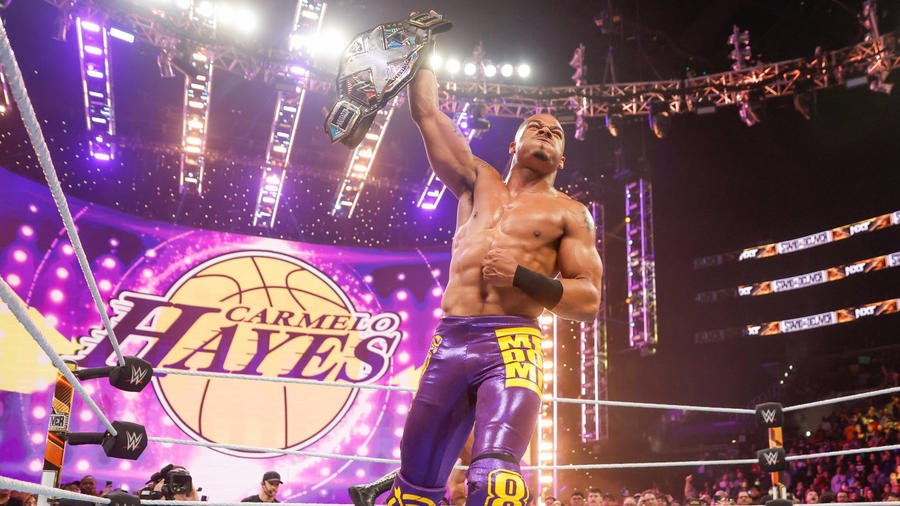
Carmelo Hayes won the NXT championship April 1 in Los Angeles. - Original Credit: Courtesy WWE
When Carmelo Hayes materialized on Monday Night Raw to deliver a devastating beatdown, the collective disbelief inside the arena was palpable. Just hours earlier, wrestling circles across the internet were convinced that the former championship contender was on the verge of walking away from the company entirely. Instead of confirming those digital eulogies, the broadcast delivered an explosive confrontation that caught viewers, analysts, and opponents completely off guard. A narrative that began with darkened social media accounts culminated in a seismic ring invasion that altered the hierarchy of WWE flagship programming.
The sudden turn of events dismantled days of unchecked speculation across the sports entertainment landscape. Fans had spent the preceding forty-eight hours decoding vague online gestures and piecing together catastrophic theories regarding contract fallout. In a single broadcast segment, those viral rumors transformed into an orchestrated narrative weapon. The strategic execution was swift, decisive, and calculated to maximize shock value on live television.
The Raw Shock That Toppled The Bloodline
Monday night presented what was billed as a pivotal collision between rising force 946 and the most established dynasty in modern professional wrestling. As reported by Bleacher Report, Carmelo Hayes executed an unmistakable heel turn to help the newly formed collective secure an improbable victory over The Bloodline. The scheduled six-man tag team contest featured 946 members Royce Keys and OTM taking on Solo Sikoa alongside The Usos. While The Bloodline expected to dictate the tempo against the group making its formal in-ring debut, the dynamic shattered the moment outside interference flipped the playing field.
The physical intensity of the ambush was unsparing. Yahoo Sports reported that 946 capitalized on the chaos to hand down a brutal beating that left Sikoa and his stablemates reeling on the canvas. Ringside commentary scrambled to make sense of the sudden alliance as the numbers game overwhelmed The Bloodline. Hayes did not merely provide a passing distraction from the apron. He engaged directly in the assault, delivering decisive offense that ensured Keys and OTM would leave their debut showcase with an unforgettable victory over wrestling royalty.
The post-match scene painted a stark picture of WWE evolving power dynamics. Solo Sikoa, typically the enforcer dictating terms with cold detachment, found himself unable to counteract the coordinated blitz. The Usos were neutralized on the perimeter, leaving their faction exposed in a manner rarely witnessed over the past four years. By actively orchestrating the downfall of SmackDown most feared unit on Monday night television, the attackers announced that the old rules governing brand supremacy and family intimidation no longer apply.
Deconstructing The Viral Social Media Blackout
The explosive in-ring ambush was made even more startling by the cloud of uncertainty that preceded it. An atmosphere of impending departure had been building steadily, fueled by reports from F4W/WON noting that Carmelo Hayes had blacked out his X profile picture during an extended broadcast absence. In the hyper-reactive ecosystem of modern professional wrestling, a darkened social profile rarely registers as simple digital maintenance. Instead, followers immediately interpreted the monochromatic aesthetic as a distress signal indicating backstage unrest or an imminent contractual freeze.
Wrestling publications jumped on the digital breadcrumbs almost instantly. Media outlets like WhatCulture highlighted the eerie timeline, observing that the athlete appeared to be sending cryptic messages to an increasingly anxious fan community. Because performers often utilize personal platforms to negotiate public leverage or hint at impending departures, digital sleuths treated every deleted mention and blank banner as tangible evidence of institutional estrangement. The lack of televised appearances over previous weeks only amplified the narrative that a split was brewing behind closed doors.
This atmosphere proved fertile ground for sensational interpretations. Without official confirmation from corporate leadership, observers filled the silence with worst-case scenarios. The modern sports fan lives in an era where digital gestures frequently foreshadow real-world movement, creating a reflex to treat social media silence as an administrative fracture. When Monday night arrived, that entire structure of digital breadcrumbs was revealed to be an elaborate curtain concealing a creative reset.
3 Crucial Strategic Takeaways From The 946 Alliance
The alliance between the charismatic former champion and the powerhouse unit of 946 carries immediate ramifications that stretch far beyond a single episode of television. To evaluate why this maneuver reverberated so loudly across the industry, one must unpack the distinct tactical motivations driving the creative direction.
Fabricated Exit Speculation Exposed As Narrative Deception
The most immediate revelation from the ambush was the decisive collapse of persistent departure narratives. Premature commentary published by Cageside Seats floated that Carmelo Hayes might be following Ilja Dragunov out of WWE, synthesizing fragmented social media clues into a sweeping theory of backstage exodus. Observers drew hasty parallels between unrelated roster movements, asserting that a creative impasse was pushing top tier prospects toward the exit door.
That entire theoretical edifice vanished the instant the attack occurred. The narrative misdirection proved that what external analysts diagnosed as contract disillusionment was actually deliberate preparation for a high-profile heel turn. Wrestling promotions have long weaponized digital paranoia to heighten dramatic payoffs, but using genuine anxieties over roster retention represents an evolved, hyper-aware style of television booking. Rather than fighting internet rumors, the creative team allowed those rumors to flourish, ensuring the television reveal landed with twice the intended impact.
Rebuilding The Power Balance Against Solo Sikoa And The Usos
From a competitive standpoint, the ambush provides an immediate counterweight to The Bloodline long-standing hegemony. For years, opponents facing Solo Sikoa, Jimmy Uso, and Jey Uso struggled against their ironclad unity and relentless interference tactics. By aligning with Royce Keys and OTM, a formidable coalition emerged that can match the legendary family strike for strike and body for body.
A six-man tag team contest against the industry premier dynasty requires exceptional execution, especially for a group making its televised in-ring debut. By securing an emphatic victory over Sikoa and The Usos, 946 bypassed months of mid-card seasoning, stepping instantly into main event territory. The presence of an established, agile offensive focal point balances the raw physical power brought by Keys and OTM, forging a stable capable of threatening every championship division on the Raw roster.
The Tactical Reinvention Of A Former Blue Brand Prodigy
The third crucial takeaway centers on individual character evolution. Navigating the transition from developmental golden child to established main-roster headliner can often stall when performers rely on familiar heroic tropes. Prior to the hiatus, the high-flying style and confident swagger were flirting with creative saturation, requiring an ideological pivot to reignite forward momentum.
Embracing a ruthless, villainous persona solves that dilemma instantly. Stripping away the desire for fan validation allows for a harsher, more opportunistic in-ring psychology. Operating as the catalyst for 946 gives the persona an edge that solitary runs rarely afford. Instead of carrying the burden of an underdog fighting against established giants, the role transforms into an aggressive disrupter willing to ambush iconic families to conquer the brand.
Digital Misdirection And The Modern Wrestling Rumor Engine
The rapid escalation of this storyline underscores a broader cultural trend in digital sports journalism. In the scramble to break internal developments, the boundary between kayfabe storytelling and legitimate corporate reporting has become perilously narrow. When an athlete modifies their digital footprint, blogs and social accounts often treat the change as a verified contractual dispute without secondary verification.
When digital signals blur the boundary between genuine contractual disputes and televised angles, audiences often fail to verify before amplifying panic. Applying breaking news verification mechanics and 4 proven rules that prevent costly media hysteria reveals how quickly unsourced claims can distort simple narrative misdirection into an imagined corporate crisis. The collective hysteria surrounding Carmelo Hayes demonstrates how readily audiences project organizational friction onto simple television plotting.
This dynamic grants television writers unprecedented control over live reactions. By remaining silent while independent outlets amplify departure theories, the promotion turns the online news cycle into free, immersive viral marketing. When the truth finally airs on live television, the emotional release is substantially higher because the audience believes they are witnessing an impossible twist. It represents an intricate cat-and-mouse game where the fans own investigative instincts are turned into theatrical props.
Where Monday Night Raw Headwinds Move Next
The fallout from this beatdown will inevitably dominate programming across upcoming weeks. Solo Sikoa and The Bloodline are unaccustomed to suffering public humiliation, particularly at the hands of a newly established alliance. Retribution is not merely expected; it is structurally mandatory for the faction to maintain its menacing aura across both televised brands.
For the newly solidified unit of 946, the defensive challenge begins immediately. Winning a chaotic brawl through surprise is vastly different from defending ground against an enraged Bloodline seeking payback. Royce Keys and OTM must prove their debut dominance was not a situational anomaly, while their newly turned ally must prepare for the physical blowback that accompanies war against wrestling most entrenched dynasty.
What remains undeniable is that the Monday night hierarchy has been fundamentally reshaped. Far from departing the company or fading into creative obscurity, the future for Carmelo Hayes stands on aggressive new ground. By turning a digital blackout into a tactical ambush, Raw has ignited an electrifying faction war that promises to captivate wrestling audiences for months to come.